Hip Replacement at Beijing Jishuitan Hospital: Costs, Process & Our Companion Service
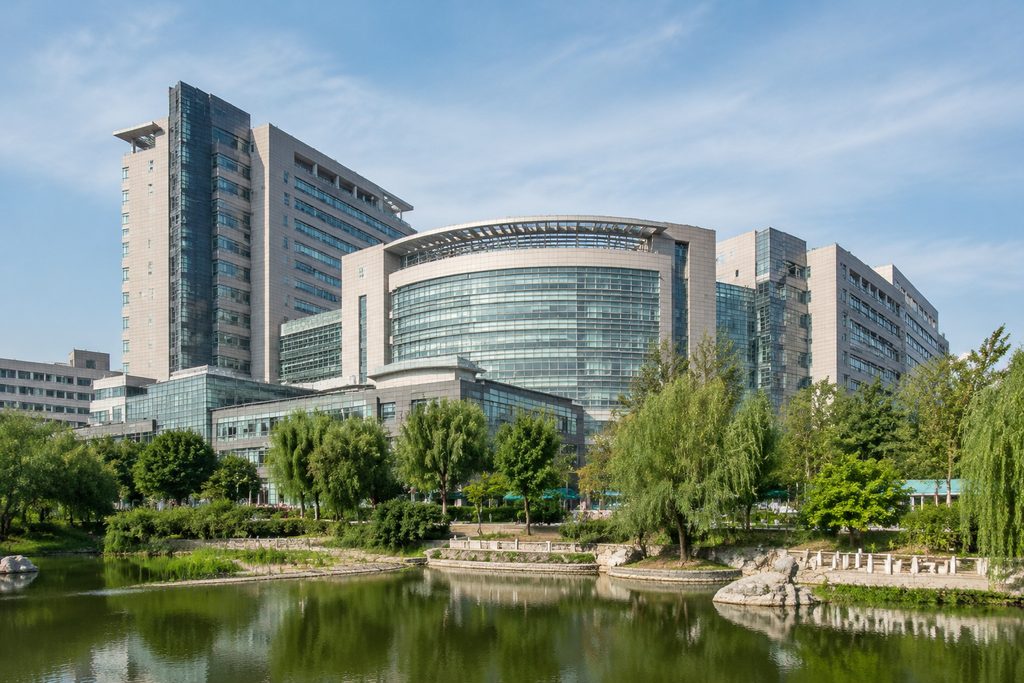
More than 450,000 total hip replacements are performed annually in China. Beijing Jishuitan Hospital handles over 2,000 of them each year. That volume matters. It’s the kind of number that builds a level of surgical muscle memory you simply cannot replicate in a facility doing 200 cases a year.
But volume alone doesn’t answer the question you typed into a search bar late at night, after your doctor said the words “joint deterioration” and you felt the floor shift. You want to know if this specific hospital is the best hip replacement hospital Beijing cost-wise and quality-wise for someone traveling from abroad.
The short answer is yes, it’s widely considered the top orthopedic center in China. The longer answer involves understanding what that actually means for you—the logistics, the real prices, and the moments between surgery and walking again where you’ll need someone in your corner.
Hip Replacement at Jishuitan: The Short Answer
Beijing Jishuitan Hospital is China’s premier orthopedic institution. Its joint surgery department performs approximately 2,000 hip replacements annually. For international patients, a total hip replacement here typically costs between $15,000 and $25,000. That’s roughly one-fifth to one-eighth of the $40,000 to $120,000 you’d pay in the United States.
The catch? You cannot simply book a surgery date from overseas. The hospital’s public outpatient system requires an in-person consultation first. The international medical department can coordinate ahead, but the surgeon still needs to see you, review your imaging personally, and clear you for the procedure. Our role is making sure that happens efficiently, with someone who speaks both languages standing next to you.
Who This Is Right For — and Who It Isn’t
Traveling internationally for a major orthopedic procedure is not for everyone. The flight alone is a stress test on a compromised body.
A good candidate typically checks these boxes:
- You have confirmed osteoarthritis, avascular necrosis, or a femoral neck fracture requiring replacement.
- Your condition is stable enough for a long-haul flight and a brief pre-surgery waiting period.
- You are seeking a specific surgical approach, such as the direct anterior method, which Jishuitan’s senior surgeons perform routinely.
- You have a family member or companion who can travel with you, or you’re willing to rely on a professional bilingual medical companion service.
This path is probably not right for you if:
- You have unstable cardiovascular disease or a recent cardiac event that makes air travel risky.
- Your BMI is significantly above 40, as this elevates surgical and anesthetic risk and some surgeons may require weight optimization first.
- You require a complex revision surgery with extensive bone grafting—while Jishuitan does these, remote evaluation becomes trickier and in-person assessment is non-negotiable.
- You expect a Western-style private room with hotel-like amenities in the public wing. The international department offers upgraded accommodations, but it’s still a Chinese hospital environment.
Being honest about that last point matters. You come here for the surgical hands, not the thread count.
The Options, Compared
You have choices—not just about where to go, but what kind of experience you want. Here’s how the pathways compare for a total hip replacement.
| Factor | Beijing Jishuitan (Public Int’l Dept.) | Private Int’l Hospital in China | United States (Avg. Orthopedic Center) |
|---|---|---|---|
| Surgeon Experience | 2,000+ hips/year per department; senior surgeons with 20+ years | Varies; often experienced but lower volume | Typically 100–300 hips/year per surgeon |
| Total Cost (Unilateral THR) | $15,000–$25,000 | $25,000–$40,000 | $40,000–$120,000 |
| Implant Options | Full range: ceramic-on-ceramic, ceramic-on-poly, dual mobility; imported and domestic | Primarily imported implants | Full range, mostly imported |
| Language Support | Limited in-house; external companion service recommended | English-speaking staff standard | Native English |
| Pre-Surgery Coordination | Remote second opinion available; surgery booked after in-person consult | Can often be pre-arranged remotely | Scheduled directly with surgeon’s office |
| Post-Op Rehab | In-hospital physiotherapy; outpatient rehab coordination via companion | Integrated rehab services | Integrated rehab; familiar insurance pathways |
If your priority is the surgeon’s hands and the sheer number of hips they’ve replaced, Jishuitan is the strongest card on the table. If you need a fully English-speaking environment from check-in to discharge and cost is secondary, a private international hospital like Beijing United Family makes more sense. There’s no single right answer—only the right one for your specific anxiety threshold and budget.
Why Jishuitan’s Volume Matters for Joint Replacement
This is the section that addresses the question you didn’t know to ask: is Jishuitan Hospital good for joint replacement, or just famous?
It’s not just famous. In China’s Fudan University hospital rankings, Jishuitan’s orthopedics department has held a top national position for years. The hospital was founded in 1956 specifically as a trauma and orthopedics center. Every orthopedics resident in Beijing rotates through here. When a complex periprosthetic fracture arrives at another hospital in northern China, it often gets transferred to Jishuitan.
What does that mean for a standard primary hip replacement? It means the surgeon doing your case has likely managed complications you’ll never experience. They’ve seen the anatomy that textbooks call “rare.” That depth changes how they handle the routine.
The hospital’s joint surgeons are also early adopters of the direct anterior approach, a muscle-sparing technique that avoids cutting major muscles. Recovery is often faster—some patients walk with a frame within 24 hours. Not everyone is a candidate, but if you are, you want a team that’s done thousands, not dozens.
So yes, Jishuitan is genuinely good for joint replacement. The international reputation is earned.
What a Hip Replacement at Jishuitan Actually Costs
Let’s talk numbers. The “how much is hip surgery at Beijing Jishuitan Hospital” question deserves a straight answer.
For a standard unilateral total hip replacement through the international medical department, the hospital’s portion—including the implant, operating theater, anesthesia, nursing, and a standard-length stay of about 5 to 7 days—typically runs between $13,000 and $22,000. The implant choice drives a lot of the variance. A fourth-generation ceramic-on-ceramic bearing from a major international manufacturer sits at the higher end. A domestically produced implant, which is clinically proven and widely used across China, brings the cost down.
Then there are the non-hospital costs. Our coordination and companion services start from $300 per day for bilingual support. A written second opinion from a Jishuitan specialist before you travel costs between $300 and $500. If you want a video consultation with the surgeon beforehand, that’s typically $500 to $800. Airport transfers are a flat $200 round trip.
Here’s a realistic budget range:
- Hospital costs (surgery + stay + implant): $13,000–$22,000
- Pre-travel remote consultation (video): $500–$800
- Bilingual companion (5 days inpatient support): from $1,500
- Airport transfers: $200
- Accommodation for companion (nearby hotel, 10–14 nights): $800–$1,500
- Estimated total, all-in: $16,000–$26,000
That’s the band. The final number depends on your implant selection, your length of stay, and how much support you want around you. But even at the high end, you’re looking at a fraction of the US price for a procedure done by a surgeon whose annual hip volume exceeds what many Western surgeons do in a decade.
Practical Considerations: Records, Visas, and the Recovery Timeline
You’ve decided to explore this seriously. Here’s what the logistics actually look like.
Medical records. Before anything else, we need your imaging. Recent X-rays and ideally a CT or MRI of the affected hip, plus a brief medical history summary in English. Our team translates and formats these for the Chinese specialists. The surgeon reviews them and provides a written second opinion—or we arrange a video call. This step confirms you’re a surgical candidate and sets expectations before you book a flight.
Visa. Medical treatment in China falls under the S2 visa category, which covers short-term private affairs including medical care. It’s not an M visa—that’s purely for commercial and trade activities. The hospital’s international department provides an invitation letter and treatment confirmation, which you submit with your application. Processing times vary by consulate, but plan for two to four weeks. We guide you through the documentation. We don’t guarantee visa approval—no one can—but we make sure your paperwork is complete.
Payment. Public hospitals in China, including Jishuitan’s international department, operate on a prepayment model. You deposit an estimated amount upfront, and the final bill is settled at discharge. Credit cards and wire transfers are accepted. Most international insurance plans are reimbursement-based—you pay the hospital, then claim from your insurer. Private hospitals like United Family offer direct billing, but Jishuitan does not.
Language. The international department has some English-speaking staff, but it’s not consistent across shifts. Radiology, billing, pharmacy—these interactions often default to Mandarin. A bilingual companion bridges every one of those gaps. They’re with you during the surgeon consult, they explain the anesthesia consent form, they confirm your implant choice before you sign. This isn’t a luxury. It’s the difference between informed consent and hoping you understood correctly.
Recovery and follow-up. Most patients are discharged on day 5 to 7. You’ll be walking with a frame or crutches. The surgeon will want to see you for a wound check around day 10 to 14. After that, you can fly home—with compression stockings, blood thinner protocols, and a rehab plan in hand. We coordinate the handoff to your local physiotherapist. The surgeon may request follow-up X-rays at three months and one year, which you can send digitally. The direct relationship with the surgical team doesn’t end when you board the plane.
Frequently Asked Questions
Not directly. The public hospital system requires an in-person consultation before scheduling surgery. However, through the international medical department and with our coordination, you can complete a remote evaluation first. The surgeon reviews your imaging and confirms candidacy. Then we schedule the in-person consult and surgery in a single trip, minimizing your time on the ground. It’s not a guaranteed surgery date before you land, but it’s a confirmed plan with a very high probability. No surgeon will operate on you without looking you in the eye first—and frankly, you shouldn’t want one who would.
Jishuitan Hospital has a fully equipped ICU and 24-hour on-call surgical teams. It’s a major trauma center, which means it’s built to handle complications. Infection rates for primary hip replacement at high-volume Chinese orthopedic centers are comparable to international benchmarks—typically under 1%. That said, you are far from home. We strongly recommend medical travel insurance that covers complication management and, in a worst-case scenario, medical evacuation. We can point you to providers. We do not sell insurance. The realistic answer is that major complications are rare, but you need a financial safety net that doesn’t depend on the hospital’s goodwill.
Most patients are cleared to fly 10 to 14 days after surgery. The flight itself requires precautions: aisle seat, standing and walking every two hours, compression stockings, and possibly a short course of blood thinners. The first six weeks at home involve walking with crutches and daily physiotherapy exercises. By three months, most people are walking unaided and wondering why they waited so long. Full recovery—the point where you forget you had surgery—takes about a year. The direct anterior approach used at Jishuitan tends to accelerate the early phase, but the bone still needs time to integrate with the implant. There are no shortcuts for biology.
Yes, the surgical cost is genuinely 75% to 85% lower than US prices. What’s not included: international flights, your companion’s accommodation and meals, any extended rehab stay you might choose, and the cost of managing a rare complication. The hospital bill covers the implant, surgeon’s fee, anesthesia, operating room, nursing, and a standard inpatient stay. Your companion service fee covers the human support. Everything else—hotel, food, flight, insurance—is on you. Even with those added, the total is typically half or less of what the surgery alone costs in the US.
Your Next Step
You came here with a hip that hurts and a question about whether traveling to Beijing for surgery makes sense. Now you have the numbers, the process, and the honest trade-offs. Jishuitan Hospital offers world-class orthopedic volume and skill at a price that makes the flight worth it—if you’re a good candidate and you have the right support on the ground.
We are not a hospital. We don’t diagnose, we don’t treat, and we don’t make clinical decisions. What we do is make sure you never stand alone at a registration counter, trying to explain your surgical history in a language you don’t speak. We connect you with the right surgeon, put the paperwork in order, and stay beside you until you’re cleared to fly home.
If you want to know whether Jishuitan is right for your specific hip, start with a remote evaluation. Visit our patient services page to send us your imaging and medical history. We’ll arrange a written second opinion or a video consultation with the orthopedic team. There is no pressure and no commitment beyond that first conversation. Just a clear answer from a surgeon who does this every day.
For more medical information and treatment options in China, visit chinamedservices.com (China Medical Services).
