Your Spine Surgery at Shanghai Changzheng Hospital: Complex Spinal Full Coordination Service
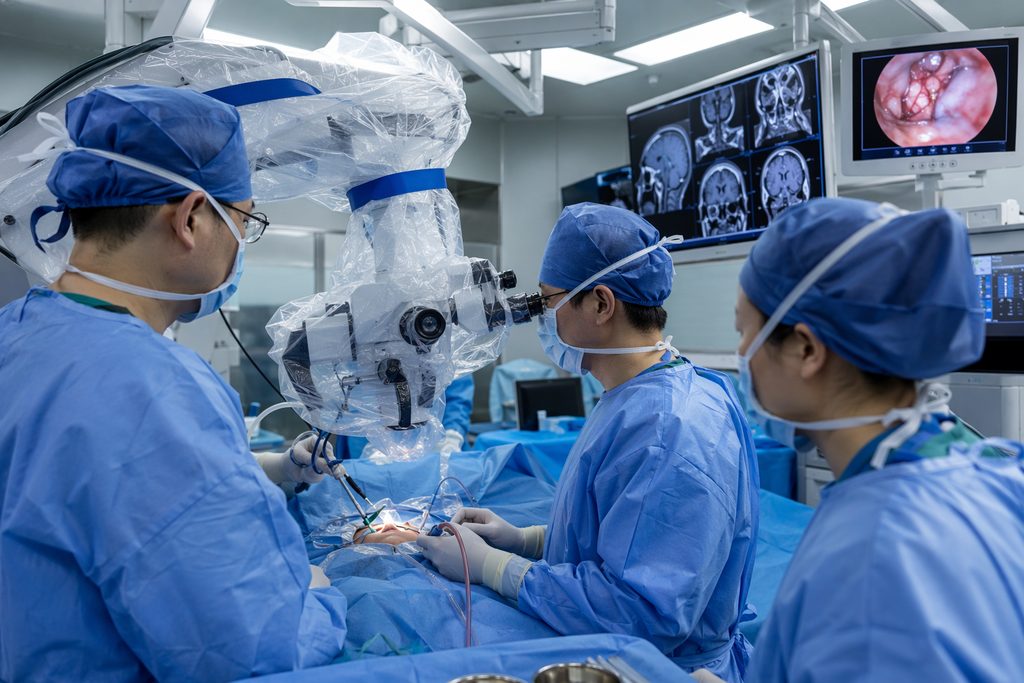
You have probably heard that traveling abroad for complex spine surgery means rolling the dice on quality. The assumption is that lower costs signal lower standards, outdated equipment, or surgeons with less experience. The data tells a different story. Shanghai Changzheng Hospital performs over 10,000 spinal surgeries annually, a surgical volume that places it among the highest-volume spine centers globally. For a patient facing a quote of $80,000 to $150,000 for a multi-level fusion in the United States, understanding the real complex spine surgery cost Shanghai offers is not about bargain hunting. It is about finding concentrated expertise without the financial devastation. Our team has spent years connecting international patients with China’s most specialized surgical teams, and the gap between perception and reality in spinal surgery is wider here than in almost any other specialty.
Key Takeaways
- The Spine Surgery Department at Shanghai Changzheng Hospital handles over 10,000 procedures a year, a caseload that drives technical proficiency in complex deformities, revisions, and tumor resections rarely matched elsewhere.
- A full coordination service bundles hospital registration, imaging prioritization, bilingual surgical translation, and inpatient logistics into a single workflow — critical for navigating a 2,000-bed military-affiliated hospital.
- Direct hospital costs for complex spinal instrumentation at Changzheng typically run 50% to 70% lower than US cash-pay rates, but the trade-off is a system that requires in-person evaluation before any surgery is scheduled.
- No legitimate service can guarantee a specific surgery date or outcome before the surgeon examines you. Any promise to the contrary is a red flag.
The Problem: When Your Spine Diagnosis Outpaces Your Local Options
Spinal pathology does not wait for insurance approvals. A patient with severe adolescent idiopathic scoliosis watching a curve progress past 50 degrees, or an adult with degenerative kyphoscoliosis losing the ability to stand upright, faces a closing window. In Canada, the median wait time from specialist referral to orthopedic surgery sits at 27.4 weeks, according to the Fraser Institute’s 2023 survey. In the United Kingdom, NHS data shows over 30% of trauma and orthopedic patients waiting longer than 18 weeks for treatment. For a complex revision surgery — where a previous fusion has failed, hardware has loosened, or adjacent segment disease has set in — the wait can stretch beyond a year. These are not administrative inconveniences. They are months of neurological decline, muscle atrophy, and opioid dependence.
The financial side is just as unforgiving. A 2020 study in the Journal of Spine Surgery analyzed hospital costs for adult spinal deformity surgery in the United States, finding mean total hospital costs of $121,000 for patients without complications — and $178,000 when complications occurred. Even with insurance, out-of-pocket maximums and denied claims can leave families with bills exceeding $30,000. For uninsured or underinsured patients, the numbers are simply impossible. And yet the spine continues to deform, nerves continue to compress, and the window for an optimal surgical outcome narrows. This is the precise scenario where looking beyond domestic borders stops being a luxury and starts being a medically rational decision.
Why Shanghai Changzheng Hospital Delivers Results for Complex Spines
Clinical Volume Drives Better Outcomes
There is a well-documented relationship between surgical volume and patient outcomes in spinal surgery. A 2019 study published in Spine examined over 130,000 spinal fusion cases and found that surgeons in the highest-volume quartile had significantly lower complication rates and shorter lengths of stay compared to low-volume surgeons. Shanghai Changzheng Hospital’s Department of Orthopedic Surgery is not a general orthopedics unit that does some spine work on the side. It is a dedicated spine surgery powerhouse that completes over 10,000 procedures annually. This is not a typo. The department fields multiple specialized teams focused on spinal deformity, spinal tumors, degenerative disease, and minimally invasive techniques. A surgeon here who has done 300 pedicle subtraction osteotomies — a demanding procedure for fixed sagittal imbalance — has a depth of tactile knowledge that cannot be acquired through fellowship alone. For a patient with a rare spinal tumor or a severe rigid deformity, walking into a center where the team saw three similar cases last week is fundamentally different from walking into a center where the team sees three per year.
Technology and Efficiency at Scale
Changzheng Hospital operates as a 2,000-bed tertiary military medical center affiliated with the Naval Medical University. The scale enables investments that smaller centers cannot justify. The hospital’s intraoperative imaging suite includes O-arm surgical navigation systems that provide real-time 3D verification of screw placement during complex deformity corrections and tumor resections. Intraoperative neurophysiological monitoring — somatosensory evoked potentials and motor evoked potentials — runs continuously during any case where the spinal cord is at risk, with a dedicated neurophysiologist reading the signals in real time. This is standard at top US centers. The difference is throughput: Changzheng’s spine teams perform these monitored cases multiple times per day, every operating day. The navigation techs, the monitoring staff, and the surgical teams operate as a unit with a rhythm that only comes from relentless repetition.
Cost Advantage Without Quality Compromise
Let us address the elephant in the room directly. The complex spine surgery cost Shanghai hospitals charge is substantially lower than US and European rates, and the reason is structural, not qualitative. A posterior spinal fusion with instrumentation for adult scoliosis that might generate a hospital bill of $120,000 to $150,000 at a major US academic center typically falls in the $35,000 to $55,000 range at Changzheng’s international or VIP department. This is the direct hospital charge — surgeon fees, implant costs, operating room time, and inpatient stay. The gap is driven by China’s lower physician labor costs, centralized implant procurement policies that have slashed orthopedic hardware prices, and hospital operational models that do not carry the administrative overhead of US insurance-driven systems. The implants themselves — pedicle screws, rods, interbody cages — are often the same multinational brands used in Western operating rooms. The sterilization protocols, the anesthesia monitoring standards, the ICU capabilities — these are not cut-rate. What is missing is the multi-layered billing apparatus that inflates US hospital charges. A patient paying cash at Changzheng is not buying a discount surgery. They are buying surgery in a system where the same clinical inputs simply cost less to deliver.
What a Full Coordination Service Actually Means for Spinal Surgery in China
Searching for “what is full coordination service for spinal surgery in China” suggests you have already realized that booking complex spine surgery abroad is not like booking a hotel room. A full coordination service addresses the gap between deciding on a hospital and actually being wheeled into the operating room with a surgeon who knows your case. At Shanghai Changzheng Hospital, this is not a luxury add-on. It is a practical necessity. The hospital’s outpatient volume exceeds 10,000 visits per day. Registration windows, imaging centers, and specialist clinics are spread across a campus that can overwhelm even a Mandarin speaker on their first visit. Here is what the coordination workflow looks like in practice for a spinal surgery patient.
Phase one is pre-arrival documentation. The patient sends existing imaging — standing full-spine X-rays, MRI with axial and sagittal views, CT scans if hardware is present, and any prior operative notes. Our team translates these records into clinical Chinese and submits them through the hospital’s international department for a preliminary review. The spine team assesses whether the case falls within their scope and whether the patient is a surgical candidate. This step alone can save a patient from flying to Shanghai only to learn that their specific pathology is better treated elsewhere. If the review is positive, the patient travels on an S2 visa — the short-stay category used for private medical treatment — with a formal invitation letter from the hospital’s international department as supporting documentation.
Phase two is the in-person evaluation. This is non-negotiable. No ethical surgeon will schedule a multi-level spinal fusion or tumor resection based on images alone. The patient meets the surgeon, undergoes any additional imaging the team requires — often a new CT with 3D reconstruction for surgical planning — and completes pre-operative clearance. A bilingual medical companion handles registration, queues for imaging, translates the surgical consent discussion in detail, and ensures the patient understands the proposed construct, the risks, and the recovery trajectory. This is where the coordination service earns its value. A complex surgical consent conversation — one that covers the risk of neurological injury, instrumentation failure, non-union, and the possibility of staged procedures — is difficult enough in your native language. Conducting it through a translation app is reckless.
Phase three is admission, surgery, and inpatient recovery. The coordination service manages admission paperwork, deposit payment, and communication with the nursing station. During the hospital stay — typically 7 to 14 days for a major spinal reconstruction — the companion provides daily translation support during rounds, helps the patient communicate pain levels and symptoms to the care team, and coordinates with family members back home. After discharge, the service arranges follow-up visits for wound checks and suture removal before the patient is cleared to fly. A full coordination service does not change the medicine. It removes the friction that can make receiving complex care in a foreign language feel impossible.
Evaluating Whether Changzheng Is the Right Choice for Your Specific Spine Condition
The question “is Shanghai Changzheng Hospital good for spine surgery” has a clear answer for certain pathologies and a more qualified one for others. Changzheng’s spine department is nationally recognized for its work in three areas in particular. Spinal deformity correction — including severe scoliosis, kyphosis, and ankylosing spondylitis-related deformities — is a core strength. The department has published extensively on osteotomy techniques for rigid deformities that many centers would consider inoperable. Spinal tumor surgery is another pillar. The department collaborates closely with the hospital’s oncology and pathology teams to manage primary and metastatic spinal tumors, including en bloc resections for chordomas and other aggressive lesions. Revision spine surgery — taking on cases where prior fusions have failed — makes up a significant portion of the caseload.
For a straightforward single-level microdiscectomy or a routine lumbar laminectomy, Changzheng’s capabilities far exceed what the case requires, and a patient might be equally well served at a smaller center with lower costs and shorter logistics. The value proposition sharpens as the case complexity increases. A patient with a 90-degree thoracic curve, a patient with a spinal tumor wrapped around the cord, a patient with a failed fusion and broken hardware — these are the cases where Changzheng’s volume and subspecialization matter most. The hospital is not the right fit for every spine patient. It is a high-volume, high-acuity center best suited to patients whose pathology demands a team that has seen it all before, many times over.
| Spinal Procedure | Estimated Cash-Pay Range at Changzheng (USD) | Typical US Cash-Pay Range (USD) |
|---|---|---|
| Single-level lumbar microdiscectomy | $6,000 – $9,000 | $20,000 – $35,000 |
| Single-level ACDF (anterior cervical discectomy and fusion) | $12,000 – $18,000 | $40,000 – $65,000 |
| Multi-level posterior spinal fusion (scoliosis, 8+ levels) | $35,000 – $55,000 | $120,000 – $180,000 |
| Spinal tumor resection with instrumentation | $28,000 – $50,000 | $100,000 – $200,000+ |
| Revision fusion with hardware removal and reconstruction | $40,000 – $65,000 | $130,000 – $200,000+ |
All prices are estimates for the hospital’s international/VIP department and include surgeon fees, implant costs, operating room, and inpatient stay. Actual quotes vary by case complexity, implant selection, and length of stay. Coordination service fees are separate.
Practical Considerations: Documentation, Visas, and Payments
Arranging surgery at Shanghai Changzheng Hospital requires specific documentation. You will need a valid passport with at least six months of remaining validity, recent imaging on CD or via secure digital transfer (DICOM format preferred), and any prior operative reports translated into English or Chinese. If you have implanted hardware from a previous surgery, the operative note should specify the manufacturer and model of the instrumentation — this matters because the revision surgeon needs to know whether existing implants are compatible with the removal instruments available. For the S2 visa application, the hospital’s international department issues an invitation letter once your case has been accepted for evaluation. Processing times at Chinese embassies and consulates vary by country, but plan for at least two to three weeks. The visa is typically issued for a stay of up to 180 days, which covers the full surgical and initial recovery timeline for even the most complex spinal reconstruction.
Payment at Changzheng’s international department is typically required upfront as a deposit before admission, with the balance settled at discharge. The hospital accepts major international credit cards and wire transfers. Cash payments in RMB are also accepted but are impractical for amounts exceeding a few thousand dollars due to currency import limits. Most international patients pay via wire transfer from their home bank to the hospital’s designated account, which takes two to five business days to clear. Insurance reimbursement is a separate matter: the hospital provides detailed invoices and medical records suitable for submission to your insurer, but it does not bill international insurance companies directly. You pay the hospital, then seek reimbursement from your insurer. Check with your insurance provider before traveling to confirm whether treatment at an overseas hospital is covered and what documentation they require. Some patients combine Changzheng’s lower direct costs with a medical tourism insurance policy that covers complications and repatriation.
After discharge, you will need to remain in Shanghai for at least one to two weeks for initial follow-up. The surgeon will want to check your wound, review post-operative X-rays, and confirm that you are medically stable for a long-haul flight. Deep vein thrombosis prophylaxis, mobility restrictions, and pain management are all addressed before you board a plane. Once you return home, you will need a local spine surgeon willing to take over post-operative care — someone who can monitor your fusion progress on serial X-rays and manage any late complications. Identify this surgeon before you leave for Shanghai. Do not assume you can find one after the fact.
Frequently Asked Questions
No. You can submit your records for a preliminary review and receive an indication of whether your case is appropriate for the department. But no surgeon will schedule an operation without examining you in person, reviewing your imaging on their own systems, and discussing the surgical plan face-to-face. Anyone offering a confirmed surgery date before you have set foot in the hospital is not operating through legitimate channels. Plan for an evaluation trip of at least two to three days before a surgery date is set.
Direct hospital costs for a complex multi-level fusion typically fall between $35,000 and $55,000. A full coordination service package — including pre-arrival record review, bilingual companion support during evaluation and hospitalization, and post-discharge follow-up coordination — adds approximately $5,000 to $8,000 depending on case complexity and length of stay. The total all-in cost for a major spinal reconstruction, including coordination, is usually in the $40,000 to $63,000 range. This compares to $120,000 to $180,000 in direct hospital costs alone at a US center.
Changzheng Hospital is a tertiary military medical center with full intensive care capabilities, 24-hour in-house surgical coverage, and the ability to manage major perioperative complications — including neurological deterioration, massive hemorrhage, and implant malposition — without transferring the patient elsewhere. The spine department’s own complication management experience is extensive precisely because it handles high-risk cases. For complications that arise after you return home, you will need a local spine surgeon who has agreed in advance to manage your post-operative care. The surgical team in Shanghai can provide detailed operative notes and imaging to your local surgeon, but they cannot manage complications from across an ocean. This is why pre-arranging follow-up care is non-negotiable.
No legitimate complex spine surgery is a standardized package. A patient with a rigid 80-degree thoracic curve and a patient with a two-level degenerative spondylolisthesis require entirely different surgical plans, implant constructs, lengths of stay, and recovery protocols. Any “package price” advertised online for complex spine surgery should be treated with extreme skepticism. The hospital determines the surgical plan and the associated costs after evaluating you. A coordination service can give you a realistic cost range based on similar cases and can facilitate the process, but it cannot — and should not — quote a fixed price before the surgeon has seen your imaging and examined you.
Your Next Step
Deciding to travel to Shanghai for complex spine surgery is a serious medical and logistical undertaking. The clinical resources at Shanghai Changzheng Hospital are real: high surgical volumes, subspecialized teams, and modern instrumentation at a cost structure that makes treatment accessible to patients who have been priced out of their home systems. The challenge is navigating the system safely and efficiently. That is what we do. Our team at China Medical Services handles the record translation, the hospital liaison work, and the on-the-ground bilingual support so that you can focus on your surgery and recovery. We do not provide medical advice, and we do not make clinical decisions. We connect you with the surgical team, and we make sure nothing gets lost in translation. If you are ready to find out whether your case is a fit for Changzheng’s spine department, request a free consultation with our coordination team. We will review your situation honestly and tell you what is possible. No pressure. No promises we cannot keep. Just a clear path forward.
For more medical information and treatment options in China, visit chinamedservices.com (China Medical Services).
