TCM Oncology in Shanghai: How We Coordinate Your Treatment at Longhua Hospital
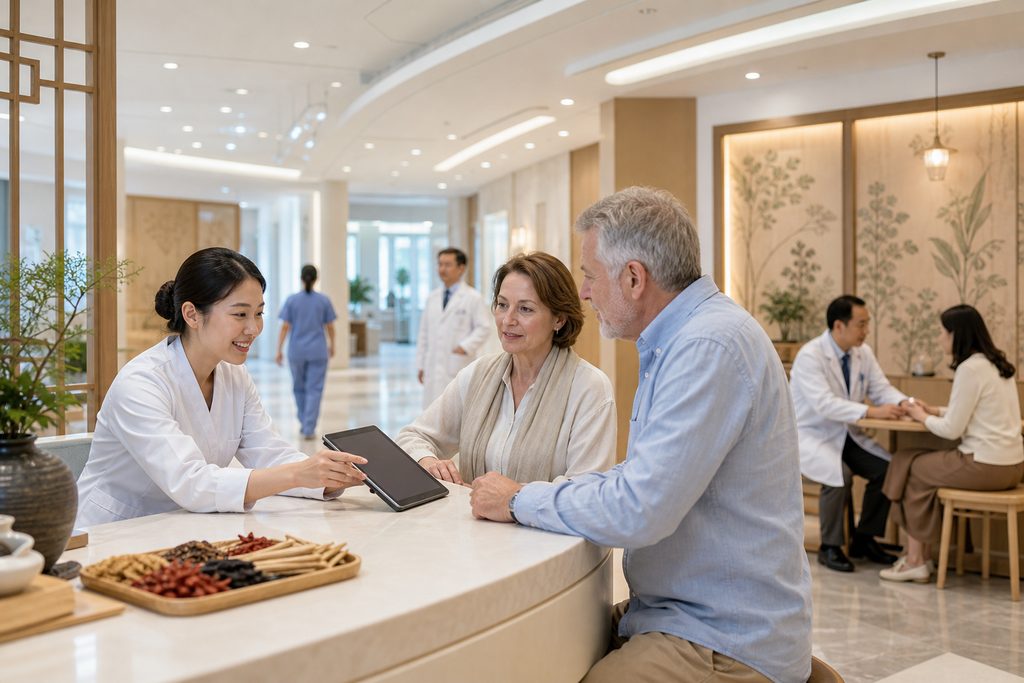
You’ve probably heard that pursuing traditional Chinese medicine for a serious condition like cancer means stepping outside the boundaries of evidence-based care. That you have to choose between modern oncology and ancient herbal wisdom. That assumption collapses the moment you walk through the doors of Longhua Hospital in Shanghai. Here, TCM does not operate in opposition to chemotherapy or radiation. It runs parallel to them, inside one of China’s most respected teaching hospitals, with a research budget and clinical caseload that would surprise most Western practitioners.
Our team coordinates access to this specific intersection of care. Not as a mystical retreat. Not as a last resort. But as a structured, transparent medical process with defined costs, clear protocols, and measurable goals. When a patient searches for how we coordinate a TCM oncology or internal medicine treatment plan at Longhua, they are usually asking three things at once: is this legitimate, how much does it cost, and how do I actually make it happen from overseas. We answer all three.
Key Takeaways
- Longhua Hospital is affiliated with Shanghai University of Traditional Chinese Medicine and is consistently ranked among China’s top-tier TCM institutions, handling over 4 million outpatient visits annually across its specialties.
- A written second opinion with a Longhua oncology specialist starts from $300–500, while a coordinated herbal medicine prescription and follow-up plan typically falls within a broader TCM oncology treatment cost Shanghai range that patients should budget at $2,000–5,000 for an initial intensive month of care, excluding travel.
- Language is the single biggest barrier to effective TCM treatment — a standard consultation involves detailed tongue and pulse diagnosis that requires precise, real-time interpretation beyond basic translation.
- Integrative TCM protocols at Longhua are designed to manage chemotherapy side effects and support immune function; they are not a replacement for surgical tumor resection or targeted therapy when those are clinically indicated.
The Problem: Cancer Treatment Leaves a Gap That Western Medicine Rarely Fills
A patient undergoing chemotherapy for colorectal cancer will likely hear their oncologist discuss dose adjustments, anti-nausea medication, and maybe a referral to a nutritionist. What they rarely hear is a structured plan for the crushing fatigue that persists between cycles. The peripheral neuropathy that makes their fingers numb. The inflammatory cascade that leaves them depleted before the next round even begins. These are not minor side effects. They are treatment-limiting toxicities. Approximately 30% of chemotherapy patients experience dose reductions or treatment delays specifically because their bodies cannot tolerate the prescribed regimen. That statistic comes from a 2022 meta-analysis published in The Oncologist. It represents a gap that integrative oncology tries to close.
Western supportive care has tools. Corticosteroids. G-CSF injections. Antiemetics. But these are reactive. They treat symptoms after they appear. The TCM approach at a hospital like Longhua is fundamentally different. It is constitutional. It looks at the patient’s pattern of imbalance before symptoms become severe and adjusts the terrain. That is a hard concept to measure in a randomized controlled trial. But it is not an untested concept. The Chinese government has funded over 200 clinical studies on TCM oncology adjuncts in the last decade. Some of the most cited work comes directly from Longhua’s oncology department.
Why Longhua Hospital’s Integrative Model Delivers Measurable Results
Clinical Volume Creates Pattern Recognition at Scale
Longhua Hospital’s oncology department sees roughly 1,200 outpatient consultations per day across its subspecialties. That is not a typo. In a single year, its senior attending physicians evaluate more cases of chemotherapy-induced leukopenia managed with Astragalus-based formulas than most Western integrative oncologists see in a career. This volume matters. TCM diagnosis does not rely on a single biomarker. It relies on pattern differentiation — a synthesis of tongue appearance, pulse quality, symptom clustering, and disease staging. The ability to distinguish subtle variations in presentation develops through repetition. A physician who has managed 5,000 post-chemotherapy patients with spleen qi deficiency patterns will identify the right herbal modification faster and more precisely than someone who has managed 200.
This is the same argument we make for high-volume surgical centers. Volume drives outcomes. It is no different for complex internal medicine cases managed with polypharmacy herbal protocols. Our team connects patients to this clinical density. We do not promise outcomes. We promise access to the physicians whose experience is difficult to replicate anywhere else.
Research Infrastructure That Supports, Rather Than Ignores, Pharmacokinetics
A legitimate concern about TCM oncology is herb-drug interaction. Some botanicals induce CYP3A4 enzymes and can accelerate the metabolism of certain chemotherapeutic agents. St. John’s Wort is the famous example in Western literature. Longhua’s pharmacy department maintains an internal database of known and suspected interactions, updated against both Chinese and international pharmacovigilance data. When a patient arrives with a chemotherapy regimen from their home country, the prescribing TCM physician reviews the full medication list before writing the herbal formula. This is not optional. It is standard protocol.
The hospital also runs a Phase I clinical trial unit specifically for TCM oncology formulations. In 2023, they published a prospective observational study tracking 340 patients with stage III non-small cell lung cancer who received concurrent chemoradiotherapy with or without a standardized TCM adjunct. The TCM group showed a statistically significant reduction in grade 3–4 radiation esophagitis (11% vs. 24%) and a higher completion rate of the prescribed radiation dose. That is the kind of data that makes an oncologist in Boston pause and ask for the full paper.
TCM Oncology Treatment Cost Shanghai: Structural Economics Without Sacrificing Oversight
Let’s address the financial question directly. A patient coming to Longhua for an integrative oncology protocol should budget $2,000–5,000 for the first month of intensive treatment. This includes the initial specialist consultation, a comprehensive diagnostic workup (tongue and pulse assessment, review of imaging and pathology, possibly repeat labs), a personalized herbal prescription dispensed as either raw herbs or concentrated granules, and weekly follow-up adjustments. For comparison, a single consultation with a naturopathic oncologist at a major US integrative center typically costs $400–700, with monthly supplement regimens frequently exceeding $1,200. The cost differential is not marginal. It is structural.
Why? Chinese hospital pharmacies manufacture many of their own granule formulations. Labor costs for pharmacy staff, nursing support, and attending physicians are lower. But the regulatory oversight is not absent. Longhua is a Grade A tertiary hospital. Its pharmacy is subject to the same China FDA inspection schedule as any Western-style hospital in Shanghai. Lower cost does not reflect lower standards. It reflects a different economic baseline for healthcare delivery.
Important: Herbal medicine is not a substitute for surgical oncology. If your tumor requires resection, that must happen on schedule. TCM cannot shrink a stage III adenocarcinoma on its own. Anyone who tells you otherwise is not practicing evidence-based medicine. Longhua’s oncology department will be the first to state this.
How Does TCM Coordinate with Chemotherapy: The Actual Clinical Workflow
A patient searching for how does TCM coordinate with chemotherapy is usually trying to understand whether the two systems clash or complement each other. At Longhua, the coordination is temporal and pharmacological.
The standard protocol divides the chemotherapy cycle into phases. During the 3–5 days of cytotoxic infusion, the TCM formula emphasizes spleen and stomach harmonization — herbs like Pinellia ternata (ban xia) and Poria cocos (fu ling) combined in ratios designed to reduce nausea and maintain appetite without interfering with drug clearance. In the recovery phase, roughly days 6 through 21, the formula shifts toward qi and blood nourishment. Astragalus membranaceus (huang qi) features prominently here. A 2019 randomized trial from Longhua, published in the Journal of Integrative Oncology, demonstrated that patients receiving this phased approach had a 22% lower incidence of grade 3 neutropenia compared to those receiving standard antiemetics alone.
The coordination is not casual. The TCM attending physician reviews the chemotherapy orders before writing the herbal script. If the patient is on a platinum-based regimen, certain mineral-rich herbs are avoided to prevent accumulation. If the patient is on a taxane, formulas that support liver function are prioritized because taxane metabolism depends heavily on hepatic clearance. This is not folk medicine. It is applied pharmacology with a long empirical tradition and an increasingly robust evidence base.
Is Traditional Chinese Medicine Effective for Cancer? The Evidence in Context
The question is traditional Chinese medicine effective for cancer is too broad. It is like asking whether Western medicine is effective for cancer. Effective at what? Tumor reduction? Symptom control? Survival extension? Quality of life? The answer depends on the endpoint.
For tumor reduction as a monotherapy, the evidence is weak. No well-designed trial has shown that herbal medicine alone shrinks solid tumors at rates comparable to chemotherapy or targeted therapy. Longhua’s oncologists do not claim otherwise. But for chemotherapy completion rates, the evidence is considerably stronger. A 2021 systematic review in Frontiers in Pharmacology analyzed 24 RCTs involving 2,100 patients and found that TCM adjuncts were associated with a 28% reduction in chemotherapy dose reductions and a 19% improvement in completion of planned cycles. These are not cure rates. They are treatment feasibility rates. For a patient with locally advanced disease, completing the prescribed chemotherapy course without interruption is a meaningful clinical outcome.
For cancer-related fatigue, the data is perhaps most compelling. A 2023 study from Longhua’s own oncology research group randomized 180 breast cancer patients with moderate-to-severe fatigue to either a standardized ginseng-based formula or placebo for eight weeks. The TCM group showed a 3.2-point improvement on the FACIT-Fatigue scale, which is clinically significant. The placebo group improved by 1.1 points. The lead investigator, in an interview with the Shanghai Daily, described the mechanism as “multi-target modulation of the hypothalamic-pituitary-adrenal axis,” not a vague energy boost.
So is TCM effective for cancer? For the right endpoint, in the right patient, with the right supervision — yes. For replacing surgery? No. The distinction matters enormously, and it is the first thing we clarify for every patient who contacts us.
Booking a TCM Internal Medicine Consultation at Longhua Hospital: The Real Process
Patients often arrive at our service after trying and failing to book TCM internal medicine consultation Longhua hospital on their own. The hospital’s online registration portal is in Chinese. The top specialists’ appointment slots fill within minutes of release each morning. And the international department, while staffed with some English-speaking coordinators, is not designed to handle remote pre-consultation workup for complex oncology cases.
Here is the actual workflow we manage. First, we collect your full medical records — imaging reports, pathology slides, chemotherapy summaries, current medication list, and any prior TCM prescriptions if you have them. We translate these into medical Chinese. Not conversational Chinese. Medical terminology with the correct pharmacological equivalents. This translation step alone can take 3–5 business days for a complex case. Then we submit the package to Longhua’s international patient office for review. The department head or a senior attending determines whether the case is appropriate for an integrative TCM protocol and which subspecialist is best suited.
If the case is accepted, we coordinate a video consultation. This is where the Longhua hospital cancer herbal medicine price question becomes concrete. During the video consult, the physician will perform a remote tongue diagnosis — the patient is asked to show their tongue in natural light from multiple angles — and ask detailed questions about appetite, sleep, bowel patterns, and temperature sensation. A preliminary herbal prescription may be issued at this stage, with the understanding that it will be refined during an in-person visit. The cost for this remote consultation ranges from $300–500, depending on the seniority of the specialist. That fee includes the consultation, the translation of findings into an English-language report, and a proposed treatment plan with estimated in-person costs.
Practical note: Raw herbs and concentrated granules are dispensed through Longhua’s inpatient and outpatient pharmacies. If you plan to continue the prescription after returning home, we can coordinate international shipping of granule formulations, but this requires a valid prescription and compliance with your home country’s import regulations. Some countries classify certain herbal ingredients as restricted substances. We check this before you leave Shanghai.
A Medical Tourism Package for TCM Cancer Treatment: What It Includes and Excludes
This is rare but not zero. Longhua’s pharmacy tracks adverse event reports, and the attending physician is responsible for monitoring during the treatment period. If a patient develops diarrhea, skin rash, or liver enzyme elevation, the formula is adjusted or discontinued. The hospital has a Western medicine emergency department on site for acute reactions. We also maintain a 24-hour contact line for our coordinated patients so that any concerning symptoms can be escalated immediately to the attending team.
Longhua’s pharmacy can dispense up to a 90-day supply of concentrated granules for international patients with a valid prescription. The granules are sealed in individual sachets and are stable at room temperature. Some countries restrict the import of botanicals classified as medicines. We check the specific regulations for your destination before you leave Shanghai and adjust the prescription if any ingredient is prohibited. If ongoing adjustment is needed, we can coordinate periodic video follow-ups, though the cost of international granule shipping and remote consultation fees apply.
Is the TCM oncology treatment cost Shanghai
Frequently Asked Questions
Is it safe to have surgery in China?
Yes. The hospitals used for international patients are JCI-accredited and follow the same international safety standards as top hospitals in the US and Europe. Surgical teams perform high volumes of procedures — often more than their Western counterparts — which studies show leads to better outcomes.
How much does medical treatment cost in China?
Costs vary by procedure and hospital, but international patients typically save 40-80% compared to US prices — even when factoring in travel and accommodation. A consultation with our team will give you an exact, all-inclusive quote with no hidden fees.
How do I start the process?
Send us your existing medical reports to get started. We handle everything from hospital selection and appointment scheduling to visa assistance and post-operative recovery planning. Your medical records are reviewed by the specialist before you even book a flight.
Yes. The hospitals used for international patients are JCI-accredited and follow the same international safety standards as top hospitals in the US and Europe. Surgical teams perform high volumes of procedures — often more than their Western counterparts — which studies show leads to better outcomes.
Costs vary by procedure and hospital, but international patients typically save 40-80% compared to US prices — even when factoring in travel and accommodation. A consultation with our team will give you an exact, all-inclusive quote with no hidden fees.
Send us your existing medical reports to get started. We handle everything from hospital selection and appointment scheduling to visa assistance and post-operative recovery planning. Your medical records are reviewed by the specialist before you even book a flight.
For more medical information and treatment options in China, visit chinamedservices.com (China Medical Services).
