Thyroid Surgery in Guangzhou: Complete Coordination for International Patients
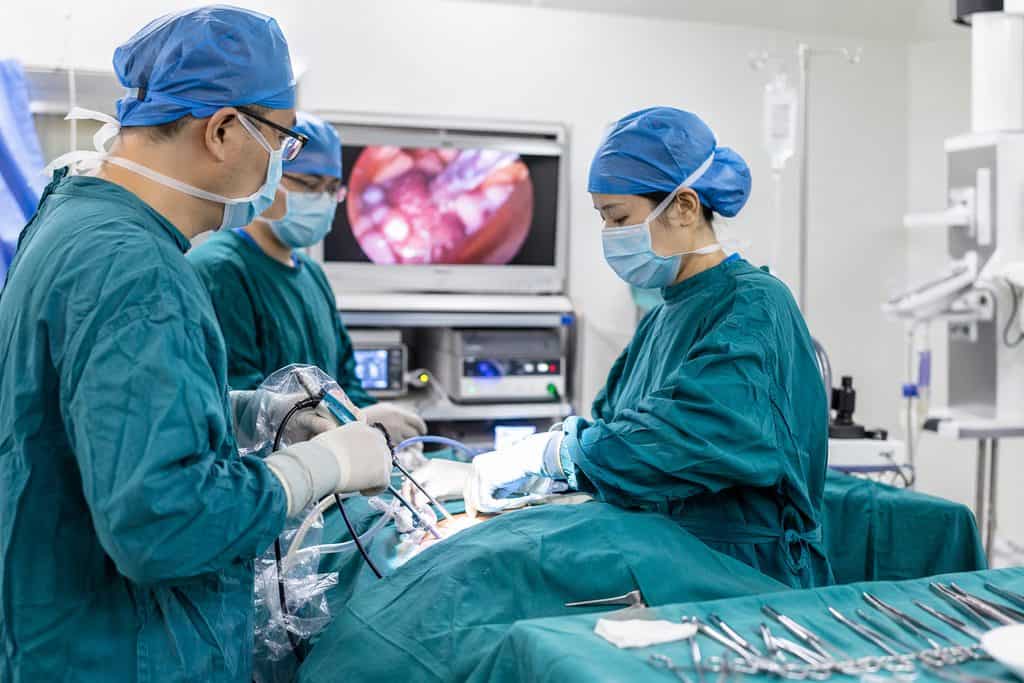
What if you could access some of the world’s most experienced thyroid surgeons, in hospitals performing thousands of these procedures every year, for a fraction of what you’d pay at home—and have a local team handle every logistical detail from the moment you land?
That’s the reality for international patients choosing Guangzhou. The city has become a serious destination for thyroid surgery. Not because of marketing. Because of volume. When a surgical team performs over 1,000 thyroidectomies annually, patterns emerge that simply don’t exist in lower-volume centers. They’ve seen the anatomical variations. They’ve managed the rare complications. That depth of experience translates directly to safety.
But getting here, finding the right surgeon, navigating a Chinese hospital, and recovering smoothly—that takes coordination. This article walks through exactly what that process looks like, what it costs, and how to evaluate your options without leaving anything to chance.
How This Actually Works, Step by Step
The path from “I’m considering thyroid surgery in China” to walking out of a Guangzhou hospital with the outcome you want follows a clear sequence. Here’s what happens, in order.
You start with your existing medical records. Ultrasound reports, biopsy results, thyroid function labs, any CT or MRI imaging. If they’re not in English, that’s fine—we handle certified medical translation. These documents get sent to the thyroid surgery department at one of Guangzhou’s top-ranked hospitals for a written second opinion.
That written opinion comes back within 5 to 7 business days. It tells you whether surgery is indicated, what approach the Chinese team recommends—total thyroidectomy, lobectomy, central neck dissection if malignancy is confirmed—and what your specific case requires. The cost for this written second opinion starts at $300. It’s not a prescription. It’s a detailed clinical assessment that gives you a clear picture before you book a single flight.
If the recommendation aligns with what you’re seeking, the next step is a video consultation. You speak directly with the surgical team. They review your imaging on screen. You describe your symptoms. They explain their approach. This consultation runs $100 to $300 for most international departments, or $500 to $800 if you’re connecting with a top-ranked specialist. Every dollar of that consultation fee gets credited back if you proceed to surgery coordination within 90 days.
Once you and the surgical team agree on the plan, coordination begins. Hospital registration, scheduling, pre-operative testing, admission dates—all arranged before you travel. You arrive knowing exactly when your surgery is, who’s performing it, and what the recovery timeline looks like.
What Determines the Thyroidectomy Cost in Guangzhou China
Let’s talk numbers. The thyroidectomy cost Guangzhou China varies considerably depending on which hospital tier you choose and the complexity of your case. But here’s what you can expect.
| Hospital Tier | Procedure | Estimated Cost (USD) | Includes |
|---|---|---|---|
| Public Grade A Tertiary (Standard Pathway) | Total Thyroidectomy | $3,000 – $5,500 | Surgery, standard ward stay (3-5 days), basic pathology |
| Public Grade A Tertiary (VIP/International Department) | Total Thyroidectomy | $6,000 – $10,000 | Surgery, private room, English-speaking nursing coordination, expedited pathology |
| Private International Hospital | Total Thyroidectomy | $10,000 – $18,000 | Surgery, private suite, full English-speaking staff, direct insurance billing |
| Lobectomy (any tier) | Single lobe removal | 20-30% less than total thyroidectomy | Shorter OR time, often shorter stay |
These numbers include the surgery itself, anesthesia, in-hospital medications, and the standard ward stay. They don’t include pre-operative testing (usually $300-$600), advanced molecular pathology if needed, or post-discharge medications. And they vary by hospital and case complexity—a thyroidectomy with central neck dissection for confirmed malignancy costs more than a straightforward benign lobectomy.
Compare this to the United States, where an uncomplicated total thyroidectomy typically runs $15,000 to $35,000 before insurance adjustments. Or the UK, where private-pay patients often face £6,000 to £10,000. The savings are real. But price alone shouldn’t drive this decision. Surgeon volume and hospital infrastructure matter more.
How Much Is Thyroid Surgery in China When You Add Coordination
The surgery itself is one line item. How much is thyroid surgery in China when you factor in the full picture? Here’s a realistic breakdown for an international patient choosing a VIP/international department pathway in Guangzhou.
| Service Component | Estimated Cost (USD) |
|---|---|
| Written second opinion (top specialist) | $300 – $500 |
| Video consultation (credited toward coordination if you proceed) | $500 – $800 |
| Hospital appointment coordination | from $300 |
| Bilingual medical companion (surgery day + 2 follow-up days) | from $900 (3 days × $300/day) |
| Airport transfer (round-trip) | $200 |
| Surgery + hospital stay (VIP department) | $6,000 – $10,000 |
| Total Estimated Range | $8,200 – $12,800 |
That $500-$800 video consultation? Credited back against the coordination fee. So your actual outlay trends toward the lower end. And compared to $20,000+ in many Western private systems, the math speaks clearly.
A note on the coordination fee itself. This covers case management—medical record translation, liaison with the hospital’s official international department, scheduling, and the bilingual companion who stays with you through appointments. It is not an access fee. We don’t sell priority or special treatment. We work through the hospital’s established international patient channels. If we can’t secure the appointment we’ve agreed to pursue, the coordination fee is refunded in full.
Best Hospital for Thyroid Surgery Guangzhou: How to Evaluate Your Options
Searching for the best hospital for thyroid surgery Guangzhou pulls up a lot of names. But “best” means different things depending on what you need.
Guangzhou is home to 10 hospitals ranked on the Fudan University Hospital Rankings Top 100 list—the most authoritative hospital evaluation system in China. That’s third nationally, behind only Beijing and Shanghai. Several of these institutions have thyroid and head-neck surgery departments that handle caseloads Western surgeons would find staggering.
Here’s what to look for when evaluating a thyroid surgery center in Guangzhou.
Annual thyroidectomy volume. A department performing fewer than 200 thyroidectomies per year has significantly higher complication rates than one performing over 500. The top centers in Guangzhou exceed 1,000 annually. Ask for this number. Reputable departments share it openly.
Recurrent laryngeal nerve monitoring capability. This is non-negotiable for modern thyroid surgery. Intraoperative neuromonitoring reduces the risk of vocal cord paralysis—one of the most feared complications. Every top Guangzhou thyroid center uses it routinely. Confirm this before committing.
Pathology turnaround. If you’re traveling internationally, you don’t want to wait two weeks for frozen section results while recovering in a hotel. Top centers provide intraoperative frozen section within 30 minutes, and final histopathology within 3-5 working days.
Endocrine surgery subspecialization. In China’s top hospitals, thyroid surgery is often performed by surgeons who do nothing else. Not general surgeons who occasionally operate on thyroids. Dedicated thyroid surgeons. This subspecialization correlates with lower complication rates across every published series.
Our team maintains current data on thyroid surgery departments across Guangzhou’s top-ranked hospitals. We can match your specific case—benign vs. malignant, primary vs. revision, standard anatomy vs. substernal extension—to the department best equipped to handle it. Start by exploring our Guangzhou hospital resources for an overview of what’s available.
A Realistic Timeline
Here’s what the calendar actually looks like. Not the optimistic version. The real one, with the waiting steps people forget.
| Stage | What Happens | Duration |
|---|---|---|
| Day 1-7 | You submit medical records. We arrange certified translation if needed and forward to the hospital department. | 1 week |
| Day 8-14 | Written second opinion is prepared by the thyroid surgery team. You receive the assessment. | 5-7 business days |
| Day 15-21 | Video consultation scheduled. You speak with the surgeon. Treatment plan confirmed. | 1 week (depends on surgeon availability) |
| Day 22-35 | Visa processing. S2 visa applications typically take 5-10 business days after submission. You’ll need the hospital’s invitation letter, which we coordinate. | 2-3 weeks |
| Day 36-42 | Travel to Guangzhou. Pre-operative testing at the hospital—blood work, ECG, chest X-ray, repeat ultrasound if needed. | 1 week |
| Day 43 | Surgery. Typical OR time: 1.5-3 hours for total thyroidectomy. | 1 day |
| Day 44-47 | In-hospital recovery. Drain removal. Voice check. Calcium monitoring. Most patients discharge on day 3 or 4 post-op. | 3-4 days |
| Day 48-55 | Local recovery in Guangzhou. Follow-up visit for wound check and pathology review. Suture removal. | 1 week |
| Day 56+ | Fit to fly. Return home with discharge summary, pathology report, and medication plan for your local endocrinologist. | — |
Total time in Guangzhou: roughly 2 to 3 weeks from landing to departure. Some patients extend to a full month if they want more recovery time before a long-haul flight. The S2 visa typically allows a 30-90 day stay, so there’s flexibility.
One variable that shifts this timeline: if your case requires additional imaging or a repeat biopsy before the surgical team commits to a plan. This happens in maybe 15% of cases, usually when the original ultrasound is older than 6 months or the biopsy report lacks detail the surgeon needs. Budget an extra week if this applies.
What Can Go Wrong—and What Happens Then
Any honest discussion of thyroid surgery abroad has to address this. Complications are rare in high-volume centers. But they happen. And you need to know what recourse looks like when you’re far from home.
Recurrent laryngeal nerve injury. The nerve that controls your vocal cord runs through the surgical field. In experienced hands, permanent injury rates are below 1-2%. Temporary hoarseness is more common, affecting perhaps 5-8% of patients, and usually resolves within weeks. Top Guangzhou centers use intraoperative neuromonitoring to map the nerve continuously during surgery. If a nerve signal drops during the procedure, the surgeon adjusts the approach in real time.
Hypoparathyroidism. The parathyroid glands sit behind the thyroid and regulate calcium. They can be bruised or inadvertently removed during surgery. Temporary hypocalcemia occurs in 10-20% of total thyroidectomies and is managed with calcium and vitamin D supplementation. Permanent hypoparathyroidism is rare—under 2% in high-volume centers. Guangzhou hospitals check calcium levels before discharge and provide a clear supplementation protocol.
Hematoma. A post-operative neck hematoma is a surgical emergency. It occurs in less than 1% of cases. The key safeguard: you’re in a hospital with 24-hour emergency surgical capability for the first 48-72 hours post-op. This is why early discharge—same-day or next-day—is not the norm in Chinese thyroid surgery pathways. They keep you for observation.
What if a complication does occur? You’re in a major academic medical center with full subspecialty backup. ENT for voice issues. Endocrinology for calcium management. These aren’t standalone surgical clinics. They’re comprehensive hospitals. That infrastructure matters if something goes off-script.
And from a practical standpoint: your bilingual companion stays with you through discharge. If you need an extended stay, we coordinate the hospital extension and any visa adjustments. You’re not navigating this alone in a foreign system.
Is Thyroid Removal Safe in China? What the Data Shows
Is thyroid removal safe in China is a question that deserves a data-driven answer, not reassurance.
China’s top-tier hospitals publish their surgical outcomes. The numbers align with international benchmarks. A 2019 study in the International Journal of Surgery analyzing over 12,000 thyroidectomies across Chinese tertiary hospitals reported a permanent recurrent laryngeal nerve injury rate of 0.9%, permanent hypoparathyroidism rate of 1.2%, and post-operative hematoma rate of 0.6%. These figures are comparable to or better than published series from major Western centers.
What drives these results? Volume. The hospital with the largest thyroid surgery program in Guangzhou performs over 2,000 thyroidectomies annually. A typical community hospital in the US or Europe might perform 30 to 50. The surgeon-level volume in these Chinese centers—often 200-400 cases per surgeon per year—has been repeatedly shown to correlate with lower complication rates.
There’s also the technology factor. Intraoperative neuromonitoring is standard, not optional, in these departments. Harmonic scalpels and advanced energy devices reduce operative time and bleeding. Frozen section pathology is available in the OR. These aren’t luxuries in China’s top hospitals. They’re baseline.
The safety question also depends on case selection. A straightforward lobectomy for a benign nodule in an otherwise healthy 40-year-old is one thing. A completion thyroidectomy with central neck dissection after a previous partial surgery is another. The second case demands a team that sees complex thyroids routinely. That’s where Guangzhou’s highest-volume centers earn their reputation.
For a broader look at how Chinese hospitals are evaluated, our top-ranked hospitals database breaks down the Fudan rankings by specialty and city.
Thyroid Surgery Packages for International Patients Guangzhou: What’s Included
The term “package” gets thrown around loosely. Thyroid surgery packages for international patients Guangzhou typically bundle the hospital’s international department services with logistical support. Here’s what a comprehensive package should include—and what to verify.
A legitimate package starts with pre-arrival evaluation. Not a sales call. A clinical review of your records by the surgical team that would operate on you. If the package doesn’t include a written second opinion or video consultation before you travel, that’s a red flag. You want the surgeon to have seen your imaging before you’re on their schedule.
It should cover hospital admission and in-patient care: the surgery itself, anesthesia, operating room charges, standard medications during your stay, nursing care, and the private room (in VIP/international departments). Post-discharge follow-up should include at least one wound check and pathology review before you leave Guangzhou.
On the coordination side, look for: medical record translation, hospital registration, scheduling, a bilingual companion for key appointments, and assistance with the hospital invitation letter required for your S2 visa application. Airport transfer is usually included or available as an add-on.
What’s typically not included: pre-operative testing (often billed separately by the hospital), post-discharge medications you’ll take home, extended hotel stays beyond the standard recovery period, and any treatment for unrelated conditions discovered during pre-op screening.
The package price should be transparent. You should know exactly which hospital, which department, and which tier of surgeon you’re being booked with. Vague promises like “top hospital” without naming the institution are another red flag.
Book Thyroidectomy in China with Coordinator: Why This Model Exists
You can’t just email a Chinese public hospital and book thyroidectomy in China with coordinator support from overseas. The system doesn’t work that way. Public hospitals in China don’t have international call centers. Their websites are in Chinese. Their registration systems require a Chinese ID or local phone
Frequently Asked Questions
Yes. The hospitals used for international patients are JCI-accredited and follow the same international safety standards as top hospitals in the US and Europe. Surgical teams perform high volumes of procedures — often more than their Western counterparts — which studies show leads to better outcomes.
Costs vary by procedure and hospital, but international patients typically save 40-80% compared to US prices — even when factoring in travel and accommodation. A consultation with our team will give you an exact, all-inclusive quote with no hidden fees.
Send us your existing medical reports to get started. We handle everything from hospital selection and appointment scheduling to visa assistance and post-operative recovery planning. Your medical records are reviewed by the specialist before you even book a flight.
For more medical information and treatment options in China, visit chinamedservices.com (China Medical Services).
