Esophageal Cancer Surgery Cost China: Full Esophagectomy Pricing With Companion
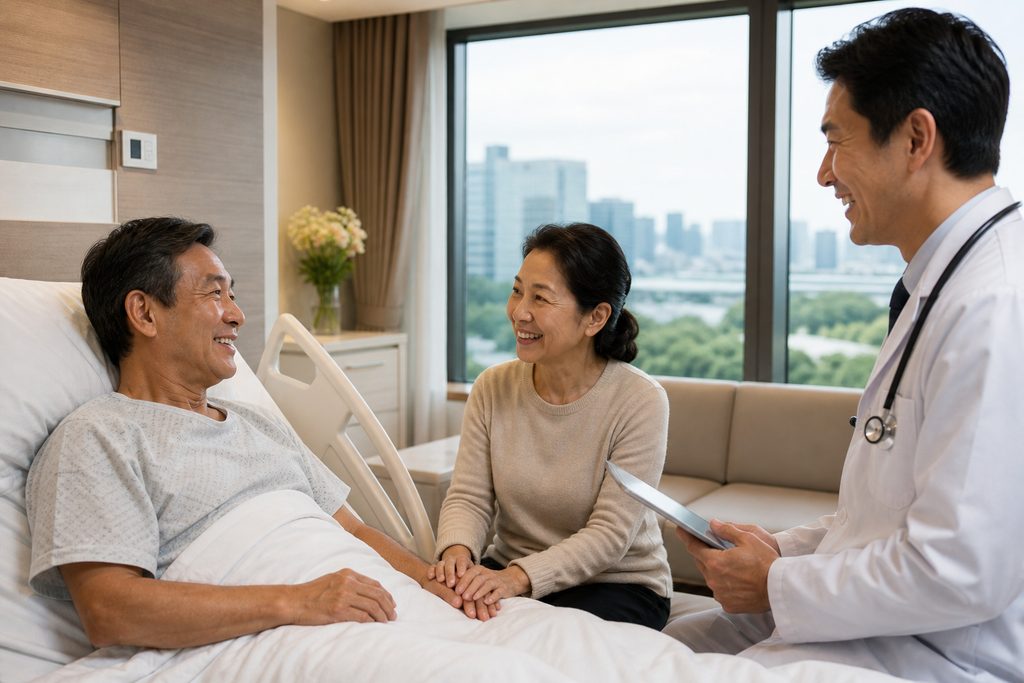
Have you been quoted a number that feels impossible to manage? A figure so high it makes you question whether the treatment is even within reach? You are not alone. The search for an affordable path through an esophageal cancer diagnosis brings many patients to our door. The esophageal cancer surgery cost China presents a radically different financial picture compared to Western hospitals, often landing between $18,000 and $35,000 for a full esophagectomy. That range typically includes the surgeon’s fee, anesthesia, operating room charges, and a hospital stay of ten to fourteen days. By contrast, the same procedure in the United States rarely starts below $120,000 and can climb past $200,000 before complications enter the picture. The gap is not marginal. It is the difference between draining a lifetime of savings and preserving a financial future.
But a number on a spreadsheet is not a plan. A plan requires knowing who will translate for you at 6 a.m. pre-op, who will explain the hospital’s billing system, and who will sit with your spouse while you are under for six hours. That is where a medical companion changes the equation. This article walks through the real costs, the hidden line items, the recovery timeline, and what a full-service package with a bilingual companion actually looks like on the ground in China.
How This Actually Works, Step by Step
The process is not instant. It is also not as opaque as it first appears. Here is the sequence most international patients follow when pursuing an esophagectomy in China.
Step 1: You send us your existing records. We need the full diagnostic picture — pathology reports confirming esophageal cancer, CT or PET-CT scans with dates, endoscopy findings, and any notes from your current oncologist. The records do not need to be in Chinese. Our team handles certified medical translation as part of the coordination.
Step 2: A written second opinion is produced. A thoracic surgery team at a top-tier Chinese hospital reviews your file. They assess resectability, stage, and whether an esophagectomy is appropriate right now or whether neoadjuvant chemotherapy should come first. This written opinion costs between $300 and $500. It is not a prescription. It is a detailed clinical assessment that tells you whether traveling to China makes medical sense. If the opinion says surgery is not indicated, you have saved yourself an international trip.
Step 3: You speak with the team directly. A video consultation with the surgical team runs $500 to $800. You ask the questions that matter to you: how many of these procedures has the surgeon performed, what is the anastomotic leak rate, what pain management protocol do they use. The conversation is interpreted in real time. No one in your family needs to speak Mandarin.
Step 4: A treatment plan and a price quote arrive. If the team confirms you are a surgical candidate, the hospital’s international department issues a detailed cost estimate. This is not a binding contract — it reflects the planned approach, the expected length of stay, and the ward category you select. You review it, ask questions, and decide.
Step 5: Visa, travel, and arrival coordination begin. You apply for an S2 visa with supporting documents from the hospital. We guide you through the paperwork. Flights, airport pickup, and accommodation near the hospital are arranged. A bilingual medical companion is assigned to your case before you land.
Step 6: Pre-operative evaluation in China. You will undergo repeat imaging and lab work at the hospital. The surgical team confirms the plan face-to-face. This is not a formality — it is a safety checkpoint. No surgeon will operate on a patient they have not examined themselves.
Step 7: Surgery and inpatient recovery. The esophagectomy itself takes four to six hours. You wake up in a thoracic ICU. Your companion is in the waiting area with your family, translating updates from the nursing staff every hour. Once stable, you transfer to a regular ward for ten to fourteen days of monitored recovery.
Step 8: Discharge and local follow-up. Before you leave China, you have a final surgical review. Your home oncologist receives a complete discharge summary in English. You fly home with a clear post-operative plan.
None of this is theoretical. Our team has walked hundreds of families through this exact sequence. The key is starting with the records review — no one should board a plane without knowing whether the destination hospital can actually help.
Breaking Down the Esophagectomy Price Comparison: China vs. the West
When patients ask us about esophagectomy price comparison China versus other destinations, they are usually trying to solve a single equation: can I get the same quality of care for a fraction of the cost? The short answer is yes, with conditions. The longer answer requires looking at what each line item actually buys you.
| Cost Component | China (Top Public Hospital, International Ward) | United States (Academic Medical Center) | United Kingdom (Private Sector) |
|---|---|---|---|
| Surgeon’s fee | $3,000 – $6,000 | $25,000 – $50,000 | $15,000 – $30,000 |
| Anesthesia | $1,500 – $2,500 | $8,000 – $15,000 | $5,000 – $10,000 |
| Operating room & equipment | $4,000 – $7,000 | $30,000 – $60,000 | $20,000 – $40,000 |
| Hospital stay (10-14 days, private room) | $6,000 – $12,000 | $40,000 – $80,000 | $25,000 – $50,000 |
| Pathology & lab work | $1,000 – $2,000 | $5,000 – $10,000 | $3,000 – $6,000 |
| Medications (inpatient) | $1,500 – $3,000 | $8,000 – $15,000 | $5,000 – $10,000 |
| Post-discharge consumables & follow-up | $1,000 – $2,500 | $4,000 – $8,000 | $3,000 – $5,000 |
| Estimated Total (hospital only) | $18,000 – $35,000 | $120,000 – $238,000 | $76,000 – $151,000 |
These are not aspirational numbers. They reflect actual invoices we have reviewed from hospitals ranked in the Fudan University Hospital Rankings — institutions that perform hundreds of esophagectomies annually. The Chinese figures assume you are admitted through the hospital’s international department or VIP wing, where English-speaking staff and private rooms are standard. The general public ward costs less, but it is not a realistic option for a non-Mandarin-speaking patient.
What the table does not show is the companion cost. A bilingual medical companion runs from $300 per day. For a two-week surgical trip, that adds roughly $4,200 to $6,000. Some families bring their own interpreter. Most do not have that option. The companion is not a luxury. They are the person who catches a medication error before it reaches your IV, who explains why the surgeon is running two hours late, and who knows which floor of the hospital cafeteria serves food your stomach can tolerate post-op.
A Realistic Timeline
Timelines matter. Patients often underestimate the waiting periods that sit between decision and surgery. Here is what a realistic schedule looks like when pursuing esophageal cancer surgery cost China through a coordinated pathway.
| Phase | What Happens | Typical Duration |
|---|---|---|
| Week 1–2 | You submit medical records. Our team reviews for completeness and arranges certified translation. | 5–14 days |
| Week 3–4 | Hospital thoracic surgery department conducts written second opinion review. Report is translated back to English. | 7–14 days |
| Week 5 | Video consultation with the surgical team is scheduled and completed. Treatment recommendation is confirmed. | 3–7 days to schedule; 1 hour for the call |
| Week 6–7 | Hospital international department issues cost estimate. You apply for S2 visa with hospital invitation letter. Visa processing time varies by consulate. | 10–20 days |
| Week 8 | Travel to China. Airport pickup. Hotel or serviced apartment check-in near hospital. | 1–2 days |
| Week 8–9 | Pre-operative evaluation: repeat CT, blood work, cardiac clearance, anesthesia consult. Surgical plan finalized. | 3–5 days |
| Week 9 | Esophagectomy. Thoracic ICU stay (typically 1–3 days). | 1 day surgery; 1–3 days ICU |
| Week 10–11 | Ward recovery. Chest tubes removed. Swallowing assessment. Transition from liquid to soft diet. Physiotherapy and mobilization. | 10–14 days |
| Week 11–12 | Discharge. Final surgical review. Receive English discharge summary. Fly home. | 2–3 days post-discharge before flying |
| Month 2–3 post-op | Recovery at home. Follow-up with local oncologist. Gradual return to normal diet and activity. | Ongoing |
Twelve weeks from first contact to discharge. That is fast for a major cancer operation involving international travel. It is also the optimistic scenario — the one where your records are complete, the visa office is efficient, and no unexpected finding on the pre-op scan forces a change in plan. Add a buffer of two to four weeks for the real world.
The recovery timeline after discharge deserves its own attention. Most patients want to know what is recovery time after esophagectomy in China before they fly home. The surgical team will want you to stay in the city for at least two to three days after discharge for a final wound check. The flight itself — sitting upright for ten-plus hours — is uncomfortable but medically feasible with compression stockings and prescribed pain management. Once home, expect six to eight weeks before you feel anything close to normal. Eating will be different. Smaller, more frequent meals become a permanent adjustment. Reflux can be an issue. These are not complications. They are the expected aftermath of removing part of the esophagus and pulling the stomach into the chest.
What Can Go Wrong — and What Happens Then
No honest discussion of esophageal surgery skips the complications. An esophagectomy is a major operation with a serious risk profile. Anastomotic leak — where the connection between the remaining esophagus and the stomach fails to heal properly — occurs in roughly 5 to 15 percent of cases, depending on the center and the patient’s nutritional status. Pulmonary complications, including pneumonia and respiratory failure, are even more common because the surgery necessarily disrupts the diaphragm and chest cavity.
If a leak occurs, the management depends on severity. A small, contained leak may be treated with antibiotics, nothing by mouth, and nutritional support via a feeding tube placed during surgery. The hospital stay extends by days or weeks. A larger leak may require reoperation. If a pulmonary complication develops, the thoracic ICU team manages it with aggressive chest physiotherapy, bronchodilators, and possibly reintubation.
These are not uniquely Chinese risks. They are esophagectomy risks, period. What matters is how the center handles them. The hospitals we work with maintain dedicated thoracic ICUs staffed by intensivists who see post-esophagectomy patients every week, not once a month. Volume matters. A surgical team performing 200 esophagectomies a year has seen and managed every complication in the book. A team doing 20 a year may be reading the protocol as they go.
Another failure mode is arriving in China only to learn that surgery is not indicated. Maybe the pre-op scan reveals disease progression that was not visible on your earlier imaging. Maybe the tumor involves structures that make resection too risky. This is devastating news, and it is also why the written second opinion and video consultation exist. They are filters. They catch the cases that should not travel. If you do arrive and the plan changes, our team helps you understand the new recommendation — often chemoradiation — and coordinates your return home. The companion does not abandon you because the surgery was canceled.
Financial surprises are a final category of failure. A hospital’s initial quote covers the planned procedure and an uncomplicated stay. It does not cover a three-week ICU admission for a severe leak. Ask the international department directly: what is the daily ICU rate, what is the cost of a reoperation, and what happens if I cannot pay immediately? Some hospitals require a deposit that exceeds the quote by 30 to 50 percent to cover contingencies. The unused portion is refunded at discharge. Know this number before you wire funds.
Evaluating Esophagectomy Packages With Companion Stay in China
Some patients ask us about esophagectomy packages with companion stay China — all-inclusive bundles that combine surgery, accommodation, and support services into a single price. These exist. They are not standardized, and the term “package” can mean very different things depending on who is offering it.
A legitimate package should include, at minimum: the hospital’s surgical and inpatient fees, a private room in the international ward, all inpatient medications and consumables, one post-discharge surgical follow-up, and a bilingual companion for the duration of your hospital stay plus the pre-op evaluation days. Airport transfers should be included. Accommodation for a family member — either in the hospital room or in a nearby serviced apartment — should be part of the arrangement.
What a package should not include is a guarantee of outcome. If a provider promises a specific discharge date or a complication-free recovery, walk away. Surgery does not work that way.
When comparing packages, ask four questions. First, which hospital and which surgeon? A package is only as good as the team delivering the care. Second, what is excluded? Some packages cover the surgery but not the pre-op imaging, which can add $2,000 to $3,000. Third, what happens if the stay extends beyond the package’s covered days? You need a daily rate in writing. Fourth, is the companion a full-time, dedicated person or a shared resource? A companion who is juggling three patients cannot give you the attention you need on post-op day two when you are in pain and the nurse does not understand your request.
Packages typically range from $25,000 to $45,000 all-in, depending on the hospital tier and the complexity of the case. That is the number to have in your head when you book esophageal cancer treatment China medical tourism arrangements. It is not a small amount of money. It is also, for many families, the only number that makes treatment possible without bankruptcy.
Practical Considerations: Records, Visa, Payment, and Follow-Up
Before you commit to anything, there are ground-level details that determine whether the trip succeeds or stalls.
Medical records. You need more than a one-line diagnosis. The hospital will want the original pathology slides or a digital pathology report, not just a summary. CT and PET-CT images must be provided in DICOM format on a CD or via secure upload — not as printed films. If your records are incomplete, the second opinion process stalls before it starts. Our team tells you exactly what is missing and helps you request it from your home provider.
Visa. The S2 visa is the correct category for short-term medical treatment in China. It covers stays of up to 180 days. The hospital’s international department provides an invitation letter and a treatment confirmation that you submit with your application. Processing times vary widely by country — some consulates issue within a week, others take three weeks. Apply as soon as you have the hospital documents. Do not book non-refundable flights until the visa is in your passport. Your accompanying family member applies for their own S2 visa. The M visa is for commercial visitors and has no relevance to medical travel.
Payment. Chinese public hospitals require upfront payment. You will be asked to wire a deposit before admission, typically via international bank transfer to the hospital’s designated account. The deposit covers the estimated total plus a buffer. Credit cards are
Frequently Asked Questions
Yes. The hospitals used for international patients are JCI-accredited and follow the same international safety standards as top hospitals in the US and Europe. Surgical teams perform high volumes of procedures — often more than their Western counterparts — which studies show leads to better outcomes.
Costs vary by procedure and hospital, but international patients typically save 40-80% compared to US prices — even when factoring in travel and accommodation. A consultation with our team will give you an exact, all-inclusive quote with no hidden fees.
Send us your existing medical reports to get started. We handle everything from hospital selection and appointment scheduling to visa assistance and post-operative recovery planning. Your medical records are reviewed by the specialist before you even book a flight.
For more medical information and treatment options in China, visit chinamedservices.com (China Medical Services).
