Aortic Aneurysm Surgery Cost China with Companion: EVAR, TEVAR & Open Repair Pricing
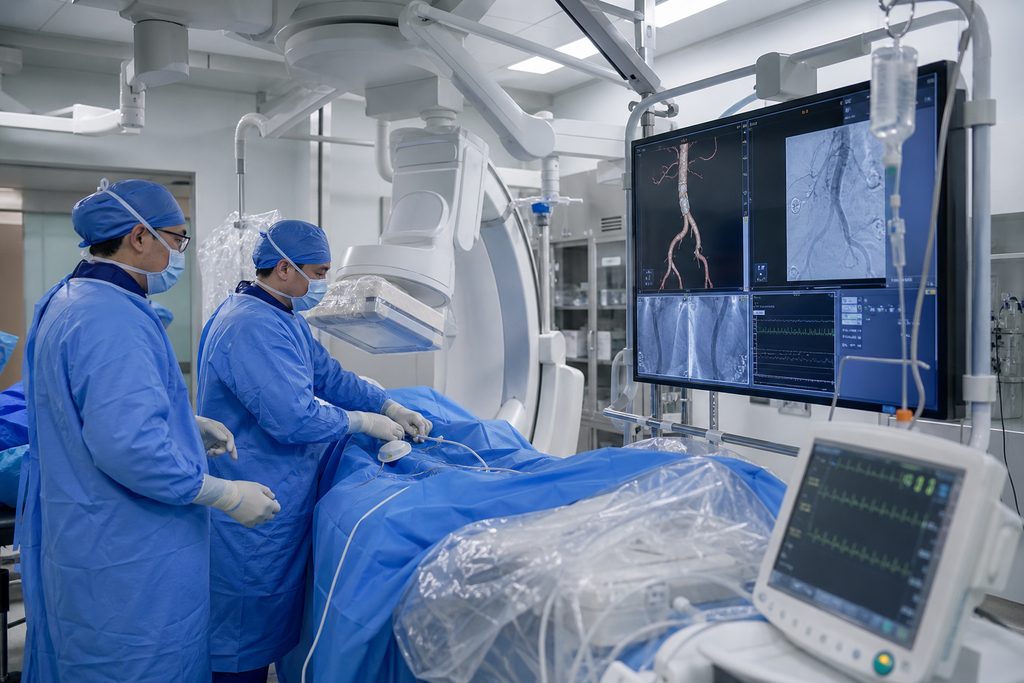
An aortic aneurysm is a silent threat. The wall of your body’s main artery weakens and balloons outward. Left untreated, it can rupture. That’s a life-threatening emergency. The fix is a major surgery — either opening the chest or abdomen, or navigating stents through arteries. The cost in the U.S. or Europe can exceed $150,000. That figure pushes many to look abroad. The aortic aneurysm surgery cost with companion China typically ranges from $35,000 to $65,000, depending on the technique. That includes the procedure, a hospital stay, and a companion to navigate the system. Not a trivial sum. But often one-fifth to one-third of Western prices.
Our team at China Medical Services doesn’t perform these surgeries. We connect you with the hospitals that do. We’ve seen the numbers, the discharge summaries, the relief on a companion’s face when their partner gets through a 6-hour procedure safely. This article walks through the real costs, the three main repair methods, what a companion actually does, and what the weeks before and after surgery look like in a Chinese hospital.
How This Actually Works, Step by Step
You’re not booking a hotel room. You’re arranging a complex vascular procedure in a foreign country. The sequence matters.
First, we need your existing scans and reports. A contrast-enhanced CT angiogram is essential. The surgical team needs to see the aneurysm’s exact size, shape, and location. Without this, no surgeon will give a plan or a price. You send us these files digitally. Our team translates the key findings into Chinese and submits them to the vascular surgery department at one or more of our partner hospitals. These are drawn from the top-ranked hospitals in our network, institutions that perform thousands of these procedures annually.
The hospital reviews your case. This takes 3 to 7 business days. They come back with a treatment recommendation — EVAR, TEVAR, or open repair — and a preliminary cost estimate. They also confirm whether your case is suitable for treatment in China. Some complex re-do surgeries or rare connective tissue disorders may require further discussion.
If you accept the plan, we move to scheduling. A deposit secures your slot. We then coordinate the visa invitation letter from the hospital. You apply for an S2 visa at your local Chinese embassy or consulate. Processing takes 1 to 3 weeks. Meanwhile, we arrange your companion, airport transfer, and accommodation near the hospital.
You land. Your bilingual companion meets you. They handle check-in, translate every conversation with nurses and doctors, and stay with you through pre-op testing. Surgery happens. Recovery begins. Your companion remains your voice when you’re too tired to speak. Discharge planning includes a translated summary for your doctor back home.
EVAR, TEVAR, and Open Repair: Three Paths, Three Price Tags
The EVAR TEVAR open repair price comparison China reveals stark differences. Your aneurysm’s location dictates the method. The method dictates the cost.
EVAR — Endovascular Aneurysm Repair — treats abdominal aortic aneurysms. The surgeon makes two small incisions in the groin. Catheters deliver a fabric-covered metal stent graft to the aneurysm site. The graft relines the artery. Blood flows through the graft, not into the bulging sac. It’s minimally invasive. Hospital stay is typically 3 to 5 days. Recovery at home takes 2 to 4 weeks. The stent graft itself is an expensive medical device. In China, EVAR costs between $35,000 and $50,000.
TEVAR — Thoracic Endovascular Aneurysm Repair — uses the same principle but in the chest. The aneurysm sits in the thoracic aorta, the portion running through your chest cavity. Access is often through a small incision in the groin, sometimes in the neck or arm. The stent graft is longer and more specialized. Hospital stay is 5 to 7 days. TEVAR in China runs from $40,000 to $55,000.
Open repair is the traditional approach. For an abdominal aneurysm, the surgeon opens the abdomen, clamps the aorta, cuts out the weakened section, and sews in a synthetic tube graft. For a thoracic aneurysm, the incision runs along the side of the chest, sometimes requiring a heart-lung machine. It’s a 4 to 8-hour operation. Hospital stay stretches to 7 to 14 days. Recovery takes 2 to 3 months. It’s more invasive, more painful, and carries higher immediate surgical risk. But the repair is durable. It lasts decades. Open repair in China costs $30,000 to $45,000. The device is cheaper than a stent graft. The longer hospital stay and ICU time add to the total.
| Procedure | Approach | Hospital Stay | Cost Range (USD) |
|---|---|---|---|
| EVAR | Endovascular (groin) | 3–5 days | $35,000 – $50,000 |
| TEVAR | Endovascular (groin/neck) | 5–7 days | $40,000 – $55,000 |
| Open Repair (AAA) | Open abdominal | 7–10 days | $30,000 – $40,000 |
| Open Repair (TAA) | Open thoracic | 10–14 days | $35,000 – $45,000 |
These figures include the procedure, the device, anesthesia, ICU, ward bed, nursing care, and standard medications. They do not include your companion’s fee, airfare, accommodation, or post-discharge rehabilitation. Prices vary by hospital tier and case complexity. A straightforward infrarenal AAA in a 60-year-old non-smoker costs less than a thoracoabdominal aneurysm in a 75-year-old with COPD.
A Realistic Timeline
Medical tourism brochures paint optimistic pictures. Here’s the actual sequence, with the waiting steps nobody mentions.
| Stage | What Happens | Duration |
|---|---|---|
| Week 1–2 | You gather and send CT scans, cardiac workup, medical history. We translate and submit. | 1–2 weeks |
| Week 3–4 | Hospital review. Surgical team evaluates suitability. Preliminary quote issued. | 1–2 weeks |
| Week 5–6 | You decide. Deposit paid. Hospital issues visa invitation letter. You apply for S2 visa. | 1–3 weeks |
| Week 7–8 | Visa approval. Flights booked. Companion and accommodation confirmed. | 1–2 weeks |
| Day 1–3 (in China) | Arrival. Companion meets you. Hospital registration. Pre-op tests: blood work, ECG, repeat CT, anesthesia consult. | 2–3 days |
| Day 4 | Surgery. | 4–8 hours |
| Day 5–7 | ICU monitoring. Pain management. First mobilization with physio. | 1–3 days |
| Week 2–3 | Ward recovery. Drain removal. Wound checks. Discharge planning. | 5–14 days |
| Week 4 | Discharge. Stay in local hotel for 3–5 days before flying. Final surgical check. | 3–5 days |
| Month 2–3 | Recovery at home. Follow-up CT at 1 month and 6 months. Email results to China team for review. | Ongoing |
Total time in China: 3 to 5 weeks. That’s the reality. You cannot fly home 3 days after open repair. Cabin pressure, immobility, and the risk of deep vein thrombosis make early long-haul flights dangerous. Surgeons typically clear patients for flight 7 to 14 days after EVAR/TEVAR, and 14 to 21 days after open repair.
What Can Go Wrong — and What Happens Then
Surgery in any country carries risk. Traveling for surgery adds layers. Let’s address the hard scenarios directly.
Endoleak after EVAR or TEVAR. This is the most common complication. Blood finds a way around the stent graft and continues to pressurize the aneurysm sac. Some endoleaks resolve on their own. Others require a secondary procedure — placing additional stent components or embolizing feeder vessels. The hospital team monitors for this with a CT scan before discharge. If an endoleak is found, the surgeon may recommend immediate revision. This adds cost and extends your stay. Some patients choose to return home and have the revision done locally. We provide all imaging and operative notes to make that possible.
Spinal cord ischemia after TEVAR. The stent graft can cover arteries that supply the spinal cord. This can cause weakness or paralysis in the legs. The risk is around 2% to 5%. Chinese thoracic aortic centers use cerebrospinal fluid drainage protocols to reduce this risk. If it happens, rehabilitation begins immediately. Recovery is variable.
Graft infection after open repair. Rare but devastating. The synthetic tube graft becomes infected. Treatment means removing the infected graft and replacing it — an enormously complex reoperation. This risk exists in every hospital worldwide. Chinese top-tier hospitals have infection rates comparable to international benchmarks, typically below 1% for elective aortic surgery.
What if you arrive and the surgeon decides against proceeding? This happens. A repeat CT shows the aneurysm is not yet large enough to justify the surgical risk. Or unexpected coronary artery disease is found on pre-op testing. The surgeon recommends medical management and surveillance instead. You go home. The deposit for the surgery is refunded per hospital policy. Our coordination fee is non-refundable, but as with all our services, if you return within 90 days for the procedure once cleared, that fee is credited toward the on-the-ground coordination.
What if you need to extend your stay due to a complication? Your companion remains with you. We extend the hotel booking. The hospital manages the medical issue. Additional costs accrue — extra hospital days, extra companion days, changed flights. We’ve seen this happen. It’s stressful but manageable. We keep you and your family informed in plain English.
Is Open Repair for AAA Safe in Chinese Hospitals?
The question “is open repair for AAA safe in Chinese hospitals” deserves a direct answer. The data says yes — at the right hospitals.
China’s top vascular centers perform open aortic repairs weekly, not monthly. Fuwai Hospital in Beijing and Zhongshan Hospital in Shanghai each complete over 300 aortic surgeries annually. Volume matters. Studies consistently show that hospitals performing more than 50 aortic procedures per year have lower mortality rates than low-volume centers. The Chinese vascular surgery community publishes its outcomes in peer-reviewed journals. Elective open AAA repair mortality at major centers runs between 1% and 3%, in line with Society for Vascular Surgery benchmarks.
The safety question hinges on hospital selection. A county-level hospital in a small city is not the same as a Fudan-ranked university hospital. Our network includes only hospitals in the top tier — those with dedicated vascular surgery departments, hybrid operating rooms with intraoperative imaging, and 24-hour ICU coverage. These are the institutions that appear on the national specialty rankings.
But safety isn’t just about the operating room. It’s about the system around it. Blood bank capacity. Infection control protocols. Nurse-to-patient ratios in the ICU. Pain management philosophy. Chinese public hospitals can feel chaotic to Western patients. Beds in hallways. Families crowding the wards. This is where a companion changes the experience. They advocate for you. They ensure your pain is addressed. They translate the surgeon’s morning rounds explanation from rapid Mandarin into clear English. The surgery may be safe. The experience without language support can feel anything but.
How Much Does Aortic Aneurysm Surgery Cost in Shanghai with Family Stay?
Shanghai is China’s most expensive city. It’s also home to some of its best hospitals. The question “how much does aortic aneurysm surgery cost in Shanghai with family stay” requires adding up more than just the hospital bill.
The surgery itself at a top Shanghai hospital like Zhongshan or Ruijin falls within the ranges above: $35,000 to $55,000. But Shanghai’s cost of living adds up. A serviced apartment near the hospital, suitable for a companion to stay for 3 to 5 weeks, runs $80 to $150 per night. That’s $2,400 to $5,250 for a month. A budget hotel is cheaper — $40 to $70 per night — but less comfortable for a long recovery period. Food, transport, and incidentals add another $30 to $50 per day per person.
| Expense Category | Shanghai (4 weeks) | Beijing (4 weeks) | Guangzhou (4 weeks) |
|---|---|---|---|
| Surgery (EVAR, midpoint) | $42,000 | $42,000 | $40,000 |
| Companion service (20 days) | $6,000 | $6,000 | $6,000 |
| Serviced apartment | $3,500 | $2,800 | $2,200 |
| Living expenses (2 people) | $2,800 | $2,400 | $2,000 |
| Airport transfers (round trip) | $200 | $200 | $200 |
| Visa fees (2 people) | $300 | $300 | $300 |
| Total Estimated Package | $54,800 | $53,700 | $50,700 |
These are estimates. Airfare is excluded — it varies too widely by origin. The companion service fee reflects a bilingual medical companion for the critical days: pre-op testing, surgery day, and the first week of recovery. Some families choose companion support for the full stay. Others taper off once the patient is mobile and can use translation apps for simple needs.
For those specifically looking to book aortic aneurysm surgery package China with companion, the concept of a “package” needs clarification. No hospital sells an all-inclusive aortic surgery package like a vacation deal. What exists is a coordinated arrangement: hospital quote + companion service + accommodation booking + logistics. We assemble these pieces. The total is transparent. You see each line item. The coordination fee starts from $300 for basic appointment support, scaling up to a full VIP coordination arrangement of $5,000 to $8,000 for complex cases requiring extensive pre-arrival planning and in-country concierge support.
Practical Considerations: Records, Visa, Payment, and Follow-Up
Records. You need a recent contrast-enhanced CT angiogram — within 3 months of your planned surgery date. Older scans won’t be accepted. You also need a cardiac clearance: echocardiogram, stress test if indicated, and a letter from your cardiologist stating you’re fit for major vascular surgery. Blood work including renal function is critical, as the contrast dye used during EVAR/TEVAR can stress the kidneys. Send everything in DICOM format if possible, not just JPEG screenshots.
Visa. The S2 visa is the correct category for medical treatment. The hospital provides an official invitation letter with their stamp. You apply with this letter, your passport, a completed application form, and a photo. Processing times vary by country. Plan for 2 to 4 weeks. Your companion applies the same way. Do not enter China on a tourist L visa and then try to have surgery — this violates visa conditions and can cause problems with hospital registration and insurance.
Payment. Chinese public hospitals require upfront payment. You deposit the estimated total before admission. The hospital draws down from this deposit daily. If the balance runs low, you top it up. At discharge, any remaining funds are refunded. Payment is typically by international wire transfer, UnionPay card, or major credit cards at larger hospitals. Cash is possible but impractical for amounts this large. Private international hospitals in our network may offer direct insurance billing, but this is rare for major vascular procedures.
Follow-up. You leave China with a discharge summary in
Frequently Asked Questions
Yes. The hospitals used for international patients are JCI-accredited and follow the same international safety standards as top hospitals in the US and Europe. Surgical teams perform high volumes of procedures — often more than their Western counterparts — which studies show leads to better outcomes.
Costs vary by procedure and hospital, but international patients typically save 40-80% compared to US prices — even when factoring in travel and accommodation. A consultation with our team will give you an exact, all-inclusive quote with no hidden fees.
Send us your existing medical reports to get started. We handle everything from hospital selection and appointment scheduling to visa assistance and post-operative recovery planning. Your medical records are reviewed by the specialist before you even book a flight.
For more medical information and treatment options in China, visit chinamedservices.com (China Medical Services).
