Why Saudi Patients Choose China for IVF and Fertility: Full Reproductive Service Guide
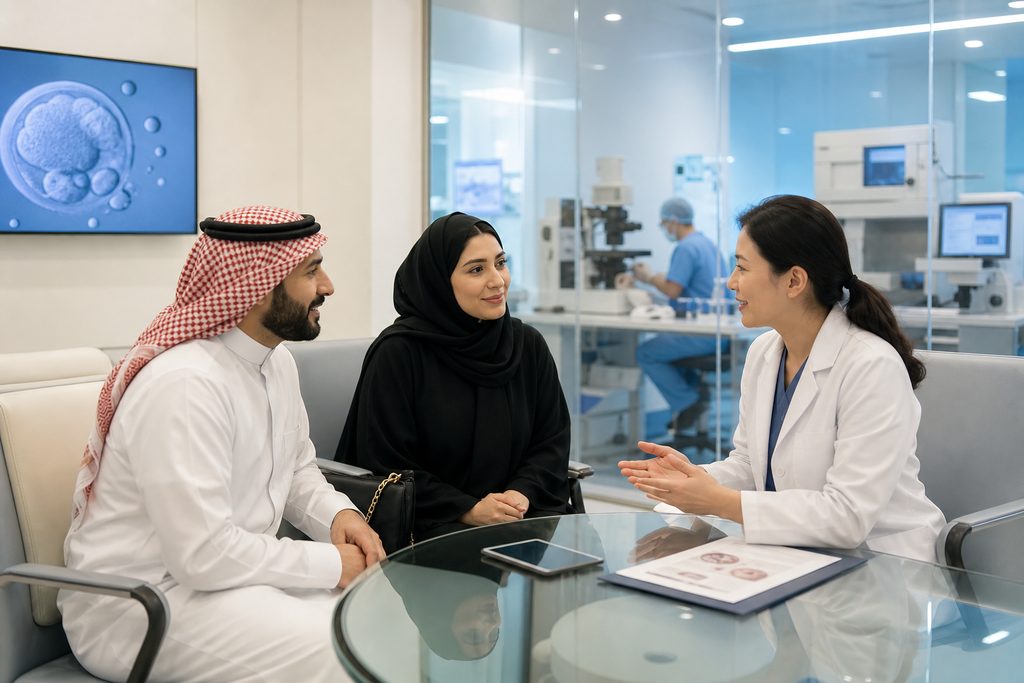
What if the biggest barrier between you and starting a family wasn’t your diagnosis, but the price tag and the years-long waiting list in your home country?
That’s the reality for a growing number of couples across the Gulf. In Saudi Arabia, cultural expectations around family are profound, yet access to advanced reproductive technology is often throttled by strict regulations and limited domestic capacity. The result is a quiet migration. Patients look east. Not to Europe or North America with their astronomical fees, but to China. The ivf cost China for Saudi patients sits at a fraction of Western prices, and the clinical infrastructure has scaled to a level that surprises most first-time visitors.
Key Takeaways
- A single IVF cycle in China ranges from $5,000 to $12,000, roughly 60-80% less than comparable care in the United States, where cycles often exceed $25,000.
- China’s top reproductive centers, like those in Shanghai, operate with advanced genetic screening labs and handle case volumes that dwarf most Western clinics, building deep clinical experience with complex infertility.
- Fertility treatment for unmarried couples or those requiring surrogacy is strictly prohibited under Chinese law, making legal eligibility a critical first filter before planning any travel.
- Success in a cross-border cycle depends less on the lab technology and more on meticulous pre-travel documentation, a clear understanding of visa logistics, and a realistic timeline that accounts for multiple weeks in-country.
The Problem: When Domestic Options Hit a Wall
Saudi Arabia has invested heavily in healthcare. No one disputes that. But the demand for in-vitro fertilization has outpaced the supply of specialized labs that can handle high-complexity cases. A couple dealing with severe male factor infertility or repeated implantation failure in Riyadh might face a six-to-twelve-month wait just for a consultation with the right specialist. And that wait carries a biological cost. Ovarian reserve doesn’t pause. Sperm DNA fragmentation doesn’t improve with time on a list.
Then there’s the financial math. A private IVF cycle in the Kingdom can run between 25,000 and 40,000 Saudi Riyals. Add on preimplantation genetic testing, and the figure climbs fast. For a couple that needs two or three cycles, the cumulative burden can exceed 150,000 SAR. That’s when the search history changes. Patients start typing “fertility treatment abroad affordable” or “full IVF package for foreigners Asia.” And increasingly, they land on Chinese medical institutions that have spent the last decade quietly building some of the busiest reproductive medicine departments on the planet.
Why China’s Reproductive Medicine Sector Delivers Results
The skepticism is predictable. China is known for manufacturing and technology exports, not for fertility tourism. But the data tells a different story. The Chinese Society of Reproductive Medicine reports that the country now performs over 800,000 IVF cycles annually. That volume creates a feedback loop: high case numbers sharpen clinical protocols, which improve outcomes, which attract more patients.
Clinical Volume Drives Diagnostic Precision
A senior embryologist at a major Shanghai fertility center might handle more cases in a single month than a counterpart in a mid-sized European clinic sees in a year. That matters most in the gray areas. When sperm morphology is borderline. When the endometrial lining pattern is atypical. When the embryo grades don’t neatly predict implantation potential. These are judgment calls. And judgment is built on repetition. We’ve seen Chinese labs catch subtle issues—like high sperm DNA fragmentation that standard semen analysis misses—because their caseload has exposed them to the full spectrum of what can go wrong.
The Technology Gap Has Closed
Ten years ago, the knock on Chinese IVF labs was that they lagged behind in genetic testing. That’s no longer true. The major centers now run their own next-generation sequencing platforms. Time-lapse embryo monitoring is standard in the top-tier hospitals. Vitrification for egg freezing uses the same protocols you’d find at a top clinic in Barcelona or Tokyo. The equipment is the same. The disposables are the same. What’s different is the operating cost structure, which directly affects the ivf cost China for Saudi patients.
Cost Advantage Without Clinical Compromise
Let’s address the elephant in the room. Lower cost often signals lower quality. In Chinese healthcare, the cost difference isn’t driven by cutting corners. It’s driven by labor economics. A highly trained embryologist in Shanghai earns a fraction of what their counterpart in California earns. The hospital’s real estate costs are lower. The pharmaceutical supply chain is shorter. And the sheer volume of cycles means fixed costs are spread thinner. You’re not paying for a marble lobby or a marketing department. You’re paying for the lab, the staff, and the medications. That’s it.
| IVF Cost Component | China (USD) | USA (USD) | Saudi Private (USD) |
|---|---|---|---|
| Standard IVF Cycle (no ICSI) | $5,000 – $7,000 | $15,000 – $25,000 | $6,500 – $10,500 |
| IVF with ICSI | $6,500 – $9,000 | $18,000 – $28,000 | $8,000 – $12,000 |
| PGT-A Genetic Screening (per cycle) | $2,000 – $3,500 | $5,000 – $8,000 | $4,000 – $6,500 |
| Egg Freezing Cycle | $3,500 – $5,500 | $8,000 – $15,000 | $5,000 – $8,000 |
| FET (Frozen Embryo Transfer) | $1,500 – $3,000 | $4,000 – $6,000 | $2,500 – $4,000 |
Figures are approximate ranges for top-tier public hospital international departments and private international clinics. Actual pricing varies by hospital, protocol, and case complexity.
How Does IVF Work in China for International Patients: A Step-by-Step Timeline
The process for a Saudi couple is more structured than many expect. China’s medical system doesn’t operate on a “walk in and start treatment” model. There’s a deliberate sequence, and understanding it before you book a flight will save you weeks of frustration.
Step 1: Remote Pre-Screening (2-4 weeks before travel). You send your existing medical records. Semen analyses. Hormone panels. Hysterosalpingogram reports. Any previous IVF cycle summaries. The Chinese fertility team reviews them remotely and issues a preliminary assessment. This is not a treatment plan. It’s a go/no-go signal. They’ll tell you whether your case is suitable for treatment under Chinese law and what additional tests you’ll need on arrival. A written second opinion at this stage typically falls in the $300–$500 range. A video consultation with the specialist runs $500–$800.
Step 2: Legal Verification and Marriage Documentation. This is the hard stop for many international patients. Chinese law requires a valid marriage certificate for any IVF treatment. The certificate must be authenticated. For Saudi couples, this means your marriage document needs to be translated into Chinese by a certified translator and notarized. Sperm donation is permitted in cases of severe male factor infertility, but egg donation and surrogacy are not legal pathways in mainland China. We’ve seen couples arrive without understanding this and leave heartbroken. Don’t be that couple. Confirm your legal eligibility before you spend a single riyal on flights.
Step 3: In-Country Consultation and Baseline Testing (Days 1-3). You arrive. You meet the specialist face-to-face. They repeat key bloodwork and ultrasound to confirm the baseline they saw in your remote records. This isn’t redundant—it’s protocol. Hormone levels fluctuate. They need current numbers before prescribing a stimulation protocol.
Step 4: Ovarian Stimulation and Monitoring (Days 3-14). This is the longest stretch. You’ll self-administer injections for 10-12 days, with monitoring appointments every 2-3 days. The clinic will adjust your medication dosage based on follicular response. You’ll need to be in the city for this entire phase. Plan for two full weeks.
Step 5: Egg Retrieval and Embryo Culture (Days 14-19). A 20-minute procedure under light anesthesia. The lab takes over from here. Fertilization happens the same day. Embryo development is tracked for 5-6 days. If you’re doing genetic testing, a few cells are biopsied and frozen while the lab runs the analysis.
Step 6: Transfer or Freeze-All (Day 19 or later). Fresh transfer happens 3-5 days after retrieval. Or, if you’re doing PGT-A or if your hormone levels suggest ovarian hyperstimulation risk, the clinic will freeze all viable embryos and schedule a frozen transfer for a later cycle. A frozen transfer cycle requires less monitoring and can often be done with a shorter in-country stay.
Is IVF Legal for Saudi Couples in China? The Rules That Matter
Yes—with clear boundaries. Chinese law permits IVF for married heterosexual couples. The marriage certificate is non-negotiable. You must present it. It must be valid. It must be translated and notarized. Some clinics will also require the husband to be physically present for the initial consultation and to sign consent forms in person. This is not a bureaucratic whim. It’s a legal requirement tied to the clinic’s operating license.
What’s off the table? Egg donation from third parties is illegal. Surrogacy is illegal. Sex selection for non-medical reasons is illegal. These restrictions are enforced. Clinics that violate them risk losing their license. So reputable centers don’t bend the rules. If a facilitator promises you otherwise, walk away. They’re either lying or directing you toward an unlicensed operation.
For Saudi couples who meet the legal criteria, the pathway is straightforward. The clinic will guide you through the documentation. Our team handles the translation and notarization coordination so you’re not navigating a foreign legal system alone. But the rules themselves are fixed. And they’re not negotiable.
Choosing the Best IVF Clinic Shanghai for Foreigners: What to Look For
Shanghai has emerged as the primary hub for international fertility patients. The city has direct flights from Riyadh and Jeddah, a large English-speaking medical workforce, and several hospitals with dedicated international patient centers. But “best” is a loaded word. The right clinic for a 28-year-old with tubal factor infertility is not the same as the right clinic for a 40-year-old with diminished ovarian reserve and two previous failed cycles.
When we evaluate a clinic for a Saudi patient, we look at three things. First, the lab’s vitrification survival rate. If a clinic can’t consistently achieve over 95% survival on thawed eggs or embryos, their freezing program isn’t reliable. Second, the embryology team’s experience with ICSI for severe male factor cases—a common presentation in the Gulf region. Third, the international patient coordinator’s responsiveness. A brilliant lab means nothing if you can’t get your questions answered in English within 24 hours.
The best IVF clinic Shanghai for foreigners will typically be either a public hospital’s international VIP department or a JCI-accredited private hospital. Public hospital VIP wings offer access to the same senior specialists and labs as the general department, but with English-speaking coordination, shorter waits, and private consultation rooms. The trade-off is cost: VIP channel pricing runs about 1.5 to 2 times the standard public rate. A cycle that costs $5,000 in the general department might run $8,000–$10,000 through the VIP channel. For many international patients, the language support and scheduling predictability justify the premium.
We maintain a detailed database of reproductive medicine departments across China, including Shanghai’s top-ranked centers. The key is matching the clinic’s specific strengths to your specific diagnosis, not chasing a brand name.
How to Book IVF Treatment China from Saudi Arabia Without Wasting Months
The booking process is where most cross-border fertility plans stall. Not because the clinics are unresponsive. Because the patient’s records are incomplete, or the legal documents aren’t ready, or the timeline doesn’t account for the female partner’s menstrual cycle. Here’s how to avoid the common traps.
Start with a complete medical dossier. Not just recent tests. Everything. If you did a semen analysis three years ago, include it. Trends matter. A declining sperm count over time tells a different story than a single abnormal result. Translate the key documents into English. Chinese fertility specialists read English medical reports fluently. Arabic-to-English translation is the step most Saudi patients miss.
Then initiate a remote consultation. This is where the book IVF treatment China from Saudi Arabia process formally begins. The clinic reviews your file and issues a treatment feasibility letter. This letter is critical for your visa application. The S2 visa—the correct category for short-term private medical treatment in China—requires an invitation letter from the hospital. You cannot apply for the visa without it. The letter must state the purpose of your visit, the intended duration of treatment, and the hospital’s contact information.
Do not book flights until the visa is in your passport. We’ve seen patients lose thousands of dollars on non-refundable tickets because of visa processing delays. The S2 visa typically takes 5-10 business days once the application is complete, but can take longer during peak seasons. Factor this into your timeline. The hospital’s international patient office will guide you on the exact documentation required, which varies slightly by Chinese consulate.
Fertility Tourism Packages China: What’s Included and What’s Not
The term “package” gets thrown around loosely in medical tourism. Some clinics market all-inclusive deals that bundle treatment, accommodation, and airport transfers. Others quote a bare medical fee and leave you to figure out the rest. Understanding what’s standard—and what’s a red flag—will help you compare options honestly.
A legitimate fertility tourism packages China offering should include, at minimum: the clinical IVF cycle (monitoring, retrieval, lab fees, transfer), the medications for stimulation, and basic embryology services like ICSI if indicated. Some packages include one year of embryo storage. Some include a follow-up consultation after a failed cycle. What they almost never include: pre-treatment diagnostic tests, genetic screening (PGT-A is billed separately), medication for a frozen transfer cycle, or accommodation.
Be wary of packages that promise a “guaranteed baby” or a fixed number of cycles for a flat fee with a money-back clause. Read the fine print. The refund conditions are often so narrow—excluding patients over a certain age, or those with specific diagnoses—that almost no one qualifies. A transparent clinic will tell you their per-cycle live birth rate for your age group and diagnosis. They won’t promise an outcome. They’ll promise a process.
For Saudi patients, the most practical approach is usually to separate the medical costs from the logistics costs. Book the clinical cycle directly with the hospital’s international department. Arrange accommodation, local transportation, and translation support separately or through a coordination service. This gives you flexibility and cost transparency. You’re not locked into a package hotel that’s far from the clinic or overpriced.
Practical Considerations: Visas, Payments, and Staying Connected
The medical part is complex enough. The logistics shouldn’t blindside you. Here’s what we tell every Saudi couple before they board the plane.
Visa Type: S2, Not M. The S2 visa is for short-term private affairs, including medical treatment. Your spouse travels on the same S2 category. You’ll need the hospital’s invitation letter, your passport with at least six months validity, a completed visa application form, and a recent photo. The Chinese embassy or consulate in Riyadh or Jeddah processes these. Processing times vary. Apply at least four weeks before your intended travel date. No visa category guarantees entry, and approval is always at the consular officer’s discretion.
Payment: Upfront and in CNY. Chinese hospitals require payment before treatment. This is not negotiable. The international department will quote you in Chinese Yuan or US Dollars. Large transactions on a Saudi-issued credit card may trigger fraud alerts—call your bank before you travel. Wire transfers are common for the hospital deposit. Some private international hospitals accept international insurance with direct billing; public hospital VIP departments typically require self-pay with reimbursement claimed from your insurer afterward.
Language: Don’t Assume English. The senior fertility specialist may speak functional medical English. The nurses, the phlebotomist, the ultrasound technician, and the billing staff probably won’t. This is the single biggest friction point for international patients in Chinese hospitals. A bilingual medical companion who understands both the clinical terminology and the hospital’s internal workflow—where to
Frequently Asked Questions
Yes. The hospitals used for international patients are JCI-accredited and follow the same international safety standards as top hospitals in the US and Europe. Surgical teams perform high volumes of procedures — often more than their Western counterparts — which studies show leads to better outcomes.
Costs vary by procedure and hospital, but international patients typically save 40-80% compared to US prices — even when factoring in travel and accommodation. A consultation with our team will give you an exact, all-inclusive quote with no hidden fees.
Send us your existing medical reports to get started. We handle everything from hospital selection and appointment scheduling to visa assistance and post-operative recovery planning. Your medical records are reviewed by the specialist before you even book a flight.
For more medical information and treatment options in China, visit chinamedservices.com (China Medical Services).
