War Injury Reconstruction in China: A Syrian Patient’s Complete Cost and Recovery Guide
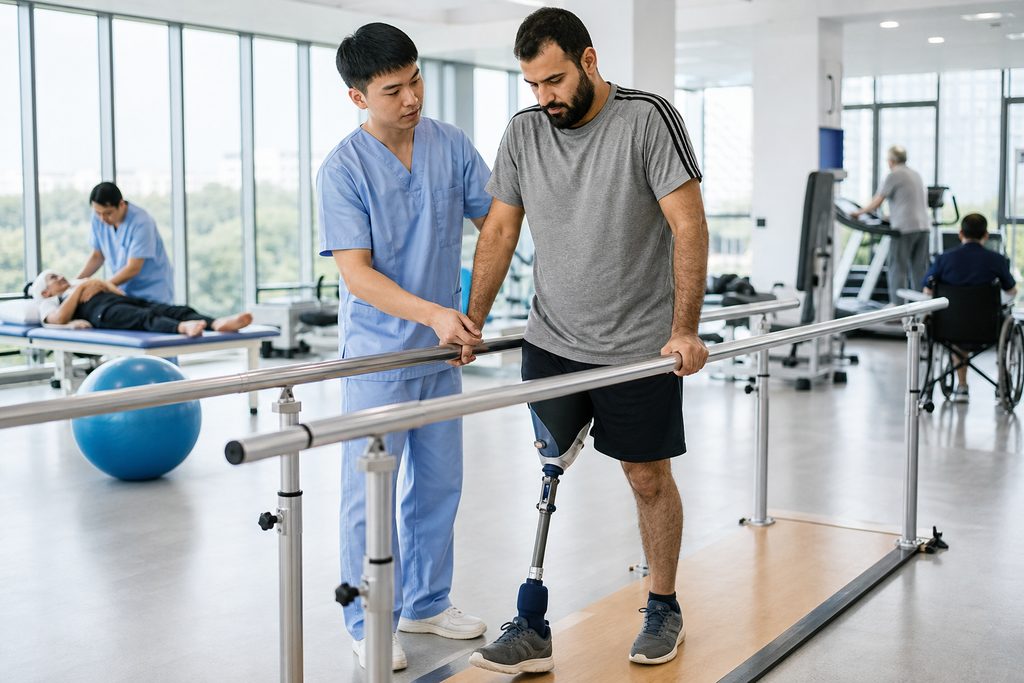
Have you asked yourself whether the physical damage left by conflict is something you have to live with forever, or whether there is a path to functional recovery that doesn’t bankrupt your family? That question brings Syrian patients to our coordination desk every week. The short answer is that China now performs a volume of complex post-traumatic reconstruction that few other systems match, at a war injury reconstruction cost China that typically falls between one-third and one-fifth of comparable Western private-pay prices. But the number alone doesn’t answer the question. You need to know what that number covers, how long you’ll actually be here, and what happens when the plan hits reality.
How This Actually Works, Step by Step
The process starts with your existing images and reports. Not a brief email describing the injury. We need DICOM-format CT scans, plain radiographs taken within the last three months, any operative notes from prior surgeries, and a list of implanted hardware if you have it. You send that file set. Our team translates the clinical summary into Chinese, strips identifying details you prefer to withhold, and submits it to two or three department heads whose published work matches your injury pattern.
That review takes five to seven business days. What comes back is a written second opinion — not a guarantee of outcome, but a surgical strategy document. It tells you whether the Chinese team believes limb salvage is still possible, how many stages they anticipate, what soft-tissue coverage method they would use, and the estimated inpatient stay per stage. The fee for this written opinion runs from $300 to $500, and if you later travel for surgery, that amount credits fully toward your on-the-ground coordination service.
If the strategy makes sense to you and your local physician, we move to video consultation. The surgeon who would lead your case joins a secure call, reviews the images with you in real time, and answers the questions that matter: Will I walk? How much pain? What hardware will stay in my body? That call costs $500 to $800. After the call, if you decide to proceed, we coordinate the S2 visa invitation letter from the hospital, secure a surgical slot on the international department schedule, and arrange your arrival. Nobody asks for a full payment upfront. You pay for each stage as you use it.
Why Syrian War Injuries Present a Specific Surgical Challenge
No ethical surgical team anywhere will guarantee limb salvage. What the team can tell you, after reviewing your images, is the probability of success based on their published series for similar defect sizes and infection status. For a tibial defect under 8 centimeters with a clean soft-tissue envelope, limb salvage rates in experienced Chinese centers exceed 90%. For defects over 15 centimeters with active infection and a history of failed flaps, the probability drops — and the team will discuss amputation as a functional alternative, not as a failure, but as a pathway to prosthetic rehabilitation that may get you walking faster than a multi-year reconstruction attempt.
Staged reconstruction is inherently modular. You pay for each surgical stage as it occurs, not for the entire treatment plan upfront. The debridement and infection control stage is the first and least expensive. Completing that stage and achieving a clean wound is a meaningful clinical endpoint in itself — it stops the disease process. Some patients complete debridement, return home, and save for the reconstructive stage over the following year. The coordination fee for each subsequent trip is reduced because your records and surgical plan are already established in the system.
Most external fixation frames used in Chinese limb reconstruction centers are modular systems — typically Ilizarov-type rings and struts — that any orthopedic surgeon familiar with the technique can adjust or remove. The surgical team provides a detailed frame construction diagram and a distraction protocol in English. For internal implants, the team uses internationally standardized systems (AO/ASIF principles) with implant batch numbers and manufacturer details recorded in your discharge summary. If a Syrian surgeon later needs to remove a screw or plate, the specifications are documented.
Your Next Step
War injury reconstruction is a long road, and the decision to pursue it abroad is never purely financial. The clinical question is whether a center with high-volume trauma reconstruction experience offers you a materially better chance at limb salvage or functional recovery than what is available closer to home. That question can only be answered by having your specific images reviewed by the surgical team that would operate on you. Our organization exists to make that review happen — we translate your records, connect you with the right department, and handle the logistics if you choose to proceed. We do not give medical advice, and we do not promise outcomes. We make the path walkable.
If you have current CT scans and a clear description of what you need, send them for a written second opinion. The fee credits toward your care if you travel. Start there.
Frequently Asked Questions
Yes. The hospitals used for international patients are JCI-accredited and follow the same international safety standards as top hospitals in the US and Europe. Surgical teams perform high volumes of procedures — often more than their Western counterparts — which studies show leads to better outcomes.
Costs vary by procedure and hospital, but international patients typically save 40-80% compared to US prices — even when factoring in travel and accommodation. A consultation with our team will give you an exact, all-inclusive quote with no hidden fees.
Send us your existing medical reports to get started. We handle everything from hospital selection and appointment scheduling to visa assistance and post-operative recovery planning. Your medical records are reviewed by the specialist before you even book a flight.
For more medical information and treatment options in China, visit chinamedservices.com (China Medical Services).
