Ankylosing Spondylitis Care at Shanghai Renji Hospital: Rank 3 Rheumatology & What They Offer
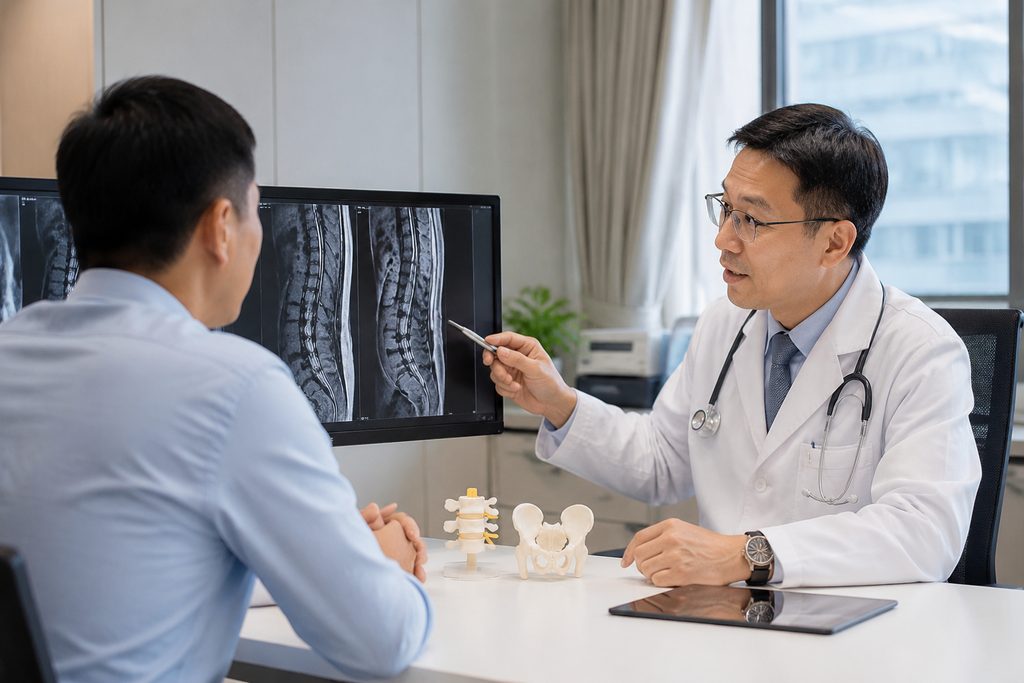
Have you ever felt that deep, unshakable stiffness in your lower back — the kind that wakes you at 3 a.m. and doesn’t loosen up with a hot shower? For many, that’s the first signal of ankylosing spondylitis. It’s not just back pain. It’s a chronic inflammatory arthritis that, left unchecked, can fuse vertebrae together. The question isn’t just “what’s wrong with me?” It becomes “where do I get the best care without draining my savings?”
Shanghai Renji Hospital’s Rheumatology and Immunology Department has been the top-ranked center in China for years. Not top five. Top. The Fudan University hospital rankings place it consistently in the number one spot nationally for rheumatology. The department sees over 400,000 outpatient visits annually. That’s not a typo. Four hundred thousand. This volume translates into something rare: clinicians who have seen every presentation of AS imaginable, from early non-radiographic cases to severe bamboo spine.
But the ankylosing spondylitis treatment cost Shanghai Renji Hospital charges — and how a foreign patient actually accesses that care — is where things get real.
How This Actually Works, Step by Step
You can’t just show up. China’s top public hospitals don’t work like that. Here’s the actual sequence.
First, you send your existing medical records. We’re talking MRIs of the sacroiliac joints, HLA-B27 test results, CRP and ESR inflammatory markers, and any previous rheumatologist notes. These need translation into Chinese. A medical translator handles this — not Google Translate. A mistranslated “enthesitis” versus “osteitis” changes the entire clinical picture.
Second, the department reviews your file. This is where the hospital’s international patient pathway diverges from the public queue. The public queue can mean weeks for a specialist appointment. The international VIP channel — which is what foreign patients use — gets your case in front of a senior rheumatologist within 3 to 5 business days.
Third, you get a written second opinion. This document outlines the Chinese team’s assessment: whether they agree with your current diagnosis, what treatment adjustments they’d recommend, and whether they believe you’d benefit from coming to Shanghai in person. A written second opinion from Renji’s top rheumatologists runs $300 to $500. If you later travel to Shanghai for treatment, that fee credits back toward your coordination costs. It’s not a sunk cost.
Fourth, if the recommendation is to come, the real logistics begin. Visa documents get prepared — the hospital issues an official invitation letter for an S2 visa. We handle translation of that letter and guide you through the consulate process. You book flights. You arrive.
Fifth, on the ground, a bilingual medical companion meets you. They handle registration, navigate the hospital’s massive campus, interpret your face-to-face consultation, and ensure nothing gets lost between languages. Renji’s outpatient volume is staggering. Without someone who knows the system, you’ll burn an entire day just figuring out where to stand in line.
Sixth, the rheumatologist examines you in person. They may order repeat imaging or labs. Then comes the treatment plan. Biologics. NSAIDs. Physiotherapy protocols. Possibly a short hospitalization if they want to monitor your initial response to a new biologic. The doctor decides. Not us. We facilitate — we never influence clinical decisions.
What Rank 3 Rheumatology Actually Means at Renji
Rank 3 is the highest classification a Chinese hospital can achieve. It signals comprehensive tertiary care capability. But in rheumatology, Renji operates at a level that transcends the label. The department was founded in 1979 — one of the first dedicated rheumatology units in China. It now runs 70 inpatient beds and 12 specialized outpatient clinics, including a dedicated ankylosing spondylitis clinic.
What does that mean for an AS patient? It means you’re not seeing a general rheumatologist who splits their time across lupus, gout, and rheumatoid arthritis. You’re seeing someone whose clinical research focus is spondyloarthropathies. The department has published extensively on AS biomarkers, imaging progression, and biologic therapy optimization. They’re not just following international guidelines — they’ve contributed to them.
The department also houses a biobank with samples from over 20,000 rheumatic disease patients. This isn’t academic trivia. It means the clinicians treating you are embedded in active research. They know which patients respond to which biologics. They track long-term outcomes. When a rheumatologist here recommends adalimumab over secukinumab, that recommendation is grounded in data that includes their own patients.
Many Western patients ask: is Shanghai Renji Hospital rheumatology rank 3 good compared to what I’d get at home? The honest answer depends on your home. If you’re in a major U.S. city with a university medical center, your local care may be comparable. But you’ll wait longer and pay dramatically more. If you’re in a country with limited biologic access or long rheumatology waitlists, Renji represents a meaningful upgrade in both speed and therapeutic options.
A Realistic Timeline
| Stage | What Happens | Typical Duration |
|---|---|---|
| Day 1–3 | You submit translated records; we verify completeness | 1–3 business days |
| Day 4–8 | Renji rheumatology team reviews your file | 3–5 business days |
| Day 9–12 | Written second opinion delivered | 2–3 business days after review |
| Day 13–30 | Visa invitation letter issued; you apply for S2 visa at local Chinese consulate | 2–4 weeks (varies by country) |
| Day 31–45 | Travel to Shanghai; in-person consultation and treatment initiation | 1–2 weeks on the ground |
This timeline assumes no major delays. Document translation can add a week if your records are extensive. Consulates in some countries process S2 visas faster than others. The one thing you shouldn’t underestimate is the visa step. Start it early. A hospital invitation letter helps, but it doesn’t guarantee approval — and no legitimate service should promise otherwise.
What Can Go Wrong — and What Happens Then
Let’s be blunt. The biggest risk isn’t medical. It’s logistical and financial.
Your records might be incomplete. If the rheumatologist can’t see clear sacroiliac joint imaging or doesn’t have recent inflammatory markers, they won’t make a treatment recommendation. They’ll ask for more tests. That resets the timeline. The fix is simple: before you send anything, we review your file for completeness against what Renji typically requires. We catch the gaps early.
The visa might be delayed or denied. This happens. Not often, but it happens. If you can’t get the S2 visa in time, your in-person consultation gets pushed back. You’re not out the cost of the written second opinion — that’s already delivered and useful on its own. But flights and accommodation become a headache. Our team helps with rescheduling and re-documentation, but the consulate’s decision is final. We don’t control it. No one does.
The in-person assessment might reveal that your disease is more or less advanced than you thought. Some patients arrive assuming they need biologics immediately, only to learn that optimized NSAID therapy and structured physiotherapy are the better first step. Others discover their AS has progressed further than their home rheumatologist recognized, and they need a more aggressive approach. Either way, the plan shifts. That’s not a failure. That’s good medicine. But it can feel destabilizing if you’ve traveled halfway around the world expecting a specific outcome.
Language friction is real. Even in the international VIP department, not every nurse or technician speaks English. Our bilingual companion bridges that gap, but moments of frustration still happen. A blood draw that takes five minutes at home might take twenty here while instructions get translated back and forth. Expect it. Budget patience for it.
How Does Renji Hospital Treat Ankylosing Spondylitis: The Biologic Question
This is the question that dominates AS forums worldwide. Biologics. TNF inhibitors. IL-17 inhibitors. The drugs that changed the game for axial spondyloarthritis. And the price tag that terrifies patients.
Renji Hospital uses the full arsenal. Adalimumab (Humira and biosimilars). Etanercept (Enbrel). Infliximab (Remicade). Secukinumab (Cosentyx). Ixekizumab (Taltz). The department has extensive clinical experience with all of them. They also participate in clinical trials for newer agents, which means some patients gain access to therapies not yet available outside China.
But here’s what you actually care about: the AS biologic therapy price China charges versus what you’d pay at home.
Adalimumab biosimilars in China cost roughly $400 to $600 per month. The same drug in the United States — even with biosimilars on the market — often runs $2,000 to $5,000 per month before insurance. Secukinumab in China: approximately $800 to $1,200 per month. In the U.S., the list price exceeds $6,000 monthly. These are rough ranges. They fluctuate by manufacturer, hospital pharmacy pricing, and whether you’re using an originator biologic or a Chinese-approved biosimilar.
Renji’s rheumatologists don’t push the most expensive option. The treatment algorithm starts with NSAID optimization and physical therapy. If disease activity remains high — BASDAI score above 4, elevated CRP, radiographic progression — biologics enter the conversation. The choice of which biologic depends on your disease phenotype, comorbidities, and prior treatment history. A patient with significant peripheral arthritis might get a different recommendation than one with pure axial disease and uveitis.
This is also where the best rheumatology hospital China for AS distinguishes itself. Renji’s volume means they’ve managed thousands of biologic initiations. They know how to screen for latent TB, hepatitis B, and other pre-biologic safety checks efficiently. They monitor for infusion reactions. They adjust dosing intervals based on your response. This isn’t algorithmic cookbook medicine. It’s high-volume clinical judgment.
Practical Considerations: Records, Payment, and Follow-Up
Bring everything. Sacroiliac joint MRI with STIR sequences. Full spine X-rays if you have them. HLA-B27 status. CRP and ESR trends over time — not just one snapshot. Previous biologic start and stop dates, with reasons for discontinuation. If you had an adverse reaction to a TNF inhibitor, the Chinese rheumatologist needs to know exactly what happened.
Payment at Renji’s international department works on a deposit system. You prepay an estimated amount at admission or before starting a biologic infusion series. The hospital settles the final bill at discharge or after treatment completion. International insurance is rarely accepted for direct billing at Chinese public hospitals — even at the VIP level. You pay upfront, then file for reimbursement with your insurer. Get pre-authorization from your insurance company before you travel. Get it in writing.
Follow-up is the part nobody plans for. AS is a lifelong condition. One visit to Shanghai doesn’t cure it. You’ll need ongoing monitoring. Renji’s rheumatologists can provide a detailed treatment letter and monitoring schedule for your home rheumatologist. Some patients return annually for reassessment. Others do video consultations every 3 to 6 months to review labs and adjust therapy. A video consultation with a Renji rheumatologist runs $500 to $800. It keeps continuity of care without requiring another international flight.
Language for follow-up matters. Your home doctor needs reports in English. Renji’s international department provides English-language discharge summaries and treatment plans. But lab reports and imaging narratives sometimes come in Chinese. Factor in translation costs for ongoing care coordination — roughly $50 to $100 per document set.
Frequently Asked Questions
Yes, but with a specific meaning. You can’t reserve a specific appointment slot months in advance the way you might in a private Western clinic. What you can do is submit your records for a written second opinion and, if the clinical picture warrants an in-person visit, have the international department coordinate your consultation timing. You’ll have a confirmed window — not a walk-in free-for-all. The coordination fee for booking and appointment management starts at $300.
This is a legitimate concern. Renji’s rheumatologists prescribe biologics that are internationally recognized — adalimumab, etanercept, secukinumab — not obscure domestic-only agents. But the specific biosimilar brand available in China may differ from what your home pharmacy stocks. The treatment letter you receive will specify the active drug and dosing schedule, not just the Chinese brand name. Your home rheumatologist can then prescribe the equivalent available locally. If you’re from a country with restricted biologic access, discuss this with the Renji team before starting therapy. They may adjust the plan to something you can realistically continue.
The direct medical costs are genuinely lower. A biologic infusion that bills at $6,000 in the U.S. might bill at $1,000 in Shanghai. But you’re adding travel, accommodation, visa fees, translation, and coordination costs. For a two-week trip, budget $3,000 to $5,000 in non-medical expenses on top of treatment costs. The total is still usually well below U.S. prices, but it’s not free. We’ve seen patients save $20,000 or more on a single year of biologic therapy. We’ve also seen patients whose total costs came close to their home-country prices once all logistics were factored in. It depends on your treatment complexity and length of stay.
Biologics don’t reverse existing fusion. Nothing does. If your spine is already extensively fused, the treatment goal shifts to controlling inflammation in any remaining mobile segments, managing pain, preserving function, and preventing further damage. Renji’s rheumatologists will be direct about what’s achievable. Some patients with advanced AS still benefit significantly from optimized biologic therapy and a structured physiotherapy program. Others find that the incremental benefit doesn’t justify international travel. The written second opinion addresses this honestly — it’s not a sales pitch for an unnecessary trip.
Your Next Step
Ankylosing spondylitis is a long game. The decisions you make about where to get care, which therapies to try, and how much to spend ripple forward for decades. Shanghai Renji Hospital offers something genuinely hard to find: world-class rheumatology expertise at a fraction of Western prices, with biologics that are the same drugs you’d get in New York or London — just billed differently.
Our team at China Medical Services handles the part that makes this possible for international patients. We translate records, coordinate with Renji’s international department, arrange written second opinions, and provide bilingual companions on the ground. We don’t practice medicine. We don’t promise outcomes. What we do is remove the logistical barriers that would otherwise make accessing this care impossible for someone who doesn’t speak Chinese or understand the hospital system. If you want to explore whether Renji’s rheumatology team is the right fit for your AS, send us your records for a free initial consultation review. We’ll tell you honestly whether this path makes sense for your specific case — and what the real costs and timeline would look like.
For more medical information and treatment options in China, visit chinamedservices.com (China Medical Services).
