Uterine Fibroid Removal in Shanghai: Minimally Invasive Options at Red House Hospital
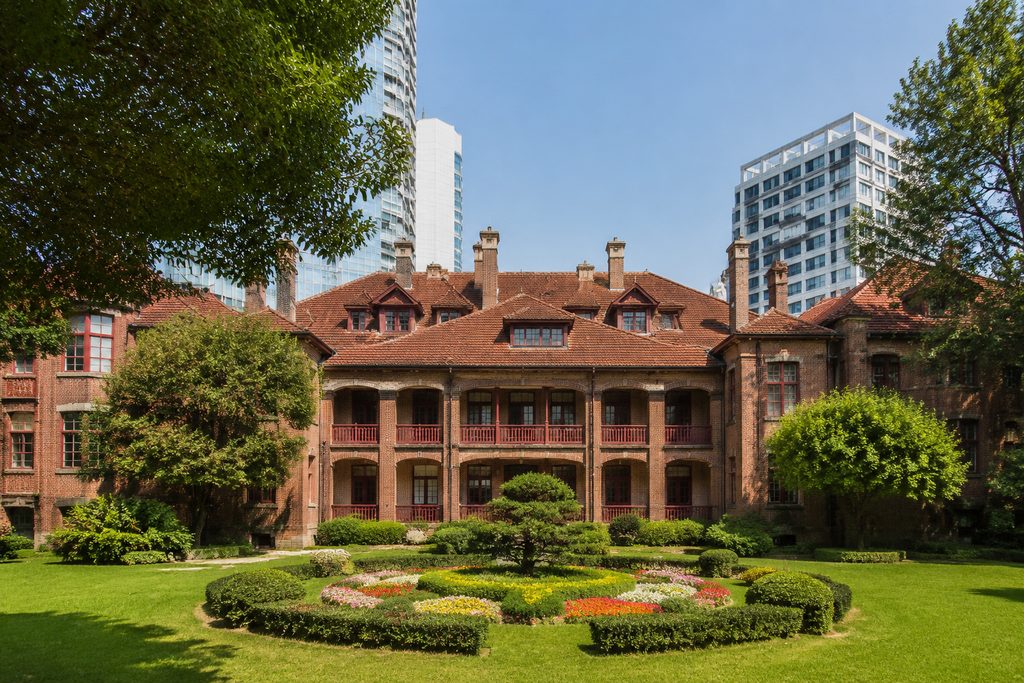
While a woman in the United States might face a bill exceeding $15,000 for a laparoscopic myomectomy, the uterine fibroid removal cost at Shanghai Red House Hospital often starts from a fraction of that. We are talking about a range that can fall between $4,000 and $8,000. That price gap is stark. But cost is only one piece of a complex decision. The real question is whether a 140-year-old Chinese hospital can deliver the safety, the specific minimally invasive technique, and the recovery experience you need as an international patient. This article breaks down exactly what is realistic, what the data shows, and what the process looks like on the ground.
The Short Answer: Yes, It’s a Real Option with Specific Advantages
You can access high-volume, minimally invasive uterine fibroid removal in Shanghai at the Obstetrics and Gynecology Hospital of Fudan University. That is the official name for what everyone still calls the Red House Hospital. The institution handles a surgical volume that dwarfs most Western centers. Their gynecologists perform laparoscopic and hysteroscopic myomectomies daily. The direct answer to your search is that this is not a theoretical possibility. It is a functioning, top-tier clinical pathway. But it is not a walk-in service. You cannot simply book a surgery slot online from overseas, and the language barrier without a coordinator is absolute.
Who This Is Right For — and Who It Isn’t
This pathway suits a very specific patient profile. It is not for everyone. Being honest about the limitations upfront saves you time and risk.
You are likely a good candidate if:
- You have a confirmed diagnosis of symptomatic uterine fibroids with clear imaging (ultrasound and preferably MRI).
- You are seeking a minimally invasive approach (laparoscopic or hysteroscopic) and your fibroid size, number, and location make you a candidate for it.
- You are medically cleared for elective surgery and can manage a long-haul flight.
- You are comfortable paying out-of-pocket and seeking reimbursement later, or you have the financial flexibility to self-fund the procedure.
- You have realistic expectations about a foreign hospital environment where English-speaking clinical staff are concentrated in the international wing.
This is probably not the right path if:
- Your case requires a complex open abdominal myomectomy with a multi-day ICU stay and you have significant comorbidities like uncontrolled diabetes or severe cardiac disease. The risk of traveling far from your established care team is higher.
- You are pregnant or your primary concern is fertility preservation without a clear surgical plan — you need a reproductive endocrinology consultation first, not a standalone surgical trip.
- You expect a Western-style private hospital experience with gourmet meals and hotel-like rooms. Red House Hospital is a high-efficiency Chinese public institution. The focus is clinical excellence, not hospitality luxury.
- You cannot arrange for a companion to travel with you. Post-operative support in a foreign city is non-negotiable.
The Options, Compared
When international patients research the best minimally invasive fibroid surgery in Shanghai, they are usually comparing three distinct clinical pathways. The table below lays out the real differences, not the marketing gloss.
| Factor | Red House Hospital (Public VIP) | Shanghai Private International Hospital | Typical US Hospital |
|---|---|---|---|
| Surgical Volume | Extremely high; surgeons perform these procedures multiple times daily | Moderate; surgeons often split time with public hospital roles | Variable; a surgeon may do 5–10 per month |
| Minimally Invasive Rate | Very high; laparoscopy and hysteroscopy are the default for suitable cases | High; equipment is modern but case selection may be more conservative | High at top centers, but open procedures still common in community hospitals |
| Cost (All-in, Surgery Only) | $4,000–$8,000 USD | $10,000–$18,000 USD | $15,000–$30,000+ USD |
| English-Speaking Staff | Concentrated in the international department; ward nurses speak limited English | Widespread; this is the core selling point | Native English environment |
| Payment Model | Upfront deposit required; you seek reimbursement from your insurer | Direct insurance billing often available | Insurance-billing dominant; complex post-care statements |
| Wait Time for Surgery | Typically 1–3 weeks after in-person consultation | 1–2 weeks | Can be 4–8 weeks or longer depending on the system |
If your priority is the sheer technical repetition of a surgical team that sees an extraordinary concentration of fibroid cases, the public VIP pathway at a hospital like Red House makes sense. If you need a fully English-speaking bubble and direct insurance billing and you are willing to pay for that, Shanghai’s private international hospitals are the alternative. For many of the patients our team supports, the decision comes down to one trade-off: clinical volume versus hospitality comfort.
The Red House Hospital Surgical Ecosystem: What the Name Actually Means
You cannot evaluate Shanghai Red House Hospital fibroid treatment reviews or outcomes without understanding what this hospital is. Founded in 1884, it is one of China’s first Western-medicine gynecology and obstetrics hospitals. Today it is a tertiary referral center attached to Fudan University, one of the country’s top medical schools. The gynecology department is consistently ranked among the top three in China in the Fudan national specialty reputation rankings. That ranking is not a marketing badge. It is based on peer assessment by Chinese department chairs and clinical leaders nationwide.
The hospital operates a dedicated minimally invasive gynecology surgery center. The volume is the story. A senior gynecologist here may perform over 400 laparoscopic myomectomies annually. That repetition breeds a specific kind of technical fluency. They see fibroid presentations — submucosal, intramural, pedunculated, multiple — at a frequency that is simply uncommon outside of a few mega-centers in Asia. For a patient, that matters. The learning curve for complex laparoscopic suturing of the uterine wall after fibroid removal is steep. You want a surgeon who is on the flat, confident part of that curve.
Also worth knowing: the hospital has a strong research track record in gynecological endoscopy. They have developed and refined techniques that are now standard across China. This is not a place trying to catch up to Western protocols. It is a place that writes its own.
What It Costs: Breaking Down the Numbers
The uterine fibroid removal cost at Shanghai Red House Hospital is not a fixed price on a menu. It is a bundle that shifts based on your surgical complexity, the implantables used, and the ward class you choose. Here is what we see in practice for international patients accessing the hospital’s international or VIP wing.
A straightforward laparoscopic myomectomy for a single moderate-sized fibroid, with a two-night hospital stay, typically lands between $4,000 and $6,000. That includes the surgeon’s fee, anesthesiology, operating theater charges, basic pathology on the removed tissue, and standard ward accommodation. If your case involves multiple fibroids, a longer operative time, or the use of specific adhesion barriers, the cost moves toward $7,000 or $8,000. A hysteroscopic myomectomy for a submucosal fibroid is generally at the lower end of the range.
What is not included in that surgical figure? Your pre-operative imaging if you need updated scans in Shanghai. Your post-discharge medications. Your accommodation outside the hospital. Your flights. And critically, the coordination and bilingual companion support that makes the entire process feasible if you do not speak Mandarin. Those are separate line items. But even when you sum them up, the total is still substantially below the US self-pay price for the surgery alone.
Recovery Time and What to Expect in Shanghai
The question “what is recovery time for laparoscopic myomectomy in China” assumes the biology is different. It is not. The tissue healing is the same. The difference is the discharge culture and the post-operative support structure available to you as a foreign visitor.
For a laparoscopic myomectomy, the hospital stay is typically two to three nights. The first 24 hours involve managing the CO2 gas pain in the shoulder and getting you mobile. Chinese post-surgical wards are disciplined about early mobilization. You will be expected to walk the corridor sooner than you might in a Western hospital. By discharge, you should be able to manage light meals, walk slowly, and tolerate oral pain relief.
We advise international patients to plan for a total of 10 to 14 days in Shanghai. That breaks down as: arrival and in-person consultation (Day 1–2), pre-op checks and surgery (Day 3–5), in-hospital recovery (Days 5–7), and then a critical buffer of 5–7 days in a nearby hotel before flying. You do not want to board a 12-hour flight on Day 8. The risk of thromboembolism is real. You need to be walking comfortably and cleared by the surgical team. Most patients feel significantly better by Day 10, but fatigue lingers for two to three weeks. Heavy lifting and vigorous activity should wait a full six weeks, same as anywhere else.
Practical Considerations: Records, Visas, and the Language Barrier
The clinical question “how safe is uterine fibroid surgery in China” is inseparable from the logistical question of how well you prepare. The surgery itself, at a Fudan-affiliated hospital, is safe by any international benchmark. The risk of major complications in laparoscopic gynecology at a high-volume center is low — in the range of 1–2% for issues like excessive bleeding, infection, or injury to surrounding structures. That is comparable to US and European data.
The safety variable you control is your preparation.
Medical records. You need a recent pelvic ultrasound and ideally a contrast-enhanced MRI, translated into Chinese if possible. The surgeon will review these before you travel. Do not arrive with just a doctor’s note. The imaging is the language everyone understands.
Visa. You are coming for medical treatment. The correct visa category is S2 (short-term private affairs, annotated for medical treatment). Your accompanying family member also applies for an S2. You will need an invitation letter and supporting documentation from the hospital. Our team handles this coordination because the paperwork must match the visa officer’s expectations. An M visa is for commercial trade. It does not apply here.
Payment. The hospital requires a deposit upfront, typically via cash, UnionPay, or a major credit card. Wire transfers in advance are sometimes possible but must be confirmed case by case. If you have international health insurance, you will likely be paying first and claiming later. The hospital’s international department can provide the detailed invoices and medical summaries you need for reimbursement.
Language. The surgeon and the international department coordinator will speak some English. The ward nurses, the operating theater technicians, the cashier — they will not. Having a bilingual medical companion with you on admission day, during pre-op teaching, and at discharge is what turns a disorienting experience into a manageable one. This is not a luxury add-on. It is the difference between knowing what pain medication you are being given and guessing.
Follow-up. You will need a gynecological follow-up in your home country about two to four weeks after returning. The hospital will give you a discharge summary in English. Bring that to your local doctor. They need to know exactly what was done, what suturing technique was used, and what to watch for.
Frequently Asked Questions
No. You cannot book a surgery slot remotely as a new international patient. The standard public hospital pathway requires an in-person consultation first. The surgeon must see you, review your imaging personally, and sign off on the surgical plan. What you can do remotely is arrange a pre-travel video consultation or a written second opinion through the hospital’s international coordination channel. That step confirms your candidacy and allows the team to tentatively reserve a surgical window. But the final booking happens after you arrive and are examined. Anyone promising a locked-in surgery date before you land is not being straight with you.
Red House Hospital is a full tertiary care center with an ICU, a blood bank, and 24-hour in-house senior surgical cover. If a laparoscopic procedure encounters unexpected complexity, the team can convert to an open procedure immediately — the capability and the instruments are in the room. The hospital’s complication rates for gynecological laparoscopy are in line with top international centers. The practical concern for an international patient is not the clinical response but the communication during a crisis. This is why we insist on a bilingual companion being present throughout the hospitalization. If a decision needs to be made, you understand it fully. Post-operative complications are rare, but they are managed within the same institution, not transferred out.
The hospital uses surgical devices and implants that are approved by China’s National Medical Products Administration (NMPA), and in many cases these are the exact same multinational brands — Johnson & Johnson, Medtronic, Olympus — used in US and European operating rooms. The laparoscopic towers, the morcellation systems, the electrosurgical units are modern and maintained to a high standard. The supply chain is global. The hardware is not a safety concern. The variable that matters most is the hands using it, and at this hospital, those hands are highly experienced.
You should be skeptical of individual patient reviews on commercial platforms, in any country. They are prone to selection bias. The more reliable indicators for this hospital are: its consistent top-three national ranking in the Fudan gynecology specialty reputation list (an annual peer survey of Chinese specialists), its status as a national key clinical specialty designated by the health ministry, and its publication record in international peer-reviewed journals on gynecological endoscopy. These are verifiable data points. Look at the institution’s academic output and its national standing among other doctors. That tells you more than a handful of anonymous testimonials.
Your Next Step
You now have a clear picture of what uterine fibroid removal at Shanghai Red House Hospital actually involves — the costs, the recovery timeline, the surgical reality, and the logistical hurdles. The institution’s clinical credentials are genuine. The pathway is real. The question is whether it fits your specific case and your tolerance for navigating a foreign medical system. Our team at China Medical Services exists to bridge that gap. We are not a hospital and we do not provide medical advice or diagnoses. We handle the coordination, the document preparation, the visa invitation paperwork, and we place a bilingual medical companion at your side from admission to discharge. If you want to explore whether this option makes sense for your situation, you can request a free initial consultation. We will walk through your imaging, your timeline, and a realistic plan — no pressure, no promises we cannot keep.
Speak with our patient coordination team today: Request a free consultation. You can also explore our database of top-ranked hospitals across China to compare institutions and specialties before making any decision.
For more medical information and treatment options in China, visit chinamedservices.com (China Medical Services).
