Childhood Cancer Treatment at Shanghai Fudan: What Families Need to Know
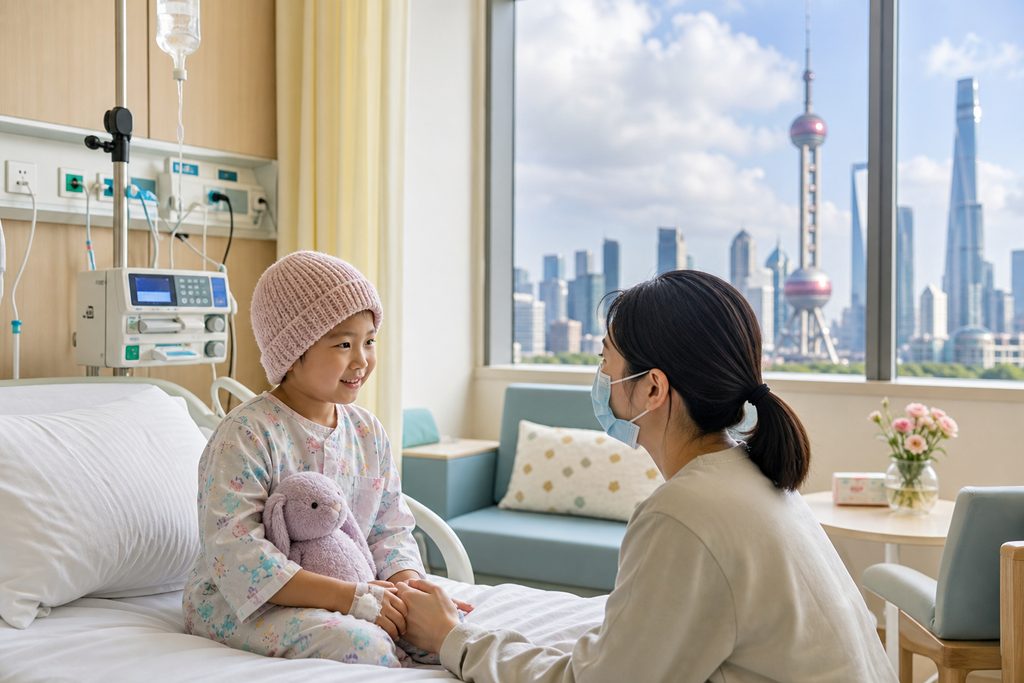
You have probably heard that taking a child abroad for cancer care means choosing between clinical excellence and emotional support. The assumption is that you can’t have both. You either stay close to home with familiar faces and your own language, or you fly halfway across the world to a sterile, efficient machine that treats the disease but ignores the child.
The reality at a place like the pediatric oncology center at the Children’s Hospital of Fudan University in Shanghai is far more nuanced. It is a high-volume, research-driven environment. But it is also a place where the sheer scale of clinical experience breeds a particular kind of calm competence. Our team has walked families through this exact corridor. We have seen the initial fear give way to a focused, practical determination. This is not a brochure. This is what the journey actually looks like, including the hard parts most guides leave out.
How This Actually Works, Step by Step
The process is not a single click. It is a sequence of deliberate, verifiable steps that build on each other. Rushing any one of them creates friction later. Here is the path most families follow.
You start with a remote evaluation. You send us the existing medical records. Every pathology report, every imaging scan on a CD, every blood test trend, every discharge summary. We translate these documents into clinical Chinese. Not conversational Chinese. The precise terminology that a pediatric hematologist-oncologist at Fudan needs to see. This translation step is critical. A mistranslated pathology marker wastes weeks.
The materials go directly to the pediatric oncology department at the Children’s Hospital of Fudan University. A specialist reviews them. They produce a written second opinion. This document typically outlines whether they agree with the current diagnosis, what their recommended treatment protocol would be, and what they believe is achievable. This written opinion, priced from $300 to $500, is for reference only. It is not a prescription. But it answers the fundamental question: is it worth getting on a plane?
If the written opinion confirms a viable path forward, you have a choice. You can schedule a video consultation, which runs from $500 to $800 for a top specialist. This is a face-to-screen conversation with the physician who might lead your child’s care. You can ask the questions that keep you up at night. You can gauge their communication style. You can decide if this is a person you trust with your child’s life.
After the video consult, if you decide to proceed, we coordinate the appointment. This is where the physical journey begins. We handle the hospital registration, create the medical card, and schedule the initial in-person consultation. Our bilingual medical companion meets you at the hospital entrance on day one. They handle every queue, every payment window, every pharmacy pickup. You focus on your child. They handle the system.
Is Shanghai Fudan Pediatric Cancer Center Good for Foreign Families?
This question sits at the heart of every parent’s research. The answer requires looking past marketing and into the operational reality of the institution.
The Children’s Hospital of Fudan University is consistently ranked among China’s top pediatric hospitals. In the Fudan University Hospital Ranking, which is China’s most authoritative hospital evaluation system, its pediatric surgery and pediatric internal medicine departments are classified in the highest tier. The hospital’s hematology and oncology center manages an extraordinary volume of childhood cancer cases annually. This volume translates into pattern recognition. A rare presentation at a smaller center is a Tuesday morning here.
For foreign families specifically, the hospital operates a dedicated international medical service center. This is not a token gesture. It is a functional unit with English-speaking coordinators who manage the administrative interface between overseas families and the clinical teams. They understand that you need appointment letters for S2 visa applications. They know you need itemized receipts for insurance reimbursement back home. They have seen patients from dozens of countries and the logistical patterns are familiar.
But there are realities you must accept. The hospital is enormous. The outpatient halls are crowded. The pace is fast. A senior specialist might see eighty patients in a morning session. Without a bilingual medical companion, you will be lost. Not metaphorically lost. Physically unable to find the right building, the right floor, the right window. This is not a criticism. It is a description of a public hospital that serves a nation. Our companions, starting from $300 per day, are not a luxury. They are essential navigation equipment.
The clinical quality is genuine. The environment requires adaptation. Both things are true.
What Is the Survival Rate for Childhood Cancer at Fudan Shanghai?
Parents ask this question with a tremor in their voice. They want a number. A guarantee. Any honest clinician will tell you that survival rates are retrospective statistics applied to a population, not a prediction for an individual child. What we can tell you is what the published data shows.
For pediatric acute lymphoblastic leukemia, which is the most common childhood cancer, the five-year event-free survival rate at top Chinese pediatric oncology centers like Fudan now exceeds 85 to 90 percent. This is comparable to outcomes reported by major Western centers. For acute myeloid leukemia, the figures are lower but have improved significantly with risk-stratified protocols. For solid tumors like neuroblastoma and Wilms tumor, outcomes depend heavily on stage at diagnosis and molecular subtype.
The key variable is protocol adherence. Fudan’s pediatric oncology team follows internationally recognized treatment protocols, often adapted from the same cooperative group studies used in North America and Europe. The drugs are the same. The radiation technology is the same. The difference is volume. A specialist here may manage more cases of a specific rare pediatric cancer in a year than a Western colleague sees in a decade. That concentrated experience matters when a child does not follow the textbook response.
No one can promise your child will be in the favorable percentage. What we can say is that the protocols, the drugs, and the clinical experience at this center place it in the top tier of pediatric oncology care globally. The survival statistics, adjusted for case mix, reflect that reality.
A Realistic Timeline
Hope moves fast. Bureaucracy does not. Here is a timeline that respects both realities. These are ranges, not promises. Every case is different.
| Phase | What Happens | Duration |
|---|---|---|
| Days 1–3 | You gather and send all medical records. We perform an initial review to confirm documents are complete and legible. | 1–3 days |
| Days 4–10 | Medical translation into clinical Chinese. This is meticulous work. Rushing creates errors that delay later steps. | 5–7 days |
| Days 11–21 | Records are submitted to Fudan pediatric oncology for written second opinion. Specialist review and report generation. | 7–10 days |
| Days 22–28 | You review the written opinion. If proceeding, schedule video consultation with the specialist. | 5–7 days |
| Days 29–45 | Video consultation occurs. You decide whether to travel. We initiate hospital appointment coordination. | 1–2 weeks |
| Days 46–60 | Visa application. The hospital issues an invitation letter. You apply for an S2 visa at your local Chinese embassy or consulate. Processing times vary by country. | 2–4 weeks |
| Days 61–75 | Travel to Shanghai. In-person consultation at Fudan. Treatment plan finalized. Admission or treatment schedule begins. | 1–2 weeks |
The total time from first contact to sitting in the doctor’s office is typically eight to twelve weeks. Some families move faster. Some cases require additional testing or sub-specialist review that extends the timeline. The factor most families underestimate is the visa processing window. Start that conversation with your local embassy early.
What Can Go Wrong — and What Happens Then
Things go wrong. Pretending otherwise is dishonest. Here are the common failure points and the actual recourse for each.
The specialist reviews the records and concludes that the case is too advanced for curative treatment. This happens. It is devastating. But it is also better to learn this from a written opinion at home, for a few hundred dollars, than after flying to Shanghai. The written second opinion costs $300 to $500. The round-trip flight costs thousands and extracts an emotional toll you cannot measure. If the opinion says no, you have saved your child an exhausting journey and gained clarity. You pursue palliative options or clinical trials closer to home with no ambiguity about what Fudan can offer.
The visa is delayed. Embassy processing times are outside our control. If the S2 visa does not arrive in time for the scheduled appointment, we reschedule. The hospital understands that international patients face this variable. The appointment coordination fee is not lost. We push dates forward.
The treatment plan changes after the in-person evaluation. The written opinion is based on records. The physical examination and repeat imaging in Shanghai may reveal new information. The specialist may recommend a different chemotherapy backbone or a surgical approach not anticipated remotely. This is not a failure of the remote process. It is the purpose of the in-person visit. You adapt.
The cost exceeds the initial estimate. We provide ranges, not fixed quotes. A complex course with unexpected complications costs more. We will tell you as early as possible when costs are trending higher. You always have the right to ask for a detailed breakdown. Financial surprises are corrosive to trust. We aim to prevent them.
How Much Does Leukemia Treatment Cost at Fudan Children’s Hospital?
Every parent asks this. The answer is a range, not a number. The childhood cancer treatment cost at Shanghai Fudan depends on the diagnosis, the protocol length, and whether complications arise. Here is what families should expect.
For a standard course of treatment for pediatric acute lymphoblastic leukemia, the total cost over the full treatment timeline, which can span two to three years including maintenance therapy, typically ranges from $30,000 to $70,000. This is the all-in cost for the chemotherapy protocols, hospitalizations, supportive care, and monitoring. It does not include lodging, food, or our coordination services. It is the hospital’s charges.
For a more intensive course, such as treatment for acute myeloid leukemia or a high-risk neuroblastoma protocol requiring stem cell transplantation, the total can reach $100,000 to $150,000. These are upper-bound estimates for complex cases.
To put this in context, comparable treatment at a major U.S. pediatric oncology center can easily exceed $500,000 to $800,000. Even with insurance, the out-of-pocket exposure for a family with a high-deductible plan can be crushing. The cost differential is not marginal. It is transformative. Many families find that they can pay cash for the entire course of treatment in Shanghai for less than their annual out-of-pocket maximum at home.
Payment at Fudan’s international service center is typically required as a deposit upfront, with periodic replenishment as treatment progresses. The hospital provides detailed receipts suitable for insurance reimbursement. Most international insurers will reimburse treatment at Fudan, but you must verify this with your specific policy before committing. We can help you understand what documentation your insurer requires.
Practical Considerations: Records, Visas, and Follow-Up Care
The medicine is only half the equation. The logistics can overwhelm a family already under stress. Here is what you need to have in order.
Medical records must be complete and organized. A stack of unsorted papers delays the review. We need a clear chronology: date of diagnosis, pathology report, staging studies, treatment protocol received to date, response assessment, and current status. Imaging must be provided in DICOM format on a CD or via secure electronic transfer. Printed films photographed with a phone are not adequate for a specialist review.
The visa category is specific and non-negotiable. For medical treatment in China, you and your child apply for an S2 visa. The S2 is for short-term private affairs, including medical treatment. The hospital’s international service center provides an official invitation letter that you submit with your application. Do not apply for an M visa. That is for commercial and trade activities. Using the wrong visa category can result in denial of entry or complications during your stay. Processing times vary by country, so contact your local Chinese embassy or consulate for current timelines.
Insurance reimbursement requires proactive management. Before you travel, call your insurer. Ask specifically about coverage for treatment at an overseas hospital. Request pre-authorization if your policy requires it. Understand what documentation you will need for claims. We can provide the hospital’s profile and credentials to support your pre-authorization request. After treatment, we ensure you receive itemized receipts and translated discharge summaries suitable for submission.
Follow-up care after returning home is a shared responsibility. Fudan’s specialists will provide a detailed treatment summary and recommendations for ongoing monitoring. You must establish a relationship with a local pediatric oncologist who is willing to receive the handoff. This is easier if you had a local oncologist before traveling. If you did not, we can help you identify potential providers, but the relationship is yours to build. The Fudan team is typically available for follow-up questions by email, but they cannot manage day-to-day care from across the ocean.
Language is a barrier you cannot ignore. The clinical team may have some English capability. The nursing staff, the pharmacy, the billing office, the CT scan technician almost certainly do not. Our bilingual medical companion, available from $300 per day, bridges this gap. They are not interpreters on a screen. They are a person standing next to you, explaining what the nurse just said, reading the medication label, and making sure the right test is ordered on the right patient.
Frequently Asked Questions
Can we book an appointment at Fudan pediatric oncology before traveling?
Yes, with a qualifier. You cannot directly book a public outpatient clinic slot from overseas. Those require in-person registration on the day. What we do is coordinate through the hospital’s international medical service center to schedule a specific appointment with a specialist. This is an arranged consultation, not a standard walk-in visit. We handle the registration and logistics so that when you arrive, you have a confirmed time and place. This appointment coordination service starts from $300, and if for any reason we cannot secure the appointment as agreed, that fee is fully refunded.
What is the survival rate for childhood cancer at Fudan Shanghai compared to Western hospitals?
The published outcomes for common pediatric cancers like acute lymphoblastic leukemia are comparable, with five-year event-free survival exceeding 85 to 90 percent at top Chinese centers. The protocols used are internationally recognized. The volume of cases managed is higher than at most Western centers, which builds clinical expertise. Survival statistics are population data. They cannot predict an individual outcome. But the institutional performance places Fudan in the top tier globally.
How much does leukemia treatment cost at Fudan children’s hospital if complications occur?
The baseline range for pediatric ALL treatment is $30,000 to $70,000. Complications such as severe infections, ICU stays, or the need for alternative therapies increase costs. A complicated course requiring intensive care support can push the total toward $100,000 or more. We cannot predict complications. We can tell you that the hospital’s international service center provides ongoing cost statements, and you will not be blindsided by a surprise bill at discharge. You replenish the deposit as treatment progresses, and you always know where you stand.
Is Shanghai Fudan pediatric cancer center good for foreign families who do not speak Chinese?
The clinical care is excellent. The patient experience without language support is difficult. The hospital’s international service center provides English-speaking administrative staff, but the clinical environment is predominantly Chinese-speaking. Our bilingual medical companions fill this gap. They are present for every consultation, every procedure, every pharmacy visit. They translate in real time and handle all logistical friction. With this support, the experience is manageable and focused on your child’s care. Without it, the language barrier creates stress and risk of miscommunication.
Your Next Step
You came here looking for clarity about childhood cancer treatment at Shanghai Fudan. You now have the cost ranges, the timeline, the survival data, and an honest account of what the process demands from you. The decision is yours. No one can make it for you.
Our role is to provide the infrastructure that makes the decision executable. We are not physicians. We do not offer medical advice or promise outcomes. We are case managers who translate records, coordinate with the hospital’s international service center, and put a bilingual companion at your side from the moment you land. If you want to explore whether this path makes sense for your child, the next step is a free consultation. We will review your situation honestly and tell you if Fudan is a realistic option or if you should look elsewhere. There is no pressure. There is only the information you need to make the hardest decision a parent ever faces.
Request a free consultation to discuss your child’s case with our team.
For more medical information and treatment options in China, visit chinamedservices.com (China Medical Services).
