Jaw Surgery at Shanghai Ninth People’s Hospital: A Complete Guide for International Patients
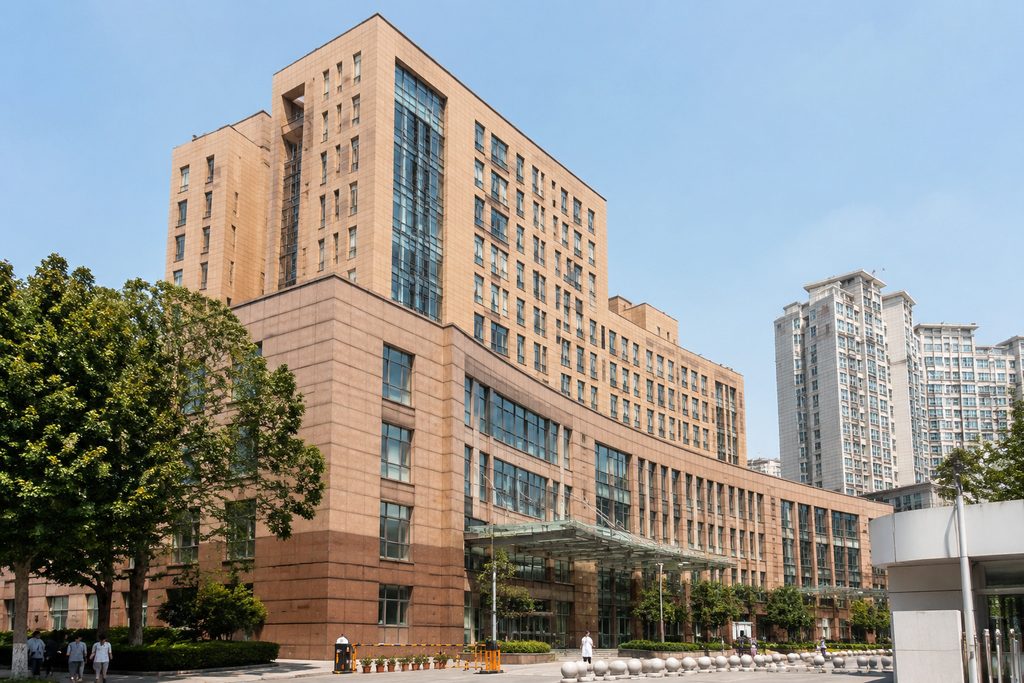
Jaw Surgery at Shanghai Ninth: The Short Answer
Shanghai Ninth People’s Hospital runs one of the world’s busiest oral and maxillofacial surgery departments. Their surgeons perform over 10,000 inpatient procedures annually. For complex orthognathic cases, few centers anywhere match that volume. The jaw surgery cost at Shanghai Ninth People’s Hospital typically ranges from $8,000 to $18,000 USD for double jaw surgery—a fraction of what patients pay in North America or Western Europe.
But here’s the catch. That price assumes you can navigate the system. The hospital’s public outpatient halls see roughly 15,000 patients daily. No English signage. No international appointment hotline for the standard clinics. The surgeons are world-class. Getting to them without local help is genuinely difficult.
Who This Is Right For — and Who It Isn’t
Orthognathic surgery corrects skeletal jaw discrepancies that braces alone cannot fix. We see patients with severe underbites, overbites, open bites, facial asymmetry, and obstructive sleep apnea caused by jaw position. The procedure repositions the upper jaw, lower jaw, or both. Recovery demands months of commitment.
Good candidates typically include:
- Adults with completed jaw growth (usually 18+ for women, 21+ for men)
- Patients whose functional problems—chewing, breathing, speech—are clearly documented
- Those willing to complete pre-surgical orthodontics, which can take 12 to 18 months
- International patients who can stay in Shanghai for at least 4 to 6 weeks post-surgery
This path is not right for:
- Patients seeking purely cosmetic refinement without functional impairment. The recovery is too demanding for marginal aesthetic gain alone.
- Anyone unable to return to Shanghai for follow-up visits. You will need at least one follow-up at 6 to 12 months.
- Patients with uncontrolled systemic conditions that complicate bone healing
- Those expecting a Western-style private hospital experience. Ninth People’s is a massive public institution. Even in the VIP International Wing, the environment differs from what many Western patients expect.
The Options, Compared
When international patients research orthognathic surgery price China, they are usually weighing three paths. Here is how they stack up.
| Factor | Shanghai Ninth Public Clinic | Shanghai Ninth VIP/International Wing | Private Hospital (Shanghai) |
|---|---|---|---|
| Double jaw surgery cost | $8,000–$12,000 | $15,000–$22,000 | $25,000–$40,000 |
| Surgeon | Same senior team | Same senior team | Varies; some hire Ninth-trained surgeons |
| Wait time for surgery | 3–6 months after consult | 4–8 weeks after consult | 2–4 weeks |
| English support | None | Basic interpreter available | Full English-speaking staff |
| Insurance direct billing | No | Rarely | Yes, most plans |
| Post-op room | Shared ward standard | Private room available | Private suite |
The public clinic price is real but inaccessible to almost every foreigner without a bilingual coordinator. The VIP wing offers the same surgical expertise with a buffer of logistical support. Private hospitals trade surgical volume for comfort. For complex skeletal movements, volume matters. Surgeons who see 300 orthognathic cases a year simply have sharper instincts than those who see 30.
Why This Specific Department Draws International Patients
The Department of Oral and Maxillofacial Surgery at Shanghai Ninth People’s Hospital is not merely well-regarded. It is the national center that other Chinese hospitals send their most difficult cases to. The department holds the top position in China’s Fudan University hospital rankings for oral and maxillofacial surgery—a ranking based on peer reputation and clinical output, not marketing.
What does that mean for a patient considering traveling here? Three things.
First, the surgeons have seen anatomical variations that would stump a less experienced team. A surgeon who has corrected 1,000 asymmetric mandibles has pattern recognition that cannot be taught in textbooks. Second, the orthodontic-surgical coordination is tighter here because the orthodontists and surgeons work under one roof with shared protocols developed over decades. Third, the department invests in surgical planning technology—3D virtual surgical planning is standard for orthognathic cases, not an upgrade.
Is Shanghai Ninth Hospital good for jaw surgery? The data says yes. The question is whether you can access that expertise as a foreign patient. That brings us to the practical path.
What Jaw Surgery Costs — and What Drives the Price
The jaw surgery cost at Shanghai Ninth People’s Hospital breaks down into components that international patients should understand before budgeting.
Surgeon and hospital fees: $6,000–$10,000 for double jaw surgery. Single jaw procedures run lower, around $4,000–$7,000. This covers the operating theater, anesthesia, surgeon’s fee, and standard inpatient stay of 5 to 7 days.
Pre-surgical orthodontics: $3,000–$6,000. This is typically done in your home country before traveling. Your orthodontist and the Shanghai surgical team must coordinate. Do not underestimate this challenge. Misaligned pre-surgical orthodontics can delay surgery by months.
3D virtual surgical planning: $500–$1,000. At Ninth People’s, this is standard practice. The planning session maps exactly where each bone segment will be repositioned and produces custom surgical guides.
Titanium plates and screws: $1,000–$2,500. These fixate the jaw segments. The exact hardware depends on the complexity of the movements.
Post-operative stay and follow-up: $2,000–$4,000 for accommodation, liquid diet supplies, and local transportation during the 4-to-6-week initial recovery window in Shanghai.
What is not included: your international flights, visa fees, pre-surgical orthodontics done outside China, and any revision surgery if needed. The orthognathic surgery price China offers is genuinely lower than Western alternatives, but the total cost of traveling for care must account for every line item.
Practical Considerations: Records, Visas, and the Language Barrier
Walking into Shanghai Ninth People’s Hospital without preparation is not a viable strategy. Here is what you actually need.
Medical records. You must bring panoramic X-rays, lateral cephalometric X-rays, dental models or intraoral scans, and a detailed orthodontic treatment plan from your home orthodontist. All documents should be translated into Chinese. The surgical team will not review English-only records in the public clinic. The International Medical Center can work with English materials, but Chinese translations still accelerate the process.
Visa category. Foreign patients traveling to China for medical treatment apply for an S2 visa, with the purpose noted as medical treatment. Your accompanying family member applies under the same category. The hospital provides an invitation letter and treatment confirmation that supports the visa application. Do not apply for an M visa—that is strictly for commercial and trade activities and will be rejected for medical travel purposes.
Payment method. Chinese public hospitals require prepayment. You deposit funds at admission, and the hospital draws down from that balance. Credit cards are accepted at the International Medical Center but not always in the standard public wing. Wire transfers in advance are the most reliable approach. Most international health insurance plans operate on a reimbursement model here—you pay upfront and submit claims afterward.
Language. The clinical team speaks Mandarin. The International Medical Center provides interpreter services, but these are not available 24/7. During the 5-to-7-day inpatient stay, nursing communication happens in Chinese. Having a bilingual companion during hospitalization is not a luxury. It prevents medication errors and ensures you can describe pain levels and symptoms accurately.
Follow-up after returning home. Your local orthodontist manages the post-surgical orthodontic phase. The Shanghai team typically requests progress records at 3, 6, and 12 months. Some patients return to Shanghai for a 6-month or 12-month in-person review. Others manage remotely with their local provider sending records.
Frequently Asked Questions
The initial recovery in Shanghai lasts 4 to 6 weeks. Week one is inpatient—swelling peaks around day three, and you will be on a liquid diet. By week two, swelling begins to subside and you transition to soft foods. Most patients feel presentable enough to fly home around week four. Full bone healing takes 6 to 12 months. The surgical plates remain in place permanently unless complications arise. You will feel fatigued for the first month. That is normal. Your body is redirecting energy to bone healing.
You cannot book surgery directly as a new international patient. The standard public clinic does not accept remote surgical bookings. The path is: remote consultation first, where you send records for surgical review. If the team accepts your case, you travel for an in-person consultation. Surgery is scheduled after that face-to-face evaluation. The International Medical Center can coordinate this sequence, but no reputable surgeon will schedule osteotomies without examining you in person. Anyone promising otherwise is not following standard protocol.
Complication rates for orthognathic surgery at high-volume centers are low—infection rates under 5%, nerve injury rates that vary by procedure but are well-documented in the consent process. But complications do happen. If you develop an infection, malunion, or hardware issue after returning home, your local oral and maxillofacial surgeon manages the acute problem. The Shanghai team can consult remotely with your local provider. Revision surgery, if needed, would typically be performed in Shanghai. This is the inherent risk of traveling for surgery. The cost savings must be weighed against the logistical complexity of managing complications across borders.
We do not name individual surgeons in published articles—medical credentials and availability change, and the “best” surgeon for one case may not be the best for another. What matters is that the Department of Oral and Maxillofacial Surgery at Shanghai Ninth People’s Hospital operates as a team. Complex cases are reviewed at departmental rounds. The surgeon assigned to your case will be a senior attending with extensive orthognathic experience. If you require a specific surgeon by name, that request goes through the International Medical Center and is subject to that surgeon’s availability and willingness to accept international patients. Some senior professors have waiting lists exceeding six months.
Your Next Step
Shanghai Ninth People’s Hospital offers genuine surgical expertise at a price point that makes financial sense for many international patients. The barrier is not the quality of care. It is the distance between you and a system built for Chinese speakers. Our team at China Medical Services exists to bridge that gap—we coordinate record translation, International Medical Center registration, visa support documentation, and bilingual accompaniment during your hospital stay. We are not a hospital. We do not diagnose or treat. We connect you with the right department and make sure nothing gets lost in translation. If you are considering jaw surgery in Shanghai, start with a remote consultation. Send your records. Get the surgical team’s assessment. Then decide.
Your next step is straightforward. Reach out for a free consultation about your case. We will review your situation, explain the likely pathway and timeline, and give you a clear picture of what jaw surgery at Shanghai Ninth People’s Hospital would actually involve for someone traveling from your country. No pressure. Just the information you need to make a sound decision.
For more medical information and treatment options in China, visit chinamedservices.com (China Medical Services).
