Physical Therapy in China: Costs, Hospitals, and What to Expect
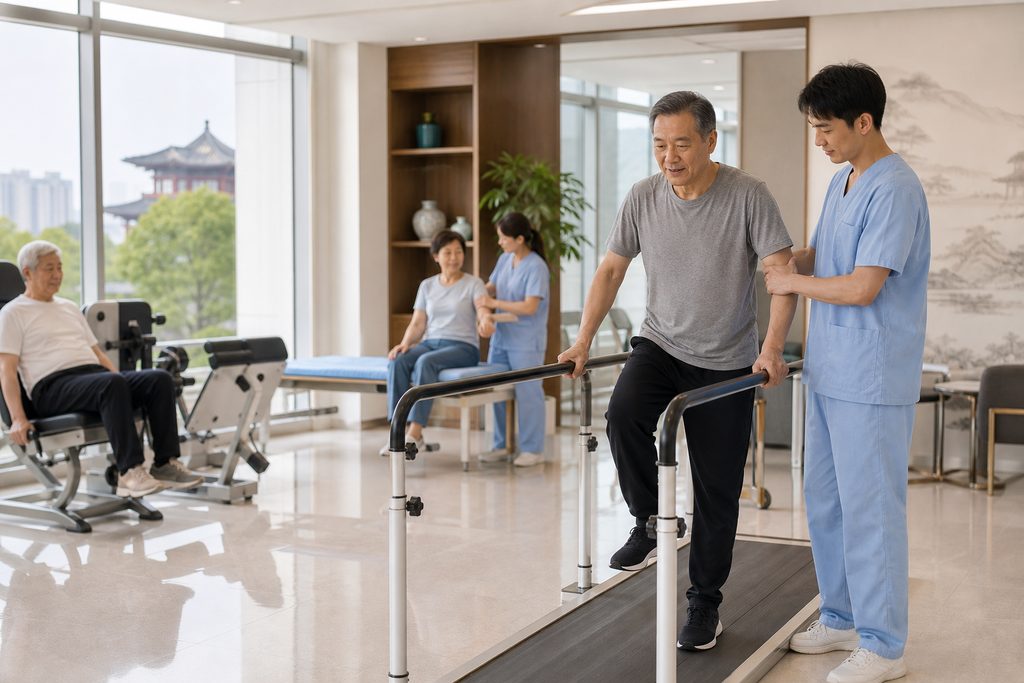
Physical Therapy in China: How It Works, What It Costs, and Where to Go
While patients in the United States routinely pay $150–$350 per physical therapy session after insurance, a comparable session at a top-tier Chinese rehabilitation hospital runs from $30 to $80. That gap explains why international patients increasingly ask about physical therapy cost China. But price is only part of the story. The system operates differently here — and knowing how it works before you arrive saves weeks of confusion.
Our team at China Medical Services has coordinated rehabilitation care for patients from over 20 countries. What follows is the unvarnished picture: how physical therapy actually functions in China’s hospital system, what you’ll pay, where the best programs are, and the honest limitations you should weigh before booking a flight.
How This Actually Works, Step by Step
Physical therapy in China is hospital-based, not clinic-based. Unlike the U.S. model of standalone PT offices, most serious rehabilitation happens inside large public hospitals or specialized rehabilitation centers. Private international clinics exist, but they’re the exception. That structural difference shapes every step of the patient journey.
Here’s the sequence for an international patient seeking physical therapy in China:
Step 1: You send your existing medical records. This means imaging reports (MRI, CT, X-ray), surgical notes if applicable, and your physician’s referral or diagnosis. We translate these into Chinese for the hospital’s rehabilitation department. Translation typically takes 2–3 business days.
Step 2: A specialist reviews your case. The rehab department at your target hospital evaluates whether their program fits your condition. Orthopedic rehab, neurological rehab, sports medicine, and post-surgical recovery all route to different teams. This review usually takes 3–7 days depending on hospital volume.
Step 3: You receive a written treatment plan and cost estimate. This is not a prescription — it’s a proposed course of therapy: frequency (typically 3–5 sessions per week), duration (usually 2–8 weeks), and modalities (manual therapy, therapeutic exercise, electrotherapy, acupuncture-adjacent techniques, hydrotherapy). The quote includes per-session pricing and any inpatient stay costs.
Step 4: You decide between remote consultation or coming directly. Some patients book a video consultation first to speak with the rehab physician before committing to travel. Others proceed straight to visa and travel planning once the written plan looks right.
Step 5: Visa, travel, and arrival. For medical treatment, you’ll apply for an S2 visa with supporting documents from the hospital. Processing typically takes 1–3 weeks depending on your home country’s Chinese embassy. Once you land, our bilingual companion meets you and handles registration, payment, and getting you to the right department.
Step 6: Initial in-person evaluation. Chinese hospitals require an in-person assessment before starting therapy. The rehab physician confirms the plan, adjusts it if needed, and your first session usually happens the same day or the next. This is not a bureaucratic hurdle — it’s a genuine clinical checkpoint.
Physical Therapy Cost China: Real Numbers From Real Hospitals
Let’s talk about the physical therapy cost China ranges you’ll actually encounter. Prices vary by city tier, hospital class, and whether you use the public channel or the international/VIP department. Here’s what current data from our coordination work shows:
| Service | Public Hospital (Standard) | Public Hospital (International Dept.) | Private International Clinic |
|---|---|---|---|
| Single PT session (45–60 min) | $30–$60 | $80–$150 | $120–$250 |
| Initial evaluation with rehab physician | $50–$100 | $150–$300 | $200–$400 |
| Inpatient rehab (per day, incl. therapy) | $150–$300 | $400–$800 | N/A (usually outpatient) |
| Full 4-week outpatient program (12–20 sessions) | $1,200–$2,400 | $3,200–$6,000 | $4,800–$10,000 |
| Hydrotherapy session | $40–$80 | $100–$180 | $150–$250 |
These figures vary by hospital and case complexity. A complex neurological rehab program at a top Beijing center will cost more than post-ACL-surgery therapy at a provincial hospital. But even at the high end, a full month of intensive rehab in China typically costs less than two weeks of equivalent care in the U.S. or Western Europe.
What about the rehabilitation center Beijing price specifically? Beijing’s top rehab facilities — China Rehabilitation Research Center (CRRC) and the rehab departments at Peking University Third Hospital — charge $50–$120 per session through their international channels. Inpatient programs run $300–$600 per day. Shanghai prices sit 10–20% lower on average. Guangzhou and Chengdu run 20–30% lower still.
Best Physical Therapy Hospital Shanghai: Where the Field Is Strongest
If you’re researching the best physical therapy hospital Shanghai, you’re asking the right question. Shanghai hosts several of China’s strongest rehabilitation programs, and the city’s international infrastructure makes it the most accessible entry point for foreign patients.
Three Shanghai institutions stand out based on Fudan University’s specialty rankings and our own coordination experience:
Huashan Hospital (Fudan University) operates one of China’s most respected sports medicine and rehabilitation departments. Their therapists regularly work with professional athletes, and the department ranks among China’s top 10 for rehabilitation medicine. Expect strong English support through their international wing.
Shanghai Sixth People’s Hospital is a national leader in orthopedic surgery and post-surgical rehab. If your physical therapy follows a joint replacement, fracture repair, or spinal procedure, their integrated surgical-rehab pathway is among the best in Asia. Their rehab department handles high volumes — over 200,000 therapy sessions annually.
Ruijin Hospital (Shanghai Jiao Tong University) brings a comprehensive academic approach. Their rehabilitation medicine department covers neurological rehab, cardiopulmonary rehab, and geriatric therapy. For patients with complex multi-system conditions, Ruijin’s depth matters.
You can explore more options through our department rankings across 45 specialties, which includes rehabilitation medicine programs in Shanghai, Beijing, and other major cities.
A Realistic Timeline
People consistently underestimate how long the pre-arrival phase takes. Here’s an honest schedule for a typical international physical therapy patient:
| Phase | What Happens | Duration |
|---|---|---|
| Week 1 | Record collection, translation, hospital submission | 3–5 business days |
| Week 2 | Specialist review, treatment plan draft, cost estimate | 3–7 business days |
| Week 3 | Plan approval, visa document preparation, S2 visa application | 1–3 weeks (varies by embassy) |
| Week 4–5 | Travel booking, accommodation arrangement, flight to China | Flexible |
| Arrival Day | Hospital registration, initial evaluation, first session | 1–2 days |
| Month 1 | Active therapy phase (3–5 sessions weekly) | 2–8 weeks depending on condition |
| Month 2–3 | Progress evaluation, plan adjustment, discharge or extension | Ongoing |
The step people forget is document translation. If your records are in English, German, French, or Arabic, they need professional medical translation before any Chinese hospital will review them. Budget 2–3 days just for that. And visa processing times fluctuate — some embassies turn around S2 applications in five business days, others take three weeks.
What Can Go Wrong — and What Happens Then
We’re direct about this because surprises in a foreign medical system are the worst kind. Here are the failure modes we’ve seen and how each gets resolved:
Your records are incomplete or too old. Chinese rehab physicians are strict about current imaging. If your MRI is more than six months old, they’ll likely order a new one before starting therapy. That adds $200–$500 and one day to your timeline. The fix: bring everything, and expect a fresh scan.
The treatment plan changes after in-person evaluation. This happens in roughly 30% of cases. The remote review is based on paper; the in-person assessment sometimes reveals a different clinical picture. Your therapy frequency, modalities, or duration may shift. The fix: build 20% flexibility into your budget and schedule.
Language friction in the therapy room. Even at top hospitals, individual therapists may have limited English. The rehab physician might speak English well, but your day-to-day therapist might not. The fix: book through the international department, which assigns English-capable staff, or use a bilingual companion for your sessions.
Insurance reimbursement gets complicated. Chinese public hospitals require upfront payment. You pay, get receipts, and file with your insurer afterward. Some international insurers have direct billing arrangements with private clinics like United Family or Jiahui, but not with public hospitals. The fix: confirm with your insurer before traveling, and keep every receipt.
Your condition doesn’t improve as expected. Physical therapy is not magic. If progress stalls at week three, the rehab team will reassess and adjust. Sometimes the honest answer is that surgery or a different intervention is needed. Chinese physicians are generally direct about this. The fix: maintain communication with your home physician throughout.
Is Physical Therapy Effective in China? What the Evidence Shows
The question is physical therapy effective in China deserves a serious answer, not a sales pitch. The evidence points to strong clinical outcomes, particularly in high-volume orthopedic and post-surgical rehabilitation.
China’s rehabilitation hospitals treat enormous patient volumes. Shanghai Sixth People’s Hospital alone performs over 20,000 orthopedic surgeries annually, and most of those patients flow into the hospital’s rehab pipeline. Volume drives expertise. A therapist who sees 50 post-knee-replacement patients per month develops pattern recognition that a lower-volume Western clinic simply cannot match.
Published outcome data supports this. Studies from Chinese rehabilitation centers report functional recovery rates for stroke patients comparable to Western benchmarks — with Barthel Index improvements of 30–50 points over 8–12 week programs. Post-ACL reconstruction return-to-sport rates at top Chinese sports medicine centers run 85–90%, in line with international standards. The clinical protocols are not exotic; they’re grounded in the same evidence-based practice you’d find in Boston or Berlin.
Where China differs is integration with Traditional Chinese Medicine. Many rehab programs incorporate acupuncture, tuina (therapeutic massage), and qigong-based movement therapy alongside conventional PT. The evidence for these adjuncts is mixed — acupuncture shows modest benefit for pain management in some meta-analyses, while tuina’s evidence base is thinner. You can decline TCM components; they’re optional additions, not mandatory protocols. We tell patients to view them as complementary, not primary.
Practical Considerations: Records, Visa, Payment, and Follow-Up
Here’s what actually matters for international patients planning physical therapy in China:
Medical records. Bring original imaging (not just reports), your referral or diagnosis letter, surgical notes if applicable, and a list of current medications. Digital copies on a USB drive help, but hospitals often want printed versions for their files.
Visa category. Medical treatment in China uses the S2 visa, not the M visa. M is for commercial and trade activities — using it for medical care creates problems. Your hospital issues an invitation letter that supports your S2 application. Family members accompanying you apply for their own S2 visas. Processing takes 1–3 weeks, so start early.
Payment. Chinese public hospitals require prepayment. You deposit funds at registration and draw down as services are provided. International departments accept major credit cards and sometimes international insurance. Standard public channels are cash or Chinese mobile payment — which is why the international department route is worth the premium for foreign patients.
Language. Even with English-capable physicians, the surrounding system — registration desks, pharmacy counters, imaging departments — operates in Chinese. A bilingual companion handles these touchpoints. Our companions cost from $300 per day and remove the single biggest source of friction for international patients.
Follow-up at home. Before you leave China, your rehab team provides a written discharge plan. This includes exercise protocols, progression timelines, and warning signs. Share it with your home physical therapist. Continuity matters — the patients with the best long-term outcomes are those who bridge Chinese treatment with home-based follow-through.
If you’re weighing whether to book physical therapy package China through a coordination service versus arranging it yourself, consider this: the hospital’s international department handles the clinical side, but someone still needs to translate records, schedule appointments, navigate registration, and stand with you at the payment window. That’s the gap we fill. You can read more about how our bilingual companion service works.
Frequently Asked Questions
International patients typically pay $30–$150 per session depending on hospital tier and whether they use the international department. A full 4-week outpatient program ranges from $1,200 to $6,000. Inpatient rehab runs $150–$800 per day. These figures vary by hospital and case complexity.
Yes, in most cases. Chinese hospitals require a physician’s referral or diagnosis before the rehab department accepts a patient. If you don’t have one, the hospital can arrange an initial evaluation with a rehab physician, but this adds a step and a fee. A referral from your home physician speeds everything up.
You can submit records and receive a written treatment plan remotely, but you cannot lock in specific therapy sessions before an in-person evaluation. Chinese hospitals require face-to-face assessment before starting treatment. What you can do remotely is confirm that the hospital will accept your case and get a cost estimate.
At top-tier Chinese hospitals, clinical outcomes for orthopedic and post-surgical rehab are comparable to Western benchmarks. The main differences are system navigation (Chinese hospitals are larger and more bureaucratic), language friction outside international departments, and the integration of TCM modalities. Choose a top-ranked hospital and the quality gap narrows considerably.
Many patients combine surgery and rehab in one trip. Chinese hospitals with strong surgical departments usually have integrated rehab pathways — you move from the operating room to the rehab floor in the same facility. This is one of the most cost-effective ways to use China’s healthcare system, since post-surgical rehab is where the price gap with Western countries is widest.
Your Next Step
Physical therapy in China offers genuine value: top-tier clinical expertise at a fraction of Western prices, with volume-driven experience in orthopedic and neurological rehab. The trade-off is system complexity — language barriers, different payment structures, and the need for in-person evaluation before treatment begins.
Our team at China Medical Services coordinates the entire journey: record translation, hospital matching, appointment scheduling, visa document support, and on-the-ground bilingual companionship. We don’t provide medical care — we make it accessible. If you’re considering physical therapy in China, start with a free consultation. Tell us your condition and goals, and we’ll tell you honestly whether China makes sense for your case.
Get a free consultation at our patient services page. No pressure, no obligation — just a clear picture of what’s possible.
For more medical information and treatment options in China, visit chinamedservices.com (China Medical Services).
