Shanghai Renji Hospital: Accessing China’s #1 Gastroenterology Care
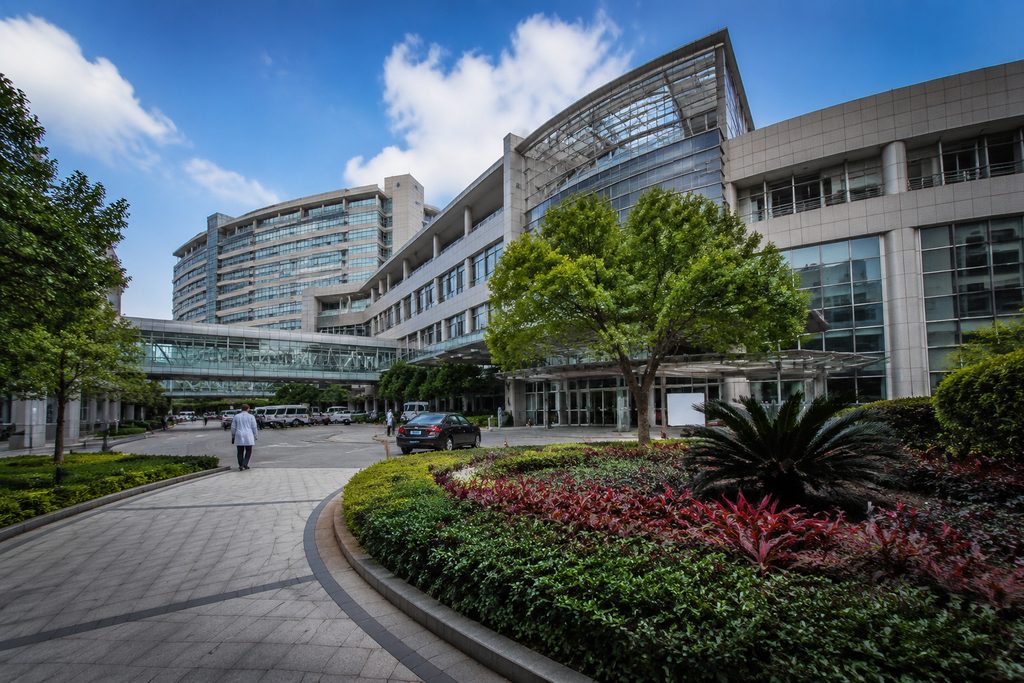
You have probably heard that seeking complex medical care in a foreign country means navigating chaos, language barriers, and uncertain quality. The data tells a different story for digestive diseases. Shanghai Renji Hospital, affiliated with Shanghai Jiao Tong University School of Medicine, operates the largest gastroenterology department in China. It has been ranked No. 1 in the nation for gastroenterology in the prestigious Fudan University China Hospital Specialty Reputation Ranking. For patients facing conditions like refractory inflammatory bowel disease, complex liver pathology, or early-stage gastrointestinal cancers, this represents a clinical volume and subspecialty depth rarely found under one roof anywhere else in the world.
The department handles over 450,000 outpatient visits and more than 10,000 inpatient admissions annually. That scale creates a pattern-recognition advantage. When a team sees thousands of cases of a specific autoimmune liver condition each year, they develop an intuition for treatment nuances that a center seeing dozens of cases cannot replicate. Our team connects international patients with this specific expertise, managing the logistics so you can focus on your health. We do not provide medical care ourselves. We are the bridge.
Key Takeaways
- Renji Hospital’s gastroenterology department is ranked No. 1 in China by the Fudan University Specialty Reputation Ranking, with over 450,000 annual outpatient visits.
- The department houses 5 specialized sub-centers, including one of Asia’s largest inflammatory bowel disease (IBD) cohorts with over 5,000 registered patients.
- International patients cannot simply walk in or book online; access requires navigating the hospital’s official International Medical Center and providing complete translated medical records.
- The cost of gastroenterology treatment at Renji Hospital Shanghai is typically 70-80% lower than equivalent care in the United States, but payment is required upfront with reimbursement sought from your insurer afterward.
The Problem: Waiting for a Diagnosis While Your Condition Worsens
Gastrointestinal diseases punish delay. A patient with suspected Crohn’s disease in Canada waits an average of 8 to 12 months to see a gastroenterologist for the first time. In the UK, the NHS target of 18 weeks from referral to treatment is missed for nearly 30% of gastroenterology patients. During those months, inflammation continues. Strictures form. Fistulas develop. The window for early intervention closes.
For patients with conditions like primary sclerosing cholangitis or autoimmune hepatitis, the shortage of hepatologists with deep subspecialty experience compounds the problem. A general gastroenterologist might see 5 cases of autoimmune hepatitis in a year. A specialist at a high-volume center sees 5 cases before lunch on a Tuesday. That difference matters. It changes treatment decisions. It changes outcomes.
Then there is the cost barrier for those considering private care in the West. A complex diagnostic workup with advanced endoscopy, cross-sectional imaging, and histopathology at a major US academic center can easily exceed $15,000 before any therapeutic intervention begins. Many patients simply cannot afford to get answers. They manage symptoms. They hope for the best. And their disease progresses.
Why Renji’s Gastroenterology Department Delivers Different Results
Clinical Volume That Creates Unmatched Pattern Recognition
The Renji gastroenterology team performs over 100,000 endoscopic procedures each year. That includes roughly 15,000 ERCP procedures, 8,000 EUS examinations, and a growing volume of advanced endoscopic submucosal dissection (ESD) for early gastrointestinal cancers. Compare this to a high-volume US academic center, which might perform 3,000 to 5,000 total advanced endoscopies annually. The difference is not marginal. It is an order of magnitude.
This volume translates directly into technical proficiency. A 2019 study published in Gastrointestinal Endoscopy found that endoscopists performing over 500 ERCPs annually had significantly lower rates of post-procedure pancreatitis and higher rates of successful biliary cannulation compared to those performing fewer than 100. The Renji team operates far above that threshold. For a patient with a complex biliary stricture requiring delicate wire-guided cannulation, the operator’s case volume is the single strongest predictor of a complication-free outcome.
The Best Gastroenterology Hospital in China Ranking Reflects Subspecialty Depth
Renji’s gastroenterology department is not a monolithic unit. It is organized into 5 distinct sub-centers: the Center for Inflammatory Bowel Disease, the Liver Disease Center, the Pancreatic Disease Center, the Advanced Endoscopy Center, and the GI Motility Center. Each sub-center is led by a team that focuses exclusively on that disease category. This is the structural reason behind the best gastroenterology hospital in China ranking that Renji has maintained consistently in the Fudan specialty reputation survey.
The IBD Center, for example, maintains a registry of over 5,000 patients with Crohn’s disease and ulcerative colitis. The team has published extensively on the distinct clinical phenotypes of IBD in Asian populations, which differ meaningfully from Western presentations. For an international patient with a challenging IBD case that has not responded to standard biologic therapy, access to a team that has managed thousands of similar cases and has experience with the full range of available biologics and small-molecule therapies can open up treatment pathways that a smaller center might not consider.
Cost of Gastroenterology Treatment at Renji Hospital Shanghai: The Structural Reasons
A common objection is that lower cost implies lower quality. That assumption does not survive scrutiny of the structural economics. The cost of gastroenterology treatment at Renji Hospital Shanghai is lower for reasons entirely unrelated to clinical quality: China’s lower labor costs for highly skilled physicians, the hospital’s enormous scale spreading fixed costs across far more patient encounters, and a healthcare system that does not carry the administrative overhead burden of the US multi-payer insurance system.
A diagnostic colonoscopy with sedation at Renji’s International Medical Center typically costs between $600 and $1,200. The same procedure at a US hospital outpatient department averages $2,750, and can exceed $5,000 depending on the facility. An advanced EUS with fine-needle aspiration for a pancreatic lesion runs $1,500 to $3,000 at Renji. In the US, that procedure costs $8,000 to $15,000. A complex ESD procedure to remove an early gastric cancer endoscopically costs $5,000 to $10,000 at Renji. The US equivalent: $25,000 to $50,000.
These are not cherry-picked numbers. They reflect the consistent 70-80% cost differential that holds across the full range of gastroenterology procedures. The clinical outcomes, measured by complication rates and complete resection rates for early cancers, are comparable to or better than Western benchmarks. The savings are structural, not a discount on quality.
How to Get Treated at Renji Hospital for Digestive Problems: The Real Pathway
This is where many international patients hit a wall. You cannot simply email the hospital and book an appointment with a famous professor. You cannot call the general outpatient number and expect English-language support. The pathway exists, but it requires navigating the International Medical Center specifically, and it follows a sequence that many Western patients find unfamiliar.
Step one is documentation. Before any appointment can be scheduled, the Renji International Medical Center requires a complete set of translated medical records: all relevant endoscopy and imaging reports, pathology slides and reports, a detailed clinical summary, and a list of current medications. The translation must be accurate. A poorly translated pathology report that mischaracterizes the grade of dysplasia can lead to an inappropriate treatment recommendation. This is not a bureaucratic hurdle. It is a patient safety requirement.
Step two is a remote evaluation. The relevant subspecialty team reviews the records and determines whether they can offer meaningful benefit beyond what the patient can access locally. If the case is accepted, the team provides a preliminary treatment plan and a cost estimate. This is not a binding quote. It is an informed estimate based on the information available. The final plan and costs may shift once the patient is seen in person and additional testing is completed.
Step three is the in-person visit. The patient travels to Shanghai, attends the International Medical Center for consultation and any required diagnostic procedures, and then proceeds to treatment. The timeline from arrival to completion of a diagnostic workup is typically 3 to 7 days. For a therapeutic procedure like ESD, the hospital stay is usually 3 to 5 days. For complex cases requiring multidisciplinary evaluation, the stay may extend to 2 weeks.
A medical trip to Shanghai requires planning. The city is well-served by international flights and has a robust infrastructure for foreign visitors, but the hospital environment itself functions differently than what Western patients expect. The International Medical Center provides English-speaking coordination, but the broader hospital operates in Mandarin. Having someone who understands both the clinical workflow and the language makes a tangible difference in how smoothly the experience goes.
What a Renji Hospital Digestive Disease Treatment Price for Foreigners Actually Covers
Transparency about costs matters. The Renji Hospital digestive disease treatment price for foreigners is not a single number. It breaks down into distinct components, and understanding those components helps patients plan financially and avoid surprises.
| Service Component | Estimated Cost (USD) | Notes |
|---|---|---|
| Initial specialist consultation (International Medical Center) | $150 – $350 | 30-60 minute consultation with an English-speaking coordinator present |
| Diagnostic colonoscopy with sedation | $600 – $1,200 | Includes pathology on any biopsies taken |
| Advanced EUS with FNA | $1,500 – $3,000 | For pancreatic or submucosal lesion evaluation |
| ERCP with stone extraction or stent placement | $2,000 – $4,500 | Varies with complexity and accessories used |
| ESD for early gastric or colorectal neoplasia | $5,000 – $10,000 | Includes 3-5 day hospital admission |
| Liver biopsy (percutaneous, ultrasound-guided) | $800 – $1,500 | Includes pathology processing and reporting |
| Abdominal MRI with contrast (3T) | $400 – $800 | Often same-day or next-day availability |
| Hospital ward stay (International Medical Center, per night) | $200 – $500 | Private room; varies by room category |
These prices apply to the International Medical Center pathway. The standard public outpatient pathway is less expensive but offers no English-language support, no appointment priority, and no coordination. For an international patient who does not speak Mandarin and needs a predictable schedule, the International Medical Center is the only practical option.
These figures are estimates. Final costs depend on the specific procedures performed, the complexity of the case, and the length of stay. A medical tourism package Shanghai Renji Hospital digestive care arrangement does not exist as a pre-packaged product with a fixed price. Each case is evaluated individually. That is a feature, not a flaw. A package deal for complex medical care should raise skepticism. Real medicine is customized to the patient, not priced off a menu.
Practical Considerations: Records, Visas, and Payment at Renji
Getting the logistics right before you travel prevents the kind of stress that can derail a medical trip. The first priority is medical records. You will need all relevant endoscopy reports, imaging studies (preferably the original DICOM files on CD, not just the written reports), pathology slides and reports, and a detailed clinical summary covering your diagnosis history, treatments tried, and response to each. These must be translated into Chinese by a medically competent translator. A general translation service will not suffice. Mis-translating “submucosal invasion” or “high-grade dysplasia” has clinical consequences.
The visa category for medical treatment in China is the S2 visa, endorsed for private affairs including medical treatment. Accompanying family members also apply for S2 visas. The hospital’s International Medical Center provides an invitation letter that supports the visa application. Processing times vary by country, but plan for 2 to 4 weeks. Do not book non-refundable flights until the visa is in hand. The S2 visa does not permit employment or long-term residence. For treatment courses exceeding 180 days, an S1 visa may be required. Our team can guide you through the specific requirements based on your nationality and treatment plan.
Payment at Renji Hospital is upfront. The hospital does not directly bill international insurance companies. You pay for each service at the time it is rendered, and you receive detailed receipts and medical reports to submit to your insurer for reimbursement. The International Medical Center accepts major credit cards and wire transfers. Cash payments in Chinese yuan are also accepted but are impractical for large amounts. Confirm with your insurer before traveling that they will reimburse for care received at a hospital outside their network and outside your home country. Get that confirmation in writing.
After you return home, follow-up care requires coordination. The Renji team provides a detailed discharge summary and treatment plan in English. You will need a local gastroenterologist willing to receive these records and continue your care. Identify that local physician before you travel to Shanghai. A handoff planned in advance works far better than one arranged after the fact.
Frequently Asked Questions
Technically yes, but practically it is extremely difficult. The hospital’s International Medical Center accepts direct inquiries, but the process requires Chinese-language fluency for record submission and follow-up communication. The center receives a high volume of inquiries and prioritizes cases that arrive with complete, properly translated documentation. Most international patients find that the time, uncertainty, and risk of miscommunication make direct booking impractical. A coordinator who understands the system and the language significantly reduces friction.
This happens more often than you might expect, and it is not necessarily a sign that one doctor is wrong. Different centers see different patient populations and develop different clinical approaches. Renji’s IBD team, for example, has extensive experience with treatment-refractory Crohn’s disease patterns that are more common in Asian populations and may recommend a biologic sequencing strategy that differs from standard Western guidelines. Take both opinions seriously. Discuss the differences openly with both teams. A second opinion is most valuable precisely when it challenges your existing treatment plan, not when it simply confirms it.
The Fudan University ranking that places Renji at No. 1 for gastroenterology in China is based on a peer-reputation survey of thousands of Chinese specialists, combined with objective measures of clinical volume and research output. The department’s complication rates for advanced endoscopic procedures have been published in peer-reviewed international journals and fall within or below accepted international benchmarks. The hospital holds Joint Commission International (JCI) accreditation. No ranking or accreditation guarantees an individual outcome, but the structural indicators of quality—volume, subspecialization, published outcomes, international accreditation—are all present at a level comparable to elite Western academic centers.
Renji Hospital is a full-service tertiary academic medical center with over 2,000 inpatient beds and comprehensive intensive care, interventional radiology, and surgical backup. If a complication occurs during an advanced endoscopic procedure, the resources to manage it are immediately available within the same hospital. This is not a freestanding endoscopy center where a complication requires transfer to a different facility. The International Medical Center also maintains communication with your local physician after you return home to facilitate continuity of care. Realistically, however, once you leave Shanghai, ongoing management of any late complications will need to be handled by your local medical team.
Your Next Step
Renji Hospital’s gastroenterology department offers a combination of clinical volume, subspecialty depth, and cost advantage that is difficult to replicate elsewhere. The barrier for international patients has never been the quality of the medicine. It has been the complexity of accessing it. Our team at China Medical Services exists to remove that barrier. We translate records, coordinate with the International Medical Center, arrange appointments, and provide bilingual support throughout your stay. We do not diagnose, treat, or guarantee outcomes. We handle the logistics so you can focus on getting well. If you are considering digestive disease treatment in Shanghai and want to understand whether Renji is the right fit for your specific case, reach out for a free consultation. We will review your situation honestly and tell you whether this pathway makes sense for you.
For more medical information and treatment options in China, visit chinamedservices.com (China Medical Services).
