Remote Dental Consultation in China: Implant Review Before Travel
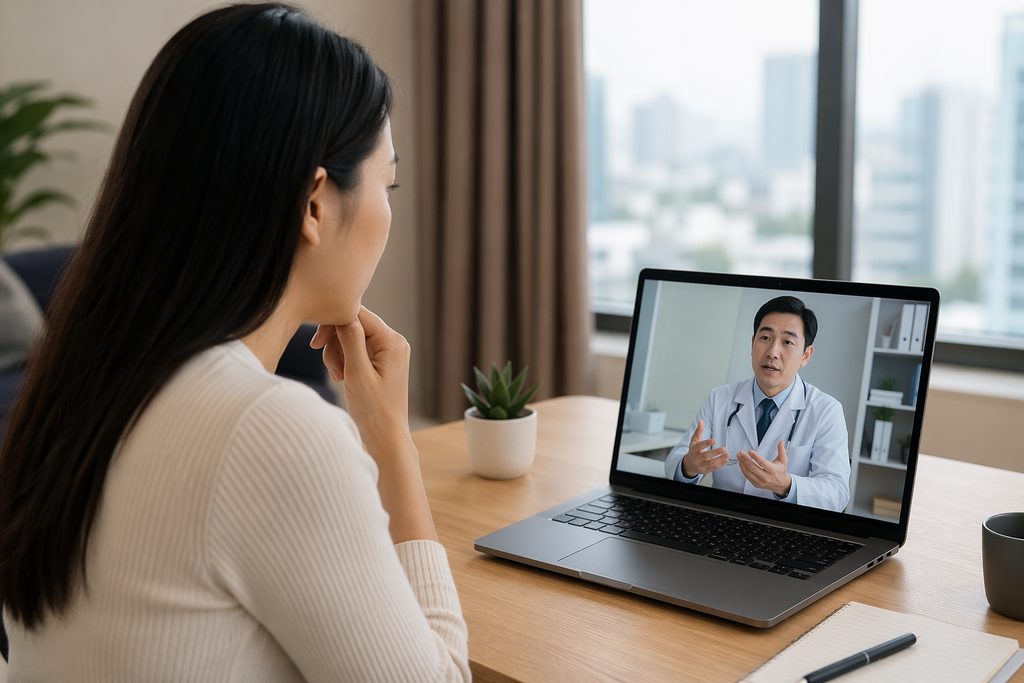
When 42-year-old Sarah from Manchester received a treatment plan quoting £4,800 for a single posterior dental implant, she did what many patients are now doing. She started looking abroad. Her dentist in the UK had already taken CBCT scans and X-rays. The question she typed into Google was simple: could a specialist in Shanghai actually review her case and give her a firm price before she booked a flight? The answer is yes. A dental implant cost China online consultation is now a standard first step for international patients — and it changes the entire economics and logistics of dental tourism.
We coordinate these remote reviews every week for patients from North America, Europe, the Gulf states, and Southeast Asia. The process is not a sales gimmick. It is a clinical workflow. You send existing scans, a Chinese implant specialist reviews them, and you receive a written treatment plan with a price range before committing to travel. This article explains exactly how that works, what it costs, what to watch for, and how to decide whether it is the right move for you.
Key Takeaways
- A single dental implant in China typically costs between $800 and $2,500, compared to $3,000 to $6,000 in the US and UK — a 50–80% saving.
- Remote implant reviews are legitimate clinical processes, not marketing calls. You submit CBCT/DICOM files and receive a written assessment from a licensed specialist.
- Written second opinions from top-tier Chinese dental departments run $300–500, while video consultations range from $100–300.
- Not every case is suitable for remote planning. Severe bone loss, sinus lifts, or full-arch restorations may require an in-person evaluation first.
The Problem: Dental Implant Prices Keep Rising While Quality Information Stays Scarce
The average cost of a single dental implant with crown in the United States now sits between $3,000 and $6,000, depending on region and whether bone grafting is needed. In the UK, private clinics commonly charge £2,000 to £4,800 per implant. Australia and Canada fall into similar ranges. For a full-arch restoration like All-on-4, American patients routinely face quotes of $24,000 to $35,000 per arch.
What makes this worse is opacity. Many Western clinics bundle the implant fixture, abutment, crown, and surgical fees into a single number without explaining which component drives the cost. Patients rarely get a second opinion on implant placement because the scans are already sitting in one clinic’s system. And dental insurance typically caps annual coverage at $1,000 to $2,000 — a fraction of the total bill. So patients pay more, understand less, and feel locked in.
That frustration is what pushes people to search for alternatives. But the fear is real: if I fly 6,000 miles for cheaper treatment, how do I know the quality is safe? That is precisely where remote consultation changes the game.
Why Remote Dental Implant Review Works Before You Travel
Clinical Volume Produces Astonishing Experience
Top-tier Chinese dental hospitals and international dental departments in Shanghai, Beijing, and Guangzhou handle implant volumes that dwarf typical Western clinics. A senior implantologist at a major Shanghai teaching hospital may place 800 to 1,500 implants per year. The average US general dentist places fewer than 100 annually. This matters because implant success correlates strongly with surgical experience — particularly for complex cases involving narrow ridges, immediate loading, or peri-implantitis management.
Chinese implant specialists also work with the full range of global implant systems: Straumann, Nobel Biocare, Osstem, Dentium, and domestic systems like WEGO and C-Tech. You are not limited to whatever brand a single Western clinic has a supply contract with. During your remote review, the specialist can discuss which system fits your bone quality and budget.
Digital Dentistry Is Standard, Not an Upgrade
Most high-volume Chinese dental departments now use CBCT-guided implant planning as their default workflow. That means your DICOM files are imported into software like SimPlant, coDiagnostiX, or domestic equivalents to plan implant position, angle, and depth before any incision. Guided surgery kits — where a 3D-printed surgical stent directs the drill — are common. This is not a premium add-on. It is the baseline at hospitals that serve international patients.
For a remote consultation, this digital infrastructure is exactly what you want. Your files are reviewed in the same software environment the surgeon will use for the actual procedure. The treatment plan you receive remotely is the same plan they will execute in person, barring any changes discovered during clinical examination.
Cost Structure: Why the Same Implant Costs Less
The price difference is not because Chinese dentists are less skilled. It is structural. Chinese dental clinics operate at much higher patient volumes with lower fixed overhead per procedure. Labor costs for dental assistants, lab technicians, and administrative staff are lower. Dental laboratory fees for crowns and abutments — often $300 to $800 in the US — run $80 to $250 in China for comparable zirconia or titanium work.
So a Straumann BLX implant with a zirconia crown that might cost $4,500 in New York or London can be delivered in Shanghai for $1,500 to $2,200. Same implant system. Same digital workflow. The savings come from overhead, not from cutting corners on materials or sterilization.
How Does Remote Dental Consultation Work for Implants: The Step-by-Step Process
This is the section patients ask about most. Here is the actual workflow, based on how we coordinate remote reviews for international patients every month.
Step 1: Gather Your Existing Records
You will need a recent panoramic X-ray (OPG) and ideally a CBCT scan in DICOM format. If you have had a failed implant or periodontal disease, include any previous surgical notes. If you do not have CBCT files, some Chinese clinics can still provide a preliminary assessment from a panoramic X-ray, but the treatment plan will be provisional. Without 3D imaging, the specialist cannot accurately measure bone width and height at the proposed implant site.
Step 2: Submit Through a Coordination Service or Directly
You can contact a hospital’s international department directly, but language barriers and file-transfer logistics often cause delays. Our team handles this daily — we translate your dental history into Chinese, transfer DICOM files securely, and route your case to the appropriate specialist. A remote dental implant review before travel China typically takes 3 to 7 working days from file submission to written report.
Step 3: Written Assessment or Video Consultation
Two formats are available. A written second opinion from a top-tier hospital specialist costs $300–500 and includes a written analysis of your bone condition, proposed implant system, number of implants needed, and whether grafting is required. A video consultation costs $100–300 for a general international department specialist, or $500–800 if you want a named top specialist on camera. During the video call, you can ask about healing timelines, abutment options, and what the surgeon sees in your scans.
Step 4: Receive Your Treatment Plan and Price Range
The written plan will specify the implant brand, fixture size, whether a sinus lift or bone graft is needed, the type of restoration, and the estimated total cost. Prices are given as ranges because the final fee depends on what is found during clinical examination and any adjustments to the surgical plan. A typical single implant plan might read: Straumann BLT 4.1mm x 10mm, no grafting required, screw-retained zirconia crown, estimated total $1,400–$1,800.
Step 5: Decide Whether to Travel
If the plan fits, you schedule treatment dates. If the specialist identifies a complication — insufficient bone height, a cyst, an impacted tooth — you now know before spending money on flights. That is the entire point of the remote step: you de-risk the decision.
Is Dental Implant Safe in China: Evaluating Quality and Red Flags
This is the question every patient asks, and it deserves a straight answer. Dental implant treatment in China is safe when performed at accredited hospitals and reputable international dental clinics. It is risky when performed at low-cost, high-volume chains that prioritize speed over diagnostics. The country has both. Your job is to know the difference.
Look for these markers of a safe provider. The clinic should use implant systems with global regulatory approval — Straumann, Nobel Biocare, Osstem, Dentium, or equivalent. The surgeon should be a licensed stomatologist with documented implant training, ideally from a university teaching hospital or a recognized international program. The facility should have a CBCT machine on-site and use guided surgery protocols. Sterilization standards should be visible: sealed instrument pouches, autoclave logs, disposable surgical drapes.
Red flags include quotes that seem dramatically below market (a $300 implant is not a bargain — it is a warning), pressure to pay in full before any consultation, no written treatment plan, and refusal to provide the surgeon’s credentials. We have seen patients offered “implant packages” that exclude the crown, the abutment, or the post-operative medications. The remote consultation is your best defense against these traps because it forces the clinic to put its clinical reasoning in writing before you commit.
| Item | China (Top Hospital / International Clinic) | United States | United Kingdom |
|---|---|---|---|
| Single implant + zirconia crown (Straumann/Nobel) | $1,400 – $2,500 | $3,500 – $6,000 | £2,500 – £4,800 |
| Single implant + crown (Osstem/Dentium) | $800 – $1,500 | $2,500 – $4,000 | £1,800 – £3,200 |
| Bone graft (small, per site) | $200 – $600 | $800 – $2,000 | £500 – £1,500 |
| Sinus lift (closed) | $500 – $1,200 | $2,000 – $4,500 | £1,500 – £3,500 |
| CBCT scan | $50 – $120 | $200 – $500 | £100 – £250 |
| Remote written second opinion | $300 – $500 | Rarely offered | Rarely offered |
These ranges vary by hospital tier, city, and case complexity. A Shanghai dental implant price comparison abroad consistently shows savings of 50–70% on the surgical component alone, with additional savings on laboratory fees for the restoration.
Practical Considerations: Records, Visas, Payment, and Follow-Up
If you decide to move forward after your remote review, several practical matters need attention before you board a plane.
Medical records and imaging. Bring all original DICOM files on a USB drive, not just printed films. Bring your written treatment plan, any medical clearance letters for conditions like diabetes or heart disease, and a list of current medications. Chinese dental departments will want to see blood pressure readings and may request a recent HbA1c if you are diabetic, since uncontrolled diabetes affects implant integration.
Visa. Dental treatment falls under the S2 visa category for short-term private affairs and medical treatment. The hospital or clinic will provide an invitation letter and treatment confirmation documents, which you submit with your visa application. Accompanying family members also apply for S2 visas. Processing times vary by consulate, so start at least 4 to 6 weeks before your intended travel date. Requirements change — always check with the Chinese embassy or consulate in your country for current rules.
Payment methods. Chinese hospitals generally require payment before surgery. International credit cards are accepted at most international departments and private clinics, though some public hospital departments prefer bank transfer or cash. Alipay and WeChat Pay are ubiquitous but require a Chinese bank account for full functionality. Clarify payment methods during your remote consultation so there are no surprises.
Insurance. Most Western dental insurance plans will not reimburse treatment performed outside their network, and dental tourism is rarely covered. Some medical tourism policies exist, but they are niche products. Budget for full self-payment. The savings usually dwarf any insurance reimbursement you would have received domestically anyway.
Language. International departments at major Chinese hospitals have English-speaking coordinators. Private international clinics like United Family and Jiahui operate fully in English. If you choose a public hospital’s standard department, expect limited English and bring a bilingual companion or use your coordination service’s translation support.
Follow-up after returning home. Dental implants require a healing period of 3 to 6 months for osseointegration before the final crown is placed. Some patients complete the entire process in China with two trips: one for implant placement, one for crown delivery. Others have the implant placed in China and the crown completed by a local dentist at home — though this requires careful coordination of implant system compatibility. Discuss this during your remote consultation.
Frequently Asked Questions
Yes, but “package” is a word to use carefully. Reputable providers will give you a detailed treatment plan and price range after reviewing your scans remotely. That is a legitimate clinical quote, not a tourist package. You are not buying a fixed-price holiday deal — you are receiving a medical assessment with associated costs. The distinction matters because a genuine treatment plan is adjusted based on clinical findings, while a “package” may hide exclusions.
It changes the plan, not the feasibility. Bone grafting and sinus lifts are routine in Chinese implant departments, and the cost difference versus Western clinics remains significant. A small bone graft adds $200–$600 in China versus $800–$2,000 in the US. The remote review will tell you whether grafting is needed and include it in the estimate. Some cases with severe atrophy may require a staged approach — graft first, wait 4–6 months, then implant. That extends your timeline but is not a reason to abandon the plan.
The clinical risk is low if you choose an international department or a JCI-accredited private clinic with English-speaking staff. The logistical risk is higher if you navigate alone. That is why patients use bilingual coordination services — not because the surgery is dangerous, but because registration, payment, imaging, and pharmacy visits in a Chinese public hospital are genuinely difficult without language support. Our team handles these logistics daily, and we are transparent about what we do: coordination, translation, and accompaniment — not medical advice.
Ask for the implant system name, the specific fixture model, and the lot number at the time of surgery. Reputable clinics will show you the sterile implant package before opening it. The written treatment plan from your remote consultation should specify the brand and model. If the clinic wants to substitute a different system, they should tell you why and adjust the price accordingly. This is standard practice at top-tier Chinese dental departments.
Your Next Step
If you have existing dental scans and are weighing implant treatment abroad, a remote review is the lowest-risk first move you can make. China Medical Services coordinates remote dental consultations with top-tier Chinese hospitals and international dental departments — we handle file transfer, translation, and specialist matching. We are not a hospital and do not provide diagnoses; we are the bridge between your records and the right clinical team. When you are ready to explore whether a dental implant cost China online consultation makes sense for your case, request a free consultation and we will walk you through the process step by step.
The decision to travel for dental care is personal and significant. But it should be made with real clinical information — not marketing brochures. A remote implant review gives you that information before you spend a single dollar on airfare. That is the smart way to start.
For more medical information and treatment options in China, visit chinamedservices.com (China Medical Services).
