Acupuncture for Migraine in China: How We Arrange Your Treatment
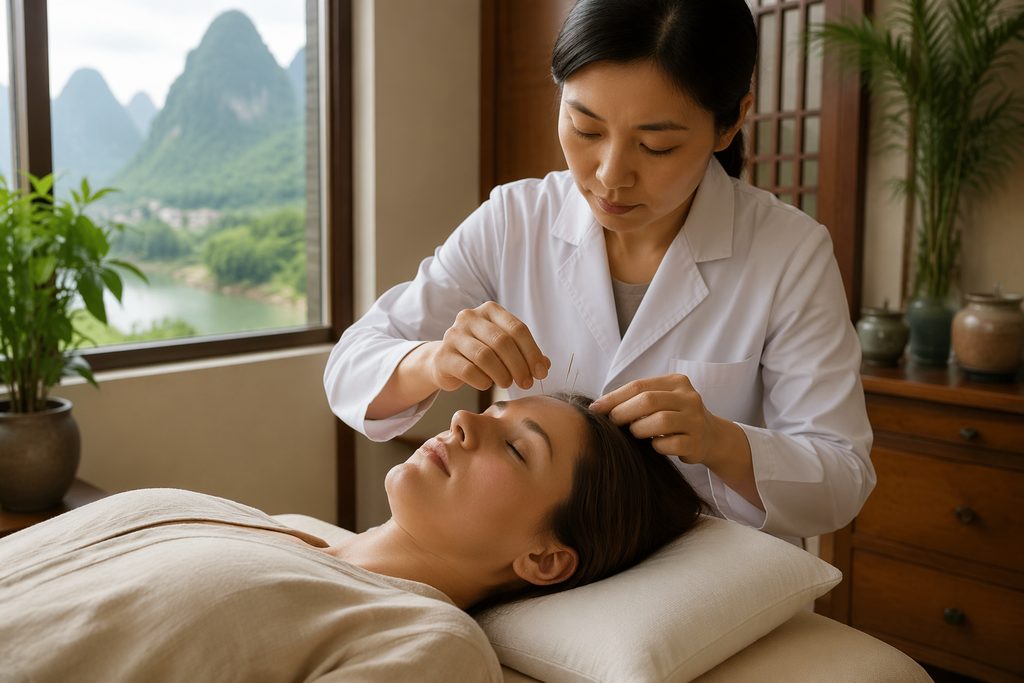
While a single migraine attack can cost an American patient upwards of $1,700 in lost productivity and emergency care, a full course of acupuncture treatment at a top Chinese TCM hospital often costs less than a single specialist consult in the United States. The gap is stark. And the clinical evidence for acupuncture as migraine prophylaxis keeps getting stronger.
Key Takeaways
- Acupuncture for migraine cost China typically runs $30–$80 per session at public TCM hospitals, with 10–12 sessions as the standard prophylactic course.
- China’s top TCM hospitals integrate acupuncture with neurology departments, meaning you get both traditional needle therapy and modern diagnostic workup under one roof.
- Language and registration barriers are real: public hospital acupuncture departments rarely have English-speaking staff, and you cannot pre-book a specific specialist from overseas through standard channels.
- A written second opinion or remote video consultation before travel can confirm whether acupuncture is appropriate for your specific migraine pattern — and save you an unnecessary trip.
The Problem: Migraine’s Toll and the Limits of Western Care
Migraine affects roughly 1 in 7 people worldwide. In the United States alone, more than 39 million adults live with the condition. The financial burden is staggering: the American Migraine Foundation estimates that healthcare costs plus lost productivity exceed $36 billion annually in the US. Patients cycle through triptans, beta-blockers, CGRP inhibitors, and Botox injections — yet a significant minority, perhaps 30–40%, never achieve satisfactory relief.
That is where the search for alternatives begins. And for many patients, that search leads to questions about acupuncture for migraine cost China, where the therapy is not a boutique wellness add-on but a mainstream, insurance-covered medical intervention delivered at scale. The contrast is not merely financial. It is structural.
Why Acupuncture in China Delivers Different Results
At hospitals like Guang’anmen Hospital in Beijing or the First Teaching Hospital of Tianjin University of TCM, acupuncture departments treat hundreds of patients daily. A senior acupuncturist in a Chinese TCM hospital may perform 40–60 needle sessions per day, five or six days a week. That is tens of thousands of procedures over a career. Compare that to a Western acupuncturist who might see 8–12 patients daily in a private clinic. The pattern-recognition skills that come from that volume are difficult to replicate elsewhere.
Chinese TCM hospitals do not ask you to choose between acupuncture and modern medicine. A typical migraine workup at a top TCM hospital includes a neurology consult, possibly an MRI or CT scan to rule out secondary causes, and then a TCM syndrome differentiation — all before the first needle is placed. That dual-diagnosis approach matters. It means the acupuncturist is not working in the dark. Your treatment plan is informed by imaging and lab work, not just pulse and tongue diagnosis.
The most common question we field is about acupuncture for migraine cost China. The answer is reassuring: a single session at a public TCM hospital in Beijing or Shanghai typically costs between $30 and $80 USD. A full prophylactic course of 10–12 sessions, the standard protocol for migraine, totals roughly $300 to $960. In the United States, a single acupuncture session averages $75–$150, and a full course can exceed $1,500. The structural reasons are straightforward: lower labor costs, higher patient volume, and government subsidies for public hospitals. Quality does not suffer from these economics — if anything, the volume-driven expertise improves it.
What a Typical Acupuncture Migraine Protocol Actually Looks Like in China
Patients often ask how many sessions of acupuncture for migraine are needed before they see results. The answer, based on Chinese clinical practice and published TCM guidelines, is typically a course of 10–12 sessions, delivered two to three times per week. Some patients report reduced attack frequency after the first week. Others need the full course plus maintenance sessions every two to four weeks.
A standard session at a Chinese TCM hospital runs 30–45 minutes. The acupuncturist selects points based on your specific migraine pattern — frontal, temporal, or occipital pain, with or without aura, aggravated by stress or hormonal cycles. Common points include Baihui (GV20), Taiyang (EX-HN5), Fengchi (GB20), and Hegu (LI4). Needles are typically retained for 20–30 minutes. Some departments add electroacupuncture, where a mild current is applied to the needles to enhance stimulation.
But here is the honest part: you cannot simply fly to Beijing and walk into a top TCM hospital’s acupuncture department expecting to be seen that day. Public hospital registration works on a same-day queuing system. You line up at 6 a.m., take a number, and wait. Without Chinese language ability, even getting a hospital card created is a challenge. This is where preparation — or a bilingual coordinator — changes the experience entirely.
How to Choose the Right Acupuncture Provider in China
Not all acupuncture in China is equal. The provider landscape splits into three broad categories: public TCM hospitals, public general hospitals with TCM departments, and private international clinics. Each has a different profile for foreign migraine patients.
| Provider Type | Cost per Session (USD) | English Support | Best For |
|---|---|---|---|
| Public TCM Hospital (e.g., Guang’anmen) | $30–$60 | Limited — bring an interpreter | Authentic TCM, lowest cost, integrated neurology |
| Public General Hospital TCM Dept (e.g., Peking Union) | $40–$80 | Moderate — some English-speaking staff | Combined Western + TCM evaluation |
| Private International Clinic (e.g., United Family) | $100–$250 | Full English service | Convenience, insurance billing, no language barrier |
The search for the best acupuncture clinic Beijing migraine often leads patients toward Guang’anmen Hospital, the flagship TCM hospital affiliated with the China Academy of Chinese Medical Sciences. Its acupuncture department is among the largest in the country. For patients who want the credibility of a Western-style hospital with an attached TCM department, Peking Union Medical College Hospital offers acupuncture through its TCM department alongside top-tier neurology.
But does acupuncture work for migraines China? The evidence is nuanced. A 2020 Cochrane review of 22 trials involving 4,985 participants found that acupuncture reduces migraine frequency by about 50% in up to 59% of patients, compared with roughly 15–20% for sham acupuncture. That is a meaningful effect size. Chinese clinical guidelines for migraine prophylaxis include acupuncture as a recommended non-pharmacological intervention. The key variable is protocol quality: point selection, session frequency, and practitioner experience all influence outcomes.
Practical Considerations: Visas, Records, and Follow-Up
If you are considering medical tourism acupuncture China price and logistics, several practical matters need attention before you book a flight.
First, your visa. Foreign nationals traveling to China for medical treatment apply for an S2 visa, which covers short-term private affairs including medical care. You will need supporting documents from the hospital — typically an invitation letter or treatment confirmation. If your treatment requires a stay longer than 180 days, an S1 visa applies. Family members accompanying you also apply for S2 visas. We always advise confirming current requirements with the Chinese embassy or consulate in your country, as rules shift.
Second, your medical records. Bring a complete migraine history: headache diary, list of previous medications and responses, any imaging reports (MRI, CT), and a letter from your neurologist summarizing your diagnosis. Chinese TCM doctors will want to see what has already been tried. A written second opinion — where a Chinese TCM specialist reviews your records remotely — can clarify whether acupuncture is likely to help your specific migraine subtype before you spend money on travel. That service typically costs $300–$500 and is often a wise first step.
Third, payment. Public hospitals in China require prepayment — you deposit funds at registration and draw down as services are delivered. Credit cards are accepted at international departments, but cash or Chinese payment apps are more common in standard outpatient areas. Private international clinics handle direct insurance billing, which is a significant convenience if your plan covers acupuncture.
Fourth, language. Even at top public TCM hospitals, front-line staff rarely speak English. A bilingual medical companion — who handles registration, queueing, payment, and translation — is available from $300 per day. It is not a luxury. It is the difference between a smooth visit and a day lost in confusion.
Finally, follow-up after you return home. Acupuncture for migraine is a course, not a single event. Chinese TCM doctors typically recommend maintenance sessions every 2–4 weeks after the initial course. Many patients arrange remote video follow-ups with their Chinese acupuncturist and continue maintenance acupuncture with a local provider at home. The treatment plan should be structured with that continuity in mind.
Frequently Asked Questions
How many sessions of acupuncture for migraine do I actually need?
Most Chinese TCM protocols recommend 10–12 sessions over 4–6 weeks as an initial course. Some patients notice reduced attack frequency within the first 5 sessions. Maintenance sessions every 2–4 weeks are common after the initial course. Individual response varies — a written second opinion before travel can give you a realistic expectation for your specific case.
Is acupuncture in China safe for foreign patients?
Yes, when performed at accredited hospitals. Chinese TCM hospitals use single-use, sterile disposable needles — the same standard as Western acupuncture clinics. The main risks are minor: mild bruising, transient soreness, occasional dizziness after a session. Serious adverse events are rare. Choosing a hospital-affiliated department rather than an unregulated street-side clinic is the key safety decision.
What if acupuncture does not work for my migraines?
That is a real possibility, and you should plan for it. Roughly 40% of migraine patients do not achieve meaningful relief from acupuncture alone. That is why we recommend choosing a hospital with an integrated neurology department — if acupuncture underperforms, the same institution can offer medication adjustments, nerve blocks, or other interventions. A remote consultation before travel can also help identify whether your migraine pattern is one that typically responds to acupuncture.
Can I book acupuncture treatment China migraine before I arrive?
Through standard public hospital channels, no. Public TCM hospitals operate on same-day registration for outpatient acupuncture. You cannot pre-book a specific specialist from overseas through the ordinary system. However, hospital international departments and VIP channels do allow advance coordination for foreign patients, typically at 1.5–2 times the standard cost. A coordination service can arrange this before you travel, including the hospital invitation letter needed for your S2 visa.
What does the full trip cost, including treatment?
A realistic budget for a 10-session acupuncture course in Beijing or Shanghai: $300–$800 for treatment, $200 for airport transfers, $800–$1,500 for 3–4 weeks of modest accommodation, and $300–$600 for bilingual companion services if needed. Total: roughly $1,600–$3,100, excluding international flights. That is often less than the out-of-pocket cost of a comparable acupuncture course in the United States, even before insurance considerations.
Your Next Step
Acupuncture for migraine in China is not a miracle cure, but it is a clinically supported, cost-effective option delivered at a scale that no Western clinic can match. The evidence is real, the price is compelling, and the logistics — while not trivial — are manageable with proper preparation. Our team at China Medical Services helps international patients navigate Chinese TCM hospitals: we coordinate written second opinions, arrange video consultations with TCM specialists, and provide bilingual companions for in-person treatment. We are not a hospital and we do not provide medical advice or diagnoses. If you want to understand whether this path makes sense for your migraines, start with a conversation. Request a free consultation and we will help you think through the options — no pressure, just clarity.
For more medical information and treatment options in China, visit chinamedservices.com (China Medical Services).
