Health Checkup Recovery Hotel in China: Where to Stay After Testing
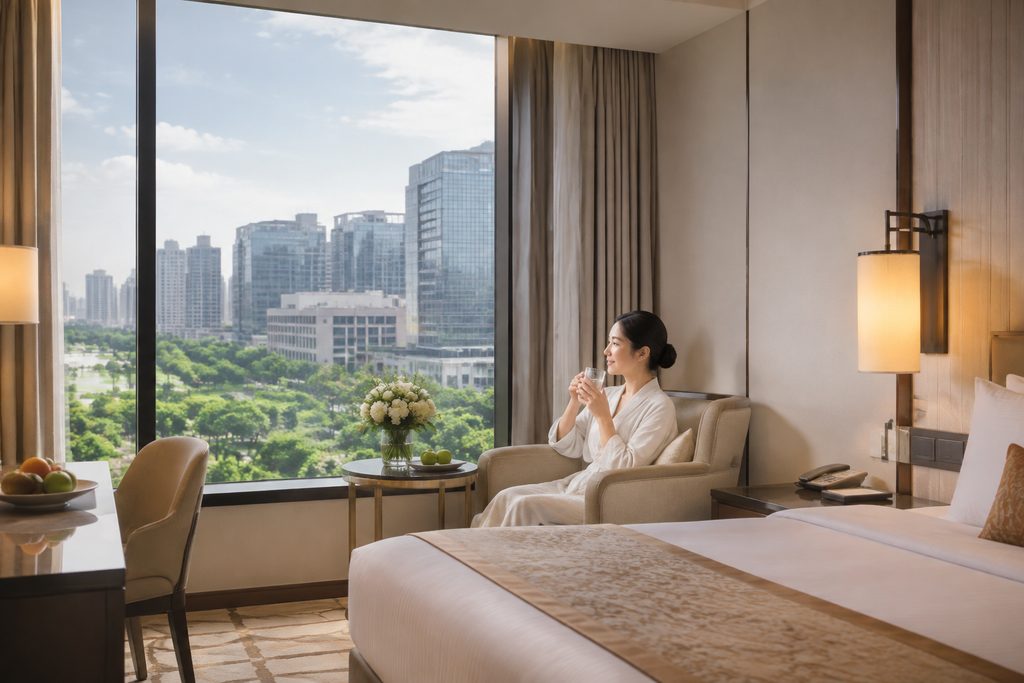
According to the China National Tourism Administration’s medical tourism report, over 400,000 international visitors traveled to China for healthcare services in 2024, with executive health screenings among the fastest-growing segments. Many of those travelers discovered something the brochures rarely mention: the hours after your final blood draw or imaging scan matter just as much as the tests themselves. Finding the right health checkup recovery hotel China options can determine whether your medical trip feels restorative or exhausting.
We have coordinated stays for patients undergoing everything from cardiac stress tests at Fuwai Hospital to full-body executive screenings at Peking Union Medical College Hospital. The pattern is consistent. Patients who book accommodation near their testing facility recover faster, navigate follow-up appointments with less friction, and report significantly lower stress levels than those who commute across the city between tests.
This guide covers what actually happens after your checkup, where to stay in China’s major medical cities, what recovery actually requires, and how to avoid the mistakes that turn a two-day health screening into a week of unnecessary fatigue.
How This Actually Works, Step by Step
You land in Beijing or Shanghai with your medical records translated and your appointment confirmed. What happens next follows a predictable sequence.
Your first morning involves fasting blood work, usually drawn between 7:00 and 9:00 AM. Then comes the imaging — ultrasound, chest X-ray, sometimes CT or MRI depending on your package. By early afternoon, you have completed most baseline testing. Your body has been poked, scanned, and deprived of food for twelve-plus hours.
Here is what nobody tells you: the fatigue is real. Fasting alone drops blood glucose enough to cause measurable cognitive sluggishness. Add contrast dye from imaging, disrupted sleep from travel, and the ambient stress of navigating a foreign hospital system, and you are operating at maybe 70% of baseline. That is why where to stay after medical checkup Shanghai matters more than most patients anticipate.
The sequence typically unfolds like this:
- Day 1: Arrival, hotel check-in, light dinner, early sleep. Your body needs to adjust to the time zone before testing begins.
- Day 2: Fasting blood work at 7:30 AM, followed by imaging throughout the morning. You finish by 2:00 PM, exhausted.
- Day 3: Specialist consultations to review results. Some packages include same-day review; others schedule this 24-48 hours later.
- Day 4: Departure or extended monitoring, depending on findings.
Each of these days involves hospital visits. Each visit involves walking, waiting, and cognitive load. Your hotel choice directly affects how much energy you have for each step.
Do You Actually Need a Recovery Hotel After a Health Checkup in China?
The short answer: yes, but not for the reason most people assume. A health checkup is not surgery. You will not be bedridden. But the cumulative effect of fasting, imaging contrast, sleep disruption, and navigation stress is substantial.
We have seen patients try to stay at tourist hotels in central Shanghai, thirty minutes by metro from Zhongshan Hospital. By day three, they are depleted. The commute alone — crowded trains, confusing transfers, language barriers — burns energy that should go toward recovery and clear thinking during consultations.
So is hotel recovery needed after checkup in China? For most international patients, yes. Not because the tests are dangerous, but because the logistics are draining. A quiet room within walking distance of your hospital changes the entire experience.
One patient from Dubai put it bluntly after her executive screening at Ruijin Hospital: “I didn’t realize how much the hotel mattered until I didn’t have to think about getting there.”
Health Checkup Recovery Hotel China: What to Look For
Not every hotel near a hospital is a recovery hotel. Some are budget options catering to domestic patients’ families. Others are luxury properties with no understanding of medical guests’ needs. The right health checkup recovery hotel China properties share specific characteristics.
Proximity to Your Hospital
Walking distance is ideal. Under 15 minutes on foot, or a single short taxi ride. Every transfer adds friction. After fasting blood work, you want breakfast within minutes, not an hour.
Quiet Rooms
Chinese hospitals are loud. The surrounding streets are louder. A recovery hotel should offer rooms facing away from main roads, with adequate soundproofing. Ask about this specifically when booking.
Flexible Dining Hours
Your eating schedule will be dictated by your testing schedule. A hotel restaurant that stops breakfast at 9:30 AM is useless on a day when your last blood draw ends at 10:00. Look for extended breakfast hours or room service.
English-Speaking Staff
This matters more than most travelers expect. When you need to extend your stay, arrange a late checkout, or communicate a dietary restriction, English capability at the front desk removes a significant barrier.
Air Quality and Climate Control
Beijing’s air quality varies dramatically by season. A hotel with proper HVAC filtration makes a measurable difference in how you feel, especially after respiratory testing or if you have any underlying pulmonary concerns.
Best Recovery Hotel for Medical Tourists Beijing: Neighborhood Guide
Beijing’s top hospitals cluster in specific districts. Understanding the geography helps you choose wisely.
Peking Union Medical College Hospital (PUMCH) sits in Dongcheng District, near Wangfujing. The surrounding area includes several international-brand hotels within walking distance. Best recovery hotel for medical tourists Beijing options in this zone tend to be mid-range to upper-mid-range, with prices from $80 to $200 per night depending on season.
Fuwai Hospital, the world’s highest-volume cardiac surgery center, is in Xicheng District. The immediate neighborhood is more residential, with fewer international hotels. Patients often stay 10-15 minutes away by taxi in the Financial Street area, where major chains operate.
For those visiting Beijing’s private international hospitals, Chaoyang District offers the widest range of Western-style accommodations. United Family Hospital’s main campus sits in this area, surrounded by serviced apartments and international hotels with English-speaking staff and Western breakfast options.
A practical tip: ask your hospital’s international department which hotels they commonly recommend. They know which properties handle medical guests well and which do not.
Where to Stay After Medical Checkup Shanghai: District Breakdown
Shanghai’s medical landscape splits across several districts. Zhongshan Hospital, affiliated with Fudan University, anchors the Xuhui District. Huashan Hospital sits in Jing’an. Ruijin Hospital is in Huangpu. Each area offers distinct accommodation profiles.
For Zhongshan Hospital patients, the Xuhui area provides the best where to stay after medical checkup Shanghai options. Several international hotels sit within a 10-minute walk. Prices range from $90 to $250 per night. The area is walkable, with numerous restaurants and pharmacies nearby — useful when you need to pick up supplements or prescriptions after your consultation.
Huashan Hospital patients often prefer Jing’an District. This area blends international hotels with local character. The metro access is excellent, though if you are staying within walking distance, you will not need it.
Ruijin Hospital’s Huangpu location puts you near the former French Concession. Boutique hotels here tend to be quieter than the large chains, though English capability varies more widely.
| Shanghai Area | Primary Hospital | Typical Hotel Price Range | Walking Distance to Hospital |
|---|---|---|---|
| Xuhui | Zhongshan Hospital | $90–$250/night | 5–15 minutes |
| Jing’an | Huashan Hospital | $100–$280/night | 5–15 minutes |
| Huangpu | Ruijin Hospital | $80–$220/night | 10–20 minutes |
| Pudong | Shanghai East Hospital | $70–$200/night | 10–25 minutes |
Prices fluctuate significantly by season. October and April conferences can drive rates up 40% or more. Book early when possible.
Executive Health Checkup Package with Hotel China: What Is Typically Included
Many Chinese hospitals now offer executive health checkup package with hotel China arrangements. These bundles typically include the medical screening itself plus accommodation at a partner hotel, sometimes with airport transfers.
What you get varies widely. Top-tier packages at hospitals like PUMCH or Zhongshan might include:
- Comprehensive blood panel, including tumor markers and hormonal assessment
- Full-body imaging: ultrasound, chest X-ray, sometimes low-dose CT
- Cardiac evaluation: ECG, stress test, echocardiogram
- Gastrointestinal screening: gastroscopy and colonoscopy under sedation
- Specialist consultations to review all findings
- Hotel accommodation for 2-3 nights
- Some meals and airport transfers
Prices for these bundled packages generally range from $1,500 to $5,000, depending on the hospital tier and the depth of screening. Standalone hotel costs typically add $150 to $400 for a 2-3 night stay in a quality property.
One thing to understand: the hotel included in these packages is not always the closest option. Hospitals partner with specific properties based on corporate relationships, not necessarily proximity. Always ask which hotel is included and check the distance before booking.
A Realistic Timeline
Planning a health checkup trip to China involves more lead time than most people expect. Here is what a realistic schedule looks like:
| Stage | Duration | What Happens |
|---|---|---|
| Initial inquiry | Week 1 | Contact hospital international department or service coordinator. Discuss package options, screening scope, pricing. |
| Document preparation | Week 2–3 | Medical records translation, passport copies, visa application materials. S2 visa processing typically takes 1-4 weeks depending on your home country. |
| Appointment confirmation | Week 3–4 | Hospital confirms testing dates. Hotel booking finalized. Airport transfer arranged if needed. |
| Travel and testing | Days 1–4 | Arrival, checkup completion, specialist review, departure or extended stay. |
| Follow-up at home | Month 1–3 | Review results with your home physician. Schedule any recommended follow-up testing or specialist referrals. |
The step people forget is document translation. If your existing medical records are not in English or Chinese, translation adds 3-7 days. Start this process early.
Visa processing is another hidden time cost. The S2 visa, which covers medical treatment visits, typically takes one to four weeks depending on your home country’s Chinese embassy or consulate. Some countries process faster; others require in-person interviews.
What Can Go Wrong — and What Happens Then
Medical travel rarely goes perfectly. Understanding the failure modes helps you prepare.
Problem: Your results require follow-up testing. This happens in roughly 15-20% of executive screenings, based on our coordination experience. A borderline finding on imaging or an elevated marker prompts additional tests. Your 3-day trip becomes 5 days. This is why refundable hotel bookings matter.
Problem: The hotel is not what you expected. Photos mislead. Noise levels surprise. The room faces a construction site. If you booked directly, you have recourse. If your package included the hotel, contact your hospital coordinator — they can often arrange a room change within the same property.
Problem: Language barriers at the hotel. Even international-brand hotels in China sometimes have limited English capability during night shifts. Have your hospital coordinator’s contact information ready. They can translate over the phone if needed.
Problem: You feel unwell after testing. Sedation from endoscopy can leave you groggy for 12-24 hours. Contrast dye from CT scans occasionally causes mild reactions. If symptoms concern you, contact your testing hospital immediately — do not wait until you return home.
Hotel Near Hospital for Recovery China: How to Evaluate Your Options
Choosing a hotel near hospital for recovery China requires more than checking a map. Here is a practical evaluation framework we use with patients.
First, verify the actual walking route. A hotel that looks 500 meters from the hospital on a map might require crossing an eight-lane road with no pedestrian crossing. Check satellite view and street-level imagery.
Second, ask about medical guest policies. Some hotels near major Chinese hospitals have experience with medical travelers and offer early breakfast, late checkout flexibility, and quiet room assignments. Others treat you like any tourist.
Third, consider noise. Chinese cities are loud. Construction, traffic, and hospital ambulance traffic all contribute. Ask for a room on a high floor, away from the elevator bank, and not facing the main road.
Fourth, check the cancellation policy. Medical schedules change. Results come back suspicious. Flights get delayed. A flexible cancellation policy is worth paying slightly more for.
Fifth, evaluate dining options. After fasting blood work, you need food quickly. A hotel restaurant with all-day dining or a nearby cluster of restaurants makes a real difference in your recovery experience.
Practical Considerations: Records, Visa, Payment, and Language
Beyond hotel selection, several practical matters affect your health checkup trip.
Medical records: Bring copies of any prior test results, imaging reports, and medication lists. Translated versions help Chinese physicians understand your history. Digital copies on your phone are useful, but printed copies work better in Chinese hospital settings.
Visa: The S2 visa covers short-term medical treatment visits. Processing times vary by country. Start at least six weeks before your planned travel date. Your hospital can provide an invitation letter that supports your application. For more on navigating China’s medical system as a foreigner, see our guide to top-ranked Chinese hospitals.
Payment: Chinese public hospitals typically require upfront payment for checkup packages. International credit cards work at most hospital international departments, though some smaller facilities prefer cash or domestic payment methods. Private international hospitals often accept international insurance directly.
Language: Public hospital staff may have limited English capability outside the international department. Even within international departments, communication gaps occur. Having a bilingual coordinator or companion reduces friction substantially. Our bilingual medical companion service handles registration, translation, and navigation so you can focus on your health.
Follow-up at home: Your Chinese checkup results need review by your home physician. Some findings may require follow-up testing in your home country. Bring comprehensive written reports, not just verbal summaries.
Frequently Asked Questions
For basic screenings, no. But for comprehensive executive packages involving sedation, contrast imaging, or multiple days of testing, staying near your hospital is strongly recommended. Sedation from endoscopy alone means you should not travel far immediately afterward.
Quality hotels near major Chinese hospitals typically range from $80 to $250 per night. Budget options exist below $60, but noise levels and service quality vary significantly. International-brand hotels in medical districts average $120 to $180 per night.
Many hospital international departments can recommend partner hotels and some executive packages include accommodation. However, hospital-arranged hotels are not always the closest or quietest options. Always verify the specific property and its distance from the hospital before accepting a package inclusion.
What if my checkup results show something concerning?
Your testing physician will discuss
For more medical information and treatment options in China, visit chinamedservices.com (China Medical Services).
