Is My Stomach Pain an Ulcer? Symptoms, Diagnosis, and Treatment Costs in China
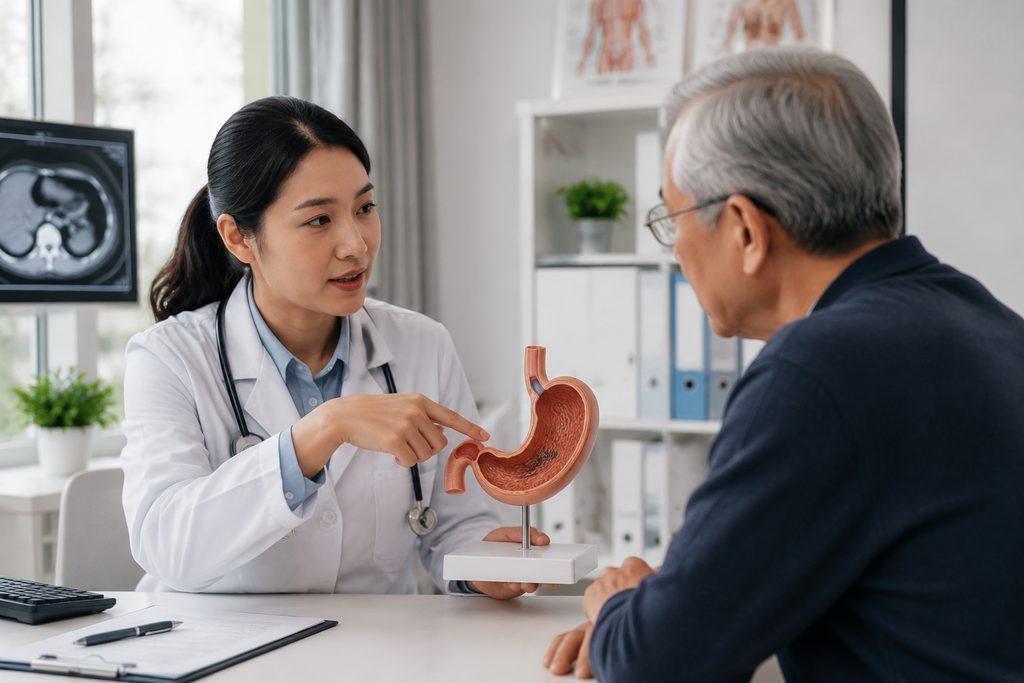
Roughly 1 in 10 people will develop a peptic ulcer at some point in their lives. That gnawing, burning sensation below your breastbone could be gastritis, gallstones, or something else entirely. But when the pain wakes you at 3 a.m. and eases after eating, an ulcer becomes the prime suspect. For many international patients, the question isn’t just “what is this pain?” — it’s also “what will diagnosis and stomach ulcer treatment cost China actually run me?”
We work with patients from over 40 countries who face this exact dilemma. Some have waited months for an endoscopy back home. Others have been quoted five-figure bills just for diagnostic work. This article walks through what an ulcer feels like, how Chinese gastroenterologists confirm it, what treatment typically costs, and how to navigate the system if you decide to come.
How This Actually Works, Step by Step
You’re sitting at home with recurring stomach pain. Maybe you’ve tried antacids. Maybe they help for an hour and the ache returns. Here’s the sequence most of our patients follow when they contact us about suspected ulcers.
First, you send us whatever records you have. Blood work, previous endoscopy reports, H. pylori breath test results, ultrasound images. Even a simple list of symptoms and medications helps. Our team translates these into Chinese and sends them to a gastroenterology department at one of our partner hospitals.
A specialist reviews the file. Usually within 2–4 working days, you receive a written assessment: whether your symptoms align more with an ulcer, gastritis, or reflux, and what diagnostic steps make sense. If you want to speak directly with the doctor, we arrange a video consultation. That costs between $100 and $300 for a standard hospital international department, or $500–800 for a top-tier specialist.
If the recommendation is an endoscopy, we coordinate the appointment. You travel to China, we handle registration, translation, and a bilingual companion who stays with you through the procedure. Results come back the same day in most cases. Treatment follows — antibiotics if H. pylori is present, acid suppression, and follow-up testing 4–6 weeks later.
That’s the clean path. Reality sometimes includes waiting for visa approval, translating records properly, and deciding which hospital fits your budget and condition.
Is My Stomach Pain an Ulcer or Gastritis? The Clinical Difference Matters
Patients ask us this constantly. The symptoms overlap, but the implications differ. Gastritis means inflammation of the stomach lining. An ulcer is an actual breach in that lining — a crater that can bleed, perforate, or obstruct.
Ulcer pain typically follows a pattern. It flares when your stomach is empty, often 2–3 hours after a meal or in the middle of the night. Eating or taking antacids usually calms it. Gastritis pain tends to appear right after eating, especially with spicy, acidic, or fatty foods. Bloating and early fullness are more prominent in gastritis.
But here’s the catch: roughly 30% of ulcer patients report no classic symptoms at all. Silent ulcers can bleed without warning. That’s why Chinese gastroenterologists don’t rely on symptoms alone. They test.
The definitive answer comes from an upper endoscopy. A thin camera goes down your throat, and the doctor sees the stomach lining directly. No guessing. If there’s a crater, it’s an ulcer. If the lining is red and swollen but intact, it’s gastritis. The procedure takes 10–15 minutes under sedation in most Chinese hospitals.
A Realistic Timeline
People underestimate how long the pre-travel phase takes. Here’s what a typical journey looks like from first contact to completed treatment.
| Stage | What Happens | Typical Duration |
|---|---|---|
| Day 1–3 | Initial consultation, record collection, symptom review | 1–3 days |
| Day 4–10 | Written second opinion or video consultation with gastroenterologist | 3–7 days |
| Week 2–3 | Decision to travel, S2 visa application, document preparation | 1–2 weeks |
| Week 3–4 | Arrival in China, hospital registration, endoscopy scheduling | 2–5 days |
| Week 4 | Endoscopy, biopsy results, treatment plan delivered | Same day to 3 days |
| Month 2–3 | H. pylori eradication therapy, symptom monitoring | 2–4 weeks of medication |
| Month 3 | Follow-up breath test to confirm H. pylori clearance | 4–6 weeks after finishing antibiotics |
Visa processing is the wildcard. S2 visa applications for medical treatment typically take 5–10 business days, but embassy backlogs can stretch this. We always advise patients to apply as soon as the hospital confirms they’ll accept you. Some patients combine the trip with a general health check — Chinese hospitals offer comprehensive packages that include endoscopy, abdominal ultrasound, and blood panels at a fraction of Western prices.
One thing that surprises people: you cannot simply book an endoscopy online from abroad at a public hospital. You need an in-person registration and a doctor’s order first. That’s where our coordination service earns its fee — we handle the hospital card creation, registration, and queue management before you land.
What Can Go Wrong — and What Happens Then
Let’s be honest about failure modes. This is where trust gets built or broken.
The endoscopy finds something unexpected. Maybe it’s not an ulcer. Maybe it’s erosive gastritis, Barrett’s esophagus, or — in rare cases — a malignancy. Chinese hospitals handle this well because they see enormous volumes. The doctor takes biopsies during the same procedure. Pathology results come back within 3–5 days. If cancer is found, you’re already in a system with some of the world’s busiest oncology departments. Early gastric cancer in China is increasingly treated with endoscopic submucosal dissection — removing the lesion through the scope, no open surgery needed.
Your H. pylori test is negative. Then what? Negative breath or stool tests still miss roughly 10–15% of infections, particularly if you recently took antibiotics or proton pump inhibitors. Chinese gastroenterologists often recommend a biopsy-based test during endoscopy, which has higher sensitivity. If truly negative, the ulcer likely stems from NSAID use. You stop the NSAIDs, continue acid suppression, and heal.
The ulcer bleeds. This is the complication everyone fears. Signs include black, tarry stools or vomiting what looks like coffee grounds. Chinese emergency departments handle bleeding ulcers routinely. Endoscopic hemostasis — clipping or injecting the bleeding vessel — stops the bleed in over 90% of cases. If you’re in China when this happens, you go to the emergency department of any top-tier hospital. Your bilingual companion coordinates admission and translation.
Records get lost in translation. A poorly translated endoscopy report can lead to wrong assumptions. We’ve seen patients arrive with reports that say “ulcer” when the Chinese original said “suspected ulcer — biopsy pending.” Our team translates every document before the doctor sees it, and the doctor reviews the original images when available.
How Do Doctors in China Diagnose Stomach Ulcers? The Testing Protocol
Chinese gastroenterology follows international guidelines with some local adaptations. The diagnostic pathway is efficient because volume demands it. A busy endoscopy center at a major Shanghai or Beijing hospital performs 100–200 upper endoscopies daily.
The process typically starts with a consultation. The doctor takes a detailed history — when the pain occurs, what relieves it, NSAID use, smoking, family history. Then comes testing.
For H. pylori, the most common ulcer cause, Chinese hospitals offer several options. The urea breath test is non-invasive and takes 30 minutes. The stool antigen test is equally accurate. H. pylori testing price Beijing hospital ranges from $30 to $80 depending on the facility. At public hospital international departments, expect the lower end. At private international hospitals like United Family or Jiahui, expect the higher end.
Endoscopy remains the gold standard. In China, it’s often done under conscious sedation, though some patients opt for unsedated transnasal endoscopy — a thinner scope through the nose. The procedure itself takes 10–15 minutes. Biopsies go to pathology the same day.
One local difference: Chinese doctors frequently test for H. pylori during endoscopy using a rapid urease test on the biopsy specimen. Results come back within an hour. This means many patients leave the endoscopy suite already knowing whether they need antibiotics.
Practical Considerations: Records, Visas, Payment, and Follow-Up
What should you bring? Every relevant medical record you have. Previous endoscopy images and reports, medication lists, allergy information, blood test results. If records are not in English or Chinese, we arrange translation. Missing records mean repeated tests — not dangerous, but costly and time-consuming.
Visa category matters. Medical treatment falls under the S2 visa, which covers short-term private affairs including medical visits. You’ll need an invitation letter from the hospital and proof of appointment. Our team provides guidance on documentation, but final approval rests with the Chinese embassy or consulate. Apply early. For treatment extending beyond 180 days, the S1 visa applies.
Payment is straightforward but requires planning. Public hospitals in China operate on a prepaid basis. You deposit funds at registration, and costs are deducted as services are rendered. Bring a card that works internationally or arrange a bank transfer. Private international hospitals often accept direct insurance billing. Public hospital international departments usually require payment upfront, then you claim reimbursement from your insurer. Check your policy’s overseas coverage before traveling.
Language is the biggest practical barrier. Top hospitals employ English-speaking staff in international departments, but once you step into the general outpatient area, everything is Chinese. A bilingual medical companion from $300 per day handles registration, queues, payment, translation, and navigation. It’s the single highest-value service we offer for patients who don’t speak Mandarin.
Follow-up at home matters. H. pylori eradication requires confirmation testing 4–6 weeks after antibiotics finish. Many patients do this with their home doctor. We can also arrange a follow-up breath test if you’re still in China. Your written discharge summary from the Chinese hospital will include everything your home physician needs.
Stomach Ulcer Treatment Cost China: What You’ll Actually Pay
Let’s talk numbers. The stomach ulcer treatment cost China patients face depends heavily on hospital tier and whether H. pylori is involved. Here’s a realistic breakdown.
| Service | Public Hospital International Dept | Private International Hospital | US Average (for comparison) |
|---|---|---|---|
| Gastroenterologist consultation | $50–150 | $150–300 | $250–500 |
| Upper endoscopy (with sedation) | $300–600 | $800–1,500 | $2,500–5,000 |
| H. pylori breath test | $30–60 | $80–150 | $150–350 |
| Biopsy pathology (3 specimens) | $100–200 | $200–400 | $400–800 |
| H. pylori eradication therapy (2-week course) | $50–100 | $100–200 | $200–500 |
| Total diagnostic + treatment package | $530–1,110 | $1,330–2,550 | $3,500–7,150 |
Prices vary by hospital and case complexity. A complicated ulcer requiring endoscopic hemostasis adds $500–1,500. A full workup including abdominal CT adds $200–400. Still, most patients pay less for a complete diagnosis and treatment in China than they would for the endoscopy alone back home.
Some hospitals offer packaged pricing for international patients. If you’re considering a medical trip to China for ulcer diagnosis, ask about combined packages that bundle consultation, endoscopy, biopsy, and H. pylori testing. These sometimes reduce the total by 15–20%.
Best Gastroenterology Hospital Shanghai for Ulcers: Where to Go
Shanghai hosts several gastroenterology departments ranked among China’s top 10 in the Fudan University hospital rankings. The Fudan rankings are China’s most authoritative hospital evaluation system, covering 45 specialties across the country’s 35,000+ hospitals.
Zhongshan Hospital, affiliated with Fudan University, consistently ranks in the top tier for gastroenterology. Its endoscopy center handles over 100,000 procedures annually. Renji Hospital, affiliated with Shanghai Jiao Tong University, is another heavyweight — its gastroenterology department is a national key discipline. Ruijin Hospital rounds out the top Shanghai options, with particular strength in complex ulcer complications.
For patients who prefer English-speaking environments and direct insurance billing, Shanghai’s private international hospitals offer Western-style care. Jiahui International Hospital and Shanghai United Family Hospital both have gastroenterology departments with internationally trained physicians. Expect to pay 2–3 times public hospital rates.
Choosing between public and private depends on your priorities. Public hospital international departments give you access to China’s most experienced specialists at moderate prices. Private hospitals offer convenience, English fluency, and insurance direct billing. Our team helps you weigh these trade-offs based on your specific case. You can explore our database of top-ranked Chinese hospitals to compare options across cities.
Frequently Asked Questions
Stress alone rarely causes ulcers, though it can worsen symptoms. If your pain follows a pattern — worse on an empty stomach, better after eating — an ulcer becomes more likely. The only way to know for certain is endoscopy. We’ve arranged hundreds of these procedures for patients who spent months wondering.
Not directly at public hospitals. You need an in-person consultation first, then the doctor orders the endoscopy. What you can do from abroad is book a video consultation, get a written recommendation, and have our team pre-arrange the hospital registration so your endoscopy happens within days of arrival. Some private international hospitals may allow advance booking with a doctor’s referral letter.
This happens in a small percentage of cases. The advantage of being in a major Chinese hospital is immediate access to pathology, oncology, and surgical teams. You won’t wait weeks for a referral. The same endoscopy that diagnoses the problem also takes biopsies that guide next steps.
It depends entirely on your policy. Some international health insurance plans cover treatment at JCI-accredited hospitals in China. Public hospital international departments may require upfront payment with later reimbursement. We recommend contacting your insurer before traveling and requesting pre-authorization if your policy allows it. Our team can provide the documentation insurers typically request.
Most patients complete the full diagnostic workup — consultation, endoscopy, biopsy, H. pylori testing — within 5–7 days. If H. pylori is confirmed, you start antibiotics immediately and complete the 2-week course at home. The follow-up breath test can be done by your local doctor. Some patients combine the trip with a broader health check, which adds 1–2 days.
Your Next Step
Stomach pain that persists for more than two weeks deserves a proper diagnosis. Whether the cause is an ulcer, gastritis, or something else, knowing beats worrying. Our team at China Medical Services has guided patients from 40+ countries through diagnosis and treatment at China’s top gastroenterology departments. We handle record translation, hospital matching, appointment coordination, and bilingual companionship — we don’t practice medicine, and we never promise outcomes. If you’d like to explore whether a diagnostic trip to China makes sense for your situation, request a free consultation and we’ll walk through your options together.
For more medical information and treatment options in China, visit chinamedservices.com (China Medical Services).
