Adult Braces in China: Costs, Options, and What to Expect After 30
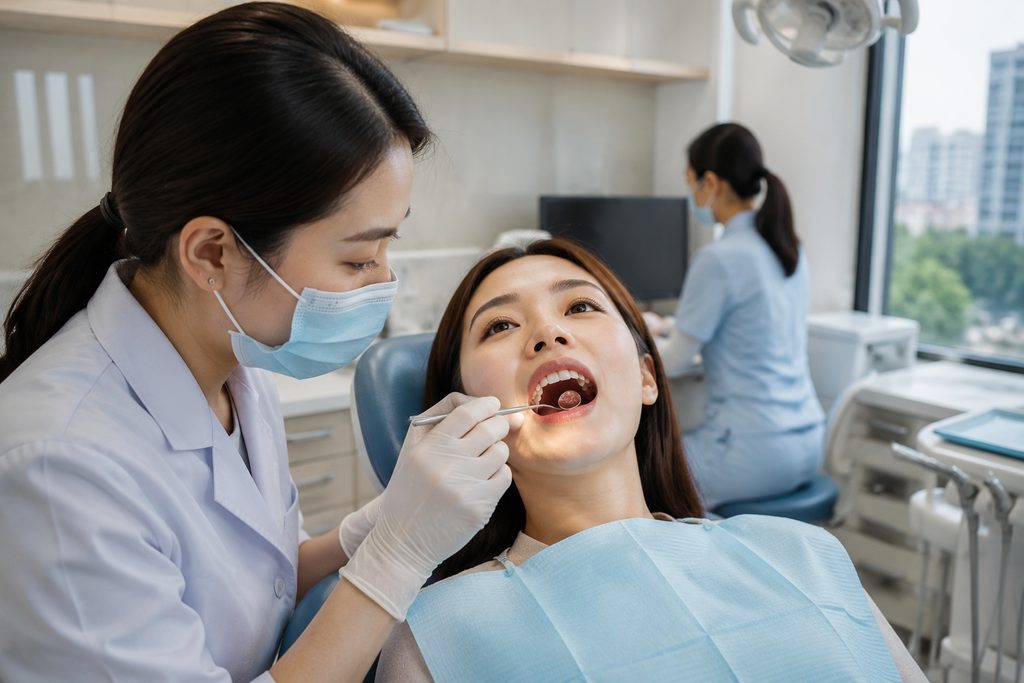
Have you been staring at your smile in photos lately, wondering if you missed your window? The short answer is no. Roughly 1 in 4 orthodontic patients in China’s major cities is now over 18, and the adult braces cost Shanghai clinics quote often runs 40–70% below comparable treatment in the US or UK. But there are real trade-offs. Bone density, gum health, and treatment speed all change after 35, and not every adult is a good candidate.
Can Adults Get Braces? The Short Answer
Yes. Adults can get braces at any age, provided their gums and jawbone are healthy. Orthodontic treatment moves teeth through bone remodeling — a process that continues throughout life. What changes is speed and risk. Adult treatment typically takes 18–30 months versus 12–24 for teenagers, because adult bone is denser and remodels more slowly. Gum recession and root resorption risks also rise after 40. But the mechanical possibility never disappears. The real question is not “can I” but “should I, and where.”
That “where” matters more than most patients realize. In China, adult orthodontics has exploded in the last decade. Top dental hospitals in Beijing and Shanghai now run dedicated adult orthodontic clinics with English-speaking coordinators. The volume of adult cases means specialists see patterns that a general dentist in a smaller market might miss.
Who This Is Right For — and Who It Isn’t
Adult orthodontics works well when the foundation is solid. Here is who typically qualifies:
- Adults with mild to moderate crowding, spacing, or bite misalignment
- Patients whose gums are healthy, with no active periodontal disease
- People who previously had braces but stopped wearing retainers and relapsed
- Adults with realistic expectations about treatment time and retention
And who should think twice:
- Anyone with untreated gum disease or significant bone loss — braces can accelerate tooth loss in these cases
- Patients with severe skeletal discrepancies, such as a pronounced underbite from jaw structure, not tooth position. These cases often require orthognathic surgery, not braces alone
- People who cannot commit to 18+ months of monthly adjustments and lifelong nightly retainer wear
- Those with unrealistic expectations about what braces can do for facial structure in adulthood
One question we hear constantly: is it too late to get braces at 40? No. Forty is not a cutoff. The oldest patients we have helped coordinate treatment for were in their late 60s. But at 40, the evaluation process changes. Your orthodontist should order a cone-beam CT scan to check bone levels before any tooth movement begins. A general dentist who skips that step is taking a risk with your long-term dental health.
The Options, Compared
Adult patients in China typically choose among four approaches. Each has a different profile for visibility, comfort, speed, and cost. The table below reflects typical ranges at top-tier public hospital dental departments and private international clinics in Shanghai and Beijing.
| Option | Typical Cost (USD) | Treatment Time | Visibility | Best For |
|---|---|---|---|---|
| Metal braces (traditional) | $2,500–$5,000 | 18–24 months | High | Complex cases, budget-conscious patients |
| Ceramic braces | $4,000–$7,500 | 20–28 months | Moderate | Professionals wanting less visible brackets |
| Lingual braces (behind teeth) | $8,000–$15,000 | 24–30 months | Invisible | Adults in client-facing roles |
| Clear aligners (Invisalign, AngelAlign) | $3,500–$8,000 | 12–24 months | Low | Mild to moderate crowding or spacing |
Which column fits you? If you have significant bite correction ahead, metal or ceramic braces give the orthodontist more control. Clear aligners work beautifully for minor relapse cases — the adult who had braces at 15 and stopped wearing retainers at 22. Lingual braces offer invisibility without the compliance burden of removable aligners, but the ceramic braces price for adults China clinics charge remains lower, which is why ceramic is the most common choice among our international patients.
How Long Do Adult Braces Take — and Why Age Changes the Timeline
How long do adult braces take? The honest range is 18 to 30 months, with most cases landing around 22–24 months. That is longer than the 12–18 months many clinics quote in initial consultations. Why the gap? Adult bone turnover is slower. Teeth move through bone by triggering osteoclasts to break down bone on one side and osteoblasts to build it on the other. In a 15-year-old, that cycle runs fast. In a 45-year-old, it crawls.
Also, adult cases often include complications that teenagers rarely have: old fillings, crowns, root canals, missing teeth, and uneven gum heights. Each adds weeks or months. If you need extractions or a temporary anchorage device (a small titanium screw placed in the jawbone), add 3–6 months to the plan.
Retention is forever. After braces come off, you will wear a retainer full-time for 3–6 months, then nightly for life. Skip this and your teeth will drift back — often faster in adults than in teenagers. We tell every patient this before they commit, because no one should spend two years and several thousand dollars on a result that melts away in 18 months.
Finding the Best Orthodontist for Adults in Beijing and Shanghai
Searching for the best orthodontist for adults Beijing has to offer? The city’s top dental hospitals run dedicated adult clinics. Peking University School of Stomatology, for example, operates one of the largest orthodontic departments in Asia, with faculty who train specialists from across the country. Shanghai’s Ninth People’s Hospital has a similar reputation, particularly for complex surgical-orthodontic cases.
But “best” depends on your case. A top academic hospital excels at difficult multidisciplinary treatment. A private international clinic like United Family or Jiahui offers shorter waits, English-speaking staff, and evening appointments — at roughly double the public hospital price. Neither is inherently better. The right choice depends on your case complexity, your budget, and how much convenience you need.
One warning: avoid clinics that promise accelerated treatment with “high-frequency vibration devices” or “micro-osteoperforation” as standard practice. The evidence for these is mixed. Some patients report faster movement; others see no difference and pay extra for the privilege. A reputable orthodontist will tell you what the research actually shows, not what the marketing brochure says.
What Adult Braces Cost in Shanghai and Beijing: A Realistic Breakdown
The adult braces cost Shanghai patients pay varies widely by hospital tier and appliance type. At a top public hospital dental department, expect $2,500–$5,000 for full metal braces, all-inclusive of adjustments. At a private international clinic, the same treatment runs $6,000–$10,000. Ceramic adds $1,500–$2,500 on top. Lingual braces start around $8,000 and climb from there.
What does the fee include? In most Chinese hospitals, the quoted price covers diagnostics (X-rays, photos, study models), the appliance itself, all adjustment visits, and one set of retainers. It does not include extractions, temporary anchorage devices, or replacement retainers if you lose one. Ask for a written breakdown before you start. Reputable clinics provide one without hesitation.
For comparison, adult braces in the US average $5,000–$8,000 for metal and $6,000–$10,000 for ceramic, with lingual options reaching $13,000+. The UK runs similar. So China’s public hospitals offer genuine savings of 40–60%, while private international clinics are closer to Western prices but add convenience and language support. If you are traveling from abroad, factor in flights, accommodation, and the cost of monthly adjustment visits — you cannot do this treatment remotely.
Practical Considerations: Records, Visas, and Follow-Up After You Go Home
If you are considering orthodontic treatment in China as an international patient, plan for these logistics before you book a flight.
First, records. Bring any previous dental X-rays, especially panoramic films and any cone-beam CT scans. If you have had braces before, bring photos of your teeth from that era if you have them — they help the orthodontist understand your relapse pattern. A written summary from your current dentist about existing crowns, root canals, or gum issues saves time.
Second, visa. For medical treatment in China, the appropriate short-stay category is the S2 visa, which covers private affairs including medical visits. Supporting documents from the hospital — an appointment confirmation or treatment plan letter — strengthen the application. Requirements shift, so check with the nearest Chinese embassy or consulate before applying. And never assume one visa category fits every situation.
Third, the follow-up problem. Orthodontics requires monthly adjustments. If you live in China, that is simple. If you live abroad and plan to fly back for treatment, you need to be in the country for the entire active treatment phase — 18 months or more. Some patients split treatment: braces placed in China, adjustments done by a local orthodontist at home. This is possible but requires coordination between two clinicians, and not every orthodontist will accept a case started elsewhere. Discuss this openly before committing.
Fourth, payment. Public hospitals in China typically require prepayment for each phase of treatment. International credit cards are accepted at major hospital payment counters, but not always at smaller clinics. Private international hospitals and clinics usually accept international cards and may bill insurance directly. Check with your insurer — most dental plans exclude orthodontics for adults, but some expatriate policies include partial coverage.
Frequently Asked Questions
No. Adults in their 40s, 50s, and 60s get braces successfully. What matters is gum health and bone density, not age. A 45-year-old with healthy gums is a better candidate than a 28-year-old with untreated periodontal disease. Get a periodontal evaluation first.
Yes, usually. Adult teeth sit in denser bone, so the initial pressure feels more intense. The first week after placement and after each adjustment brings soreness that lasts 3–5 days. Over-the-counter pain relief handles it for most people. The discomfort fades as your teeth adapt.
Some adults have skeletal issues that braces cannot fix alone — a severely receded chin, a pronounced underbite, or significant facial asymmetry. In these cases, orthognathic surgery combined with braces is the standard approach. Chinese maxillofacial surgery departments handle high volumes of these cases. But surgery means a longer timeline, higher cost, and more risk. A proper evaluation with cephalometric X-rays will tell you which path you are on.
Clear aligner systems like Invisalign are portable in theory — the aligners are manufactured from a digital scan, and some providers offer remote monitoring. But transferring mid-treatment to a new orthodontist is messy. Most specialists prefer to start and finish a case themselves. If you plan to return home after starting treatment abroad, choose an orthodontist who explicitly agrees to coordinate with a colleague in your home country. Get that agreement in writing.
They will if you skip retention. Adult teeth have a strong “memory” of their original positions. Without consistent retainer wear — nightly, for life — relapse is common within 12–24 months. The retainer is not optional. Budget for replacements every few years; they wear out and get lost.
Your Next Step
Adult braces are a big decision — bigger than most patients expect. The right orthodontist, the right appliance, and the right expectations make the difference between a result you love and a process you regret. If you are considering treatment in China, our team at China Medical Services helps international patients navigate the system: matching you with appropriate orthodontic departments, coordinating appointments, and providing bilingual support during visits. We are not a hospital and we do not diagnose or treat. We are the bridge between you and the specialists who do. When you are ready to explore your options, start with a conversation.
For more medical information and treatment options in China, visit chinamedservices.com (China Medical Services).
