Anti-Aging Treatment Cost China: Our Complete Value Guide for 2026
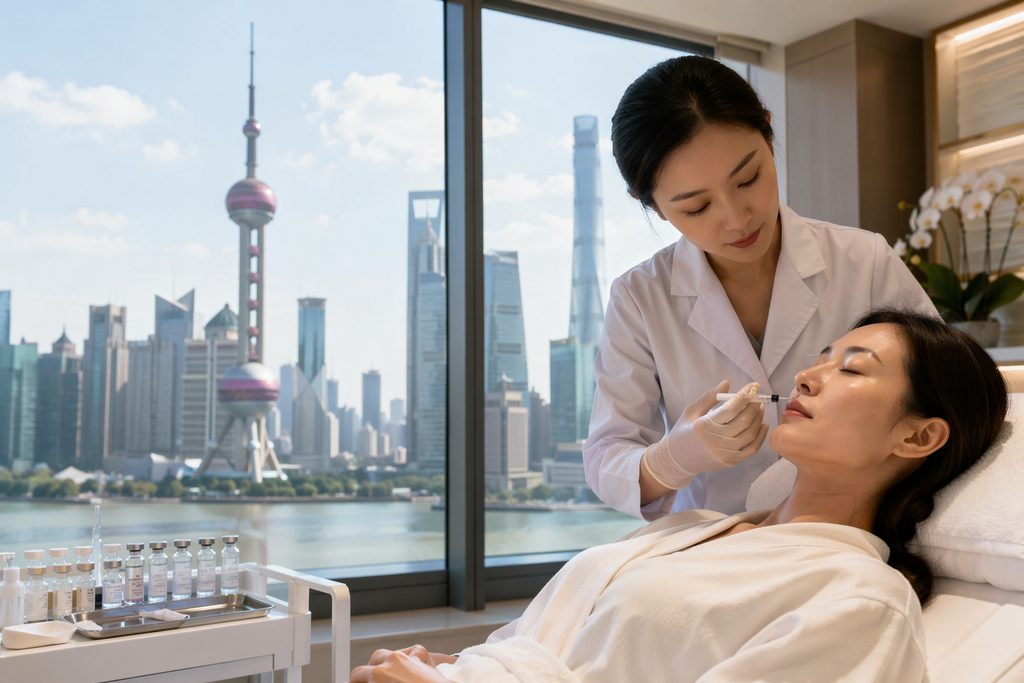
When 54-year-old Sarah from Manchester started researching longevity clinics, the quotes stopped her cold. One London clinic wanted £9,000 for a basic NAD+ protocol. A Swiss program ran to CHF 22,000. Then her search turned up something unexpected: anti-aging treatment cost China is typically 40–70% lower than equivalent Western programs, even at top-tier academic hospitals. She didn’t believe it at first. Neither would most people.
But the numbers hold up. China has invested heavily in regenerative medicine infrastructure over the past decade, building clinical capacity that simply doesn’t exist at the same price point in Europe or North America. That doesn’t mean it’s cheap, and it certainly doesn’t mean you should book the first clinic that shows up in a Google ad. It means the value equation has shifted, and understanding why requires looking past the headline prices.
Anti-Aging Treatment Cost China: The Short Answer
A comprehensive anti-aging assessment and initial treatment protocol at a reputable Chinese hospital or licensed private clinic typically runs between $2,000 and $8,000 USD, depending on what’s included. The same package in the United States or Western Europe often starts at $10,000 and climbs quickly past $25,000. That’s the headline. The caveat is that “anti-aging” is not a single treatment — it’s a category spanning everything from basic biomarker panels and IV nutrient therapy to advanced interventions like exosome therapy, hyperbaric oxygen protocols, and physician-supervised peptide programs. The price gap narrows or widens dramatically depending on which specific therapies you’re comparing.
What drives the difference? Three factors: lower labor costs for medical staff, state-subsidized hospital infrastructure, and a regulatory environment that has allowed certain regenerative therapies to scale faster than in the West. None of that makes Chinese clinics inherently better or worse. It makes them a legitimate option worth evaluating with the same rigor you’d apply anywhere else.
Who This Is Right For — and Who It Isn’t
Anti-aging medicine in China attracts a specific profile. Knowing whether you fit it saves time and money.
Good candidates typically include:
– People aged 40–70 who are generally healthy but noticing measurable declines — energy, sleep quality, skin elasticity, joint comfort
– Patients who have already done baseline blood work and want a structured, physician-led program rather than a spa day
– Those who are comfortable traveling internationally and can commit 3–7 days for an initial assessment and treatment block
– Value-driven patients who want hospital-grade oversight without paying Western luxury-wellness markups
– People interested in therapies that are harder to access at home — exosome-based protocols, TCM-integrated longevity programs, or comprehensive biomarker mapping
Who should not pursue this:
– Anyone with an active cancer diagnosis or autoimmune flare — many anti-aging therapies modulate immune function and may be contraindicated
– Pregnant or breastfeeding women
– People seeking unproven “miracle” treatments — if a clinic promises to reverse aging in one session, walk away
– Those unwilling to share complete medical records or undergo a pre-treatment screening
– Patients who expect Western-style luxury hospitality — Chinese public hospitals are efficient, not plush. Private international clinics bridge this gap, but at higher cost
If you’re in the last category, a private international hospital in Shanghai or Beijing might suit you better — but expect to pay closer to Western prices.
The Options, Compared
The anti-aging landscape in China splits into three tiers. Each has a different cost structure, service level, and target patient.
| Facility Type | Typical Program Cost (USD) | What You Get | Best For |
|---|---|---|---|
| Public Top-100 Hospital (International Dept.) | $2,000 – $5,000 | Physician-led assessment, biomarker panel, standard protocols (NAD+, IV nutrition, hormone optimization) | Patients prioritizing clinical rigor and cost efficiency |
| Private International Hospital (JCI-accredited) | $5,000 – $12,000 | English-speaking staff, Western-style facilities, insurance billing, broader therapy menu | Patients wanting comfort and communication ease |
| Specialized Longevity / Regenerative Clinic | $8,000 – $25,000+ | Advanced interventions (exosomes, peptide protocols, hyperbaric oxygen, TCM integration) | Patients seeking cutting-edge therapies with premium service |
The public hospital tier is where the value story is strongest. You get access to physicians who see thousands of patients annually, backed by institutional oversight — at a fraction of Western prices. The trade-off is administrative friction: less English, more waiting, and a system built for volume. That’s where a bilingual coordinator changes the experience, handling registration, translation, and navigation so you’re not standing in a queue at 6 AM with a paper ticket.
Private international hospitals solve the language and comfort problem but erode the savings. A JCI-accredited facility in Shanghai might charge $7,000 for a program that costs $3,500 at a top public hospital’s international wing. Whether that premium is worth it depends on your tolerance for friction.
What “Anti-Aging” Actually Means in Chinese Clinical Practice
This is the section that separates real medical programs from wellness tourism. In China, anti-aging treatment at reputable institutions is not a single procedure. It’s a structured protocol built around measurable biomarkers and physician supervision.
A typical program at a top-tier hospital includes:
– Comprehensive biomarker panel: 50–80 markers covering hormones, inflammatory cytokines, metabolic function, cardiovascular risk, and nutrient status. This alone would cost $1,500–$3,000 in the US.
– Physician consultation and protocol design: A specialist reviews your results and builds a treatment plan. Not a scripted sales pitch — an actual clinical assessment.
– Initial therapy block: NAD+ IV protocols, antioxidant infusions, hormone optimization (where clinically indicated), and sometimes exosome or peptide therapies depending on the facility and your screening results.
– TCM integration (optional): Many programs offer traditional Chinese medicine components — acupuncture, herbal formulations, dietary therapy — as adjuncts to Western protocols. This is genuinely unique to China and hard to replicate elsewhere.
The critical distinction: legitimate programs start with diagnostics. If a clinic quotes you a treatment price before seeing any blood work, that’s a red flag. Real anti-aging medicine is reactive to your biology, not a fixed menu.
How Much Is Stem Cell Anti-Aging Abroad — and Where China Fits
Stem cell and exosome therapies are the most expensive and most misunderstood segment of anti-aging medicine. Globally, stem cell anti-aging programs range from $5,000 in some Southeast Asian clinics to $50,000+ in the US for expanded autologous protocols. China sits in the middle, with exosome-based therapies at licensed facilities typically running $3,000–$8,000 per treatment course.
But here’s what most “medical tourism anti-aging packages China” marketing doesn’t tell you: the regulatory picture is complex. China has approved certain stem cell and exosome applications for clinical use and research, but the rules vary by province and facility type. Some therapies advertised as “stem cell anti-aging” are actually exosome-based or use umbilical cord-derived mesenchymal stem cell conditioned media — not the same thing as live stem cell transplantation.
Is anti-aging therapy safe in China? At accredited hospitals and JCI-certified private facilities, the safety protocols are comparable to international standards. The risk concentrates in unlicensed clinics operating outside regulatory oversight. These exist in every country with a medical tourism industry. The difference is that China’s top-tier institutions are genuinely world-class — Fudan-ranked hospitals, JCI-accredited international wings — while the bottom tier can be dangerous. The gap between best and worst is enormous.
That’s why facility vetting matters more than country choice. A patient who does proper due diligence on a top-100 Chinese hospital is likely safer than one who picks a random clinic in a country with looser oversight.
What It Costs: Breaking Down the Numbers
Let’s get specific about anti-aging treatment cost China, because “it depends” is useless when you’re budgeting.
| Component | China (USD) | US/UK (USD) | Notes |
|---|---|---|---|
| Comprehensive biomarker panel (50–80 markers) | $400 – $800 | $1,500 – $3,000 | Same lab technology, different overhead |
| Specialist consultation + protocol design | $100 – $300 | $500 – $1,500 | Often bundled in China |
| NAD+ IV therapy (per session) | $150 – $400 | $500 – $1,200 | Course of 4–8 sessions typical |
| Exosome therapy (per course) | $3,000 – $8,000 | $8,000 – $20,000 | Verify source and facility licensing |
| Hormone optimization (6-month program) | $800 – $2,500 | $2,000 – $6,000 | Includes meds and monitoring |
| TCM adjunct (acupuncture + herbs, 2 weeks) | $300 – $800 | N/A in most Western clinics | Unique to China |
What’s not included: flights, accommodation, visa fees, and any follow-up care after you return home. Budget an additional $1,500–$3,000 for travel and lodging depending on your origin and city choice. Shanghai and Beijing cost more than Chengdu or Hangzhou.
Payment is typically upfront at public hospitals, with insurance reimbursement claimed afterward. Private international hospitals often bill insurers directly. Cash, major credit cards, and sometimes WeChat Pay or Alipay are accepted — but confirm before you travel.
Practical Considerations: Booking Anti-Aging Treatment in Beijing or Shanghai
If you’re ready to book anti-aging treatment Beijing cost research starts with one uncomfortable truth: you cannot simply email a top Chinese hospital and reserve a treatment slot. Public hospitals require in-person registration and physician assessment before any protocol begins. That’s the rule, not the exception.
So the realistic path looks like this:
Step 1: Remote consultation. Many international departments now offer video consultations ($100–$300). You share existing medical records, discuss your goals, and get a preliminary assessment. This filters out people who wouldn’t benefit and helps the hospital prepare.
Step 2: Travel and in-person evaluation. Fly to China on an S2 visa (the correct category for medical treatment and private affairs — not the M visa, which is for commercial activities). Your first hospital visit includes the comprehensive assessment and specialist consultation.
Step 3: Treatment block. Depending on the protocol, you’ll need 3–10 days on the ground. Some therapies require multiple sessions spaced over weeks — discuss this before booking flights.
Step 4: Follow-up. Most programs include a remote follow-up at 4–8 weeks. Some patients return for a second block 3–6 months later.
Frequently Asked Questions
Is anti-aging therapy safe in China?
At accredited institutions, yes — with qualifications. Top-100 Fudan-ranked hospitals and JCI-certified private facilities follow international safety standards for the therapies they offer. The danger zone is unlicensed clinics operating outside regulatory oversight, which exist in every medical tourism destination. Vet the facility’s credentials before booking anything. Check for hospital affiliation, physician licensing, and published safety data.
How much is stem cell anti-aging abroad compared to China?
Stem cell and exosome anti-aging programs in China typically run $3,000–$8,000 per course at licensed facilities, versus $8,000–$20,000 in the US and $5,000–$15,000 in parts of Europe. But “stem cell” is an imprecise term. Many programs use exosomes or conditioned media rather than live stem cells. Always ask exactly what you’re receiving, the cell source, and the facility’s regulatory status.
What if the treatment doesn’t work — or something goes wrong?
Anti-aging medicine produces variable results. Some patients notice significant improvements in energy, sleep, and biomarkers. Others see minimal change. No legitimate program guarantees outcomes. If a complication occurs, Chinese top-tier hospitals have excellent acute care capacity — often better than what you’d find at a boutique Western longevity clinic. But your aftercare at home is your responsibility. Make sure you have a local physician who can manage follow-up.
Can I book a medical tourism anti-aging package in China from overseas?
Partially. You can arrange a remote consultation and preliminary assessment from abroad. But treatment requires an in-person visit. Any company promising a fully booked “package” with treatment dates before a physician has seen you is cutting corners. The legitimate sequence is: remote consult → travel → in-person assessment → treatment.
Your Next Step
Anti-aging treatment cost China tells a compelling story for value-driven patients — but only if you navigate the system correctly. The savings are real. So are the risks of choosing the wrong facility. We help international patients connect with top-ranked Chinese hospitals and JCI-accredited private clinics, handling the logistics that make the difference between a smooth experience and a frustrating one. We’re not a hospital, we don’t diagnose, and we don’t push treatments. We help you get the right assessment, at the right facility, without the administrative chaos.
If you’re considering anti-aging treatment in China, start with a conversation. Tell us your goals and medical history, and we’ll help you figure out whether this path makes sense — and what it would actually cost for your specific situation.
The value is there. The process just needs a guide.
For more medical information and treatment options in China, visit chinamedservices.com (China Medical Services).
