Awake Craniotomy Risks: What Brain Surgery Patients Must Know in 2025
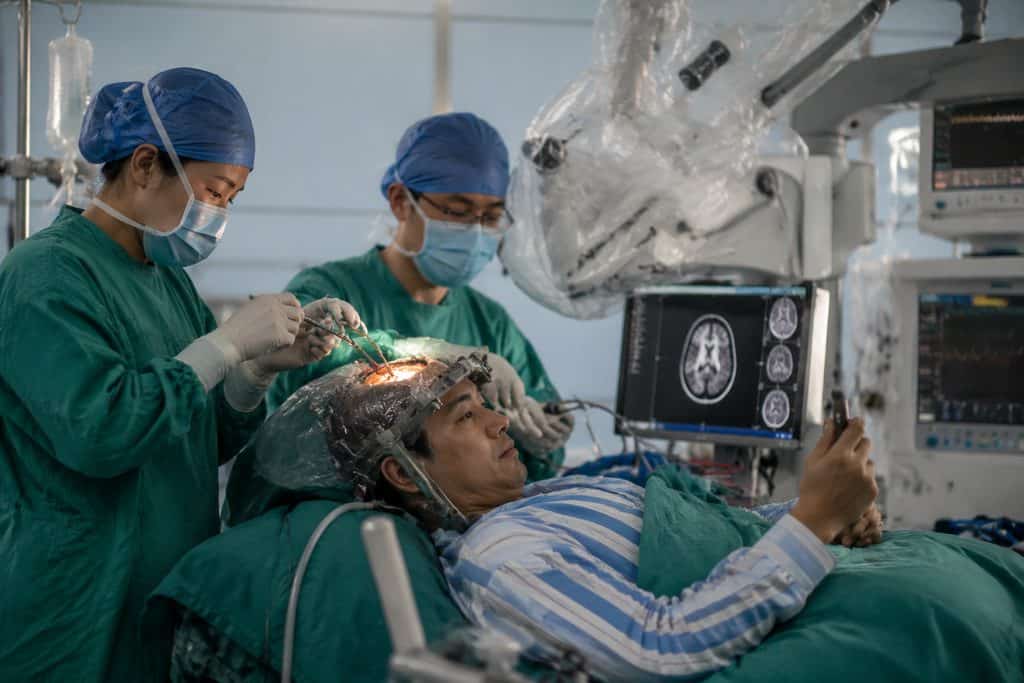
In the United States, an awake craniotomy for brain tumor resection typically carries a hospital bill between $50,000 and $120,000 depending on the institution and length of stay. Across the Pacific, the same procedure at a Fudan-ranked neurosurgery center in Shanghai or Beijing runs closer to $18,000–$35,000 — a difference that has pushed a growing number of international patients to research awake craniotomy cost China as a serious option. But price is only one variable. The question that matters more: what are the actual risks of this procedure, and how do complication rates compare across borders?
Key Takeaways
- Awake craniotomy carries a 2–5% risk of new permanent neurological deficit, with transient speech or motor weakness affecting 20–40% of patients in the immediate postoperative period.
- China’s top neurosurgery centers perform 300–600 awake craniotomies annually at single institutions — volumes that exceed most Western hospitals and correlate with lower complication rates.
- Intraoperative seizure occurs in 8–15% of awake craniotomy cases regardless of country; experienced anesthesia teams manage this without converting to general anesthesia in over 90% of episodes.
- Language barriers during the awake phase present a unique risk for foreign patients — a bilingual medical companion is not optional, it is a safety measure.
The Problem: High-Stakes Brain Surgery With No Room for Error
Approximately 1 in 4 patients diagnosed with a brain tumor will require surgical resection at some point in their treatment journey. For tumors located in or near eloquent cortex — the regions controlling speech, movement, and sensory processing — surgeons face an impossible trade-off. Remove too little tissue and the tumor recurs. Remove too much and the patient wakes up unable to speak or move their right arm.
Awake craniotomy was developed to solve this exact problem. The patient is sedated but conscious during the critical resection phase, allowing the surgical team to map brain function in real time. A neuropsychologist or speech therapist asks the patient to name objects, count, or move fingers while the surgeon applies electrical stimulation to cortical tissue. If a response degrades, that tissue stays. If not, resection proceeds.
But the procedure itself introduces risks that a standard craniotomy under general anesthesia does not carry. Patients can panic. They can seize. They can experience pain when the dura is manipulated. And if the anesthesia team is not experienced with the awake-asleep-awake protocol, the entire operation can destabilize in minutes.
What Are the Risks of Awake Craniotomy? A Data-Driven Breakdown
Any honest discussion of this procedure starts with the complication literature. A 2021 systematic review published in the Journal of Neuro-Oncology analyzed outcomes from 2,091 awake craniotomy patients across 18 studies. The findings give patients a realistic baseline.
Neurological Deficits: The Risk That Keeps Surgeons Up at Night
New permanent neurological deficits occur in 2–5% of awake craniotomy patients. That number drops below 2% at high-volume centers performing more than 50 procedures annually — a threshold that matters when evaluating hospitals. Transient deficits are far more common. Between 20% and 40% of patients experience temporary speech difficulty, motor weakness, or sensory changes in the days following surgery. Most resolve within 2–6 weeks as cerebral edema subsides.
What does this mean for a patient researching is awake craniotomy safe in China? The risk profile is not meaningfully different from Western benchmarks — provided the hospital has the volume and the dedicated awake-craniotomy protocol. China’s top neurosurgery departments, including those at Huashan Hospital in Shanghai and Beijing Tiantan Hospital, publish outcomes comparable to MD Anderson and UCSF. The gap is not in clinical capability. It is in variability between hospitals.
Intraoperative Seizures: Common, Manageable, and Frightening
Seizures during the awake phase occur in 8–15% of cases. Cortical stimulation — the very tool that makes awake mapping possible — can trigger epileptiform activity. The anesthesia team typically manages this with cold saline irrigation and short-acting anticonvulsants. In the vast majority of cases, surgery continues without converting to general anesthesia.
For the patient, however, an intraoperative seizure can feel terrifying. This is where the surgical team’s communication matters enormously. A patient who understands what is happening — and has a team that explains each step in their native language — tolerates the event far better than one who is confused and frightened.
Airway and Anesthesia Risks: The Silent Variable
Awake craniotomy requires a delicate anesthesia balance. The patient must be sedated enough to tolerate skull pins and craniotomy, yet conscious enough to participate in mapping. Too much sedation risks respiratory depression and airway loss. Too little risks panic and movement. The awake-asleep-awake protocol — where the patient is fully awake only during mapping — reduces but does not eliminate this risk.
Airway complications occur in 1–3% of cases. That is low, but the consequences are severe when they happen. This is precisely why the anesthesia team’s experience with awake craniotomy specifically — not just neurosurgical anesthesia generally — is a critical selection criterion.
Why China’s High-Volume Neurosurgery Centers Deliver Comparable Safety
The structural advantages of China’s top-tier hospital system apply directly to awake craniotomy outcomes. Volume drives proficiency. Proficiency drives safety.
Clinical Volume: The Single Best Predictor of Complication Rates
Beijing Tiantan Hospital performs approximately 15,000 neurosurgical procedures annually, including over 400 awake craniotomies. Huashan Hospital in Shanghai — home to one of Asia’s largest neurosurgery departments — reports similar volumes. Compare that to an average US community hospital, which might perform 10–20 awake craniotomies per year.
This volume gap is not academic. Studies consistently show an inverse relationship between surgical volume and complication rates for complex neurosurgical procedures. A 2020 analysis in Neurosurgery found that hospitals performing fewer than 25 awake craniotomies annually had a 2.3-fold higher rate of permanent neurological deficit compared to high-volume centers.
Technology and Intraoperative Mapping Infrastructure
China’s top neurosurgery centers have invested heavily in the same intraoperative technologies found at leading Western institutions: intraoperative MRI, 5-ALA fluorescence-guided resection, and high-density electrocorticography grids. The difference is scale. A single department at Huashan Hospital may run three awake craniotomy operating rooms simultaneously, each with a dedicated neuropsychologist, speech therapist, and anesthesia team.
That operational depth changes the safety calculus. When a complication arises — and in brain surgery, something always arises — the team has seen it before. Hundreds of times.
Cost Structure Without Quality Compromise
The awake craniotomy cost China advantage is real, but it is not a signal of lower quality. Chinese hospital pricing reflects structural economics: lower labor costs for nurses and support staff, government-subsidized hospital infrastructure, and a high-volume model that amortizes expensive equipment across far more patients. The surgeons at Fudan-ranked hospitals train in the same international fellowship programs and publish in the same journals as their Western counterparts.
An awake craniotomy priced at $22,000 in Shanghai is not a “discount” version of a $75,000 procedure in Boston. It is the same procedure with a different cost base.
What Actually Happens During an Awake Craniotomy: A Step-by-Step Timeline
Understanding the procedure reduces fear. Fear, in turn, is a clinical risk factor — anxious patients move, hyperventilate, and require more sedation, which complicates the anesthesia management.
Days 1–2: Preoperative Mapping and Preparation
Before surgery, patients undergo functional MRI or diffusion tensor imaging to map language and motor pathways. A neuropsychologist establishes baseline cognitive function. For international patients, this is also when the bilingual medical team confirms that the patient can reliably name objects, count, and follow commands in English or their native language.
This step is critical. The entire procedure depends on the patient’s ability to participate. If language barriers exist, they must be solved before the patient enters the operating room.
Day of Surgery: The Awake-Asleep-Awake Protocol
The patient receives local anesthesia for scalp nerve blocks and skull pin sites, plus monitored sedation. The craniotomy proceeds under sedation. Once the dura is exposed, the anesthesia team lightens sedation until the patient is alert and responsive. This is the awake phase.
Mapping begins. The surgeon applies a small electrical current to cortical tissue while the patient performs language or motor tasks. When stimulation temporarily disrupts a function, that tissue is marked as eloquent and preserved. The resection proceeds around it. After the tumor is removed, sedation deepens again for closure.
The entire awake phase typically lasts 30–90 minutes. Patients report feeling pressure and vibration but not sharp pain.
Days 3–7: Immediate Recovery and Monitoring
Most patients spend 1–2 nights in intensive care, followed by 3–5 days on a neurosurgical ward. Transient deficits — word-finding difficulty, mild arm weakness — are common and usually resolve. Speech therapy and physical therapy begin early. Discharge typically occurs 5–7 days after surgery.
How to Evaluate a Hospital for Awake Craniotomy: Decision Criteria That Matter
Not every hospital that offers awake craniotomy should be trusted with your brain. The following criteria separate centers with genuine expertise from those with a case report and a marketing budget.
| Evaluation Criterion | High-Volume Center (e.g., Huashan, Tiantan) | Typical Community Hospital |
|---|---|---|
| Annual awake craniotomy volume | 200–400+ | 10–25 |
| Dedicated awake-craniotomy anesthesia team | Yes — same team daily | Often ad hoc |
| Intraoperative language mapping | Routine, with neuropsychologist | Variable or absent |
| Permanent neurological deficit rate | 1.5–2.5% | 3–6% |
| Intraoperative MRI availability | Standard | Rare |
| Estimated cost (international patient) | $18,000–$35,000 | $50,000–$80,000 (US) / varies (EU) |
The awake brain surgery price abroad comparison cuts both ways. Western patients often assume higher cost equals higher quality. In neurosurgery, the data does not support that assumption. Volume and protocolization do.
One more criterion that international patients frequently overlook: the availability of English-speaking staff during the awake phase. If the neuropsychologist cannot communicate with the patient in a language the patient fully understands, the mapping is compromised. This is not a convenience issue. It is a safety issue.
Practical Considerations: Documentation, Visas, and Logistics for International Patients
If you are considering an awake craniotomy in China, the logistics are manageable but require planning. Here is what actually matters.
Medical Records and Imaging
Chinese neurosurgery departments require complete records before accepting an international patient: MRI with contrast, pathology reports if a biopsy was performed, and a summary of prior treatments. These should be in English or professionally translated. A written second opinion from a top Chinese neurosurgery center typically costs $300–500 and provides a realistic assessment of whether surgery is indicated and what approach the team would recommend.
Visa Requirements
Foreign nationals traveling to China for medical treatment apply for an S2 visa, which covers short-term private affairs including medical care. The hospital must provide an official invitation letter and treatment confirmation. Family members accompanying the patient also apply for S2 visas. Processing typically takes 1–3 weeks depending on the consulate. The S2 is not a “medical visa” — China does not have a dedicated medical visa category — but it is the correct category for treatment-related travel.
Payment and Insurance
Public hospitals in China require prepayment for surgical procedures. International patients typically pay a deposit covering the estimated procedure cost before admission. Most international insurance plans operate on a reimbursement model — you pay the hospital, then submit claims. Some private international hospitals in China offer direct billing, but for neurosurgery, the top-tier public hospitals are where the volume and expertise live.
Language and Interpretation
This cannot be overstated. The awake phase of the procedure requires real-time linguistic participation. A bilingual medical companion — someone who understands both the clinical context and the patient’s native language — is a legitimate safety measure, not a luxury. For patients from English-speaking countries, many top Chinese neurosurgeons speak functional English, but the nursing staff, anesthesiologists, and neuropsychologists may not.
You can explore Fudan-ranked hospitals by city to see which neurosurgery departments meet the volume criteria described above. For patients specifically considering Shanghai, the neurosurgery department rankings provide a starting point for shortlisting hospitals.
Frequently Asked Questions
Not inherently. The overall complication rate for awake craniotomy is comparable to standard craniotomy, and for tumors in eloquent brain regions, awake mapping actually reduces the risk of permanent neurological deficit. The key variable is team experience. At high-volume centers, the risks are well-controlled. At low-volume centers, they are not.
The awake craniotomy cost China typically ranges from $18,000 to $35,000 at top public hospitals, including hospital stay, surgeon fees, and operating room costs. In the United States, the same procedure ranges from $50,000 to $120,000. The price difference reflects labor economics and hospital cost structures, not a difference in clinical quality. Final pricing varies by hospital and case complexity.
Intraoperative seizures occur in 8–15% of awake craniotomy cases. The anesthesia team treats them immediately with cold saline irrigation and intravenous anticonvulsants. In over 90% of cases, surgery continues without converting to general anesthesia. The event can feel frightening, but it is a known and manageable complication.
The term “package” is misleading for a procedure this serious. What actually happens is a staged process: remote evaluation of your records, a written second opinion or video consultation with the neurosurgery team, and then — if surgery is recommended and you agree — coordination of hospital admission, visa documentation, and on-the-ground support. No reputable hospital sells brain surgery as a fixed-price package. Any service promising that should be avoided.
Most international insurance plans operate on a reimbursement model. You pay the hospital upfront, then submit itemized receipts and medical records to your insurer. Some plans have pre-authorization requirements for out-of-network international treatment. Check with your insurer before committing. Chinese public hospitals do not typically bill international insurers directly, though some private international hospitals do.
Your Next Step
An awake craniotomy is a serious procedure with real risks — but those risks are well-understood and manageable at high-volume centers. The decision to have surgery in China should be based on hospital volume, team experience, and communication capability, not on price alone. We help international patients evaluate their options, obtain written second opinions from Fudan-ranked neurosurgery departments, and coordinate the logistics of treatment in China. We are not a hospital and we do not provide diagnoses — we are the bridge between you and the medical expertise you need. If you are weighing this decision, start with a free consultation to understand what your records say and what your options actually are.
For more medical information and treatment options in China, visit chinamedservices.com (China Medical Services).
