Beijing Children’s Hospital: China’s Pediatric Powerhouse for Rare Diseases
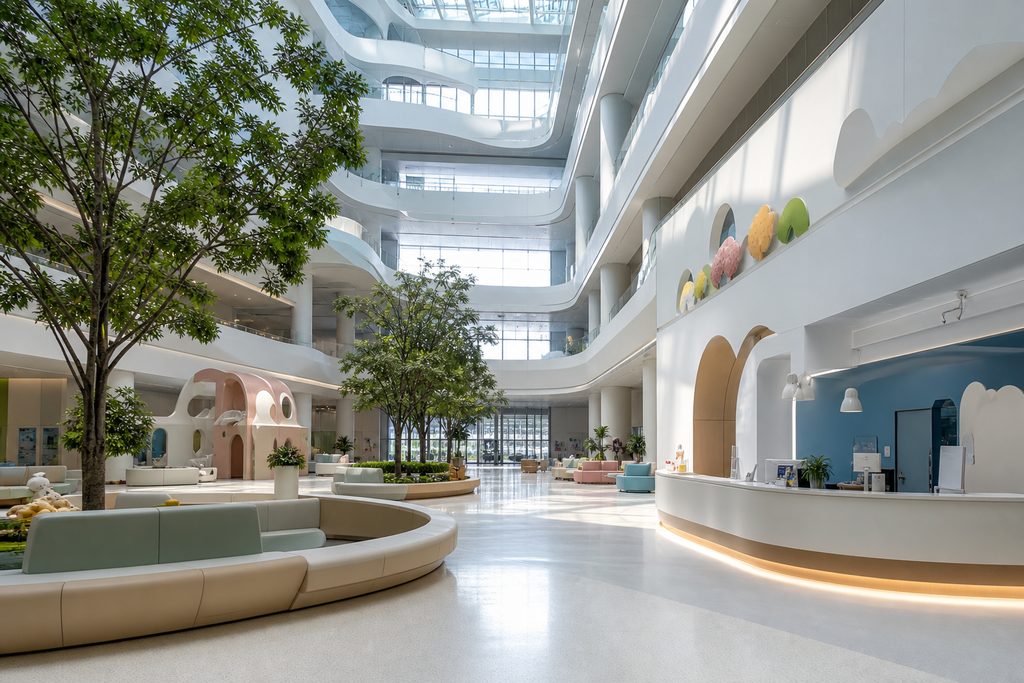
A family in London waits 18 months to see a clinical geneticist for an undiagnosed rare disease. Another in Houston faces a $300,000 bill for a single gene therapy infusion. Meanwhile, at Beijing Children’s Hospital, the Rare Disease Center processes over 1,500 new complex pediatric cases annually—with a diagnostic yield that rivals any Western center, at a fraction of the cost.
That contrast is not marketing. It is structural.
We see it every week. Parents arrive exhausted, carrying binders of inconclusive tests, having been told their child’s condition is “too rare” to diagnose. They come to Beijing because this hospital has seen more cases of certain ultra-rare pediatric disorders than most national referral centers in Europe or North America.
The numbers tell the story. China defines a rare disease as one affecting fewer than 1 in 10,000 people. That sounds small. But with a population of 1.4 billion, the absolute patient volume is enormous. Beijing Children’s Hospital—officially the Beijing Children’s Hospital, Capital Medical University—sits at the center of that concentration. It is not just a hospital. It is China’s National Clinical Research Center for Pediatric Diseases.
And for families who have run out of options at home, it represents something increasingly scarce: a place where rare is routine.
Key Takeaways
- Beijing Children’s Hospital operates China’s largest pediatric rare disease center, diagnosing conditions most Western clinicians see once in a career—if ever.
- The hospital anchors China’s national rare disease network, giving international patients access to multi-center expertise and government-subsidized orphan drug programs unavailable elsewhere.
- Navigating the system independently is extremely difficult: no English-language patient portal exists, public registration is Mandarin-only, and international billing is not standardized.
- Understanding Beijing Children’s Hospital rare disease cost structure before you travel prevents financial surprises—public ward pricing and international VIP channel pricing are entirely different systems.
The Problem: Rare Means No Answers, No Protocol, No Timetable
Rare diseases are individually rare but collectively common. Approximately 1 in 10 Americans—roughly 30 million people—lives with a rare disease. Half are children. The average diagnostic odyssey drags on for 5 to 7 years, involving eight different physicians and two or three misdiagnoses before the real condition is identified.
That is in a country with advanced medical infrastructure.
For families outside major research hubs, the situation is bleaker. A pediatric metabolic disorder might be seen once per decade at a regional hospital. The neurologist does not recognize the presentation. The genetic panel comes back inconclusive. The insurance company denies the whole-exome sequencing request. Months pass. The child deteriorates.
This is the moment some families start looking abroad. Not because they want to travel. Because they have exhausted every option within driving distance.
What they find is that certain centers in China—Beijing Children’s Hospital foremost among them—have built entire clinical ecosystems around rare pediatric diseases. The hospital’s Rare Disease Center, established in 2019, coordinates 34 specialized multidisciplinary teams covering hematology, neurology, endocrinology, immunology, and inborn errors of metabolism. It is one node in a national network of 324 hospitals designated as rare disease diagnosis and treatment centers by China’s National Health Commission.
Scale matters. A pediatric neurologist here might see more cases of spinal muscular atrophy in one month than a counterpart in Melbourne sees in three years. That volume translates into pattern recognition—the kind that shortens diagnostic timelines from years to weeks.
Who We Are
We are China Medical Services. We are not a hospital. We do not provide medical treatment or clinical diagnoses. Our team functions as logistical architects—we bridge the gap between international families and China’s top-tier pediatric expertise. We handle hospital matching, appointment coordination through official international channels, bilingual medical companion services, and visa guidance. We work with over 340 top-ranked hospitals across 37 Chinese cities, but we are honest about what is possible and what is not. We do not promise miracles. We promise a clear path through a complex system.
Why Beijing Children’s Hospital Delivers Results for Rare Childhood Diseases
Clinical Volume Creates Diagnostic Speed
Rare disease diagnosis depends heavily on pattern recognition. A clinician who has seen 200 cases of Gaucher disease recognizes the subtle presentation that a textbook cannot convey. Beijing Children’s Hospital operates 3,000 inpatient beds and handles more than 3 million outpatient visits per year. Within that volume sits a concentration of rare pathology unmatched by most pediatric centers globally.
The hospital is the national coordinating center for pediatric rare diseases under China’s National Health Commission. That means when a child in Xinjiang or Yunnan presents with an undiagnosed condition, tissue samples and genetic data often route through Beijing Children’s for tertiary analysis. The center has built a biobank of rare disease specimens and a data platform integrating phenotypic and genomic information—resources that accelerate diagnosis for international patients who arrive with incomplete workups.
This matters concretely. A family from the UK recently arrived with a child who had been undiagnosed for four years despite evaluations at two London teaching hospitals. The Rare Disease Center at Beijing Children’s identified a pathogenic variant in the NGLY1 gene within three weeks. The diagnosis changed nothing about the underlying condition—NGLY1 deficiency has no cure—but it ended the diagnostic odyssey and allowed the family to connect with a global research community working on targeted therapies.
Access to Therapies Not Yet Approved in Western Markets
China’s drug regulatory landscape has shifted dramatically in the past five years. The National Medical Products Administration now offers expedited review pathways for drugs treating serious rare pediatric diseases. Several gene therapies and enzyme replacement treatments approved in China are still under review by the FDA or EMA.
Beijing Children’s Hospital participates in numerous international multicenter clinical trials for rare disease therapies. For conditions like hemophilia B, certain lysosomal storage disorders, and specific genetic epilepsies, treatment options exist in China that are not yet available in the United States, Canada, or Australia.
There is also a cost dimension. China’s national healthcare security administration negotiates aggressively on orphan drug pricing. A therapy that costs $400,000 annually in the US might be priced at $60,000 in China after government negotiation—and that is before considering the lower overall cost of hospital care.
Integrated Traditional and Modern Medicine for Supportive Care
This is not about replacing evidence-based rare disease treatment with herbal remedies. It is about what happens alongside the primary therapy. Children with rare metabolic disorders often struggle with feeding difficulties, chronic pain, sleep disturbance, and developmental delays. Beijing Children’s Hospital integrates Traditional Chinese Medicine modalities—acupuncture, pediatric tuina massage, herbal formulations—into supportive care protocols in ways that many families find beneficial.
The TCM department here is not a side operation. It is a full clinical department with published research on TCM adjunctive therapies for pediatric neurological conditions. For families traveling from abroad, this integrated approach can address quality-of-life issues that purely pharmaceutical protocols often overlook. Our TCM services page explains how these modalities complement conventional rare disease management.
What You Need to Know Before Going Alone
The clinical reputation is real. So are the barriers. We tell every family the same thing: Beijing Children’s Hospital is a world-class institution embedded in a system not designed for international patients. Here is what that means in practice.
- Language and Registration: The hospital’s public-facing systems operate entirely in Mandarin. There is no English-language patient portal. No international scheduling hotline. The standard outpatient registration process requires a Chinese ID number or local phone verification—neither of which a foreign family possesses. Walk-in registration at the public window is theoretically possible but practically impossible without fluent Mandarin and familiarity with the hospital’s internal geography.
- Payment Architecture: The public ward system operates on a prepaid deposit model. You load funds onto a hospital account at admission, and charges are deducted daily. International credit cards are not accepted at public payment counters. The international VIP department uses a different fee schedule—roughly 1.5 to 2 times the public rate—and accepts wire transfers and some international cards. These are two parallel systems inside the same building, and navigating between them without guidance is extremely difficult.
- Medical Records and Prior Authorization: The hospital requires translated and notarized medical records before scheduling a rare disease consultation. Translation must be professionally certified. Genetic testing reports need to include raw data files, not just summary interpretations. Getting this wrong delays everything. We have seen families arrive with incomplete records and waste two weeks sorting out documentation that could have been handled before travel.
- Visa Requirements: Medical treatment in China requires an S2 visa with a notation specifying the treatment purpose. Accompanying family members also need S2 visas. The hospital must provide an official invitation letter confirming the appointment before the visa application can proceed. This is not negotiable. M visas are for commercial activity and will be rejected if presented for medical treatment purposes.
How We Help You Navigate This
These barriers exist for structural reasons, not malice. Beijing Children’s Hospital serves a domestic population of hundreds of millions. The international patient pathway is an overlay, not the default. Our job is to make that overlay function smoothly.
Before you travel, we handle the entire pre-arrival sequence. We collect and translate medical records, coordinate with the hospital’s international department to secure an appointment with the appropriate rare disease specialist, and obtain the official invitation letter required for visa processing. We also provide a detailed Beijing Children’s Hospital rare disease cost estimate based on your child’s specific condition and the anticipated diagnostic or treatment pathway. This estimate covers hospital fees, specialist consultation charges, and projected inpatient costs through the international VIP channel.
During your stay, a bilingual medical companion accompanies you to every appointment. This person handles registration, payment at each counter, queue management, and real-time translation between you and the clinical team. They are not interpreters on a screen. They are physically present, navigating the hospital’s sprawling campus alongside you. Beijing Children’s Hospital covers 70,000 square meters across multiple buildings. Finding the right department without guidance is not trivial.
After discharge or completion of the diagnostic workup, we coordinate follow-up communication. If a treatment plan requires ongoing monitoring back home, we arrange secure transfer of medical records and facilitate video consultations with the Beijing specialists through our patient coordination service.
The cost structure is transparent. Bilingual companion services start from $200 per day. Hospital appointment coordination starts from $300. Video consultations with specialists range from $100 to $800 depending on the seniority of the physician. All coordination fees paid within 90 days of upgrading to on-the-ground services are credited in full toward the coordination fee—never toward hospital treatment charges, which go directly to the hospital.
Is Beijing Children’s Hospital Good for Rare Genetic Disorders? A Realistic Assessment
The short answer is yes—with context.
For conditions where China has invested heavily in research infrastructure, such as spinal muscular atrophy, hemophilia, certain lysosomal storage disorders, and specific inborn errors of metabolism, Beijing Children’s Hospital operates at the global frontier. The diagnostic capabilities are excellent. The treatment options are current. The clinical volume means the teams have deep experience managing complications and comorbidities.
For ultra-rare conditions with fewer than 100 known cases worldwide, the situation is more nuanced. Beijing Children’s has the genomic sequencing capacity and the bioinformatics expertise to identify pathogenic variants. What it may not have—and no single center does—is a proven treatment protocol for a condition that has barely been described in the literature. In these cases, the value of the hospital is diagnostic clarity and connection to research networks, not a guaranteed therapeutic pathway.
Families should also understand that the bedside manner and communication style in Chinese hospitals differs from what many Western families expect. Physicians are direct. Appointments are efficient rather than leisurely. The emotional support infrastructure—child life specialists, psychological counseling, family support groups—is less developed than in top Western pediatric hospitals. This is not a criticism. It is a cultural difference worth anticipating.
Frequently Asked Questions
What is the actual Beijing Children’s Hospital rare disease cost for international patients?
Costs vary significantly by condition and treatment pathway. A comprehensive rare disease diagnostic workup—including specialist consultations, advanced genetic testing, imaging, and metabolic panels—typically ranges from $5,000 to $15,000 through the international VIP channel. Inpatient treatment costs depend entirely on the diagnosis. An enzyme replacement therapy course might run $50,000 to $80,000 for a treatment cycle that costs $300,000 in the United States. These are reference ranges, not quotes. Every case requires individual assessment and a formal cost estimate from the hospital’s international department.
How do I book an appointment at Beijing Children’s Hospital for a rare disease evaluation?
Direct self-booking through public channels is not feasible for international patients. The process requires coordination through the hospital’s international medical department, which handles scheduling for foreign families. You will need translated medical records, a summary of prior diagnostic work, and a clear referral question. Our team manages this coordination. We submit your materials, communicate with the department to identify the appropriate specialist, and confirm the appointment before you book flights. The hospital does not guarantee specific appointment dates for international patients, but we have never had a family arrive without a confirmed consultation.
What if the diagnosis is wrong or the recommended treatment does not work?
This question deserves an honest answer. No hospital—in Beijing or Boston—achieves a 100% diagnostic success rate for rare diseases. Some conditions remain undiagnosed despite the best available technology. Some treatments fail. Beijing Children’s Hospital has a strong track record, but it is not infallible. What we can say is that the center’s multidisciplinary structure means cases are reviewed by teams, not individuals. If one approach yields no answers, the case can be escalated to the national rare disease network for additional input. We also help families arrange second opinions at other top Chinese pediatric centers, including those in Shanghai and Guangzhou, if the initial evaluation proves inconclusive.
Can my child receive ongoing treatment at Beijing Children’s Hospital, or is this only for one-time evaluations?
Both pathways exist. Some families come for a diagnostic evaluation and return home with a treatment plan implemented by their local physicians. Others establish ongoing care relationships that involve periodic visits to Beijing for treatment cycles or follow-up assessments. The hospital supports telemedicine follow-up for established patients, though this must be arranged through the international department rather than the public telemedicine platform. For conditions requiring regular infusions or monitoring, we help families create a coordinated care plan that splits responsibilities between Beijing Children’s and the home medical team.
How does the best pediatric hospital in China for rare childhood diseases compare to top Western centers?
Beijing Children’s Hospital ranks alongside major Western pediatric centers in clinical volume and, for many conditions, in outcomes. It performs over 30,000 pediatric surgeries annually. Its hematology-oncology department is one of the world’s largest. Its rare disease center has published in Nature Genetics, The Lancet, and other top-tier journals. The differences are operational, not clinical: communication style, support services, and the administrative complexity of the international patient pathway. Families who understand these differences and plan for them tend to have positive experiences. Families who expect the experience to mirror a Western children’s hospital are sometimes unsettled by the cultural adjustment.
Your Next Step
Beijing Children’s Hospital represents a genuine option for families navigating the isolating terrain of rare childhood disease. It offers diagnostic firepower, therapeutic access, and cost advantages that are difficult to replicate elsewhere. It also presents real logistical challenges that demand preparation and local support.
If your child is undiagnosed or facing limited treatment options at home, the first step is a conversation—not a commitment. We review your child’s medical history, explain what Beijing Children’s can realistically offer for their specific condition, and provide a preliminary cost estimate. From there, you decide whether to proceed. There is no pressure. We have seen too many families in crisis to add to their burden.
Learn more about how we help families access care at China’s top-ranked hospitals through our free consultation service. You bring the questions. We bring the roadmap.
For more medical information and treatment options in China, visit chinamedservices.com (China Medical Services).
