Brain Aneurysm Surgery at Shanghai Huashan Hospital: What International Patients Must Know
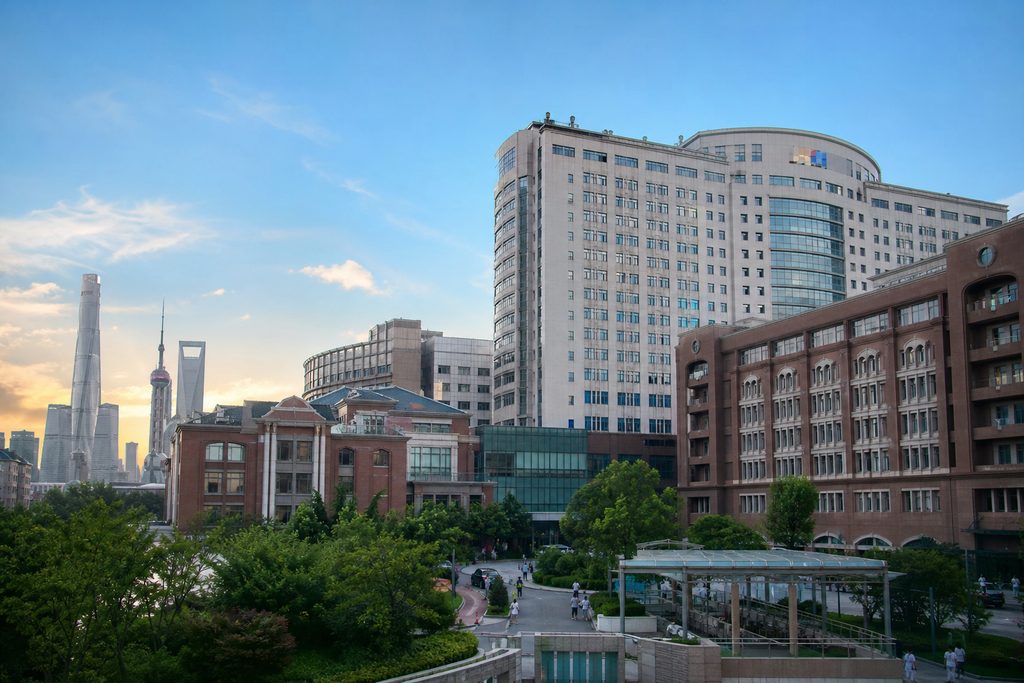
When 42-year-old Michael first heard the diagnosis — an unruptured 5mm cerebral aneurysm found incidentally on a scan — he had no idea where to start looking for treatment. His insurance network in Atlanta quoted him a six-week wait just for the initial neurosurgery consult. The projected out-of-pocket cost for clipping, even with coverage, sat north of $40,000. He started searching online at 2 a.m., typing variations of “brain aneurysm surgery cost Shanghai Huashan Hospital” into his phone. The numbers he found seemed unreal. Too good to be true. That’s the moment most of our patients reach out to us — not with certainty, but with a mix of hope and deep skepticism. They need to know if the clinical quality matches the price difference. They need to know if the system will accept them. This article walks through exactly what Michael — and anyone in his position — needs to understand before booking a flight.
How This Actually Works, Step by Step
The pathway from a diagnosis abroad to a completed surgery in Shanghai is not a single click. It’s a sequence. Here’s the real flow, stripped of marketing gloss.
First, you send your existing imaging and records. We’re talking about the actual DICOM files from your angiogram, CT angiography, or MRA — not just the radiology report. A written summary from your current neurologist helps, but the raw images are what the surgical team will scrutinize. Our team handles the certified translation of these documents into Mandarin, ensuring no clinical nuance is lost.
The records go to the neurosurgery department at Huashan Hospital for a written second opinion. This isn’t a quick email. A senior neurosurgeon reviews your vascular anatomy, the aneurysm’s morphology, size, and location, and produces a formal assessment. They’ll state whether they believe intervention is warranted, and if so, which approach they recommend — microsurgical clipping or endovascular coiling. This document comes back to you in English. The fee for this written second opinion typically runs from $300 to $500.
If the recommendation aligns with your goals, the next step is usually a video consultation. You speak directly with the specialist. You can ask about their specific experience with aneurysms in the anterior communicating artery or basilar tip, whatever your case involves. You discuss the risks they see in your particular anatomy. This consultation costs between $500 and $800 for a top-specialist session.
After you decide to proceed, we coordinate the hospital appointment and the S2 visa invitation documentation. You don’t just show up. The hospital’s international department issues a formal invitation letter confirming your treatment plan. You take that to the Chinese embassy or consulate in your country. The S2 visa is the correct category for short-term private medical treatment. Processing times vary by location, but plan for two to four weeks.
You arrive in Shanghai. Our bilingual medical companion meets you at the airport. The next day, you go to Huashan for a fresh set of pre-operative scans and a face-to-face evaluation. The surgeon confirms the plan. Surgery is scheduled. This is not a same-day or next-day event. There is a deliberate, methodical build-up.
Understanding the Real Brain Aneurysm Surgery Cost Shanghai Huashan Hospital
Let’s talk about the number that brought most people to this page. The brain aneurysm surgery cost Shanghai Huashan Hospital varies significantly based on the technique used and the complexity of the case.
For microsurgical clipping, the total hospital bill — including surgeon fees, anesthesia, operating room, ICU stay, and a standard ward recovery — typically falls between $25,000 and $40,000 USD for international patients using the hospital’s VIP or international wing. For endovascular coiling, which involves platinum coils, the cost is higher due to the device expense. You’re looking at a range of $35,000 to $55,000 USD. A flow diverter procedure, used for more complex wide-necked aneurysms, can reach $50,000 to $65,000.
These are the prices for the international patient channel. They’re higher than what a local resident pays because they include English-language coordination, private rooms, and accelerated access to senior surgeons. But they are still a fraction of the U.S. cash price. The same coiling procedure in the United States can easily exceed $150,000. Clipping frequently crosses $100,000. The difference isn’t marginal. It’s structural.
Why the gap? It’s not a discount on quality. It’s a function of different cost structures. Huashan’s neurosurgery department performs over 17,000 procedures annually. That volume drives efficiency. The hospital is not navigating the same labyrinth of multi-payer insurance billing that inflates administrative costs in the U.S. system. You are paying primarily for the clinical work itself.
| Procedure | Huashan Intl. Patient (USD) | U.S. Average Cash Price (USD) |
|---|---|---|
| Microsurgical Clipping | $25,000 – $40,000 | $100,000 – $160,000 |
| Endovascular Coiling | $35,000 – $55,000 | $130,000 – $200,000 |
| Flow Diverter Stenting | $50,000 – $65,000 | $150,000 – $250,000 |
These figures include the hospital stay. They do not include your flights, accommodation for a companion, or our coordination fees. A realistic all-in budget, including a two-week hotel stay near the hospital and our VIP end-to-end coordination, typically adds $8,000 to $12,000 to the total. Still, the math is stark.
A Realistic Timeline
People want to know how long they’ll be away from work, from family, from their life. Here’s the timeline, assuming no major complications. It’s longer than most expect.
| Phase | Duration | What Actually Happens |
|---|---|---|
| Remote Evaluation | 2–4 weeks | Document translation, written second opinion, video consultation. Back-and-forth questions. This is where trust is built or broken. |
| Visa Processing | 2–4 weeks | Hospital issues invitation letter. You apply for the S2 visa at the nearest Chinese embassy. Delays happen if documents are incomplete. |
| Arrival & Pre-Op | 3–5 days | Repeat imaging (angiogram), full physical, surgical consent, anesthesia consult. The surgeon wants fresh images, not scans from two months ago. |
| Surgery & Acute Recovery | 5–10 days | Procedure itself (3–8 hours). One to two nights in neurosurgical ICU. Then step-down to a private ward. Monitoring for vasospasm, the main post-operative risk. |
| Local Recovery Before Flight | 7–14 days | You won’t be cleared to fly immediately after discharge. Surgeons typically want you to stay in Shanghai for at least one week, sometimes two, for a final follow-up scan and clinical check before clearing you for the cabin pressure changes of a long-haul flight. |
| Total Time in Shanghai | 3–5 weeks | From landing to departure. This is the range to plan for. |
The recovery doesn’t end when you board the plane. Full recovery after cerebral aneurysm surgery is measured in months. Most patients can return to desk work after 4 to 6 weeks. Physical jobs take longer. The brain heals on its own schedule. Fatigue is the most common lingering complaint we hear about, lasting three to six months for many. This is not a failure of the surgery. It’s the reality of a brain procedure.
What Can Go Wrong — and What Happens Then
Surgery inside the skull carries irreducible risks. Any team that doesn’t state this plainly should be avoided. The honest failure modes matter.
Intraoperative rupture happens in a small percentage of cases. The surgeon is working on a weak spot in a blood vessel. When it tears during clipping, the team manages it with temporary clips and suction. Huashan’s neurosurgical suites are equipped for this. It’s a known crisis with a practiced response. The outcome depends on how quickly it’s controlled and how much bleeding occurs before control is achieved.
Post-operative vasospasm is the more common and insidious risk. In the days following a rupture repair — or even an unruptured aneurysm clipping — the brain’s blood vessels can constrict unpredictably. This can lead to delayed ischemic deficits. The team at Huashan manages this with triple-H therapy (hypertension, hypervolemia, hemodilution) and nimodipine. They monitor for it daily with transcranial dopplers. If a severe spasm develops, they can perform an intra-arterial infusion of vasodilators. The point is: they expect this. They watch for it.
What if you need to stay longer than planned? The international department extends your visa documentation. What if a complication requires a second surgery? The team is in-house. This isn’t a visiting surgeon who flies out on Monday. Huashan’s neurosurgery department has over 120 faculty neurosurgeons. Someone with the right subspecialty expertise is always on call.
What if you just want to go home early? Surgeons at Huashan will not clear a patient for flight if they believe the risk of in-flight deterioration is significant. They are conservative about this. You can’t sign out against medical advice and expect our team to support the travel logistics. We won’t facilitate an unsafe departure.
Clipping or Coiling: The Decision That Shapes Everything
The choice between clipping and coiling is not a lifestyle preference. It’s an anatomical decision. And it directly determines the brain aneurysm surgery cost Shanghai Huashan Hospital will quote you.
Clipping is open surgery. A craniotomy. The neurosurgeon places a titanium clip across the neck of the aneurysm, permanently excluding it from circulation. The recurrence rate is exceptionally low — under 1% in most series. But recovery is harder. You’re recovering from a craniotomy, not just the aneurysm repair. The hospital stay is longer. The upfront physical toll is greater.
Coiling is endovascular. A catheter is threaded from the femoral artery up into the brain. Tiny platinum coils are packed into the aneurysm sac until blood flow inside it stagnates. No skull opening. Recovery is faster. You’re out of the hospital in a few days. But the long-term durability is slightly lower. About 20% of coiled aneurysms show some degree of recanalization over time, requiring follow-up angiography and occasionally re-treatment.
So which is safer? The question “is brain aneurysm coiling safe in China” gets asked in almost every initial consultation. The short answer: yes, at a center like Huashan, coiling is performed to the same technical standard as any Western high-volume center. The hospital uses modern biplane angiography suites. The interventional neuroradiologists are fellowship-trained. The coils themselves are the same FDA-approved or CE-marked devices used globally. The safety profile is equivalent.
The decision comes down to aneurysm geometry. Wide-necked aneurysms are harder to coil without adjunctive stents or balloons. Aneurysms in certain locations — the middle cerebral artery bifurcation, for example — are often more definitively treated with clipping. The best neurosurgeon for aneurysm clipping China can offer will tell you honestly which approach fits your specific anatomy. You want a surgeon who does both, or a team where the open vascular neurosurgeon and the interventionalist collaborate on the decision. Huashan’s department operates this way. You’re not getting a biased pitch from someone who only does one procedure.
Practical Considerations: Records, Visa, and Follow-Up
You need more than a passport and a plane ticket. The practical layer is where most international plans stall.
Medical records must be complete and current. Send everything: CT angiogram, digital subtraction angiography if you’ve had it, MRI, and any previous surgical notes. Do not send screenshots. Do not send a PDF of a printed film held up to a window. The DICOM files on a CD or uploaded to a secure portal are what the team needs. Blurry images lead to “we can’t assess this,” which leads to delays.
The S2 visa is the correct instrument. It covers short-term private affairs, including medical treatment. The hospital’s international department will supply a stamped invitation letter and a copy of their business license. You’ll also need your passport, a photo, and a completed application form. The exact requirements shift slightly by embassy. Check the website of the Chinese consulate that serves your jurisdiction. Your companion — spouse, adult child — applies for their own S2 visa using the same hospital documentation.
Payment is pre-authorized. The hospital will require a deposit before admission, typically 50% to 100% of the estimated procedure cost. This is paid via wire transfer to the hospital’s account. We provide the invoice and coordinate the transfer. International health insurance sometimes covers treatment at Huashan, but you must confirm this with your insurer before you commit. The hospital is not in-network with any U.S. or European insurers. You pay the hospital directly and seek reimbursement from your insurer afterward. We provide the itemized receipts and medical reports required for claims.
Follow-up after you return home is non-negotiable. You’ll need a local neurosurgeon or neurologist to take over your care. Before you leave Shanghai, you’ll receive a detailed discharge summary in English, a CD with all post-operative imaging, and a recommended follow-up schedule. For clipped aneurysms, a one-time angiogram at one year is typical. For coiled aneurysms, you’ll need MRA surveillance at six months, one year, and then annually for several years. This is the same schedule any Western center would recommend. The surgery is in Shanghai. The long-term monitoring is at home. Plan for that handoff before you travel.
Frequently Asked Questions
For an international patient using the VIP channel, microsurgical clipping typically ranges from $25,000 to $40,000 USD. Endovascular coiling ranges from $35,000 to $55,000. The exact figure depends on the aneurysm’s size, location, and the specific devices used. A formal written second opinion will include a personalized cost estimate.
You don’t choose a single name from a website. Huashan’s neurosurgery department assigns your case to the subspecialty team that handles your specific aneurysm type. The department has dedicated vascular teams for anterior circulation, posterior circulation, and complex bypass cases. You can request a video consultation with the assigned lead surgeon before committing. This lets you assess their communication and experience directly.
Yes. Huashan’s interventional neuroradiology suites use modern biplane angiography equipment. The procedural safety profile — rates of intraoperative rupture, thromboembolic events, and access-site complications — is comparable to published benchmarks from high-volume Western centers. The devices used are the same CE-marked and FDA-approved coils and stents. The safety question is less about geography and more about volume. Huashan’s volume is among the highest in the world.
Most patients with sedentary jobs can return to work 4 to 6 weeks after clipping and 2 to 4 weeks after coiling. Physical jobs require a longer graduated return, often 3 months. Full cognitive stamina — the ability to sustain focus through a long day — frequently takes 3 to 6 months. Fatigue is normal. It is not a sign that something went wrong.
You cannot book a surgery date directly. The sequence is: written second opinion, video consultation, agreement on a treatment plan, and then coordination of the visa and appointment. The hospital requires a face-to-face evaluation in Shanghai before final scheduling. This protects you. No ethical surgeon will operate on a brain aneurysm without a fresh angiogram and a personal examination. The remote evaluation secures the plan. The in-person visit confirms it.
Your Next Step
This is the point where information turns into action. You’ve seen the cost ranges, the timeline, the risks, and the decision points. The next step is not to book a flight. It’s to send your scans. Our team facilitates the remote evaluation process — we handle the translation, the submission to Huashan’s neurosurgery department, and the scheduling of your written second opinion and video consultation. We don’t practice medicine. We don’t make clinical recommendations. We connect you with the specialists who do, and we make sure nothing gets lost in the process — not your records, not the nuance of a conversation, not the
For more medical information and treatment options in China, visit chinamedservices.com (China Medical Services).
