TCM for Fertility in China: What It Costs & How We Coordinate Your Treatment
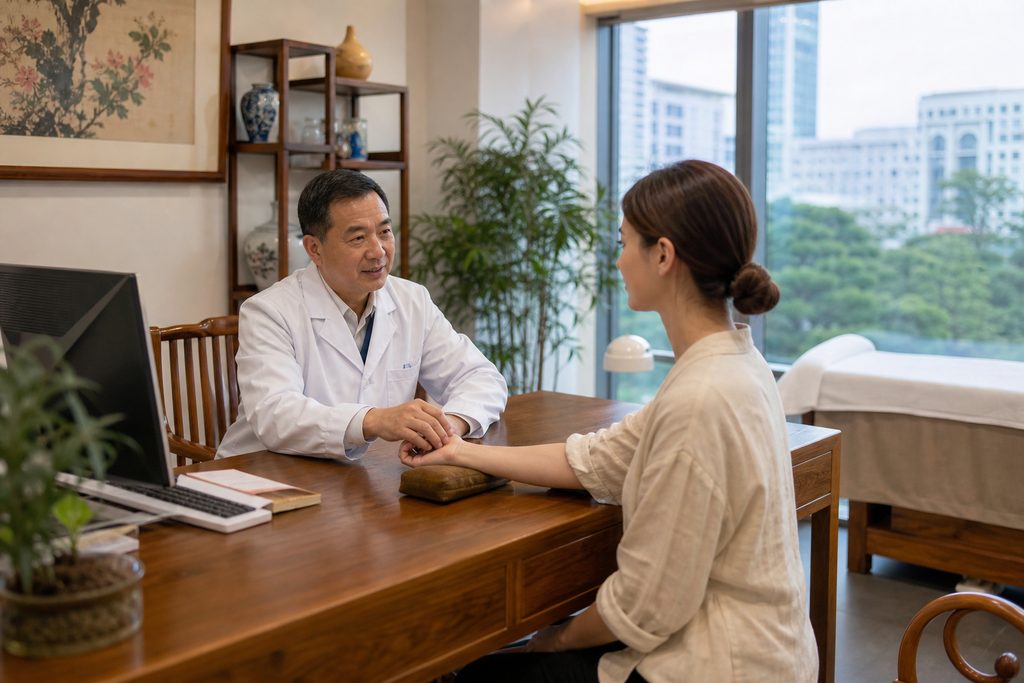
TCM for Fertility in China: The Short Answer
You’ve probably heard that traditional Chinese medicine is a slow, unproven path for fertility. The reality is more nuanced. TCM fertility clinic costs China typically range from $60 to $150 per acupuncture session and $200 to $600 per month for customized herbal formulas, depending on the hospital tier and specialist seniority. That is significantly less than comparable integrative fertility care in the US or Europe. But cost is only part of the picture. The real question is whether TCM can meaningfully support your fertility journey, and how a foreign patient actually accesses reputable care without speaking Mandarin.
Our team coordinates TCM fertility treatment across public Grade A hospitals, specialized TCM universities, and private international clinics in Beijing, Shanghai, and Guangzhou. We do not prescribe herbs or perform acupuncture. We handle hospital matching, appointment scheduling, bilingual accompaniment, and treatment plan translation so you can focus on your health. The short answer: TCM for fertility in China is affordable and increasingly studied alongside IVF protocols, but it requires careful provider selection and realistic expectations.
Who This Is Right For — and Who It Isn’t
TCM fertility support is not a universal solution. It works best as a complementary approach alongside conventional reproductive medicine, not as a wholesale replacement for it. Patients who benefit most tend to fall into specific categories.
Good candidates for TCM fertility treatment in China typically include:
- Women with unexplained infertility who have been trying to conceive for 12 months or more without a clear diagnosis
- Patients preparing for or currently undergoing IVF who want to improve endometrial thickness or reduce stress markers
- Women with irregular menstrual cycles, mild PCOS, or luteal phase defects who have not responded fully to first-line medication
- Patients with diminished ovarian reserve who are told they have limited options and want adjunctive support
- Couples where male factor issues like low motility or morphology are mild to moderate
Who should not pursue TCM fertility treatment abroad:
- Women with complete tubal blockage requiring surgical intervention — herbs cannot reopen fallopian tubes
- Patients with severe male factor infertility (very low sperm count) who need ICSI or surgical sperm retrieval
- Women over 43 pursuing their own eggs — TCM cannot reverse age-related aneuploidy
- Anyone with a known herbal allergy or liver function abnormalities, since some Chinese herbs affect hepatic enzyme pathways
- Patients unwilling to commit to 3-6 months of consistent treatment, which is the minimum window most TCM specialists require before assessing response
Being honest about who should not do this is what makes the rest of this guide credible. TCM has real limitations, and a reputable provider in China will tell you that directly.
The Options, Compared
Not all TCM fertility care in China is the same. The provider type, hospital tier, and treatment modality all affect both cost and quality. Here is how the main options stack up.
| Option | Typical Cost (USD) | Treatment Approach | Best For |
|---|---|---|---|
| Public Grade A TCM Hospital (e.g., Beijing TCM Hospital) | $60–$120 per session | Acupuncture + raw herbs, often combined with conventional diagnostics | Patients who want evidence-based TCM integrated with lab work |
| University-Affiliated TCM Clinic | $50–$100 per session | Standardized protocols, often with clinical trial participation options | Patients comfortable with teaching clinics and junior practitioners |
| Private International Clinic (e.g., United Family, Jiahui) | $150–$300 per session | English-speaking TCM physicians, Western-style intake, insurance billing | Patients who need language support and prefer a familiar clinical environment |
| Specialized Fertility TCM Center | $100–$250 per session | Integrated TCM + IVF support, often with reproductive endocrinologist collaboration | Patients already in an IVF cycle who want adjunctive acupuncture |
Public Grade A TCM hospitals offer the strongest combination of clinical expertise and affordability. But they are crowded, mostly Mandarin-speaking, and require navigating complex registration systems. Private international clinics solve the language barrier but at roughly double to triple the price. The specialized fertility TCM centers are a middle path — they understand IVF protocols and can coordinate directly with reproductive medicine departments, which is why many international patients choose them for integrated care.
Does Traditional Chinese Medicine Work for IVF Support? What the Evidence Shows
The question “does traditional Chinese medicine work for IVF” deserves an honest answer. The research is mixed but not dismissive. A 2015 systematic review published in Complementary Therapies in Medicine analyzed 20 randomized controlled trials involving 2,345 women and found that acupuncture performed around embryo transfer was associated with a 30% relative increase in clinical pregnancy rates. But the quality of included studies varied, and some later trials showed no significant difference. The honest summary: acupuncture may improve IVF outcomes modestly, particularly for patients with repeated implantation failure or high stress levels.
Herbal medicine for fertility has less rigorous evidence. Some formulas, such as those based on Dang Gui Shao Yao San or Zuo Gui Wan, have shown effects on endometrial receptivity and ovarian blood flow in small Chinese studies. A 2021 meta-analysis in Frontiers in Pharmacology reviewed 24 studies on Chinese herbal medicine for diminished ovarian reserve and reported improvements in AMH levels and antral follicle counts, but the authors cautioned that most trials had high risk of bias. That means the traditional formulas may help — but the evidence base is not strong enough to replace conventional ovarian stimulation.
What does this mean for you? TCM for IVF support in China is best understood as an adjunct, not an alternative. The most reputable TCM fertility specialists in China will tell you the same thing. They see their role as preparing the body, improving uterine environment, and reducing stress — not as a replacement for gonadotropins or embryo transfer.
Best TCM Hospital for Infertility Beijing: How to Choose
If you search for the “best TCM hospital for infertility Beijing,” you will encounter a handful of institutions repeatedly. Beijing is home to the strongest concentration of TCM fertility specialists in China, largely because it hosts the China Academy of Chinese Medical Sciences and multiple university-affiliated hospitals with dedicated reproductive TCM departments.
The leading options include Beijing Traditional Chinese Medicine Hospital, affiliated with Capital Medical University, which runs a dedicated gynecology and infertility department with both acupuncture and herbal services. Xiyuan Hospital of the China Academy of Chinese Medical Sciences is another major center, known for its integration of TCM with Western reproductive endocrinology. Guang’anmen Hospital, also under the Academy, has a long history of treating gynecological disorders with classical formulas.
We do not rank these hospitals ourselves. Instead, we rely on the Fudan University hospital rankings, which place several Beijing TCM hospitals among China’s top institutions for traditional Chinese medicine. You can review the full list on our TCM hospital directory, which groups top-ranked facilities by city and specialty. When you contact us, we match your specific diagnosis — PCOS, endometriosis, diminished ovarian reserve, recurrent miscarriage — to the department with the strongest clinical volume in that area.
How to Prepare for Acupuncture Fertility Treatment Abroad
Preparing for acupuncture fertility treatment abroad requires more than booking a flight. The most common mistake we see is patients arriving without proper medical records, which wastes the first consultation and forces repeat testing. Here is what you need before you travel.
Medical documentation to bring:
- Complete fertility workup: AMH, FSH, LH, estradiol, progesterone, TSH, prolactin, and antral follicle count from the last 6 months
- Partner’s semen analysis if male factor is involved
- Any previous IVF cycle records, including stimulation protocols, embryo quality grades, and implantation outcomes
- Imaging reports: transvaginal ultrasound, HSG if performed, and any laparoscopy findings
- List of current medications and supplements with dosages
Timing considerations:
- Acupuncture protocols for fertility typically follow the menstrual cycle, so schedule your first visit on day 2-5 of your cycle if possible
- Plan for a minimum 2-week stay for initial assessment and treatment initiation, or 4-6 weeks if you want to complete a full cycle of treatment
- Herbal formulas usually require adjustment every 2-4 weeks, so discuss follow-up options before you leave
Language preparation matters too. Even at top TCM hospitals, most physicians speak limited English. Our bilingual companions translate your medical history accurately — which is critical because TCM diagnosis relies heavily on detailed questioning about sleep, digestion, menstrual symptoms, and emotional state. A mistranslated symptom can lead to an incorrect herbal formula.
Book TCM Fertility Package Shanghai: What Packages Actually Include
When you search for ways to “book TCM fertility package Shanghai,” you will find offers ranging from simple acupuncture bundles to multi-week integrated programs. Understanding what these packages actually include is essential before committing.
A typical TCM fertility package in Shanghai at a private international clinic includes: initial consultation with a TCM physician who has reproductive training, 8-12 acupuncture sessions scheduled around your cycle, a 2-4 week supply of customized herbal granules or raw herbs, dietary counseling based on TCM food therapy principles, and a written treatment summary in English. Prices range from $1,500 to $4,000 for a 4-week package, depending on the clinic and physician seniority.
Public hospital packages are far cheaper — often $400 to $800 for a comparable set of services — but they rarely include English documentation or flexible scheduling. You will also need to handle registration, payment, and pharmacy pickup yourself, which is difficult without Mandarin. Our team can book the package on your behalf, translate the treatment plan, and accompany you to each session. The coordination fee is separate from the hospital charges and starts at $300 for appointment arrangement.
One caution: be wary of packages that promise specific pregnancy outcomes. No ethical TCM provider in China will guarantee a live birth rate. If a package claims a 70% or 80% success rate, that is a red flag. Legitimate packages describe services provided, not results promised.
TCM Treatment for Low Ovarian Reserve China Price: What to Expect
Low ovarian reserve is one of the most common reasons international patients seek TCM treatment in China. Women with AMH below 1.0 ng/mL or antral follicle counts under 5 are often told in their home countries that egg donation is their only option. TCM offers a different perspective — not a cure, but a potential improvement in ovarian response.
The price for TCM treatment for low ovarian reserve in China varies by treatment intensity. A standard protocol includes acupuncture 2-3 times per week, daily herbal decoction, and sometimes moxibustion or cupping. Monthly costs at a public TCM hospital run $300 to $600. At a private clinic with English support, expect $800 to $1,500 per month. Most specialists recommend a minimum 3-month course before reassessing AMH and antral follicle count, so budget $900 to $4,500 for a full initial treatment cycle.
What drives the variance? Raw herbs are more expensive than granule extracts, and some formulas include costly ingredients like Cordyceps or Lu Rong (deer antler velvet). Senior professors with 30+ years of clinical experience charge higher consultation fees. And private clinics add service costs for translation and scheduling. None of these factors guarantee better outcomes — they reflect provider overhead and ingredient sourcing.
It is also worth noting that some TCM hospitals in China run clinical trials for diminished ovarian reserve. Participating in a trial can reduce treatment costs to nearly zero, but enrollment criteria are strict and most trials require in-person visits over several months. Our team can check current trial availability at top-ranked public hospitals when you inquire.
Practical Considerations: Visas, Payment, and Follow-Up Care
Traveling to China for TCM fertility treatment involves logistics that go beyond booking a clinic. The visa process, payment methods, and continuity of care after you return home all require planning.
Visa: For medical treatment in China, the applicable visa category is S2, which covers short-term private affairs including medical visits. Your accompanying partner or family member also applies for an S2 visa. You will need supporting documents from the hospital — usually an invitation letter or treatment confirmation — which we help obtain after your appointment is confirmed. Processing times vary by consulate, so apply at least 4-6 weeks before your planned travel date. We never guarantee visa approval, but we provide the correct documentation to support your application.
Payment: Public TCM hospitals in China require prepayment, typically via cash, Chinese debit card, or WeChat Pay. International credit cards are often not accepted at public hospital counters. Private international clinics accept major credit cards and sometimes direct insurance billing. If you have international health insurance, check whether TCM services are covered — many policies exclude acupuncture and herbal medicine. We can provide itemized receipts for reimbursement claims.
Follow-up after returning home: Herbal formulas need adjustment as your cycle progresses. Before you leave China, ask your TCM physician for a written protocol that a local acupuncturist in your home country can follow. Many patients continue acupuncture at home and schedule video consultations with their Chinese physician every 4-6 weeks for formula adjustments. Our team can arrange these follow-up video consultations, which typically cost $100 to $300 per session depending on the specialist.
Important: Always inform your reproductive endocrinologist at home about any Chinese herbs you are taking. Some herbs interact with fertility medications or affect liver enzyme function. A responsible TCM physician in China will ask for your medication list and coordinate with your Western doctor — if they do not, consider that a warning sign.
Frequently Asked Questions
The evidence is mixed. Some meta-analyses show a modest improvement in clinical pregnancy rates when acupuncture is performed around embryo transfer, particularly for patients with repeated implantation failure. But study quality varies, and several well-designed trials found no significant benefit. Herbal medicine for IVF support has weaker evidence. The honest position: TCM may help some patients, but it should not replace conventional IVF protocols. It is an adjunct, not an alternative.
For a 3-month course at a public Grade A TCM hospital, expect $900 to $1,800 in total treatment costs. At a private international clinic with English support, the same period runs $2,400 to $4,500. Add $300 to $800 for our coordination and bilingual companion services, depending on how many sessions you need us to attend. Herbal medicine is usually the largest single expense, followed by acupuncture session fees. Prices vary by hospital tier, physician seniority, and formula ingredients.
This is a real possibility, and you should plan for it. Not every patient responds to TCM. If your AMH, antral follicle count, or menstrual regularity has not improved after 3 months, a reputable TCM physician will tell you to stop or change approach. Some patients respond better to different formulas or acupuncture protocols. Others do not respond at all. Before starting treatment, discuss with your physician what constitutes a meaningful response and what the stopping criteria are. We can help you arrange a second opinion from a reproductive endocrinologist at a top-ranked reproductive medicine department if TCM alone is not sufficient.
Yes, but with limitations. Private international clinics in Shanghai accept advance bookings and package reservations, often with a deposit. Public TCM hospitals generally do not allow overseas patients to pre-book specific appointment slots through their regular registration system. However, their international departments or VIP channels may accommodate advance arrangements. Our team can contact the hospital’s international office on your behalf, confirm availability, and secure a booking where the hospital permits it. We cannot guarantee a specific physician’s availability on a specific date, but we confirm all arrangements in writing before you travel.
Safety depends on provider quality. Licensed TCM physicians in China complete 5-8 years of university training and must pass national licensing exams. Top hospitals like those in the Fudan rankings employ physicians with doctoral degrees and decades of clinical experience. The risks come from unlicensed practitioners, contaminated herbs, or formulas that interact with Western medications. We only coordinate with physicians at accredited public hospitals or JCI-certified private clinics. You can verify a physician’s license through China’s National Medical Products Administration database, and we provide credential summaries for any specialist we recommend.
Your Next Step
TCM fertility treatment in China offers a genuine option for patients who want adjunctive support alongside conventional reproductive care — at costs that are often a fraction of Western integrative clinics. But it is not a shortcut, and it is not for everyone. The patients who benefit most are those who understand the evidence, choose reputable providers, and commit to a realistic treatment timeline.
We are China Medical Services, a coordination team based in China that connects international patients with top-ranked Chinese hospitals. We are not a hospital, and we do not provide medical advice or diagnoses. What we do is handle the logistics: hospital matching, appointment booking, bilingual accompaniment, document translation, and visa support documentation. If you are considering TCM for fertility in China, start with a free consultation. We will review your medical history, discuss which hospitals and specialists fit your diagnosis and budget, and give you a clear picture of what to expect — before you spend a dollar on travel.
For more medical information and treatment options in China, visit chinamedservices.com (China Medical Services).
