Brain Surgery Cost China: A Companion at the Ready for Every Step
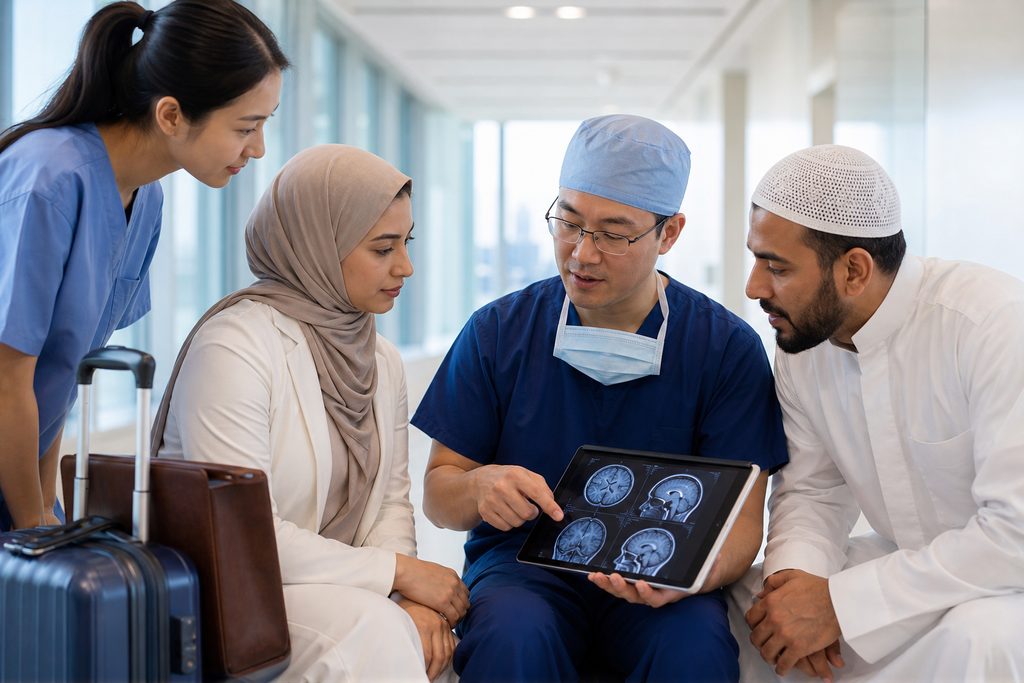
Have you ever tried to picture navigating a foreign hospital system while dealing with the fear of a brain tumor diagnosis? The language barrier alone is enough to make anyone freeze. Understanding the brain surgery cost China offers is only the first piece of a much larger puzzle that includes safety, recovery, and simply not being alone in the process.
Our team at China Medical Services works with patients from North America, Europe, and the Middle East who are weighing these decisions. We do not perform surgery. We make sure you understand exactly what you are walking into before you commit to a flight.
How This Actually Works, Step by Step
The process starts before you ever book a ticket. Most international patients send us their existing MRI, CT scans, and pathology reports first. A Chinese neurosurgery department reviews these records remotely. You receive a written analysis or a video consultation explaining whether surgery is even the right call, and what approach the team would recommend.
From there, the sequence looks like this:
- Send medical records and imaging to our coordination team.
- We arrange a remote evaluation with a neurosurgery department at a Fudan-ranked or JCI-accredited hospital.
- You receive a written second opinion (from $300–500) or a video consultation (from $100–300), depending on the complexity.
- If surgery is indicated, we coordinate your S2 visa application with the hospital’s official invitation letter.
- You fly to China. A bilingual medical companion meets you at the airport, handles registration, and stays with you through preoperative consultations.
- Surgery happens. Your companion remains available for family communication and discharge coordination.
That last point matters more than most people expect. When a family member is in the operating room for six hours, someone has to translate what the nurse means by “stable but still intubated.”
What Brain Surgery Actually Costs in China
The brain surgery cost China hospitals quote depends heavily on the procedure type and hospital tier. A standard craniotomy for tumor resection at a top public hospital typically ranges from $15,000 to $35,000. The same procedure in the United States often exceeds $100,000 before insurance adjustments.
| Procedure | China (Top Public Hospital) | United States (Average) |
|---|---|---|
| Craniotomy for tumor resection | $15,000 – $35,000 | $80,000 – $150,000+ |
| Awake craniotomy | $20,000 – $40,000 | $120,000 – $200,000+ |
| Endoscopic transsphenoidal pituitary surgery | $12,000 – $25,000 | $60,000 – $100,000+ |
| Deep brain stimulation (DBS) | $30,000 – $50,000 | $100,000 – $180,000+ |
These are ranges, not quotes. Final pricing varies by hospital and case complexity. The international department at a hospital like Huashan Hospital in Shanghai charges more than a standard public ward, but that premium buys English-speaking staff and faster scheduling.
If you are specifically asking about awake craniotomy price abroad, China sits at roughly one-fifth to one-third of US pricing. That procedure, used for tumors near language or motor centers, requires a highly coordinated surgical team. China’s top neurosurgery centers perform hundreds of these annually, which is exactly the volume you want.
Is Brain Surgery Safe in China? A Straight Answer
The honest answer is yes, at the right hospitals. Is brain surgery safe in China depends on which of the 35,000+ hospitals you walk into. The gap between a top-tier Fudan-ranked neurosurgery center and a provincial hospital is enormous.
China Medical Services works only with hospitals in the top 5% — those ranked by the Fudan University hospital rankings or accredited by JCI. The neurosurgery department rankings we reference come from the Fudan specialty reputation list, which evaluates 45 specialties including neurosurgery.
Volume is the safety signal most people overlook. A hospital performing 2,000+ craniotomies per year has seen complications you have never heard of and already knows how to manage them. That institutional experience is what you are buying.
But you need to know the limitations. Public hospital outpatient clinics cannot be booked from overseas in advance. You cannot email Huashan Hospital and reserve a surgery date. The system requires an in-person consultation first. That is why the international department or VIP pathway exists — it is the legitimate route for foreign patients to secure a preoperative evaluation before flying over.
A Realistic Timeline
Here is what the calendar actually looks like for a patient seeking brain surgery in China, starting from the day you first contact us.
| Stage | What Happens | Duration |
|---|---|---|
| Days 1–7 | Medical record collection, translation of key reports into Chinese | 1 week |
| Days 8–21 | Remote review by neurosurgery department; written opinion or video consultation scheduled | 2 weeks |
| Days 22–35 | Hospital agrees to accept case; official invitation letter issued for S2 visa | 2 weeks |
| Days 36–50 | S2 visa processing at Chinese embassy or consulate in home country | 2–3 weeks |
| Days 51–58 | Travel to China; in-person preoperative consultation and imaging | 1 week |
| Days 59–65 | Surgery scheduled and performed | 1 week |
| Month 2–3 | In-hospital recovery, then local accommodation for observation before flying home | 4–8 weeks |
People forget the document translation step. Your MRI report from a German or Canadian hospital means nothing to a Chinese neurosurgeon until it is professionally translated. That adds a week before any clinical review happens.
Visa timing is the other bottleneck. The S2 visa is the correct category for medical treatment and private affairs in China. It requires an invitation letter from the treating hospital. We help obtain that letter, but we cannot speed up the embassy’s processing time.
What Can Go Wrong — and What Happens Then
The honest failure modes deserve honest answers.
The hospital reviews your records and says surgery is not recommended. This happens more often than patients expect. A Chinese neurosurgeon may conclude that the tumor is better managed with radiation or watchful waiting. That is a good outcome, not a wasted trip. You paid a few hundred dollars for a second opinion instead of thousands for an unnecessary operation.
You arrive and the surgeon wants additional imaging. Chinese hospitals frequently repeat MRI or CT scans with their own equipment, even if you brought recent scans. Budget an extra $500–1,500 for this and expect it. It is not a scam. It is standard practice.
Surgery is delayed after you arrive. Public hospital schedules shift. A VIP international pathway reduces this risk but does not eliminate it. Your companion’s job includes pushing for rescheduling and keeping you informed in English.
Postoperative complications require a longer stay. This is brain surgery. Infection, swelling, or neurological deficits can extend hospitalization. Travel insurance with medical evacuation coverage is non-negotiable. We say this to every patient.
Choosing the Right Hospital: What the Numbers Mean
Many patients ask us directly about the best neurosurgery hospital Shanghai has to offer. Shanghai is home to Huashan Hospital, affiliated with Fudan University, which runs one of China’s highest-volume neurosurgery departments. Zhongshan Hospital and Ruijin Hospital also maintain strong neurosurgery programs, though Huashan is the name most often cited in the Fudan specialty reputation rankings.
But “best” is the wrong question. The right question is “best for my specific tumor type and location.” A hospital that excels at skull base meningiomas may not be the strongest for pediatric neuro-oncology. The specialty rankings by department break this down more usefully than any general hospital list.
When evaluating a hospital, look for three things:
- Annual neurosurgery case volume. Above 1,500 procedures per year is a strong signal.
- Subspecialty teams. Does the hospital have a dedicated skull base team, a functional neurosurgery team, a neuro-oncology tumor board?
- International department infrastructure. English-speaking coordinators, direct billing options, and experience with foreign patients.
And do not ignore the private international hospitals. Facilities like United Family or Jiahui in Shanghai offer JCI accreditation, Western-style nursing, and direct insurance billing. For complex brain surgery, most patients still prefer the volume of a top public hospital, but private hospitals can be the right choice for second opinions or postoperative care.
Practical Considerations: Records, Visa, Payment, and Follow-Up
Bring everything. Every MRI disc, every pathology slide, every lab report. Chinese neurosurgeons want the raw imaging files, not just the written report. Request DICOM files from your home hospital before you leave.
Your visa is an S2, issued for private affairs including medical treatment. Family members accompanying you also apply for S2. The hospital’s international department provides the invitation letter. Processing times vary by country, so start at least six weeks before your target surgery date.
Payment is almost always upfront. Public hospitals in China operate on a prepaid deposit system. You deposit funds at admission, and the hospital deducts as services are rendered. International departments accept wire transfers and major credit cards. US insurance rarely covers elective surgery in China directly — you pay, then file for reimbursement if your policy allows out-of-network international care.
Follow-up care at home is the piece people forget. Your Chinese surgeon will want follow-up imaging at 3, 6, and 12 months. You need a local neurosurgeon or neurologist willing to review those scans and communicate with the Chinese team. Arrange this before you travel.
How long to recover from brain tumor surgery varies widely. A straightforward meningioma resection might mean 4–6 weeks before you feel mostly normal. A glioblastoma resection near eloquent cortex could mean months of rehabilitation. Plan for the longer end of the range and be pleasantly surprised if you beat it.
Frequently Asked Questions
You cannot book a specific surgery date from overseas through the standard public hospital system. You can, however, secure a preoperative evaluation through the hospital’s international department or VIP pathway, which confirms the surgical plan and gives you a realistic surgery window. That is the legitimate route for medical tourism patients seeking to book brain surgery China offers.
Some top specialists speak functional English, but do not count on it. The international department provides interpreters, and a bilingual medical companion bridges the gap in daily communication, family updates, and discharge instructions. The surgeon’s skill matters more than their English fluency.
Your home neurosurgeon manages immediate complications. The Chinese team remains available for remote consultation, typically via the international department. This is why arranging local follow-up care before you travel is essential, not optional.
Yes. Major neurosurgery centers in Beijing, Shanghai, and Guangzhou perform awake craniotomies regularly. The procedure requires a highly coordinated team including neuroanesthesiologists, speech therapists, and intraoperative monitoring specialists. Expect the awake craniotomy price abroad to be significantly lower in China than in the US or Western Europe.
The companion stays at the hospital, communicates with the surgical team on your family’s behalf, translates updates, and handles any administrative issues that arise. If the surgery runs long or complications occur, the companion is the person who makes sure your family understands what is happening in real time.
Your Next Step
Brain surgery is never a decision made lightly, and traveling abroad for it adds another layer of complexity. What we do at China Medical Services is reduce that complexity — translating records, coordinating with hospital international departments, arranging S2 visa documentation, and putting a bilingual companion beside you from the moment you land.
We are not doctors. We do not promise outcomes or guarantee you will be approved for surgery. What we offer is a clear-eyed path through a system that is excellent but not built for foreigners. If you are weighing your options, start with a conversation. Send us your records, and we will tell you honestly whether China makes sense for your case.
Get a free consultation at our patient services page and let us walk you through the first step.
For more medical information and treatment options in China, visit chinamedservices.com (China Medical Services).
