Brain Tumor Specialist in Shanghai: Huashan Hospital Costs & How to Book
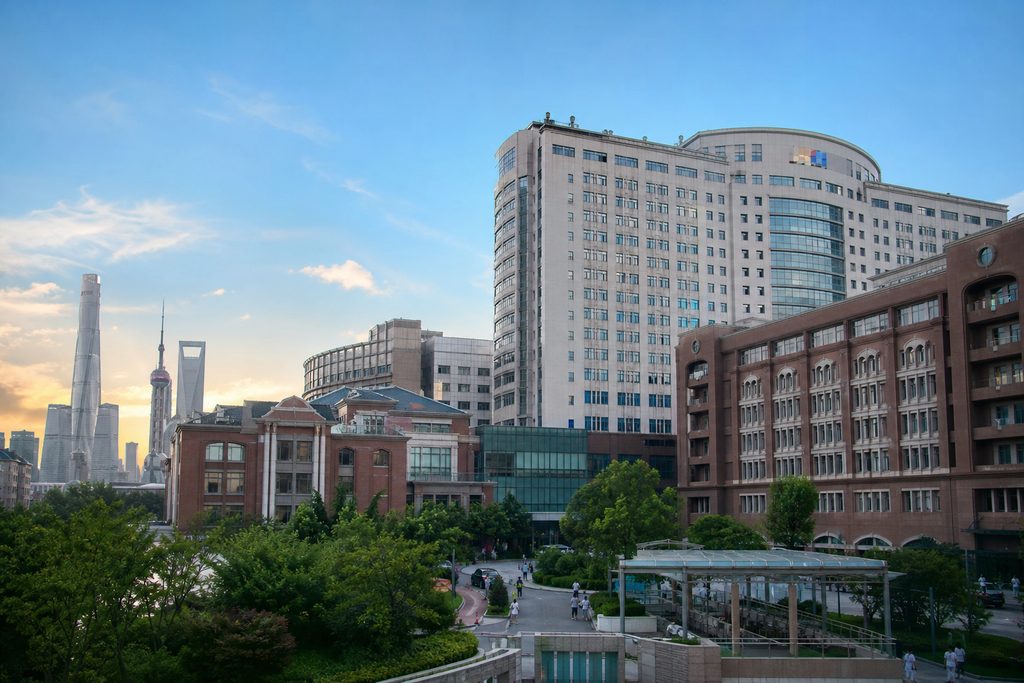
A brain tumor diagnosis upends everything. The words themselves feel heavy, clinical, terrifying. In plain terms, a brain tumor is an abnormal growth of cells inside the skull — some grow slowly and behave almost like benign neighbors, others are aggressive and demand immediate action. When you search for a “Brain Tumor Specialist in Shanghai: Huashan Hospital,” you are likely asking two questions at once. First: is this hospital genuinely world-class? Second: what will it cost, and can I actually get in? The short answer to the first question is yes — Huashan Hospital, affiliated with Fudan University, runs one of the highest-volume neurosurgery departments on the planet. The answer to the second is more nuanced, and that is what this article unpacks honestly. Our team at China Medical Services coordinates care for international patients at Huashan and other top-tier Chinese hospitals. We will walk through costs, safety, the real booking pathway, and what can go wrong.
How This Actually Works, Step by Step
You cannot simply email Huashan Hospital and book a surgery slot. That is not how Chinese public hospitals operate — not for domestic patients, and not for foreigners. The pathway is structured, but it is navigable if you know the sequence.
Step one: you send your existing medical records. MRI or CT scans, pathology reports if a biopsy was done, blood work, any prior surgical notes. These need to be in English or translated into Chinese. Step two: a neurosurgeon or neurosurgical team at Huashan reviews the materials. This is typically arranged through the hospital’s international department or a coordination service like ours. Step three: you receive a written second opinion. The specialist assesses whether surgery is indicated, what approach they would recommend, and whether your case fits their expertise. Step four: if you decide to proceed, you travel to Shanghai for an in-person consultation. Chinese law and hospital policy require a face-to-face evaluation before any surgery is scheduled. Step five: admission, pre-operative testing, surgery, and post-operative monitoring. Step six: discharge and follow-up — either in Shanghai or with your home physician, depending on the case.
The waiting steps people forget are document translation and visa processing. Translation of a full medical record can take three to five business days. An S2 visa — the correct category for medical treatment in China — typically takes one to two weeks after submission, assuming your hospital documentation is complete. You cannot apply for an M visa for this purpose; that category is strictly for commercial and trade activities.
Brain Tumor Surgery Cost Shanghai: What the Numbers Actually Look Like
Let us address the financial question head-on, because it is usually the first thing patients ask after confirming a hospital’s reputation. Brain tumor surgery cost Shanghai runs significantly below Western benchmarks, but the range is wide. For a standard craniotomy and tumor resection at a top public hospital like Huashan, international patients should expect to pay between $25,000 and $50,000 USD. That figure includes the surgery itself, anesthesia, operating theater fees, standard ICU stay, and a typical hospital admission of 10 to 14 days. It does not include pre-operative imaging if new scans are needed, nor does it cover extended rehabilitation.
Compare that to the United States, where the same procedure routinely exceeds $150,000 before insurance negotiations. For uninsured or underinsured patients, the gap is stark. In the UK, private-pay craniotomy at a London teaching hospital lands in the £40,000 to £70,000 range. Germany and Switzerland are comparable to the US. The Shanghai price advantage is real, but it comes with trade-offs in logistics, language, and distance from your home support network.
| Cost Component | Shanghai (Huashan, International Patient) | United States (Private Pay) |
|---|---|---|
| Craniotomy & tumor resection | $25,000 – $50,000 | $120,000 – $250,000+ |
| Pre-operative MRI/CT (if needed) | $500 – $1,200 | $2,500 – $5,000 |
| ICU per day (if extended) | $800 – $1,500 | $4,000 – $8,000 |
| Written second opinion | $300 – $500 | $1,000 – $3,000 |
| Video consultation with specialist | $500 – $800 | $700 – $1,500 |
These figures are ranges, not quotes. Final pricing depends on tumor location, surgical complexity, length of stay, and whether you use the hospital’s standard international channel or a VIP/green-channel pathway. The VIP route adds roughly 50 to 100 percent to the base cost but typically provides English-speaking coordination, faster scheduling, and private rooms. For most international patients, that premium is worth it — navigating a Chinese public hospital without language support is exhausting even when you are healthy.
Huashan Hospital Brain Tumor Specialist Review: What the Data Shows
Huashan Hospital is not famous because of marketing. It is famous because of volume and outcomes. The Department of Neurosurgery at Huashan performs over 20,000 neurosurgical procedures annually — among the highest surgical volumes of any single institution worldwide. That matters for brain tumor surgery specifically. Neurosurgeons who operate on hundreds of gliomas, meningiomas, and pituitary adenomas each year develop a tactile familiarity that no textbook can replicate.
In the Fudan University Hospital Rankings — the most authoritative hospital ranking system in China — Huashan’s neurosurgery department consistently appears in the top tier of the specialty reputation list. The hospital itself sits in the highest bracket (A++++ tier) of the comprehensive ranking. That places it among the top 5 percent of China’s 35,000-plus hospitals. For a patient researching “Huashan Hospital brain tumor specialist review,” the evidence points to a department with deep surgical experience, advanced intraoperative imaging, and a track record of handling complex skull-base tumors that smaller centers refer elsewhere.
But an honest review must also note the friction. Huashan’s outpatient halls are crowded. Wait times for in-person registration can stretch for hours if you do not have a pre-arranged appointment through the international department. English proficiency among nursing staff is limited. The hospital is a public institution — it runs on efficiency, not hospitality. That is where a bilingual medical companion changes the experience. Our team handles registration, queue management, payment, and translation so you are not standing in a numbered line wondering what comes next.
How Is Brain Tumor Treated in China: The Clinical Approach
Treatment protocols in China follow the same international guidelines you would find at Mayo Clinic or Charité — with some local emphasis. For gliomas, the standard pathway is maximal safe resection followed by radiation and chemotherapy, typically temozolomide. For meningiomas, surgery is often curative if the tumor is accessible. For pituitary adenomas, transsphenoidal endoscopic surgery is the default approach, and Chinese centers do enormous volumes of these procedures.
What differs in China is the pace. Once a surgical decision is made, scheduling moves quickly. A patient who completes their in-person consultation on a Monday can often be admitted by Wednesday or Thursday for pre-operative workup. Surgery follows within days. In the UK’s NHS, the same sequence might take six to eight weeks. In Canada, longer. That speed is not recklessness — it is a function of high bed capacity and surgical teams that run multiple operating rooms daily. For a patient with an aggressive tumor, that timeline matters.
Intraoperative MRI and neuronavigation are standard at Huashan’s neurosurgery department. Awake craniotomy for tumors near eloquent cortex — the parts of the brain controlling speech and movement — is performed routinely. So is endoscopic skull-base surgery through the nose, which avoids opening the skull entirely for certain pituitary and anterior skull-base tumors. These are not experimental techniques. They are established, high-volume procedures.
A Realistic Timeline
| Stage | What Happens | Duration |
|---|---|---|
| Day 1–5 | Collect and translate medical records, submit for specialist review | 3–5 business days |
| Day 5–14 | Written second opinion or video consultation with Huashan neurosurgeon | 5–10 business days |
| Day 14–28 | S2 visa application with hospital invitation letter | 1–2 weeks |
| Day 28–35 | Travel to Shanghai, in-person consultation, pre-op testing | 3–5 days |
| Day 35–50 | Surgery, ICU observation, ward recovery | 10–14 days |
| Month 2–3 | Post-discharge follow-up in Shanghai or home country | Ongoing |
Realistically, from first contact to surgery, you are looking at four to six weeks. Some patients compress that to three weeks if records are clean and visa processing is fast. Others take two months because scans are missing or a second opinion raises questions that require additional imaging. Build buffer into your planning. The timeline above assumes no complications and a responsive home physician for records requests.
What Can Go Wrong — and What Happens Then
For international patients at Huashan, expect $25,000 to $50,000 for a standard craniotomy and tumor resection, including a typical hospital stay. The same procedure in the United States often exceeds $150,000 for private-pay patients. Costs vary by tumor type, location, and whether you use the VIP channel.
At high-volume centers like Huashan, surgical outcomes for brain tumor resection are comparable to Western benchmarks. The department performs over 20,000 neurosurgical procedures annually. The main risks for international patients are logistical — language barriers, unfamiliar hospital processes, and post-operative follow-up at home — not surgical quality.
You need an S2 visa, which covers short-term private affairs including medical treatment. Your family members traveling with you also apply for S2 visas. The M visa is for commercial and trade activities only and is not appropriate for medical travel.
That happens, and it is a legitimate outcome. The written second opinion is yours to keep, and the fee is not refunded. What you gain is clarity from a high-volume specialist — sometimes the best surgical decision is no surgery at all.
Your Next Step
If you are researching Huashan Hospital for brain tumor surgery, you are already asking the right questions. The next step is getting your records in front of a specialist who can tell you whether this path makes sense for your specific case. Our team at China Medical Services coordinates written second opinions, video consultations, and on-the-ground support for international patients at Huashan and other top Chinese hospitals. We do not promise outcomes, and we do not guarantee specific surgeons. What we offer is a clear pathway, honest pricing, and a bilingual companion who speaks the system fluently. Start with a free consultation — send your records, and we will tell you honestly what is possible.
Brain surgery is a serious decision. The right hospital and the right information make it less frightening. Huashan’s neurosurgery department is genuinely world-class. Whether it is right for you depends on your tumor, your timeline, and your tolerance for distance from home. Get the second opinion first. Then decide.
Frequently Asked Questions
Yes. The hospitals used for international patients are JCI-accredited and follow the same international safety standards as top hospitals in the US and Europe. Surgical teams perform high volumes of procedures — often more than their Western counterparts — which studies show leads to better outcomes.
Costs vary by procedure and hospital, but international patients typically save 40-80% compared to US prices — even when factoring in travel and accommodation. A consultation with our team will give you an exact, all-inclusive quote with no hidden fees.
Send us your existing medical reports to get started. We handle everything from hospital selection and appointment scheduling to visa assistance and post-operative recovery planning. Your medical records are reviewed by the specialist before you even book a flight.
For more medical information and treatment options in China, visit chinamedservices.com (China Medical Services).
