CAR T Therapy in China: How We Help International Patients
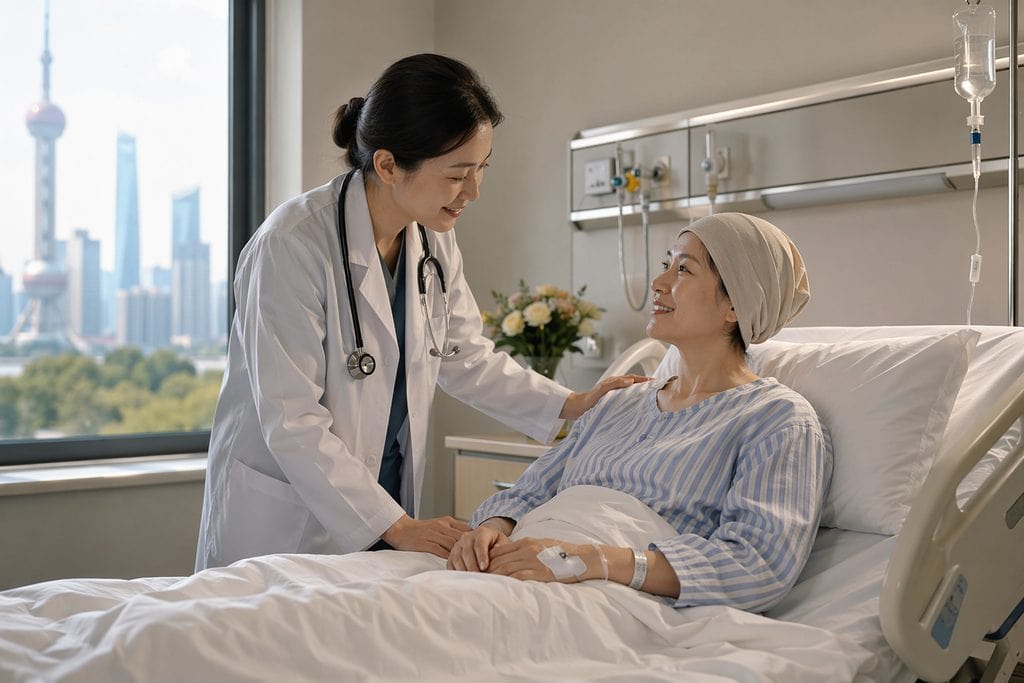
CAR T Therapy in China: How We Help International Patients Navigate Treatment
A course of CAR T-cell therapy in the United States carries a list price of roughly $400,000 to $500,000 before hospitalization, and that figure climbs past $1 million when ICU care and management of complications are included. In China, the same class of therapy — using approved products like the ones cleared by the National Medical Products Administration since 2021 — typically runs between $100,000 and $200,000 at a top-tier hospital. That gap is why the phrase “CAR T therapy cost China” has become one of the most searched phrases among international patients with relapsed blood cancers.
But cost is the easy part. The hard part is everything around it: finding a hospital that will accept an overseas patient, understanding whether you qualify, getting records reviewed before you fly, and navigating a system where almost nothing happens in English. This article explains how that process actually works, and where our team fits in.
Who This Is Right For — and Who It Isn’t
CAR T-cell therapy is not a general cancer treatment. It is a highly specialized immunotherapy used primarily for certain blood cancers that have not responded to standard chemotherapy or have relapsed after it. The main approved indications globally include diffuse large B-cell lymphoma, acute lymphoblastic leukemia in younger patients, multiple myeloma, and mantle cell lymphoma.
You may be a reasonable candidate for evaluation in China if:
- You have a confirmed diagnosis of a B-cell malignancy that has relapsed or is refractory to at least two prior lines of therapy
- Your oncologist at home has discussed CAR T as an option, or you have exhausted standard regimens
- You have adequate organ function and can tolerate the conditioning chemotherapy that precedes infusion
- You can commit to roughly four to eight weeks in China, including the monitoring period after infusion
- You are willing to pay out of pocket or work through a private insurer that reimburses internationally
You should think carefully before pursuing this if:
- Your disease is a solid tumor — CAR T is not standard treatment for most solid cancers, and no responsible hospital will offer it as one
- You have active, uncontrolled infection or severe cardiac, renal, or neurological comorbidity that makes cytokine release syndrome dangerous
- You are seeking a guaranteed cure. No one can offer that, in China or anywhere else
- You need treatment within days. The manufacturing and screening process takes weeks
The Options, Compared
Patients considering CAR T generally weigh three paths: staying in their home country, traveling to another Western center, or coming to China. Here is how those compare on the factors that matter most.
| Factor | United States | Western Europe | China (Top-Tier Hospital) |
|---|---|---|---|
| Typical total cost | $400,000–$1,000,000+ | $300,000–$600,000 | $100,000–$200,000 |
| Wait time from referral | 3–8 weeks (varies by center) | 4–12 weeks | 2–6 weeks after eligibility confirmed |
| English-language support | Standard | Standard | Available at international departments; limited elsewhere |
| Insurance direct billing | Common | Common | Rare; private international hospitals more likely |
| Approved products available | Yes, multiple | Yes, multiple | Yes, multiple NMPA-approved products |
| Follow-up after returning home | Local | Local | Requires coordination with your home oncologist |
Which column fits you depends on three things: how much your insurance will cover, how quickly you need to start, and whether you have a home oncologist willing to manage follow-up. Patients with strong reimbursement and a short timeline usually stay home. Patients paying entirely out of pocket, or facing a long wait, often find the China route worth exploring.
Finding the Best CAR T Cell Therapy Hospital in China
China’s CAR T landscape is concentrated. The hospitals with the deepest experience are large academic centers with dedicated hematology departments and cell-therapy units, most of them in Beijing, Shanghai, Guangzhou, and Chengdu. Several appear in the Fudan University Hospital Rankings, which rates hospitals by specialty reputation rather than a single national league table.
What should you actually look for? Three things matter more than brand name.
Volume in your specific disease. A center that has treated hundreds of lymphoma patients with CAR T is not the same as one that has treated a handful. Ask how many patients with your exact diagnosis they have infused in the past two years.
A functioning international department. At most Chinese public hospitals, routine outpatient registration cannot be booked from abroad in advance. You show up, queue, and take a number. The international or VIP channel exists precisely to bypass that — senior specialists, English-speaking staff, and coordinated scheduling. It costs roughly 1.5 to 2 times the standard channel, and for a foreign patient it is usually the only workable route.
Willingness to review your records remotely first. A serious center will want your pathology reports, prior treatment history, imaging, and blood work before discussing anything. If a hospital is willing to quote you a treatment plan without seeing your file, that is a warning sign, not a convenience.
You can browse hospitals by specialty and city through our department directory, which lists the top-ranked centers for oncology and hematology, or start with the Fudan-ranked hospital database grouped by city.
Is CAR T Therapy Safe in China?
This is the question international patients ask most, and it deserves a straight answer rather than a sales pitch.
The products themselves are not experimental. China’s NMPA has approved multiple CAR T-cell therapies since 2021, including treatments for large B-cell lymphoma and multiple myeloma. These are commercial products manufactured under regulated conditions, not unregulated lab experiments.
The safety question is really about the hospital, not the country. Cytokine release syndrome and neurotoxicity require ICU-level monitoring, rapid access to tocilizumab and corticosteroids, and a team that has managed these events before. A high-volume academic center in Shanghai or Beijing has that infrastructure. A small regional hospital that advertises CAR T as a service line may not.
Two practical safeguards help. First, ask directly how many CRS events the center has managed and what their escalation protocol looks like. Second, confirm that the hospital has a designated intensive care capacity for cell-therapy patients — not just a general ICU.
What we cannot tell you is that it is risk-free. It isn’t, anywhere. What we can help you do is make sure the center you choose has the volume and infrastructure to manage what comes up.
What It Costs, and What Drives the Variance
Cost estimates for CAR T therapy in China generally land between $100,000 and $200,000 for the full episode: leukapheresis, manufacturing, bridging therapy if needed, conditioning chemotherapy, infusion, and the inpatient monitoring period. Some patients spend less. Some spend considerably more.
What moves the number:
- Product choice. Different approved therapies carry different price points
- Length of hospitalization. A smooth course may mean two weeks inpatient; a complicated one can mean six
- ICU days. This is the single largest swing factor. CRS management in intensive care adds cost quickly
- Bridging therapy. Some patients need disease control while the cells are being manufactured — that is a separate cost
- Hospital tier. International departments and private hospitals charge more than standard wards, but offer English support and coordination
What is usually not included: flights, accommodation for you and a companion, visa costs, meals, and any follow-up care after you return home. Budget for those separately. A companion should plan on staying the full duration — patients are not independent during the monitoring window.
Practical Considerations: Records, Visas, and Payment
Records first. Every serious hospital will want a complete file: pathology reports with molecular markers, imaging on disc, prior chemotherapy and response history, recent blood counts, cardiac and renal function tests. These need to be translated into Chinese for the clinical team. Our team handles that translation as part of case management.
Visa category. Foreign patients coming to China for medical treatment typically apply for the S2 visa, which covers short-stay private affairs including medical treatment. Stays exceeding 180 days fall under S1. Accompanying family members apply under the same category. Requirements shift, so confirm current documentation with the nearest Chinese embassy or consulate — and note that the M visa is for commercial and trade activity, not medical care.
Payment. Chinese public hospitals generally require prepayment, with insurance reimbursement handled afterward in your home country. Private international hospitals more often offer direct billing with certain insurers. Confirm both the payment schedule and your insurer’s reimbursement policy before you commit.
Language. China’s top hospitals see thousands of outpatients daily. Signage, registration systems, and most staff operate in Chinese. This is not a system you can navigate alone without significant friction — which is the entire reason bilingual medical companion services exist.
Follow-up. The weeks after infusion matter as much as the infusion itself. Before you leave China, arrange for your home oncologist to receive the discharge summary, medication plan, and monitoring schedule in English. Without that handoff, continuity suffers.
Frequently Asked Questions
Shanghai’s top academic centers generally fall within the national range of roughly $100,000 to $200,000 for the full treatment episode. Beijing and Guangzhou are broadly comparable. The city matters less than the hospital tier, the product chosen, and how many ICU days your course requires. Any quote you receive before a clinical review is an estimate, not a final price.
Some trials do enroll foreign participants, but eligibility criteria are strict and enrollment is decided by the trial’s principal investigator, not by any intermediary. We can help identify trials that accept international patients and prepare your records for review, but we cannot secure a spot. If a trial is your goal, start the records process early — screening takes time.
You do not book it directly. The realistic path is: submit your records for remote review, complete a video consultation with the hematology team, receive a written assessment of whether you are a candidate, and only then discuss scheduling. Most public hospitals require an in-person consultation before any admission date is set. The international department channel is what makes advance coordination possible at all.
Severe cytokine release syndrome is managed in intensive care with targeted medications. This is why hospital selection matters more than price. Ask any center you consider how many CRS events they have managed and what their escalation protocol is. If they cannot answer clearly, look elsewhere.
Yes, and we recommend it. A written second opinion from a Chinese hematology specialist typically costs $300 to $500, and a video consultation runs $100 to $300 for a standard international department, or $500 to $800 for a top specialist. Any consultation fee is credited in full toward on-the-ground coordination if you proceed within 90 days.
Your Next Step
CAR T therapy in China is a genuine option for some patients with relapsed blood cancers — cheaper than Western alternatives, backed by approved products and high-volume academic centers, but logistically demanding and not without serious risk. The deciding factor is almost never the price tag. It is whether the hospital is right for your specific disease and whether the process is managed properly from the start.
We are not a hospital and we do not diagnose or treat anyone. What we do is review your records, connect you with the appropriate Chinese specialty team for a written or video assessment, coordinate appointments through official international departments, and provide bilingual support on the ground. If you would like to understand your options before making any commitment, start with a free consultation — no pressure, no obligation, just a clear picture of what is possible.
This article is for general information only and does not constitute medical advice. Treatment decisions should always be made in consultation with a qualified physician who has reviewed your individual medical history.
For more medical information and treatment options in China, visit chinamedservices.com (China Medical Services).
