How We Check a Receipt Matches Your Payment: A 3-Layer Verification
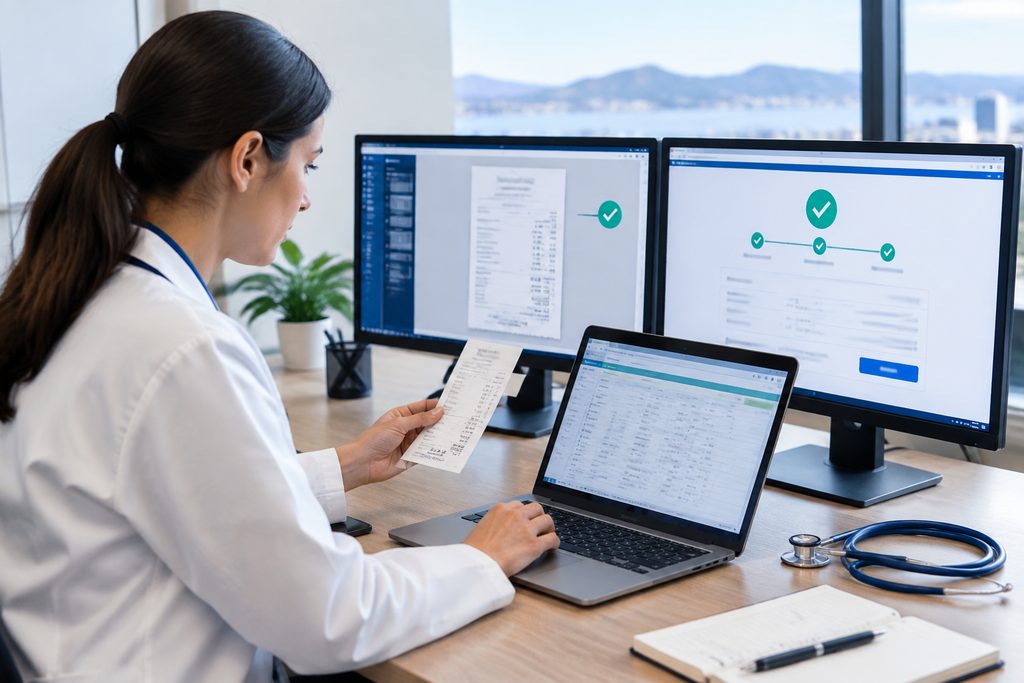
According to a 2024 analysis of cross-border medical payments, roughly 1 in 6 international patients encounters a discrepancy between what they wired and what the receiving hospital recorded. That gap — often caused by intermediary bank fees, currency conversion timing, or manual data entry — can delay admission by days or even weeks. So how we check a receipt matches your payment is not a bureaucratic afterthought. It is the single most important reconciliation step before you board a plane to China.
Our team at China Medical Services has refined this verification into a three-layer process. It catches errors early, documents every step, and gives you a written confirmation before you travel. Here is exactly how it works.
How This Actually Works, Step by Step
You send us two documents: the wire transfer confirmation from your bank and the receipt issued by the hospital’s international department. We then run a structured comparison across three layers. The first layer checks the obvious fields — patient name, hospital name, invoice number, and the amount in the original currency. The second layer digs into what banks call “value dating” and intermediary deductions. The third layer confirms the hospital’s internal ledger entry, not just the receipt itself.
The sequence matters. A receipt can look correct on its face and still be wrong in the hospital’s accounting system. That happens more often than patients expect, especially with USD-to-CNY conversions routed through correspondent banks in Hong Kong or Singapore. We have seen receipts that matched the patient’s wire amount perfectly, yet the hospital’s ledger showed a shortfall of $35 to $120 because an intermediary bank took a routing fee that was never itemized on the patient’s side.
So the process is: you submit both documents through our secure portal. A bilingual coordinator reviews them within one business day. If the amounts match and the hospital confirms receipt in their system, we issue a verification letter you can print and carry. If anything is off, we contact the hospital’s finance office directly — in Chinese, on your behalf — and resolve it before you travel.
How We Check a Receipt Matches Your Payment: The Three Verification Layers
Layer one is a field-by-field document comparison. We check the patient’s legal name exactly as it appears on the passport, because a missing middle name or a reversed surname order is one of the most common reasons a hospital cannot locate a payment. We check the invoice number, the date of issue, and the payment method code. We also verify that the hospital’s official bank account details on the receipt match the account details we provided to you before you wired funds. This prevents a growing category of fraud where a patient receives a convincing-looking receipt from a cloned email address.
Layer two is the currency reconciliation. Chinese public hospitals quote in CNY. Your bank sends USD, EUR, GBP, or another currency. The conversion happens either at your bank, at an intermediary bank, or at the receiving bank in China. Each leg can apply a spread and a fee. We calculate what the hospital should have received after standard correspondent banking deductions, then compare that to what the hospital actually recorded. If the difference is within the normal range of $0 to $50, we document it and move on. If it is larger, we trace the payment with the SWIFT reference number.
Layer three is the internal ledger confirmation. A receipt is a piece of paper or a PDF. It can be issued in error. We call the hospital’s international patient finance office and ask them to confirm the payment is posted to the correct patient file and the correct invoice. This step catches the rare but real cases where a payment is posted to a different patient with a similar name, or where a deposit is held in a suspense account because the invoice number was missing from the wire memo.
A Realistic Timeline
Most patients underestimate how long payment verification takes when it involves a foreign bank and a Chinese public hospital. Here is a realistic breakdown, assuming you use a standard international wire transfer.
| Stage | What Happens | Typical Duration |
|---|---|---|
| Day 1–3 | You initiate the wire from your home bank. The funds leave your account. | 1 to 3 business days, depending on your bank’s cut-off time |
| Day 2–5 | Correspondent banks process the transfer. Currency conversion occurs. Intermediary fees may be deducted. | 1 to 3 additional business days |
| Day 3–7 | The receiving bank in China credits the hospital’s account. The hospital’s finance office posts the payment to the patient file. | 1 to 3 business days after funds arrive |
| Day 4–8 | The hospital issues a receipt. You forward it to us along with your wire confirmation. | Same day, if the hospital’s system is current |
| Day 5–9 | We complete the three-layer verification and confirm the ledger entry with the hospital finance office. | 1 to 2 business days |
If you need a visa invitation letter from the hospital, add another 3 to 7 business days after payment verification. The hospital will not issue that letter until the payment is confirmed in their system. And if you are applying for an S2 visa for medical treatment, factor in the embassy or consulate processing time in your home country, which ranges from 4 business days to several weeks depending on the location and season.
One thing people forget: Chinese public hospitals rarely issue receipts on weekends or during national holidays. The first week of October and the Chinese New Year period are effectively closed for non-emergency finance operations. If your payment lands on September 30, you may not see a receipt until October 8. That is not a problem with your payment. It is the calendar.
What Can Go Wrong — and What Happens Then
The most common failure is an intermediary bank deducting a fee that neither you nor the hospital anticipated. Your wire confirmation shows $10,000 sent. The hospital’s ledger shows $9,960 received. The receipt shows $9,960. Everything is internally consistent, but you have a $40 shortfall. The hospital will typically ask you to pay the difference before finalizing your admission. We handle this by either requesting a top-up wire for the exact shortfall or, in some cases, the hospital agrees to deduct it from a future payment. We never assume the hospital will waive it.
The second common failure is a name mismatch. A patient whose passport reads “AL-RASHID, OMAR MOHAMMED” may have sent the wire as “Omar Alrashid” or “Omar M. Al-Rashid.” The hospital’s finance system cannot match that to the patient file. The payment sits in a suspense account. This is fixable, but it requires a formal written request from the patient, a copy of the passport, and sometimes a bank letter confirming the sender’s identity. It adds 3 to 10 business days. We have resolved dozens of these. Every single one could have been avoided by sending the wire with the name exactly as it appears on the passport.
The third failure mode is rarer but more serious: a receipt that was never issued by the hospital at all. This happens in email compromise scams where a fraudster intercepts the communication and sends a fake receipt with altered bank details. If you wired money to an account that does not belong to the hospital, the funds may be unrecoverable. This is why we tell every patient: never change payment instructions based on an email, even one that looks like it came from us or from the hospital. Call and verify through a separate channel.
And then there is the quiet failure: everything matches, but the hospital’s ledger is not updated because the finance office has not yet processed the batch. A receipt exists in the front-office system but not in the accounting system. We catch this in layer three. The fix is usually a phone call and 24 to 48 hours.
Why Hospitals in China Handle Receipts Differently Than Western Patients Expect
Western patients often expect a receipt to function like an invoice from a private clinic in the US or Germany — itemized, instantly generated, and legally binding. Chinese public hospitals operate on a deposit-and-settlement model. You pay a deposit before treatment. The hospital issues a receipt for the deposit. After treatment, the hospital issues a final settlement invoice. The receipt you check before traveling is for the deposit, not the full treatment cost. That distinction confuses many first-time international patients.
Also, Chinese public hospital receipts are official tax documents called “fapiao” in the Chinese system. They are generated through a government tax platform, not a simple accounting software. That means the hospital cannot easily edit or reissue a receipt if there is a typo. If the name on the receipt is wrong, the hospital may need to void the original and issue a new one, which can take a few days. We check the receipt details before the hospital finalizes the fapiao, because correcting it afterward is slower.
Private international hospitals in China — the ones on our private hospital directory — tend to have more familiar receipt formats and faster finance teams. But even there, the deposit model applies. The receipt confirms the deposit. The final bill comes later.
For patients considering treatment at a top-ranked public hospital, the finance office is often a separate department from the international medical center. The international center schedules your appointment. The finance office handles your money. They do not always communicate in real time. Our verification process bridges that gap, because we call both departments and reconcile what each one sees.
Practical Considerations: Documents, Currency, and Insurance Reimbursement
Keep your wire transfer confirmation in PDF form, not a screenshot. Banks issue a formal confirmation with a SWIFT reference number, a value date, and the exact amount debited. That reference number is the key that unlocks a payment trace if anything goes missing. Screenshots of your banking app often omit the reference number.
For currency, we recommend wiring in USD or EUR if your home currency is not directly convertible to CNY. The receiving bank in China handles the conversion at the official rate on the day the funds arrive. That rate may differ from the rate you saw when you initiated the wire. The difference is usually small, but it is real. We explain this to patients upfront so a $20 difference does not feel like an error.
Insurance reimbursement is a separate track. Public hospitals in China require prepayment. Your insurer reimburses you afterward. The hospital receipt and the final settlement invoice are the two documents your insurer will request. Make sure the receipt shows the hospital’s full official name and the patient’s name exactly as it appears on the insurance policy. A mismatch here can delay reimbursement by weeks. We can provide a bilingual cover letter explaining the payment structure, which some insurers request for foreign hospital claims.
For patients using the S2 visa route, the hospital’s payment confirmation is often required as supporting documentation for the visa application. The embassy or consulate wants to see that you have a genuine treatment arrangement, not just a tourist itinerary. Our verification letter summarizes the payment confirmation in English, which helps the visa officer understand a receipt that would otherwise be in Chinese.
Frequently Asked Questions
This usually means an intermediary bank deducted a fee. We calculate the expected shortfall and confirm with the hospital whether the remaining balance is acceptable for admission. If not, we arrange a top-up wire for the exact difference. You receive documentation of every deduction so you can claim it with your insurer if applicable.
No. The hospital’s internal system must show the payment posted to your patient file. Your bank’s confirmation proves you sent money. It does not prove the hospital received and allocated it correctly. We require both documents for verification, and we confirm the hospital’s ledger entry before we consider the payment verified.
We initiate a formal trace using the SWIFT reference number. If the funds went to a legitimate intermediary account, they are usually recoverable, though it can take 2 to 4 weeks. If the funds went to a fraudulent account, recovery depends on how quickly the fraud is reported and the cooperation of the receiving bank. This is why we emphasize verifying payment instructions through multiple channels before wiring any amount.
Your Next Step
Payment verification is the quiet gatekeeper of your medical travel. Get it right, and your admission proceeds without friction. Get it wrong, and you may spend your first week in China untangling bank traces instead of meeting your medical team. We have built our three-layer verification process specifically for international patients who cannot afford that lost time.
Our team at China Medical Services handles payment reconciliation, hospital communication, and document verification as part of our broader coordination service. We do not process your payment ourselves — you always wire directly to the hospital’s official account. What we do is make sure the money you sent and the receipt you received tell the same story, before you get on the plane. If you are planning treatment in China and want someone checking these details on your behalf, start with a free consultation.
You send the documents. We do the checking. You get a clear answer before you travel.
For more medical information and treatment options in China, visit chinamedservices.com (China Medical Services).
