Virtual Colonoscopy in China: What to Know Before You Book
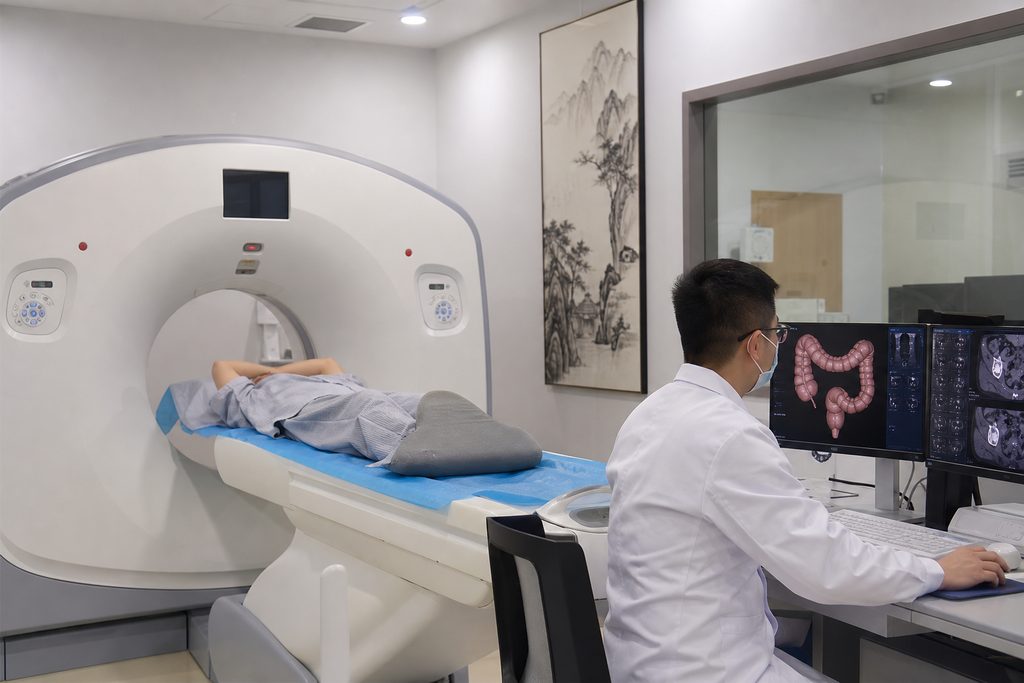
When 58-year-old David from Portland received a positive FIT screening result, his gastroenterologist handed him two options: a traditional optical colonoscopy under sedation, or a CT colonography scan. His insurance quoted $1,800 out of pocket for the scan alone. A friend mentioned that patients were flying to Asia for imaging at a fraction of that price. David opened his laptop and typed “virtual colonoscopy cost China” into Google. What he found was a maze of outdated forum posts, no clear pricing, and zero guidance on whether the quality held up.
That confusion is exactly what this guide addresses.
Key Takeaways
- CT colonography at a top-tier Chinese public hospital typically runs $250–$600 total, compared with $800–$2,500 in the United States — but final pricing depends on the hospital tier and whether contrast or sedation is needed.
- China’s 340+ top-ranked hospitals include imaging departments that perform tens of thousands of CT studies annually, and several Shanghai facilities rank among the country’s best for gastroenterology and radiology.
- The hard part is not the scan itself — it is the bowel preparation instructions, which arrive in Chinese, and the fact that public hospital outpatient imaging cannot be booked from overseas without going through an international department.
- Any abnormal finding on a virtual colonoscopy still requires a conventional colonoscopy with biopsy. The scan is a screening tool, not a treatment.
The Problem: Screening Costs and Wait Times Are Pushing Patients to Look Abroad
Colorectal cancer is the third most commonly diagnosed cancer worldwide, and screening rates in the United States sit at roughly 59% for adults aged 45 to 75, according to CDC data. That leaves tens of millions of eligible adults unscreened. Cost is one of the top three reasons people skip it.
A CT colonography — also called virtual colonoscopy — in a U.S. hospital averages between $800 and $2,500 depending on the facility and your insurance deductible. In some metropolitan markets, the billed charge exceeds $3,000. For patients on high-deductible plans, that entire amount lands on their shoulders.
Wait times add another layer. In Canada and the UK, non-urgent colonoscopy referrals can take three to nine months. A 2023 report from the Canadian Institute for Health Information found that only about 60% of patients needing a colonoscopy received one within the clinically recommended timeframe. For someone with a family history of colon cancer, waiting nine months feels like gambling.
So patients look elsewhere. And increasingly, they look at China.
Why China Delivers Results for CT Colonography
The knee-jerk reaction is skepticism. Cheaper must mean worse, right? Not necessarily. Here is what the data actually shows.
Imaging Volume and Radiologist Experience
China’s top hospitals operate at a scale Western facilities rarely match. A single large tertiary hospital in Shanghai or Beijing may run 15,000 to 30,000 CT scans per year across all body regions. Radiologists at these centers read hundreds of abdominal CT studies monthly — far more than the average Western radiologist who splits time across modalities.
That volume matters for CT colonography specifically, because the technique demands careful interpretation of thin-slice images to detect polyps as small as 6mm. Reading experience correlates directly with detection accuracy.
Equipment Standards Are Not the Bottleneck
China’s top-ranked hospitals run the same CT platforms you would find at Massachusetts General or the Cleveland Clinic — 64-slice and 128-slice scanners from Siemens, GE, and Philips. The 340+ hospitals in our network are ranked by Fudan University’s annual hospital rankings and JCI accreditation, meaning they meet international equipment and safety standards.
The technology gap that existed 15 years ago has closed at these institutions.
Cost Structure, Not Cost Cutting
The price difference comes from labor economics and procedure bundling, not from skipping steps. A radiologist’s salary in China is a fraction of a U.S. counterpart’s. Hospital overhead is lower. And the scan fee typically bundles the radiologist read, which in the U.S. is often billed separately by an outside radiology group.
You are not getting a discount because something is missing. You are getting a different cost structure.
What a Virtual Colonoscopy in China Actually Costs: Real Numbers
Here is the comparison patients ask for most. All figures are in USD and reflect 2025–2026 pricing at top-tier facilities.
| Cost Component | China (Top Public Hospital) | China (Private International Hospital) | United States |
|---|---|---|---|
| CT colonography scan + read | $250–$600 | $700–$1,400 | $800–$2,500 |
| Pre-procedure consultation | $30–$80 | $150–$300 | $200–$500 |
| Bowel prep kit | $15–$40 | $40–$80 | $50–$120 |
| English-language report | Often included or $30–$60 | Included | Included |
| Typical total | $300–$700 | $900–$1,800 | $1,050–$3,120 |
These ranges vary by hospital and case complexity. A scan requiring IV contrast for soft-tissue evaluation costs more than a standard non-contrast study. If the radiologist recommends a follow-up conventional colonoscopy on the same trip, that adds $400–$1,200 at a public hospital.
Is Virtual Colonoscopy Safe in China? What the Standards Actually Require
This is the question that stops people from booking. It deserves a direct answer.
CT colonography is a low-risk procedure everywhere it is performed correctly. The risks are the same in Shanghai as in Seattle: a small radiation dose (roughly 1–2 mSv with modern low-dose protocols, compared to 7–10 mSv for older scanners), rare allergic reaction to IV contrast, and a very small risk of perforation — which is associated almost entirely with the insufflation step and is extremely uncommon with CO2 insufflation, the current standard.
The real safety variable is not the country. It is whether the hospital follows the same preparation and imaging protocols used internationally. The top Chinese facilities in our network do. They use CO2 insufflation, low-dose protocols, and the same CTC reporting standards (C-RADS) that U.S. radiologists use.
What you should verify before booking:
- Does the hospital use CO2 rather than room air for colonic insufflation?
- Is the scanner at least 64-slice?
- Will you receive a written report in English with C-RADS classification?
- Is there a pathway to same-trip conventional colonoscopy if polyps are found?
If the answer to any of these is unclear, that is a red flag — not about China, but about that specific provider.
Best Hospital for Virtual Colonoscopy in Shanghai: How to Choose
Shanghai has the second-largest concentration of top-ranked hospitals in China — 18 facilities in the Fudan Top 100 — behind only Beijing’s 21. For gastroenterology and radiology specifically, several Shanghai institutions appear in the Fudan specialty reputation rankings.
Zhongshan Hospital Fudan University is consistently ranked among China’s top facilities for gastroenterology. Ruijin Hospital, also affiliated with Shanghai Jiao Tong University School of Medicine, has strong radiology and digestive disease programs. Both are public tertiary hospitals with international departments that can accommodate foreign patients.
Private international hospitals in Shanghai — including United Family, Jiahui, and Parkway — offer a different trade-off: English-speaking staff from the front desk to the radiologist, JCI accreditation, direct insurance billing, and a calmer patient experience. The scan costs more, but the language barrier disappears.
Which is better? Depends on your priorities. If you want the lowest price and are comfortable with a bilingual companion handling logistics, a public hospital international department is the answer. If you want a Western-style experience and your insurance covers it, go private.
You can browse hospitals by city and specialty through our directory of top-ranked Chinese hospitals. For gastroenterology-specific rankings, the department guides list the top 10 hospitals by specialty.
How Long Does a Virtual Colonoscopy Take — and What the Full Trip Looks Like
The scan itself takes 10 to 15 minutes. The entire hospital visit, including check-in and post-scan observation, runs about two hours.
But the scan is one piece of a multi-day process. Here is a realistic timeline for a medical traveler:
| Day | Activity |
|---|---|
| Day 1 | Arrive in Shanghai. Pick up bowel prep kit from hospital pharmacy. Clear liquids only after 6pm. |
| Day 2 | Bowel prep day. Split-dose regimen (typically 2 doses, 6–8 hours apart). No solid food. |
| Day 3 | Morning scan. CO2 insufflation, breath-hold sequences, 10–15 minutes on the table. Radiologist reads images same day or next morning. |
| Day 4 | Pick up written report. If findings require conventional colonoscopy, this is when it gets scheduled — usually within 1–3 days at the same hospital. |
| Day 5–6 | Conventional colonoscopy with biopsy if needed (requires additional bowel prep). |
| Day 7+ | Results review, treatment planning discussion, or fly home with records in hand. |
Total time on the ground: four days for a clean scan, up to a week if follow-up procedures are needed. That is comparable to what you would spend navigating a U.S. system where the scan, the read, and any follow-up happen across separate appointments weeks apart.
Practical Considerations: Visas, Payment, and Getting Your Records Home
The logistics of medical travel to China are manageable, but they require planning.
Visa. Foreign patients traveling to China for medical treatment typically use the S2 visa, which covers short-stay private affairs including medical treatment. Accompanying family members apply under the same category. The S2 requires an invitation letter or supporting documentation from the receiving hospital — your hospital’s international department can provide this. Note that the M visa is for commercial and trade activities and is not the correct category for medical travel. Visa rules change; confirm current requirements with your nearest Chinese embassy or consulate before applying.
Payment. Chinese public hospitals require prepayment for imaging and procedures. International credit cards (Visa, Mastercard) are accepted at international departments and private hospitals, but smaller public hospital counters may only take cash or domestic payment apps. Bring a card that does not charge foreign transaction fees, and carry some RMB cash as backup. Private international hospitals often bill insurance directly — check with your insurer first.
Records. Request a copy of the DICOM image files on a USB drive or via cloud link before you leave. Also get the written report in English. Your home physician will need both. Chinese hospitals can provide these, but you must ask — they are not automatically handed out.
Language. This is the single biggest practical hurdle. Bowel prep instructions are detailed and timing-sensitive. Misunderstanding them can ruin the scan. If you do not speak Mandarin, arrange for a bilingual medical companion who can walk you through the prep, accompany you to the pharmacy, and be present at the hospital on scan day.
Frequently Asked Questions
At public hospitals, no — not directly. Standard outpatient imaging requires an in-person registration on the day of the visit. The workaround is going through the hospital’s international department or a coordination service that can pre-register you and confirm a date. Private international hospitals are more flexible and can often schedule in advance via email.
No, provided the hospital uses modern low-dose protocols. At 64-slice and above with dose modulation, a CTC delivers roughly 1–2 mSv — comparable to a year of background radiation. Older scanners without dose modulation can deliver 7–10 mSv. Ask which scanner and protocol the hospital uses. Any top-tier facility in our network uses current low-dose settings.
You will need a conventional colonoscopy with biopsy to confirm what the CT image suggested. CT colonography detects, it does not diagnose tissue. At a Chinese tertiary hospital, this can usually be scheduled within a few days of the scan, during the same trip. If the finding requires surgery, that becomes a separate evaluation and planning process — no hospital will schedule an operation based on a screening scan alone.
Sometimes, but rarely at full cost. Most U.S. insurers cover emergency care abroad but exclude elective screening procedures. Some PPO plans offer out-of-network reimbursement at a reduced rate if you submit itemized receipts and the radiology report. Call your insurer before you book and ask specifically about elective diagnostic imaging abroad. Get the answer in writing if possible.
At public hospitals, you typically need a consultation with a gastroenterology or radiology department physician first, who then writes the imaging order. This consultation can often happen the same day. Private international hospitals may allow direct scheduling for screening purposes, depending on their internal policy.
Your Next Step
A virtual colonoscopy in China can cost a fraction of what you would pay in the U.S. — often under $600 all-in at a top public hospital — with equipment and protocols that match international standards. The trade-offs are real: language barriers, a fragmented booking process, and the need to arrange follow-up before you fly home.
China Medical Services is not a hospital and does not provide medical diagnoses. We are a coordination service that helps international patients navigate China’s top-ranked hospitals — from hospital matching and appointment coordination to bilingual medical companions who handle registration, payment, interpretation, and the details that get lost in translation. If you are considering CT colonography in China and want to understand your options, start with a free consultation. No pressure, no obligation — just a clear picture of what is possible.
For more medical information and treatment options in China, visit chinamedservices.com (China Medical Services).
