Chengdu Surgery with Family: Full Local Support Services Explained
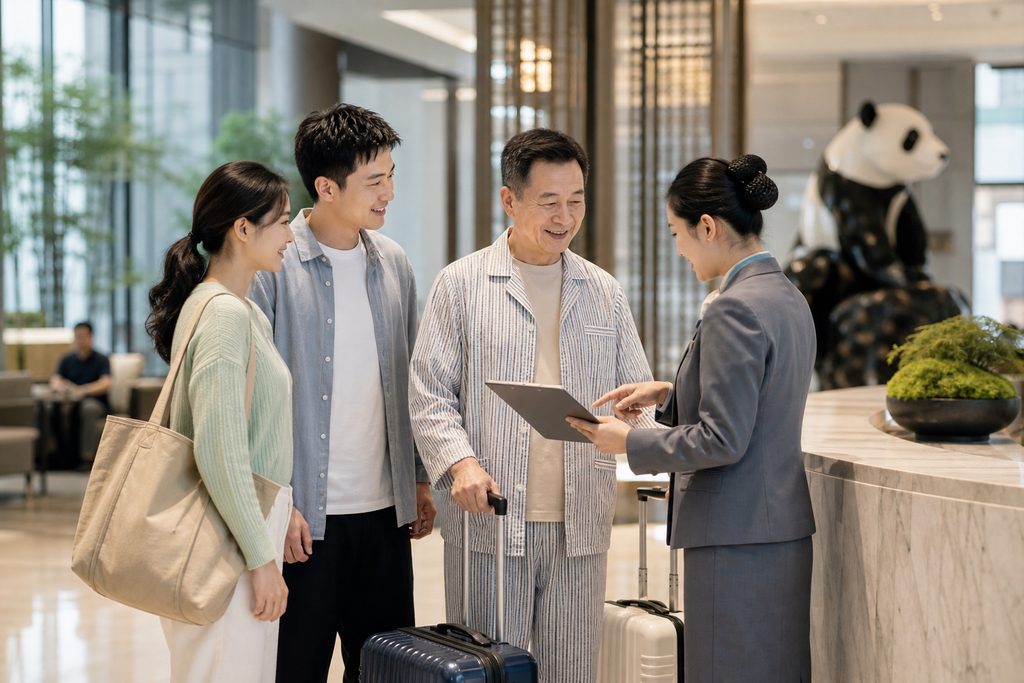
Have you ever wondered what happens to your family while you’re on the operating table in a foreign country? The logistics can feel overwhelming. You’re not just booking a procedure. You’re temporarily relocating a support system. For patients traveling to West China Hospital, the Chengdu medical tourism family package cost isn’t a single line item. It’s a carefully assembled bundle of coordinated services that keep your family stable, informed, and comfortable while you receive care.
Chengdu Surgery with Family Support: The Short Answer
Bringing your family to Chengdu for your surgery requires a parallel logistics plan. One for you. One for them. Your spouse or adult child needs a place to sleep, a way to eat, someone who speaks their language inside the hospital, and clear information about your status. A full local service packages these needs into a single operational workflow. Without it, your family caregiver burns out within 72 hours.
The caveat? No single hospital sells a “family package” at the registration desk. These are coordination services assembled by third-party medical concierge teams who know the hospital, the neighborhood, and the language. You’re paying for integration, not just a list of vendors.
Who This Is Right For — and Who It Isn’t
A family support package makes sense in specific situations. And it’s frankly unnecessary in others.
Good candidates typically include patients undergoing major procedures requiring a multi-week in-city recovery. Think orthopedic joint replacements, complex spinal surgeries, or cardiac interventions where you’ll be non-weight-bearing or physically limited after discharge. Families traveling with young children who can’t be left unsupervised in a hotel room. Elderly spouses who can’t navigate a massive Chinese hospital alone. Anyone who values a single point of contact over saving a few hundred dollars.
Who should not pursue this? Patients coming for a single outpatient consultation or a quick diagnostic scan. A day trip doesn’t need a family logistics plan. Also, families where multiple adults are fluent in Mandarin and comfortable with Chinese hospital bureaucracy. If your sister lived in Chengdu for a decade, you probably don’t need us. And patients whose family caregiver has significant medical training and wants to handle everything personally — some people prefer control, and that’s valid.
The service works best when the patient is vulnerable and the family needs to focus on emotional support, not translation and navigation.
The Options, Compared
You have three genuine paths for managing your family during a surgical trip to Chengdu. They are not equal.
| Approach | Family Accommodation | Hospital Communication | Daily Logistics | Typical Outcome |
|---|---|---|---|---|
| DIY: Book everything yourself | You research hotels near the hospital, negotiate rates, handle check-in | You rely on hospital-provided translators (availability varies wildly) | You figure out meals, transportation, SIM cards, pharmacy runs | Family caregiver exhausted; patient stressed by family’s stress |
| Hospital international department only | Limited to hospital-recommended hotels (often premium-priced) | In-hospital translation during consultations; no after-hours support | Not covered; family is on their own outside hospital walls | Better than DIY inside the hospital; gaping holes everywhere else |
| Full local service coordination | Pre-vetted apartments or hotels within walking distance; family preferences matched | Bilingual companion present for all key communications; family gets real-time updates | Airport pickup, local SIM, meal guidance, pharmacy delivery, recovery supplies | Family can actually support the patient instead of managing logistics |
If your surgery keeps you in Chengdu for less than five days, the hospital international department alone may suffice. For two weeks or longer, the DIY approach breaks down. The family caregiver either misses critical medical information or simply stops eating properly. We’ve seen it. The full local service option becomes cost-effective when you calculate the hidden price of a burned-out family member making medical decisions on zero sleep.
What Services Are Provided for Family During Medical Trip China
This is the section most websites skip. They talk about the patient. Your family needs a completely different support stack.
A proper full-service family support package in Chengdu addresses four operational layers.
First, accommodation that works for caregivers. A hotel room 20 minutes away by taxi is not acceptable. Your spouse needs to walk to your bedside in under 10 minutes. That means pre-vetted serviced apartments near the hospital’s main entrance, with kitchen facilities so your family isn’t eating three restaurant meals a day for three weeks. The full service family support surgery Chengdu model typically places families in units with washing machines, grocery delivery access, and quiet spaces to decompress.
Second, in-hospital communication that doesn’t depend on the patient. When you’re under anesthesia, your family has questions. When you’re groggy from pain medication, your family needs answers you can’t provide. A bilingual medical companion bridges this gap. They’re present during doctor rounds. They translate the surgeon’s post-op briefing. They explain what the nurse just said about drain management. Your family stops guessing.
Third, daily living infrastructure. Local SIM cards activated on arrival. WeChat Pay setup so your family can actually buy things — Chengdu is nearly cashless. Directions to the nearest pharmacy that stocks Western familiar brands. A list of restaurants that won’t cause digestive distress. These sound small. Accumulated over two weeks, they’re the difference between a manageable experience and a misery.
Fourth, recovery environment preparation. Before you’re discharged, the apartment needs specific supplies. Raised toilet seats after hip surgery. Shower chairs. Grab bars that don’t require drilling into rental walls. Your family shouldn’t be sourcing medical equipment in a foreign city while you’re still in a hospital bed.
Chengdu Medical Tourism Family Package Cost: What You’re Actually Paying
Let’s talk numbers. The Chengdu medical tourism family package cost varies by duration, accommodation tier, and level of companion support. But ranges exist.
A basic family coordination package for a two-week surgical stay starts from approximately $2,500. This covers apartment sourcing and booking near the hospital, airport round-trip transfers for two people, local SIM cards, a half-day orientation to the neighborhood, and a bilingual companion for 20 hours spread across key moments — admission, surgery day, discharge briefing. It does not cover the apartment rent itself, which in Chengdu’s Wuhou District near West China Hospital typically runs $40 to $80 per night for a serviced one-bedroom.
A mid-range package with daily companion check-ins, full grocery and pharmacy delivery coordination, and extended accommodation support runs from $4,000 to $6,000 for the same two-week window. This includes more companion hours, proactive problem-solving, and someone who knows your family’s names and preferences.
High-touch VIP coordination for complex cases where the family needs near-constant support — multiple children, an elderly caregiver, a patient requiring ICU stays — starts from $8,000. This is not most people.
What’s not included? The surgery itself. Hospital charges. Medications. The apartment rent. These are separate costs paid directly to the hospital and landlord. The family package fee covers coordination labor, not the underlying goods and services.
Why the range? Duration drives everything. A family staying 10 days needs less support than one staying 30. Also, the specific hospital matters. Some Chengdu hospitals have robust international departments that reduce the companion hours needed. Others don’t. And the family’s own capabilities matter — a tech-savvy adult child who’s traveled internationally needs less hand-holding than a 70-year-old spouse who’s never left their home country.
One important financial mechanism: any remote consultation fees you pay before traveling — written second opinions, video consultations with Chengdu specialists — are credited in full toward the coordination service if you proceed with surgery within 90 days. That means your initial $500 specialist video consult isn’t an extra cost. It’s a deposit.
Best Hospitals in Chengdu for International Patients with Family
Chengdu has one undisputed giant and several strong alternatives. Your choice affects everything about the family logistics plan.
West China Hospital of Sichuan University is the anchor. It’s ranked among China’s top-tier comprehensive hospitals, with particular strength in orthopedics, neurosurgery, oncology, and respiratory medicine. The hospital’s international department handles foreign patients routinely. The surrounding neighborhood in Wuhou District has the densest concentration of short-term rental apartments, pharmacies, and restaurants catering to hospital families. For most international patients, this is where the best hospitals in Chengdu for international patients with family conversation starts and often ends.
But it’s not the only option. Sichuan Provincial People’s Hospital offers strong cardiology and general surgery programs with potentially shorter wait times for non-urgent procedures. Chengdu Second People’s Hospital handles dermatology and ENT cases well. And for patients who prioritize a Western-style environment with English-speaking staff throughout, the private international clinics in Chengdu’s Hi-Tech Zone provide a different experience — higher out-of-pocket costs, but less bureaucratic friction.
The hospital choice dictates the family accommodation radius. West China Hospital means staying in Wuhou. A Hi-Tech Zone private clinic means staying further south, where apartment stock is newer but restaurant options skew toward chains. Your coordinator should map the family support plan to the specific hospital, not generic “Chengdu.”
We maintain detailed profiles of these hospitals, including their international patient workflows, on our Chengdu city page. The right hospital depends on your specific procedure, not a brand name.
Chengdu Surgery Recovery with Family Accommodation: The Practical Layer
Recovery in a foreign city with family present sounds warm. It can be. It can also be claustrophobic and logistically messy if the apartment isn’t set up right.
The Chengdu surgery recovery with family accommodation question has a physical answer and a psychological one. Physically, the apartment needs to function as a temporary rehab unit. Wide doorways for walkers. An elevator — many older Chengdu buildings have stairs only. A bed that’s not on the floor (traditional Chinese platform beds are low and difficult to rise from after abdominal surgery). Proximity to the hospital for follow-up appointments and the unexpected — post-surgical fever at 11 PM means a quick trip back, not a 40-minute taxi ride.
Psychologically, your family caregiver needs a space that isn’t just your sickroom. A one-bedroom apartment where the caregiver sleeps on a sofa next to your medical supplies is a recipe for caregiver collapse. A two-bedroom or a one-bedroom with a proper living area separation gives them somewhere to make a private phone call, cry if they need to, or simply sleep without hearing every shift of your hospital bed.
Chengdu’s climate matters too. The city is humid year-round. If you’re recovering from orthopedic surgery in July, you want air conditioning that works reliably and a dehumidifier. If you’re here in January, the damp cold seeps into poorly insulated buildings — space heaters and heated blankets become medical equipment.
Food is the other overlooked recovery variable. Post-surgical nutrition matters. Your family needs access to groceries they recognize and can cook simply. The apartment should be within delivery range of fresh produce and, ideally, near a wet market or supermarket where someone has shown them what to buy. Protein intake after major surgery isn’t negotiable. Neither is hydration. A family that’s eating convenience store noodles for two weeks because they can’t navigate the local food system is a family that’s not supporting your recovery well.
Practical Considerations: Visa, Payment, and Language Reality
Your family’s visa category is not optional. They need an S2 visa with the purpose annotated as accompanying a medical patient. The hospital provides an invitation letter confirming your admission. Your family member applies with that letter plus proof of relationship — marriage certificate, birth certificate. Processing times vary by country. Start this at least six weeks before travel. The S2 visa typically allows stays of up to 180 days, which covers even extended recovery periods.
Payment in Chinese hospitals is predominantly upfront. The hospital expects a deposit before admission, with settlement upon discharge. International credit cards work at some hospital international departments but not all. Your family should arrive with multiple payment methods: a Visa or Mastercard that’s been cleared for international use, a Wise or Revolut card for better exchange rates, and ideally WeChat Pay or Alipay linked to an international card. Cash still works but is increasingly impractical — Chengdu merchants often can’t make change for large bills.
Insurance is retrospective. Chinese public hospitals don’t direct-bill foreign insurance. You pay, you get detailed receipts and medical records in English (the international department handles this), and you submit to your insurer. Confirm with your insurer before travel that treatment at a Chinese public hospital is covered and what documentation they require. Some exclude certain procedure categories. Know before you go.
Language is the wall. West China Hospital’s international department has English-speaking staff. The nurses on the ward might not. The pharmacist definitely doesn’t. The person at the apartment building front desk doesn’t. Your family’s bilingual companion is the bridge during scheduled hours. Outside those hours, your family needs a translation app and patience. We recommend Pleco for written Chinese and a pre-saved list of emergency phrases. “My husband had surgery yesterday and has a fever of 38.5” is a sentence you want translated before you need it.
Medical records continuity matters after you go home. Before discharge, request a complete set of records in English — operative notes, discharge summary, pathology if applicable, medication list with generic drug names. Your home physician needs these. Don’t leave Chengdu without them. A good coordinator ensures this happens while your family focuses on getting you to the airport.
Frequently Asked Questions
Can my family stay in the hospital room with me?
In most Chinese public hospitals, no. Inpatient rooms are typically shared — two to four patients per room. Private rooms exist in the international or VIP wards but are limited and cost more. Family members are generally permitted during visiting hours only, not overnight. This is why nearby accommodation matters so much. Your family needs a real bed, not a chair in a hallway. The international department can advise on specific ward policies, but plan for your family to sleep off-site.
What if my family member has a medical emergency while we’re in Chengdu?
This is a legitimate concern, especially for elderly spouses. Your coordinator should have a protocol: nearest appropriate hospital identified in advance, translation support on standby, and your companion available to accompany the family member if you’re stable enough to be left briefly. Chengdu has excellent emergency care. The challenge is navigation and language, not medical quality. Having a local contact who can meet your family member at the ER and handle registration removes the danger of delay.
How do we handle the language barrier when the companion isn’t with us?
Your family will have blocks of time without professional translation support. Preparation helps more than panic. Install a translation app that works offline — hospital basements and some wards have no signal. Save key phrases in Chinese characters, not just pinyin, so your family can show a phone screen to a nurse. The companion should leave a written summary of your current status and care plan in both English and Chinese, which your family can show to any staff member. And establish a protocol: if something urgent happens, the family calls the companion first, who then communicates with hospital staff by phone. A three-way relay is slower than direct communication but faster than miming.
Is Chengdu safe for foreign families?
Chengdu is consistently ranked among China’s safest large cities. Violent crime against foreigners is rare. The more practical safety concerns are traffic — Chengdu drivers are assertive, and crosswalks are advisory — and food safety for unaccustomed stomachs. Your family should drink bottled water, avoid street food for the first week, and wash produce thoroughly. The city is welcoming to foreigners, and the area around West China Hospital is accustomed to seeing international faces. Your family won’t attract hostile attention. They may attract curious stares, especially outside the hospital district. This is generally benign.
Your Next Step
Bringing your family to Chengdu for your surgery is logistically complex but operationally solvable. The key is recognizing that your family’s support needs are separate from your medical needs and require their own plan. A full local service doesn’t replace your family’s presence — it protects it. It lets them be your spouse, your child, your sibling, instead of your translator, navigator, and logistics coordinator.
We connect international patients with Chengdu’s top-ranked hospitals and coordinate the surrounding support infrastructure. We are not a hospital. We don’t diagnose or treat. We handle the layer between you and the medical system so your family can focus on what they came for: being with you. If you’d like to understand what a coordinated family support plan would look like for your specific procedure and timeline, visit our patient services page for a free initial consultation. There’s no cost to explore the options, and no pressure to commit. The first conversation is about clarity, not contracts.
For more medical information and treatment options in China, visit chinamedservices.com (China Medical Services).
