Planning Chest Wall Reconstruction in China: Costs, Hospitals, and Recovery
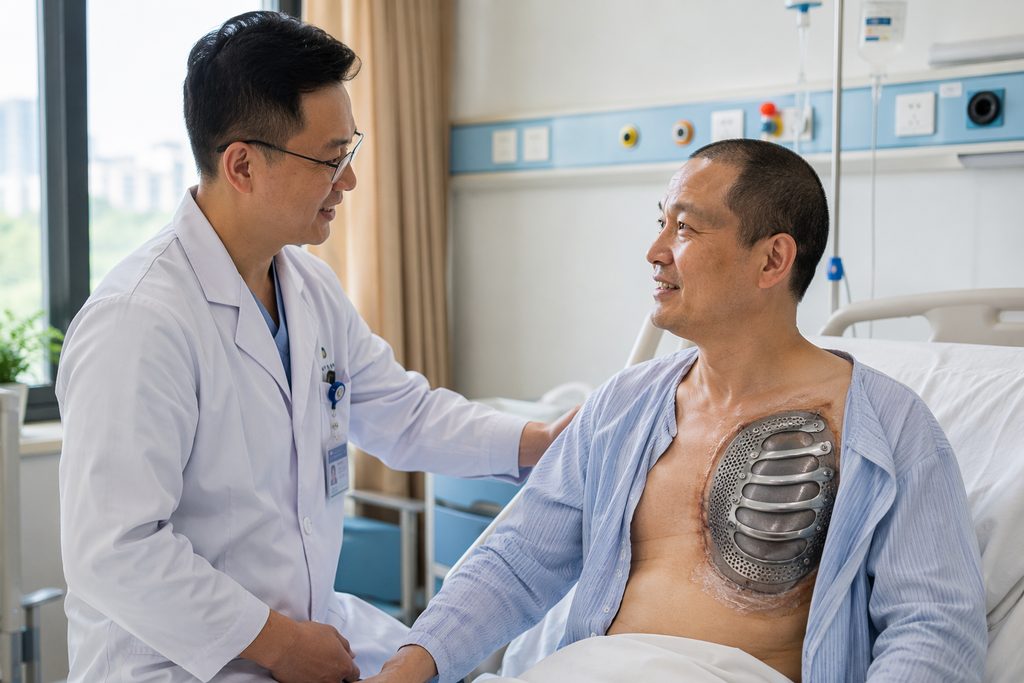
Planning chest wall reconstruction in China starts with one hard number: chest wall reconstruction cost China quotes typically run between $18,000 and $45,000 at top-tier public hospitals, versus $150,000 to $300,000 or more in the United States. That gap is real. So is the complexity behind it.
When 47-year-old Daniel from Oregon learned he needed a chest wall resection and reconstruction after a recurring chondrosarcoma, his first call was to his insurer. The second was to a surgeon. The third — after a six-week wait for a consultation slot and a quoted price that would have consumed his retirement savings — was to us. His question was simple: could this be done safely in China, and what would it actually take?
That question has a structured answer, and this article walks through it.
How This Actually Works, Step by Step
Chest wall reconstruction is not a single procedure. It is a category of surgery that rebuilds the bony and soft-tissue structure of the thorax after tumor resection, trauma, infection, or radiation damage. The surgical plan depends entirely on how many ribs are involved, whether the sternum is affected, and whether the defect sits in the front, side, or back of the chest.
Here is the real sequence for an international patient.
Step 1 — Records gathering. You send us your existing imaging (CT, MRI, PET if available), pathology reports, operative notes from any prior surgery, and a summary of current medications. Everything must be in English or accompanied by certified translation. Chinese hospital international departments generally require translated pathology and imaging reports before a specialist will review a case.
Step 2 — Written second opinion. The relevant specialty team at a Chinese hospital reviews your file and returns a written analysis: whether reconstruction is feasible, which technique they would favor (mesh, titanium rib plates, bone graft, or a combination), and what additional imaging they need. This typically takes 5 to 10 business days and costs $300 to $500.
Step 3 — Video consultation. If the written opinion looks workable, you speak directly with the surgical team online. You describe your symptoms, goals, and concerns. They explain their approach, expected hospital stay, and recovery trajectory. This is where most patients decide whether to proceed.
Step 4 — Visa and logistics. For medical treatment in China, the applicable short-stay category is the S2 visa, issued for medical treatment and private affairs, subject to the latest embassy or consulate requirements and supporting hospital documents. Accompanying family members apply under the same category. The M visa is for commercial and trade activities and is not the correct route for medical travel.
Step 5 — Arrival, in-person consultation, and surgery. Public hospitals in China generally require an in-person examination before scheduling surgery. This is not negotiable, and it is why “booking a surgery date from overseas” is not how the system works. You arrive, attend the consultation, complete any pre-operative testing, and the surgical date is set from there.
Choosing Where to Go: Hospitals and Surgeons
China has more than 35,000 hospitals. Our database covers 340+ top-ranked hospitals across 37 cities — the top 5% by Fudan University rankings and JCI accreditation. For chest wall reconstruction, the relevant strength is thoracic surgery and orthopedic oncology, and the Fudan specialty reputation rankings list the top 10 hospitals in each of 45 specialties.
Patients searching for the best chest wall reconstruction surgeon Shanghai or chest wall reconstruction surgery price Beijing are usually conflating two separate decisions. The city matters less than the department. A hospital ranked in the top tier for thoracic surgery will have a team that performs complex chest wall resections regularly; a hospital that is excellent in cardiology may not.
Three practical filters narrow the field fast:
- Annual volume of chest wall resection and reconstruction cases — ask directly, and ask for a range rather than a single figure
- Whether the team works jointly with plastic or reconstructive surgery, since large defects need soft-tissue coverage as well as skeletal stabilization
- Whether the hospital has an international department with English-speaking coordinators, which affects everything from consent forms to discharge instructions
Beijing concentrates the largest number of top-tier hospitals, followed by Shanghai and Guangzhou. Both cities have strong thoracic surgery programs. You can browse hospitals by city and specialty through our directory of top-ranked Chinese hospitals or look at department-level rankings on the specialty rankings page.
A Realistic Timeline
Every case moves at its own pace, but the stages below reflect what international patients should plan for. Add buffer. Nothing here happens in a single week.
| Stage | Typical Duration | What Slows It Down |
|---|---|---|
| Records collection and certified translation | 1–3 weeks | Missing pathology slides, hospital records requests |
| Written second opinion | 5–10 business days | Additional imaging requested by the Chinese team |
| Video consultation scheduling | 3–7 days after opinion | Time zone coordination, interpreter availability |
| S2 visa application | 1–3 weeks | Consulate processing times, invitation letter issuance |
| Travel and arrival | 1–3 days | Flight availability, jet lag before examination |
| In-person consultation and pre-op testing | 2–5 days | Additional scans, cardiology clearance, blood work |
| Surgery and hospital stay | 7–21 days inpatient | Defect size, ICU requirement, wound healing |
| Local recovery before flying home | 2–4 weeks | Surgical team’s clearance for long-haul travel |
| Follow-up imaging and remote review | 3, 6, and 12 months | Coordinating scans locally and sending them back |
From first contact to surgery, most patients should budget six to ten weeks. Complex cases requiring multidisciplinary review or additional diagnostic work can run longer.
What Can Go Wrong — and What Happens Then
The honest part.
The second opinion comes back negative. Sometimes the Chinese team concludes that reconstruction is not advisable, or that the risk profile does not justify surgery. That is a legitimate outcome, and you have lost only the cost of the review. Written opinions typically run $300 to $500.
The surgical plan changes after in-person examination. Imaging does not always tell the full story. A defect that looked reconstructable with mesh may require a different approach once the surgeon sees the tissue directly. This is normal, and it is one reason the in-person examination is mandatory.
Wound complications. Chest wall reconstruction carries real risks of infection, seroma, and hardware-related problems, particularly after prior radiation. Chinese hospitals manage these, but a prolonged stay or a second procedure is possible. Budget for it emotionally and financially.
Visa delay or refusal. No one can guarantee visa approval. If the S2 application is delayed, the surgical date shifts. Build two to three weeks of slack into your planning.
Follow-up gap after you fly home. Your local oncologist or thoracic surgeon may not be familiar with the technique used in China. Request a full operative report and imaging in English before discharge. This is the single most common post-travel problem we see.
What the Numbers Actually Mean
Cost estimates for chest wall reconstruction vary widely because the procedure does. A single-rib defect closed with mesh is a different operation from a full-thickness resection requiring titanium rib fixation and a latissimus dorsi flap.
Published comparisons consistently place major surgery in China at roughly one-fifth to one-tenth of U.S. pricing. For chest wall reconstruction, a realistic range at a top public hospital is $18,000 to $45,000, covering surgeon fees, hospitalization, implants, and standard post-operative care. Private international hospitals in China run higher — often 2 to 4 times public rates — but offer direct insurance billing and English-speaking staff throughout.
What the price does not include: flights, accommodation for you and any companion, visa fees, translation, and the cost of follow-up care at home. Those add up. A realistic all-in budget for a two-person, four-week stay in Beijing or Shanghai, excluding surgery, is $6,000 to $12,000 depending on accommodation standard.
When you evaluate quotes, ask what happens if a second surgery is needed, and whether implant costs are included or billed separately. Those two questions separate a useful estimate from a misleading one.
Practical Considerations: Records, Visas, Payment, and Follow-Up
Most patients spend 7 to 21 days in hospital. Full return to normal activity typically takes three to six months, with lifting restrictions for the first eight to twelve weeks. Recovery after radiation or a large defect takes longer.
No legitimate provider sells surgery as a fixed package. The responsible model is staged: written second opinion first, then video consultation, then travel once a plan is confirmed and you agree to it. Anyone offering a guaranteed surgical date before examining you is skipping a required step.
Sometimes, but usually only with prior authorization, and often at out-of-network rates. Contact your insurer before committing. Private international hospitals in China are more likely to bill directly, while public hospitals require upfront payment and reimbursement afterward.
The applicable category for short-stay medical treatment is S2, subject to current embassy or consulate requirements and supporting hospital documents. Accompanying family members apply under the same category. Approval is never guaranteed.
Your Next Step
Chest wall reconstruction in China is a serious undertaking that rewards preparation over speed. The patients who do well are the ones who gather complete records, get a written opinion before booking flights, and understand that the in-person examination is a required step, not a formality.
We are China Medical Services. We are not doctors and we do not provide medical advice. We coordinate written second opinions, video consultations, hospital appointments, bilingual medical companions, and visa guidance, and we tell you plainly when a case is not a good fit for travel. If you want to understand your options before making any commitment, start with a free consultation through our patient support page.
This article is for general information only and does not constitute medical advice. Treatment decisions should always be made with a qualified physician who has reviewed your individual case.
Frequently Asked Questions
Yes. The hospitals used for international patients are JCI-accredited and follow the same international safety standards as top hospitals in the US and Europe. Surgical teams perform high volumes of procedures — often more than their Western counterparts — which studies show leads to better outcomes.
Costs vary by procedure and hospital, but international patients typically save 40-80% compared to US prices — even when factoring in travel and accommodation. A consultation with our team will give you an exact, all-inclusive quote with no hidden fees.
Send us your existing medical reports to get started. We handle everything from hospital selection and appointment scheduling to visa assistance and post-operative recovery planning. Your medical records are reviewed by the specialist before you even book a flight.
For more medical information and treatment options in China, visit chinamedservices.com (China Medical Services).
