Long-Stay Medical Visa in China: How We Coordinate Extended Treatment
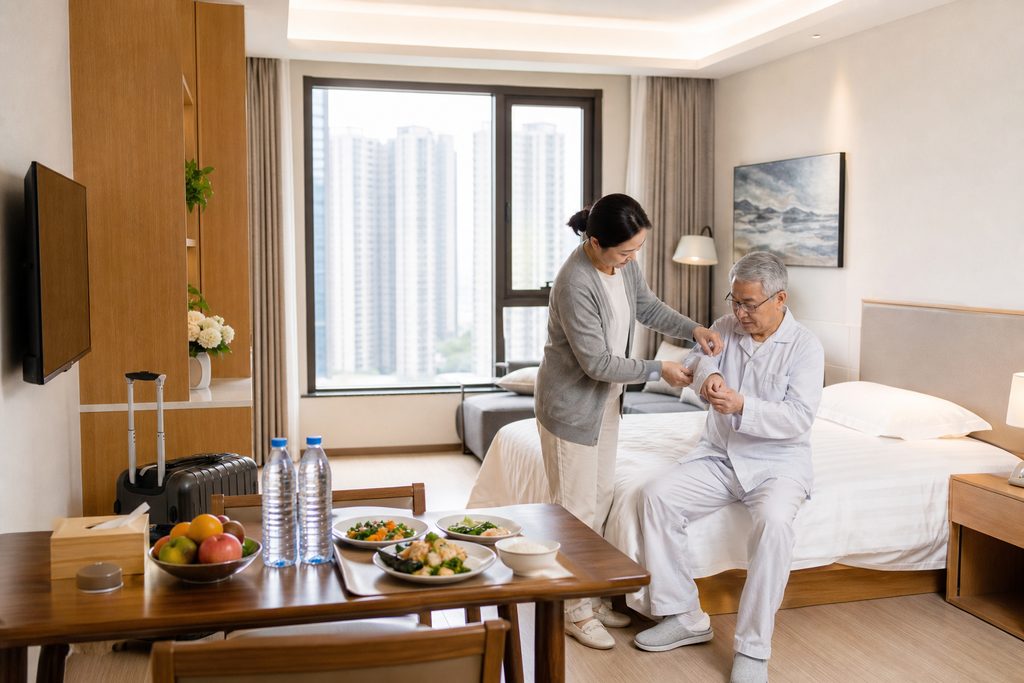
When treatment in China stretches beyond a few weeks, the visa question stops being a formality and becomes the thing that keeps you up at night. Long term medical visa China requirements are not published in one tidy government PDF. They live across embassy notices, hospital invitation letters, and the hard-won experience of patients who have done this before. Let us demystify what an extended medical stay actually involves — the paperwork, the timing, the honest risks — and how coordination works when you are not in the country yet.
How This Actually Works, Step by Step
You do not apply for a “medical visa” in the abstract. You apply for a specific visa category based on how long you need to stay and what your treatment plan looks like. For most international patients, that means an S2 visa — a short-stay visa for private affairs, which includes medical treatment. If your treatment or rehabilitation will exceed 180 days, you need an S1 visa, which allows longer residence. Both require documentation from a Chinese hospital.
Here is the sequence we walk patients through every week:
- Step 1 — Remote evaluation. You send existing medical records: imaging, pathology reports, discharge summaries, current medication list. Our team arranges for a relevant Chinese specialty department to review them. This produces a written second opinion or a video consultation. Without this step, no hospital will issue an invitation letter, and without an invitation letter, the visa conversation cannot start.
- Step 2 — Hospital confirmation. Once the reviewing team confirms your case is appropriate for treatment in China, the hospital’s international department drafts an official invitation or treatment confirmation letter. This document names you, states the medical purpose, and estimates the treatment duration. It is the backbone of your visa application.
- Step 3 — Visa application. You submit the hospital letter, passport, photo, application form, and proof of relationship for any accompanying family member to the nearest Chinese embassy or consulate. S2 applications typically take 4 to 10 business days. S1 can take longer and may require additional documentation.
- Step 4 — Arrival and registration. After landing, you register at the local police station within 24 hours (hotels do this automatically; private rentals require a visit). Then the hospital completes your admission paperwork.
- Step 5 — Extension, if needed. If treatment runs longer than the visa allows, you apply for an extension at the local Exit-Entry Administration before your current stay expires. The hospital must provide updated documentation confirming continued treatment.
Sounds manageable. The friction is in the details — which we will get to.
Long Term Medical Visa China Requirements: What the Embassy Actually Looks At
The single biggest misconception is that a long term medical visa is something you can obtain on your own by filling out a form. Embassies do not approve medical stays based on a patient’s self-declared intention. They approve based on evidence from a recognized Chinese medical institution.
That evidence typically includes:
- A formal invitation letter from a Chinese hospital’s international department, on hospital letterhead, with a seal or stamp
- The hospital’s business license or registration number (provided by the hospital, not something you source yourself)
- Your passport with at least six months validity and blank visa pages
- A completed visa application form with a recent photo
- Proof of relationship for family members traveling with you (marriage certificate, birth certificate)
- In some cases, proof of funds or insurance coverage for the treatment period
One thing we emphasize to every patient: the M visa has nothing to do with medical treatment. It is a commercial and trade visa. Patients sometimes arrive at an embassy asking for an M visa because a travel agent suggested it, and the application gets rejected or, worse, approved for the wrong purpose. When you enter on the wrong visa category and then try to receive medical care, you create problems for yourself and for the hospital. Use S2 for medical stays under 180 days. Use S1 for longer.
Our team does not issue visas. We coordinate the hospital-side documentation and guide you through the embassy process based on current requirements. The final decision always rests with the Chinese embassy or consulate in your home country.
A Realistic Timeline
People underestimate how long the pre-arrival phase takes. Here is what we tell patients planning extended treatment — for example, a complex orthopedic procedure with three months of rehabilitation, or a cancer treatment protocol requiring repeated cycles.
| Stage | What Happens | Realistic Duration |
|---|---|---|
| Day 1–7 | You gather and send medical records; our team arranges translation into Chinese | 1 week |
| Day 7–21 | Hospital department reviews records; written second opinion or video consultation scheduled | 1–2 weeks |
| Day 21–35 | Hospital international department issues invitation letter; you prepare visa application | 1–2 weeks |
| Day 35–50 | Embassy processes S2 visa application | 4–10 business days |
| Day 50–60 | Travel, arrival, police registration, hospital admission | 1–2 weeks |
| Month 2 onward | Treatment begins; any extension application filed before current stay expires | Case-dependent |
For S1 applications, add two to four weeks to the embassy stage. Some consulates require an in-person interview. Some require notarized translations of medical documents. None of this is impossible. It just takes longer than anyone expects the first time.
And the step people forget? Document translation. Chinese hospitals require records in Chinese for formal review. Translation of a 200-page oncology file takes time and must be done by someone familiar with medical terminology — not a generic translation service.
What Can Go Wrong — and What Happens Then
We would rather you know the failure modes before they happen. Here are the ones we see most often, and what the actual recourse is.
The hospital declines to issue an invitation letter. This is the most common blocker. It happens when the reviewing team determines the case is not appropriate for treatment in China, when the requested procedure is not offered to international patients, or when the medical records are incomplete. Recourse: get a second review from a different hospital in our network. We maintain relationships with 340+ top-ranked hospitals across 37 cities, and a rejection from one institution does not mean a rejection everywhere.
The embassy requests additional documents. Some consulates ask for proof of hotel booking, a detailed treatment schedule, or a financial guarantee. Recourse: work with the hospital’s international department to produce the supplementary letter. This usually adds 5 to 10 days.
Treatment runs longer than the visa allows. A planned 90-day stay becomes 120 days. Recourse: apply for an extension at the local Exit-Entry Administration before your authorized stay expires. The hospital must issue an updated treatment confirmation. Extensions are not guaranteed, but they are routinely granted when documentation is in order.
A family member’s visa gets separated from the patient’s. Accompanying family members apply for their own S2 visas. Occasionally one gets approved while the other is delayed. Recourse: submit applications together, with proof of relationship, and allow buffer time before the planned travel date.
None of these are catastrophic. All of them are easier to handle when you are not alone in a foreign hospital system.
How to Extend Medical Visa in China for Cancer Treatment
Cancer treatment is the most common reason we see for visa extensions. Chemotherapy cycles, radiation protocols, immunotherapy schedules — these do not fit neatly into a 90-day window. So how to extend medical visa in China for cancer treatment becomes a practical question around month two of a stay.
The process is straightforward in principle:
- Your treating oncologist at the Chinese hospital writes a letter stating that treatment is ongoing and must continue for a specified additional period
- The hospital’s international department stamps or seals the letter
- You submit the letter, your passport, a completed extension application form, and a registration form from your local police station to the Exit-Entry Administration bureau in the city where you are staying
- You pay the extension fee (typically modest, under $100)
- You receive an extended stay permit, usually for the period the hospital recommends
Timing matters. You must apply before your current stay expires. Applying after expiry triggers penalties, possible detention, and a much more complicated process. We remind patients to start the extension conversation with their hospital’s international department at least three weeks before the visa end date.
One nuance: if your total stay will exceed 180 days from the start, you may be better served applying for an S1 visa from the outset rather than repeatedly extending an S2. Discuss this with the hospital before your first application. It saves administrative pain later.
Best Hospitals in Shanghai for Extended Rehabilitation
Shanghai is not just a treatment destination; it is a rehabilitation destination. Patients recovering from orthopedic surgery, stroke, cardiac procedures, or complex cancer resections often need weeks or months of structured rehab. The question of best hospitals in Shanghai for extended rehabilitation deserves a straight answer.
What makes a hospital good for long rehab stays is different from what makes it good for acute surgery. You need:
- A dedicated rehabilitation medicine department with inpatient beds
- Physical therapy, occupational therapy, and speech therapy under one roof
- Experience with international patients, including English-speaking staff or reliable interpretation
- Proximity to follow-up appointments with your surgical team
Shanghai’s top-tier public hospitals — including those on the Fudan ranking — operate large rehabilitation departments. Our Shanghai hospital directory lists institutions with strong rehab programs, including those affiliated with Fudan University and Shanghai Jiao Tong University. For patients who prefer Western-style care with English-speaking staff throughout, private international hospitals in Shanghai such as Jiahui and United Family offer inpatient rehabilitation with direct insurance billing. The trade-off: private facilities cost more, typically 1.5 to 2 times public hospital rates.
For a six-month rehabilitation stay, the cost question becomes significant. Public hospital rehab beds in Shanghai range from roughly $80 to $200 per day for the room, with therapy sessions billed separately. Private international hospital rehab stays run $300 to $800 per day. The cost of 6 month hospital stay in China, including therapy, nursing, and basic medical oversight, typically lands between $25,000 and $90,000 depending on facility type and therapy intensity. Compare that to the United States, where a comparable inpatient rehab stay routinely exceeds $300,000.
Medical Visa Agent China for Long Term Care: Do You Need One?
Search for “medical visa agent China for long term care” and you will find dozens of companies offering to handle everything for a fee. Some are legitimate. Some are not. Here is how to evaluate them.
A legitimate coordinator does three things:
- Liaises with the hospital’s international department to obtain the invitation letter
- Prepares your application package with correct documentation
- Advises on timing, extensions, and local registration requirements
A legitimate coordinator does not:
- Guarantee visa approval — no one can
- Claim to have special relationships with embassy staff
- Offer to obtain a visa without hospital documentation
- Charge for “access” to specific doctors or priority admission
Our model is case management, not access selling. We translate records, coordinate with hospital international departments through official channels, and provide bilingual support on the ground. If a hospital cannot accommodate your case, we tell you. If the visa process will take longer than you hoped, we tell you that too.
Can I stay in China for 6 months for physical therapy? Yes — with an S1 visa and a hospital willing to document the medical necessity. The hospital’s rehabilitation department must state that your condition requires ongoing, structured therapy that cannot be safely interrupted. A vague desire for “wellness” or “recovery time” will not support a six-month stay. A documented post-surgical rehabilitation plan will.
Practical Considerations: Records, Payment, Insurance, and Language
Before you commit to an extended medical stay in China, four practical issues deserve your attention.
Medical records. Chinese hospitals require complete records for formal review. That means original imaging (DICOM files, not just written reports), pathology slides for cancer cases, and a detailed medication list. Incomplete records delay everything downstream. Our team handles medical translation and organizes records for hospital submission.
Payment. Chinese public hospitals operate on a prepayment model. You deposit funds at admission, and treatment costs are drawn down. Insurance reimbursement happens after the fact — Chinese public hospitals do not bill international insurers directly. Private international hospitals in our network often do. Budget for the full treatment cost upfront, then pursue reimbursement from your insurer.
Insurance. Check with your insurer before travel. Some international policies cover treatment in China; many exclude it. If your policy excludes China, you are paying out of pocket. Get this in writing before you book a flight.
Language. Even at top-tier public hospitals, English proficiency among nursing and support staff is inconsistent. Physicians often speak some English, especially in international departments. But navigating registration, pharmacy, imaging, and billing without Chinese is genuinely difficult. That is why bilingual medical companionship exists — from $300 per day, a companion handles registration, queueing, payment, directions, and interpretation. It is not a luxury for long stays. It is the difference between a manageable recovery and daily frustration.
Frequently Asked Questions
S2 is a short-stay visa for private affairs, including medical treatment, typically allowing stays up to 180 days. S1 is for longer stays exceeding 180 days. Both require documentation from a Chinese hospital confirming the medical purpose. S1 applications generally require more documentation and longer processing times.
Yes. You apply at the local Exit-Entry Administration before your current stay expires. The treating hospital must provide updated documentation confirming continued medical necessity. Extensions are routinely granted when paperwork is complete, but they are not automatic.
The cost of 6 month hospital stay in China varies widely by facility type and treatment intensity. Public hospital stays, including basic nursing and therapy, typically range from $25,000 to $50,000. Private international hospital stays run $60,000 to $90,000 or more. All figures vary by hospital and case complexity.
You can apply directly if you already have a relationship with a Chinese hospital willing to issue an invitation letter. Most international patients do not. A coordinator handles record translation, hospital liaison, and application preparation. But no agent can guarantee approval, and any agent claiming special embassy relationships should be avoided.
Yes. Accompanying family members apply for their own S2 visas, supported by proof of relationship and the patient’s hospital documentation. They are subject to the same stay limits and can apply for extensions alongside you if treatment runs longer than expected.
Your Next Step
An extended medical stay in China is a serious undertaking — and a manageable one when the groundwork is done properly. The visa, the hospital documentation, the timeline, the on-the-ground logistics: none of it is mysterious once you have walked through it once.
We are China Medical Services, and we coordinate extended treatment stays for international patients across 340+ top-ranked hospitals in 37 Chinese cities. We do not issue visas, we do not guarantee outcomes, and we do not sell access. We handle the hospital-side documentation, translation, appointment coordination, and bilingual support that make a long stay feasible.
If you are considering treatment in China and want a realistic assessment of your case, start with a free consultation. Send your records. We will review them and tell you honestly whether this path makes sense for you.
For more medical information and treatment options in China, visit chinamedservices.com (China Medical Services).
