Safe Family Surgery Trip to China: Accommodation, Visas, and Real Costs
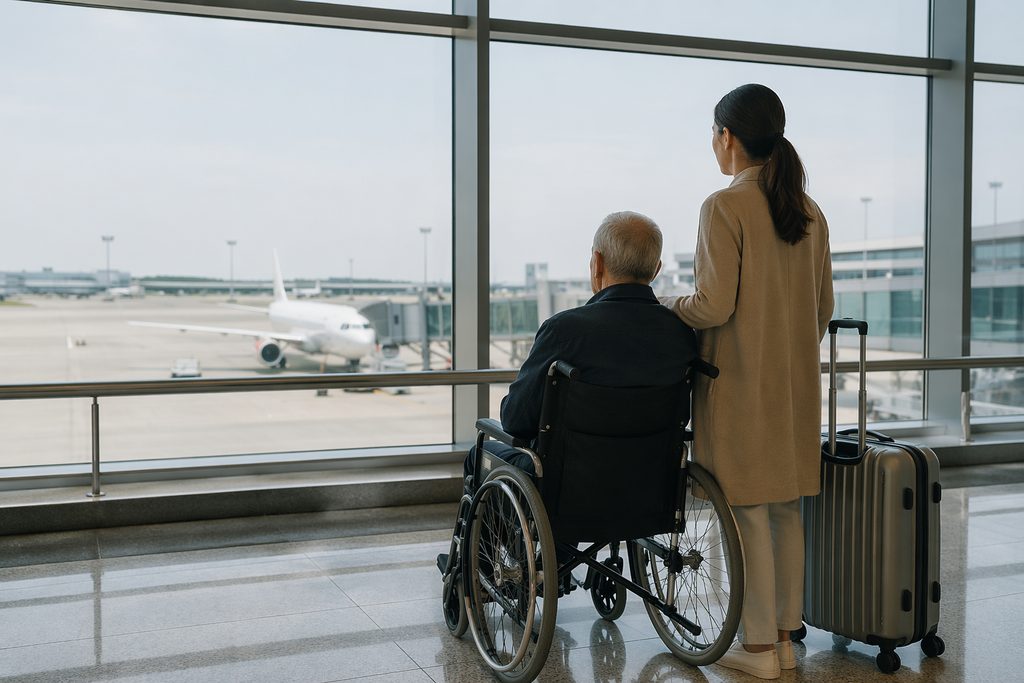
Bringing your partner, parent, or even your child with you when you travel to China for surgery is not just possible — it is the norm for most international patients we work with. But “safe” means different things to different families. A parent worries about food and language. A spouse worries about hotel distance and hospital visiting rules. A patient worries about whether the extra logistics will drain their energy before the operation even starts. The honest answer is that bringing family is not only safe, it often improves recovery outcomes. Studies on surgical recovery have repeatedly shown that patients with active family support report lower anxiety scores and better adherence to post-operative instructions. The practical question is not whether to bring them. It is how to arrange the stay so that everyone — especially the patient — can focus on getting better.
What most people do not realize is that the infrastructure around major Chinese hospitals is built to accommodate exactly this scenario. Around Fuwai Hospital in Beijing or Zhongshan Hospital in Shanghai, you will find clusters of serviced apartments, short-stay hotels, and family-oriented lodging that cater specifically to out-of-town patients and their relatives. The challenge is rarely availability. It is knowing which options are actually walkable, which have kitchens, which are quiet enough for post-operative rest, and which have staff who will not panic if a foreign guest needs help calling a taxi at 6 a.m.
That is where planning makes the difference between a stressful medical trip and a manageable one. This article walks through the real steps, the real costs, and the real risks — without glossing over the parts that are genuinely inconvenient.
How This Actually Works, Step by Step
You do not fly to China, walk into a hospital, and get surgery the next week. The sequence matters, especially when family members are traveling with you. Here is the path most of our patients follow.
First, you send your existing medical records — imaging, lab results, surgical history, current medication list — to the hospital or to a coordination team that reviews them with the relevant department. The hospital needs to confirm that your case is one they can actually treat, and that you are stable enough to travel. This is not a formality. Chinese top-tier hospitals receive enormous domestic demand, and international departments are selective about which cases they accept. For complex cardiac, orthopedic, or oncology cases, a written second opinion typically costs $300–500 and takes 5–10 working days. A video consultation with the treating specialist runs $500–800 and gives you a chance to ask direct questions about the surgical plan, hospital stay length, and what your family should prepare for.
Second, once the hospital confirms they will take your case, you apply for the correct visa. For medical treatment, foreign nationals use the S2 visa, which covers short-term private affairs including medical treatment. Accompanying family members also apply for S2 visas, each with their own supporting documents from the hospital — an invitation letter, treatment confirmation, and sometimes proof of relationship. Do not let anyone tell you to apply for an M visa. The M visa is for commercial and trade activities, and using it for medical purposes creates problems at the border and during hospital registration. S2 processing varies by embassy and country, but plan for 2–4 weeks.
Third, you book the family accommodation near hospital China surgery logistics. We recommend arriving 3–5 days before the scheduled surgery date. This gives you time for the pre-operative consultation, any final tests, and — critically — lets your family settle into the accommodation, learn the walking route to the hospital, find the nearest pharmacy and grocery store, and recover from jet lag before the operation. Patients who arrive the day before surgery are exhausted before anesthesia even starts.
Fourth, the surgery and inpatient stay happen. In Chinese public hospitals, family members generally do not stay overnight in the patient’s room. They visit during designated hours, and the nursing staff handles overnight care. For families who want 24/7 presence, private international hospitals like United Family or Jiahui offer more flexible visiting policies and family-friendly rooms, at a higher cost.
Finally, discharge and recovery. Many patients stay in China for 1–3 weeks after discharge for follow-up visits and suture removal before flying home. Your family’s presence during this window is genuinely valuable — you will need help with meals, medication schedules, and mobility, especially in the first week.
Safe Family Accommodation Near Hospital China Surgery: What Actually Works
For a one-month stay, budget $2,000–6,000 for accommodation depending on city and proximity to the hospital, plus $30–80 per day for food, local transport, and incidentals for two adults. Serviced apartments are usually cheaper than hotels for stays longer than two weeks. Shanghai and Beijing run at the higher end of these ranges; Chengdu, Hangzhou, and Wuhan are noticeably less expensive.
International clinics and the emergency departments of major hospitals treat foreign patients routinely. Travel insurance with medical coverage is strongly recommended for every family member, not just the patient. Minor illnesses are common in the first week due to travel fatigue and dietary changes, and most resolve quickly with basic care.
In public hospital international departments, overnight family stays are generally not permitted, though visiting hours are generous. Private international hospitals often allow one family member to stay overnight in the patient’s room. If 24/7 presence matters to you, factor this into your hospital choice before committing to a treatment plan.
Translation apps handle simple interactions — ordering food, asking for directions. They do not handle the fast, high-stakes exchanges at hospital registration, pharmacy windows, or pre-operative consultations. For the patient’s medical interactions, a bilingual companion is the difference between understanding your treatment plan and nodding along without actually knowing what was said. For the family’s daily logistics, it is a convenience. For the patient, it is closer to a necessity.
Your Next Step
Bringing your family to China for surgery is safe, practical, and — when arranged properly — a genuine asset to your recovery. The risks are not mysterious; they are logistical, and they are manageable with the right information and the right local support.
Our team at China Medical Services helps international patients coordinate hospital selection, S2 visa documentation, bilingual medical companions, and family accommodation near hospital China surgery across 37 cities and 340+ top-ranked hospitals. We do not perform medical treatment and we do not promise clinical outcomes. What we do is handle the coordination so your family can focus
Frequently Asked Questions
Yes. The hospitals used for international patients are JCI-accredited and follow the same international safety standards as top hospitals in the US and Europe. Surgical teams perform high volumes of procedures — often more than their Western counterparts — which studies show leads to better outcomes.
Costs vary by procedure and hospital, but international patients typically save 40-80% compared to US prices — even when factoring in travel and accommodation. A consultation with our team will give you an exact, all-inclusive quote with no hidden fees.
Send us your existing medical reports to get started. We handle everything from hospital selection and appointment scheduling to visa assistance and post-operative recovery planning. Your medical records are reviewed by the specialist before you even book a flight.
For more medical information and treatment options in China, visit chinamedservices.com (China Medical Services).
