Combined Endoscopy in China: Cost and Prep for Foreigners
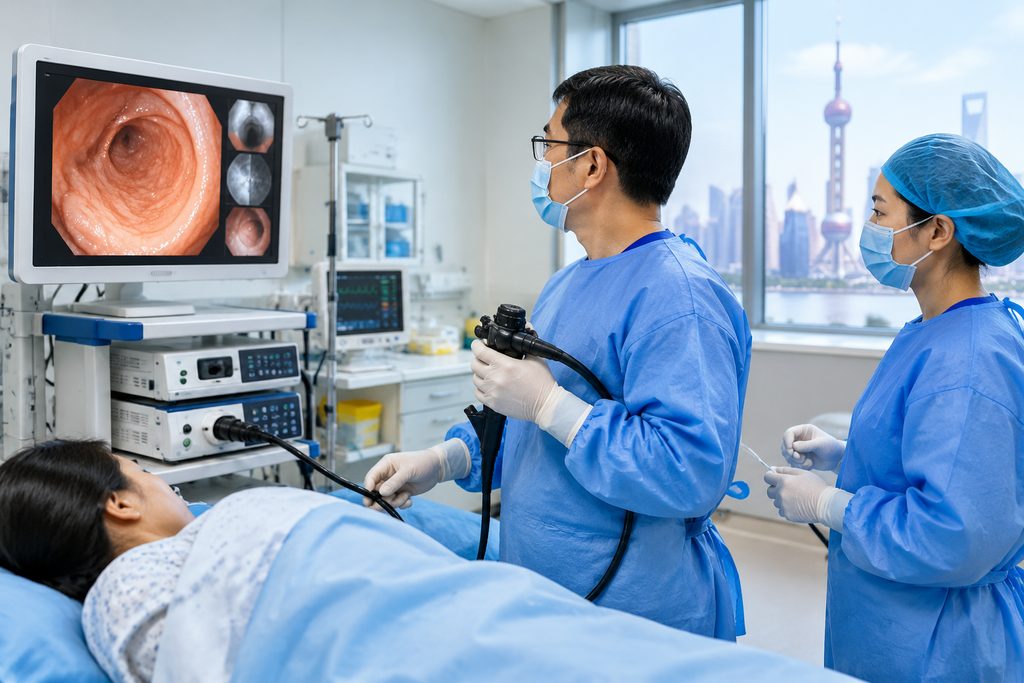
Combined Endoscopy in China: Cost and Prep for International Patients
Roughly 1 in 3 adults worldwide now develops a digestive complaint serious enough to warrant a scope, yet a combined upper endoscopy and colonoscopy in the United States routinely bills between $2,500 and $6,000 before insurance. That single number explains why searches for combined endoscopy cost China have climbed sharply among Western patients. At China’s top-ranked public hospitals, the same two-procedure session — esophagus, stomach, duodenum, then the full colon — typically lands between $400 and $1,200 out of pocket. No referral maze. No six-week wait for a screening slot.
But cheap is not the same as simple. A foreigner cannot walk into a Chinese public hospital, hand over a passport, and get scoped the next morning. The system runs on same-day registration, in-person consultations, and Mandarin paperwork. Understanding that machinery before you book a flight is the difference between a smooth two-day trip and a wasted week.
How This Actually Works, Step by Step
The sequence below is the realistic path our team coordinates every week. It assumes you are coming from abroad and have no Chinese medical record.
Step 1 — Send your records. You email us your existing reports: prior endoscopies, biopsy pathology, CT or ultrasound images, current medication list, allergy history, and any relevant bloodwork. English is fine. We translate what the hospital needs.
Step 2 — A gastroenterology team reviews. The relevant specialty at a shortlisted hospital reads your file and returns a written assessment. Do you actually need both scopes? Is sedation appropriate given your cardiac history? Should this be screening or diagnostic? That written second opinion takes roughly 3–7 business days.
Step 3 — Video consultation. If you want to speak directly with the Chinese team, we arrange a video call. You describe symptoms and goals; they explain what they would do and why. This is where most patients decide whether to travel.
Step 4 — Appointment coordination. Once you agree, we register you through the hospital’s international office or VIP channel, create your medical card, and lock a date. Public general clinics do not accept overseas pre-booking, so this step matters enormously.
Step 5 — Arrival and prep. You land, we handle airport transfer if needed, and a bilingual companion walks you through the bowel-prep schedule, the fasting window, and the check-in desk.
Step 6 — The procedure and the report. Both scopes happen in one sedation session. Preliminary findings are usually explained the same day; biopsy pathology takes about 3–5 working days.
What Combined Endoscopy Cost in China Really Includes
Published price ranges are almost always incomplete. A quoted “scope fee” may exclude sedation, biopsy forceps, pathology, and the specialist’s reading charge. Ask for an itemized estimate before you commit.
| Cost Component | Typical Range (USD) | Notes |
|---|---|---|
| Upper endoscopy (gastroscopy) | $150 – $400 | Diagnostic, without biopsy |
| Colonoscopy | $200 – $500 | Diagnostic, without polypectomy |
| Combined session (both scopes) | $400 – $1,200 | Shared sedation lowers total cost |
| Sedation / anesthesia | $80 – $250 | Conscious sedation is standard |
| Biopsy + pathology | $30 – $120 per site | Charged per specimen |
| Polyp removal | $50 – $300 | Depends on size and technique |
| Pre-procedure labs (blood, ECG) | $50 – $150 | Required before sedation |
Private international hospitals — United Family, Jiahui, Parkway, Raffles — sit at the top of these ranges or slightly above, and they bill in a Western style with English-speaking staff and direct insurance settlement. Public tertiary hospitals sit at the bottom. Both are legitimate choices; the trade-off is price against hand-holding.
A Realistic Timeline
Patients consistently underestimate the front end. The scope itself takes twenty minutes. The preparation around it takes weeks.
| Stage | Duration | What Slows It Down |
|---|---|---|
| Records collection and translation | 2 – 5 days | Missing pathology slides, illegible scans |
| Written second opinion | 3 – 7 business days | Specialist availability, complex history |
| Video consultation scheduling | 2 – 10 days | Time-zone matching |
| Appointment coordination | 1 – 3 weeks | Gastroenterology is a busy department |
| Visa (S2, medical purpose) | 1 – 3 weeks | Consulate backlog, invitation documents |
| Flight and hotel | 3 – 14 days | Peak-season pricing |
| Bowel prep at destination | 1 – 2 days | Diet compliance |
| Procedure + same-day discharge | 1 day | Sedation recovery time |
| Pathology report | 3 – 5 working days | Staining or second-read requests |
Add it up and a well-organized patient is scoped within four to seven weeks of first contact. Someone who starts the visa process late, or who needs a repeat prep because of dietary slip-ups, can easily double that.
What Can Go Wrong — and What Happens Then
Honest failure modes, because they happen.
Inadequate bowel prep. This is the single most common reason a colonoscopy gets repeated. If the colon isn’t clean, small polyps hide and the exam is diagnostically worthless. Chinese prep protocols follow the same polyethylene glycol or split-dose principles used internationally, but instructions arrive in Chinese. Misread them and you waste the trip. Our companion walks through the schedule line by line.
Undisclosed anticoagulants. Blood thinners must often be paused 5–7 days before biopsy or polypectomy. Patients forget to mention aspirin, clopidogrel, or direct oral anticoagulants. The procedure gets postponed. Tell the team everything, including supplements.
Language failure at the desk. A Chinese tertiary hospital may see 10,000+ outpatients in a single day. Signage is Chinese. Registration queues move fast. Without a bilingual companion, foreign patients routinely lose half a day to a form they cannot read.
Insurance silence. Most Chinese public hospitals require prepayment; you file for reimbursement at home afterward. Some Western insurers reimburse international claims, many do not. Verify before you fly, not after.
Is Combined Endoscopy Safe in China for Foreigners?
For the top tier of Chinese hospitals, yes — the safety infrastructure is comparable to Western academic centers. Fuwai Hospital alone performs more than 14,000 cardiac procedures annually; the procedural volume culture that produces those numbers applies across major tertiary centers. Gastroenterology departments at hospitals like Zhongshan, Ruijin, and West China handle thousands of scopes each year.
What varies is not competence but communication. Sedation monitoring, scope disinfection, and pathology workflows follow national standards. The gap is explaining your history in a language the team fully understands, and understanding their aftercare instructions in return. That gap is bridged by translation, not by choosing a different country.
Two practical points. First, ask whether the endoscopist is a senior physician or a trainee — at teaching hospitals, trainees perform some procedures under supervision, which is normal worldwide but worth knowing. Second, confirm that pathology is read in-house rather than sent out, since turnaround time depends on it.
Practical Considerations: Records, Visa, Payment, and Follow-Up
Records. Bring pathology slides or blocks if you have prior biopsies. Digital scans on a USB drive beat printed films. A typed medication list with generic drug names prevents confusion.
Visa. Foreigners traveling to China for medical treatment use the S2 visa, annotated for medical purposes; stays beyond 180 days require S1. Accompanying family members also apply for S2. The M visa is for commercial and trade activity and has nothing to do with medical care. Requirements shift, so confirm current rules with your nearest Chinese embassy or consulate and prepare the hospital’s supporting documents.
Payment. Public hospitals: prepay, then claim reimbursement at home. Private international hospitals: often direct-bill your insurer. Cards are widely accepted at international desks; smaller public counters may prefer local payment apps.
Language. Assume nothing is in English outside international departments. A bilingual medical companion covers registration, queueing, payment, and translation for the day.
Follow-up at home. Ask for the full report, images, and pathology in English before you leave. Your own gastroenterologist will want them, and chasing documents across time zones later is painful.
If you are still choosing where to go, our department-by-department rankings list the top hospitals for gastroenterology and related specialties, and the Fudan-ranked hospital directory groups them by city so you can match a hospital to your travel plans.
Frequently Asked Questions
At top public tertiary hospitals, a combined session typically runs $400–$1,200 before sedation, labs, and pathology. Adding those brings a realistic all-in figure to roughly $600–$1,500. Private international hospitals charge about 1.5–2x more. Final pricing varies by hospital and case complexity, so treat any quote as an estimate until the hospital confirms it.
Not directly through general outpatient channels — those run on same-day registration and require an in-person consultation first. Overseas patients book through a hospital’s international office or VIP channel, usually with a coordinator handling registration and the medical card. That is the route we use.
Prep follows international norms: a low-fiber diet for 1–2 days, clear liquids the day before, and a split-dose polyethylene glycol solution, with a fasting window before sedation. The instructions are written in Chinese, and timing details differ slightly between hospitals. Get them translated and confirmed in writing before you start.
At major tertiary and JCI-accredited hospitals, safety standards and sedation monitoring are comparable to Western centers. The real risk is miscommunication — unreported medications, misunderstood prep, or unclear aftercare. A bilingual companion and a complete medical history close most of that gap.
Rarely. Most packages cover the procedure fee only. Sedation, biopsy, pathology, pre-procedure labs, and translation are often billed separately. Always request an itemized estimate and ask specifically what happens if a polyp is found and removed.
Combined endoscopy in China is genuinely affordable and clinically solid at the top tier of hospitals — the challenge is navigation, not medicine. Get the prep right, get the paperwork right, and the procedure itself is the easy part. When you are ready to talk through your own case, start with a free consultation and we will tell you honestly whether traveling makes sense for you.
This article is for general information only and is not medical advice. Treatment decisions should be made with a qualified physician who has reviewed your individual history.
For more medical information and treatment options in China, visit chinamedservices.com (China Medical Services).
