Cosmetic Surgery: Finding the Right Hospital in China
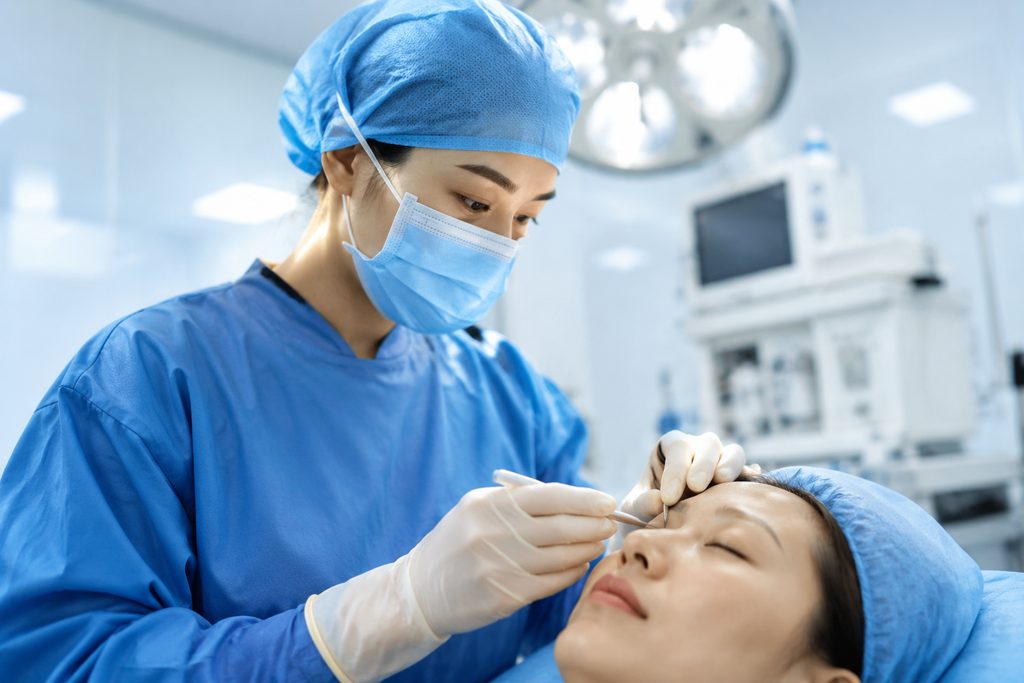
When 34-year-old Emma from Manchester started researching rhinoplasty, her spreadsheet had three columns: surgeon reputation, total price, and safety record. She had quotes from London clinics ranging from £7,500 to £9,500. Then a colleague mentioned her own experience in Shanghai. Emma’s first question wasn’t about the surgeon’s credentials. It was simpler: “Is this actually safe?” That question matters more than any price comparison. The short answer is that cosmetic surgery cost China typically runs 40–70% below Western prices for comparable procedures at top-tier hospitals, but the real work is verifying which hospital and surgeon you’re dealing with. Not all facilities are equal. Some are world-class. Some are not.
Finding the Right Hospital: The Short Answer
The right hospital for cosmetic surgery in China is either a public Grade-A tertiary hospital with a dedicated plastic surgery department ranked in the Fudan specialty reputation list, or a JCI-accredited private international hospital with board-certified surgeons and English-speaking staff. That’s the filter. Everything else is secondary. The complication? Public hospitals rarely let overseas patients book surgery in advance. You typically need an in-person consultation first. Private international hospitals offer more flexible scheduling but at 1.5–2x the public price. Both can deliver excellent results. The decision hinges on your procedure, your budget, and how much hand-holding you need.
Who This Is Right For — and Who It Isn’t
Traveling abroad for cosmetic surgery makes sense for a specific profile of patient. You should be in good general health, have realistic expectations, and be prepared to stay in China for at least 7–14 days depending on the procedure. You also need patience with documentation and communication.
A good candidate typically:
- Wants a procedure that’s expensive at home but affordable at a Chinese top-tier hospital
- Has already had a local consultation and knows exactly what procedure they need
- Can take 10–14 days off work for surgery plus initial recovery
- Speaks English and is willing to use a bilingual medical companion for hospital navigation
- Has no uncontrolled chronic conditions like severe hypertension or diabetes
This path is not right for you if:
- You’re seeking a quick “fix” without understanding the recovery timeline
- You have multiple complex procedures planned in one trip (staged is safer)
- You cannot arrange follow-up care in your home country after returning
- You’re pregnant, breastfeeding, or have an active infection
- You’re unwilling to spend 2–3 days in-country before surgery for pre-op evaluation
Being honest about the “no” list is what makes the “yes” list trustworthy.
The Options, Compared
When you search for “best plastic surgery hospital Shanghai,” you’ll find three distinct tiers. Here’s how they actually compare for an international patient considering, say, rhinoplasty or blepharoplasty.
| Factor | Public Grade-A Tertiary (e.g., Shanghai Ninth People’s Hospital) | JCI-Accredited Private International (e.g., United Family, Jiahui) | Mid-Tier Private Clinic (no JCI) |
|---|---|---|---|
| Surgeon credentials | Board-certified, high surgical volume, often published | Board-certified, often trained abroad, English-speaking | Varies widely; verify individually |
| Rhinoplasty cost (USD) | $3,500–$7,000 | $6,000–$12,000 | $2,000–$5,000 |
| Advance booking from abroad | Rarely possible; in-person consult first | Usually possible via international department | Sometimes possible |
| English-speaking staff | Limited; bring a companion | Standard | Varies |
| Safety oversight | Strict national hospital regulations | JCI standards plus national regulations | National regulations only |
| Insurance direct billing | No; pay upfront, claim later | Yes for many international insurers | Rarely |
Which column fits you? If your priority is surgeon experience and you’re comfortable navigating a large public hospital with a bilingual companion, the first column offers the best value. If you want minimal friction, English everywhere, and direct insurance billing, the second column is worth the premium. The third column can work for minor procedures, but you must verify the surgeon’s board certification yourself. We don’t recommend it for anything involving general anesthesia.
JCI Accredited Cosmetic Surgery Hospitals China: What the Label Actually Means
JCI accreditation is not a marketing badge. It’s a survey. A hospital must meet over 300 measurable standards covering patient safety, medication management, infection control, and staff qualifications. The survey happens every three years. When you search for JCI accredited cosmetic surgery hospitals China, you’re filtering for facilities that have voluntarily submitted to external inspection against international benchmarks. That’s meaningful. But here’s the nuance: JCI tells you about hospital systems, not individual surgeon skill. A JCI-accredited hospital can still have a mediocre rhinoplasty surgeon. And a Fudan-ranked public hospital without JCI can have one of the best plastic surgery departments in Asia. Use JCI as one data point. Not the only one.
Shanghai Ninth People’s Hospital, for example, is not JCI-accredited but its plastic surgery department is among the most respected in China, routinely ranked in the Fudan specialty reputation list. Meanwhile, United Family Shanghai Pudong holds JCI accreditation and offers a Western-style experience with English-speaking plastic surgeons. Different models. Both legitimate.
How to Choose a Cosmetic Surgeon Abroad: A Verification Checklist
This is where most people get it wrong. They look at before-and-after photos and price, then book. The right sequence is different.
First, verify the surgeon’s board certification. In China, plastic surgeons should hold certification from the Chinese Medical Doctor Association or equivalent provincial body. Ask for the certification number and check it against the hospital’s official website. Second, ask how many times they’ve performed your specific procedure. A surgeon doing 200 rhinoplasties a year is different from one doing 20. Third, request a video consultation before you travel. This is standard at international departments. If a clinic refuses, walk away.
Fourth, ask about revision policy. What happens if you’re unhappy with the result? Reputable hospitals have clear protocols. Fifth, check independent reviews — not testimonials on the clinic’s own site. Look at Reddit threads, expat forums, and Google reviews. Finally, confirm who actually performs the surgery. In some facilities, you consult with a senior surgeon but a junior performs the procedure. Ask directly: “Will you be the operating surgeon?” Get the answer in writing.
Is Plastic Surgery Safe in China? The Data Behind the Question
The honest answer: at top-tier hospitals, yes. At unregulated clinics, no. The gap between these two is wider in China than in most Western countries. China has over 35,000 hospitals. The top 5% — those in the Fudan rankings or holding JCI accreditation — operate at international standards. The rest vary enormously.
China’s top plastic surgery departments handle surgical volumes that dwarf Western centers. Shanghai Ninth People’s Hospital performs over 90,000 plastic surgery procedures annually across its departments. That volume builds surgeon muscle memory. But volume alone doesn’t guarantee safety. What does is the combination of board certification, hospital-level oversight, and anesthesiology standards. General anesthesia carries the highest risk in any cosmetic procedure. At a top-tier Chinese hospital, anesthesiologists are board-certified and work in dedicated departments. At a small private clinic, anesthesia might be administered by a nurse or a non-specialist. That’s the safety line. Never cross it.
Infection control is the other variable. JCI-accredited hospitals and public Grade-A tertiaries follow strict sterilization protocols. Ask about their infection rates. Ask about their emergency response capability. If you’re having surgery under general anesthesia, confirm the facility has an ICU or at minimum a post-anesthesia care unit with cardiac monitoring.
Cosmetic Surgery Cost China: What You’ll Actually Pay
Let’s get specific. These are 2026 reference ranges for international patients at top-tier hospitals in Shanghai and Beijing. Prices vary by hospital tier, surgeon seniority, and case complexity.
| Procedure | China Top-Tier Public (USD) | China JCI Private (USD) | US Average (USD) |
|---|---|---|---|
| Rhinoplasty (primary) | $3,500–$7,000 | $6,000–$12,000 | $8,000–$15,000 |
| Blepharoplasty (double eyelid) | $1,200–$2,500 | $2,500–$4,500 | $4,000–$7,000 |
| Facelift (full) | $5,000–$9,000 | $9,000–$16,000 | $15,000–$30,000 |
| Liposuction (one area) | $1,500–$3,000 | $3,000–$5,500 | $4,000–$8,000 |
| Breast augmentation | $4,000–$7,000 | $7,000–$12,000 | $8,000–$15,000 |
What’s included in these figures? Typically the surgeon’s fee, anesthesia, operating room, basic hospital stay (1–3 nights depending on procedure), and routine post-op visits during your time in China. What’s not included: your flight, accommodation, visa fees, extended hotel recovery time, compression garments, and any revision surgery. You’ll also need a local SIM card, transport, and food. Budget an additional $1,500–$3,000 for non-medical costs on a 10-day trip.
Payment is upfront at public hospitals. Credit cards are accepted at international departments, but large amounts may require bank transfer. Private JCI hospitals typically accept major international insurance directly. Check with your insurer before booking anything.
Practical Considerations: Visas, Records, and Recovery Abroad
You cannot fly to China on a tourist visa for surgery. The correct visa for medical treatment is the S2 visa, annotated for medical purposes. Your accompanying family member applies for the same S2 category. You’ll need supporting documents: a letter from the Chinese hospital confirming your appointment, your passport, and proof of funds. Processing typically takes 5–10 business days at your local Chinese embassy or consulate. Requirements shift, so verify current rules before applying.
Medical records matter. Bring all relevant documentation: previous surgical reports, imaging, allergy information, current medication list, and your primary care physician’s contact details. Have key documents translated into Chinese. Our team handles this as part of coordination, but if you’re going solo, use a certified medical translator. Do not rely on Google Translate for anything clinical.
Recovery timing dictates your itinerary. For rhinoplasty, most surgeons want you in-country for at least 7–10 days for cast removal and initial follow-up. For a facelift, plan 12–14 days. For minor procedures like blepharoplasty, 5–7 days may suffice. Flying too soon after surgery increases risk of complications, especially deep vein thrombosis on long-haul flights. Your surgeon will clear you for travel. Don’t book a return flight before that clearance.
Frequently Asked Questions
Sometimes, but not at public hospitals. Private international hospitals and some mid-tier clinics offer package deals that include surgery, hospital stay, and basic aftercare. Public Grade-A tertiaries almost always require an in-person consultation before scheduling surgery. If you see a “package” advertised for a public hospital, be skeptical. Verify directly with the hospital’s international department.
This is the hardest question, and you should ask it before surgery. Revision policies vary. Some surgeons include one minor revision within 6–12 months, but you’ll need to return to China for it. Others charge a reduced revision fee. No reputable surgeon guarantees a perfect result. Discuss revision terms explicitly during your video consultation and get them in writing. Also confirm whether your home-country surgeon would be willing to manage complications — many won’t touch another surgeon’s work.
Ask directly. “Will you personally perform every part of the surgery?” In China’s top hospitals, the consulting surgeon is almost always the operating surgeon. But in some high-volume public departments, senior surgeons supervise while fellows perform portions of the procedure. This is common in teaching hospitals worldwide, not just China. If you’re not comfortable with that, say so. You can request that the senior surgeon perform the entire procedure, though this may cost more or require scheduling flexibility.
South Korea is often more expensive than China for comparable procedures, and Thailand’s market is similarly tiered. China’s advantage is the combination of high surgical volume at top public hospitals and significantly lower prices than Korea. But cost shouldn’t be your only driver. Choose the country where you can verify the surgeon, communicate clearly, and access follow-up care. For many Western patients, China offers the strongest value equation at the top tier.
Your Next Step
Choosing a hospital for cosmetic surgery abroad is a research problem, not a booking problem. Verify the surgeon. Confirm the facility’s safety record. Understand the visa and recovery timeline. That’s the work that protects you.
We help international patients navigate this process at China Medical Services. We’re not a hospital and we don’t provide medical advice. What we do is coordinate: hospital matching, video consultations, bilingual medical companions, and visa guidance. If you’re considering cosmetic surgery in China and want to talk through your options, start with a free consultation. No pressure. Just clarity on what’s realistic, what it costs, and how to proceed safely.
Get the facts before you book the flight. That’s the whole game.
For more medical information and treatment options in China, visit chinamedservices.com (China Medical Services).
