Dental Treatment in China: Paying Safely Without Getting Burned
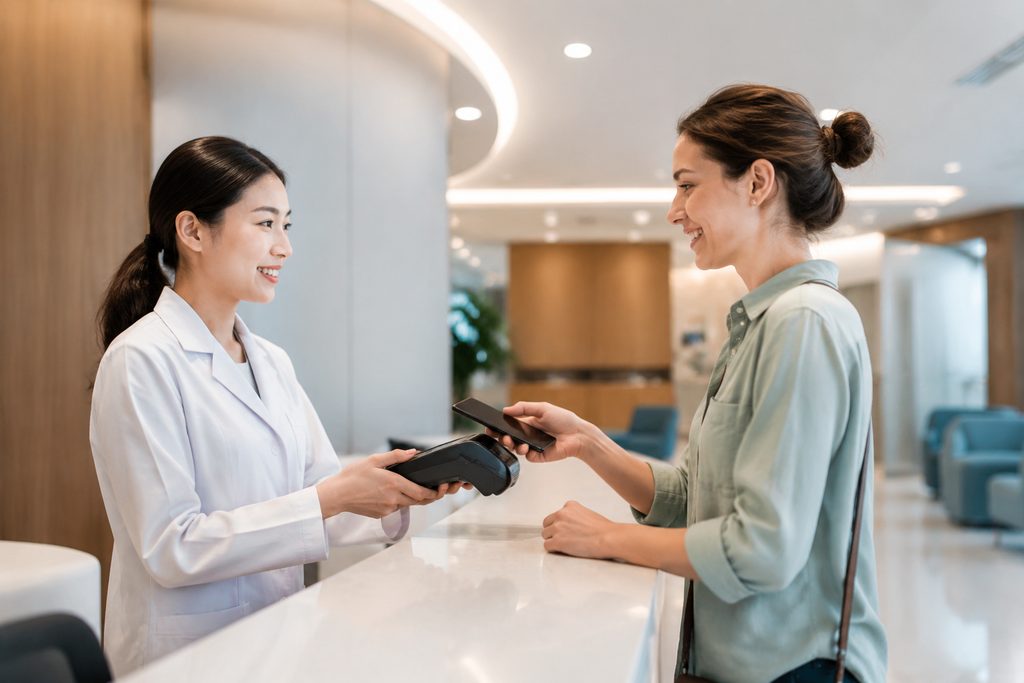
Dental Treatment in China: Paying Safely Without Getting Burned
According to industry estimates, more than 200,000 international patients now travel to China each year for medical and dental care — and a growing share of them are booking implants, crowns, and full-mouth restorations that would cost $30,000 or more at home. The pitch is compelling: a single implant in the United States averages $3,000 to $5,000; in China, the same procedure at a top-tier facility often lands between $800 and $1,800. That gap is real. So is the risk of paying it badly. The question that matters is not whether dental treatment cost China is lower — it almost always is — but whether your money reaches a legitimate provider and your work is done to a standard you can live with for the next twenty years.
This guide is about the paying part. Not the dentistry itself, and not a sales pitch for any clinic. Payment mechanics, verification steps, deposit timing, refund pathways, and the specific traps that catch foreign patients who book too fast.
Dental Treatment Cost China: The Short Answer
Expect to pay 20 to 40 percent of typical US or Western European prices at a reputable Chinese dental hospital, with the largest savings on implant hardware and laboratory work. A titanium implant with abutment and crown that runs $4,000 in Chicago often costs $900 to $1,600 in Shanghai or Beijing at a public tertiary hospital’s international department. Full-arch restoration — All-on-4 or All-on-6 — commonly falls between $8,000 and $18,000 per arch versus $25,000 to $50,000 in the US.
That is the headline. The complication is that China’s dental market has two very different tiers, and the cheap tier is where foreign patients get hurt. Private “dental chains” in tourist districts quote prices that undercut even public hospitals, then bill you mid-treatment for complications, or use unverified implant brands with no traceable manufacturer. The savings are genuine at the top. They are frequently counterfeit at the bottom.
Who This Is Right For — and Who It Isn’t
Dental travel to China suits a specific kind of patient. It does not suit everyone, and pretending otherwise wastes your money and your time.
Typically a good fit:
- You need implants, crowns, bridges, or full-arch work — procedures with a large hardware and lab component where Chinese pricing is genuinely lower
- You have existing X-rays or a CBCT scan, or you can get one before traveling
- You can stay 7 to 14 days for treatment, or make two trips for staged implant work
- You are comfortable with a bilingual coordinator handling registration, payment, and translation
- Your case is straightforward: healthy bone, no active infection, no complex grafting
Probably not a good fit:
- You have uncontrolled diabetes, active periodontal disease, or a bleeding disorder — get that managed first, wherever you are
- You need extensive bone grafting or sinus lifts combined with multiple implants; the complexity and healing timeline make a single trip impractical
- You require IV sedation or general anesthesia and have cardiovascular risk factors that need local specialist clearance
- You are looking for the absolute cheapest option anywhere. That search ends badly in every country
- You cannot return for follow-up. Implant complications often surface at month three or later
The Options, Compared
Three realistic paths exist for a foreign patient needing significant dental work. Each has a different risk profile — and the risk sits mostly in the payment structure, not the clinical technique.
| Path | Typical Single Implant + Crown | Payment Structure | Verification You Can Do | Main Risk |
|---|---|---|---|---|
| Public tertiary hospital, international department | $900 – $1,600 | Prepaid at hospital cashier; itemized receipt | Hospital listed on Fudan rankings; international office answers in English | Longer waits; less hand-holding |
| Private international clinic (JCI-accredited) | $1,800 – $3,200 | Direct card payment; some bill insurance | JCI certificate number; named licensed dentists | Prices approach Western levels |
| Tourist-district dental shop or online “package” | $400 – $800 | Cash deposit or wire to a personal account | Often none — no hospital affiliation, no verifiable license | Counterfeit implants, no recourse, no records |
Which column fits you? If your case is routine and you want the strongest price-to-safety ratio, the public hospital international department is usually the answer. If you want a Western-style experience and your insurance may reimburse, the JCI-accredited private clinic earns its premium. The third row is not a budget option. It is a different product entirely, and the product is not dentistry you can trust.
Is Dental Work in China Safe? What Actually Determines the Answer
“Is dental work in China safe” is the wrong question in its broad form, because the answer depends entirely on which tier you enter. Chinese dental schools train to international standards. Several Chinese hospitals rank among Asia’s strongest for oral and maxillofacial surgery. Implant systems used at top facilities — Straumann, Nobel Biocare, Osstem, and domestic brands with CE marks — are the same products used in Germany and Korea.
Safety breaks down at three specific points. First, implant provenance: ask for the brand name, the lot number, and the manufacturer’s warranty card. A legitimate clinic provides all three without hesitation. Second, sterilization: top hospitals run autoclave logs you can request to see. Third, operator credentials: a licensed dentist in China holds a practicing certificate, and hospitals display department credentials publicly.
One more factor people overlook — language. A misunderstanding about which tooth, which material, or which follow-up schedule is a clinical risk, not just an inconvenience. This is the single largest reason foreign patients end up with work they did not agree to.
How Much Do Dental Implants Cost in Shanghai — and What Drives the Number
Shanghai is the most common entry point for dental travel, and pricing there is fairly consistent across reputable providers. A single implant with abutment and crown at a public tertiary hospital’s international department typically runs $1,000 to $1,600. At a JCI-accredited private clinic in Pudong or Jing’an, expect $2,000 to $3,200 for the same procedure. Full-arch All-on-4 ranges from $9,000 to $18,000 per arch depending on the clinic tier and whether grafting is needed.
Four variables move the price more than anything else:
- Implant brand. Korean and domestic systems sit at the low end; Swiss and Swedish brands add $300 to $700 per implant
- Bone condition. Grafting or a sinus lift can add $500 to $2,500 per site
- Restoration material. A zirconia crown costs more than a porcelain-fused-to-metal one
- Clinic tier. The international department premium is roughly 1.5 to 2 times the standard public channel — you are paying for English service, shorter waits, and a named senior specialist
Prices vary by hospital and case complexity, and any quote you receive before an in-person examination is an estimate, not a contract. Treat it that way.
Practical Considerations: Records, Visas, and Paying Without Losing Money
Records first. Send a panoramic X-ray and, if you have implants planned, a CBCT scan before you commit to anything. A written second opinion from a Chinese dental specialist costs $300 to $500 and tells you whether the plan you were quoted at home is even necessary. That single document has saved patients thousands by revealing that a proposed full-mouth reconstruction was really two crowns and a cleaning.
Visa category. Medical treatment in China falls under the S2 visa, which covers short-stay private affairs including medical treatment, subject to the latest embassy and consulate requirements and supporting hospital documents. Accompanying family members apply under the same category. Note clearly: the M visa is for commercial and trade activities and has nothing to do with medical treatment. Anyone telling you otherwise is misinformed. Stays beyond 180 days require the S1 category.
Payment mechanics. Public hospitals require prepayment — you pay at the cashier before treatment, and insurance reimbursement happens afterward, at home. Private international clinics frequently accept international cards directly and some bill insurers. Bring a card that does not charge foreign transaction fees, and confirm the hospital’s accepted payment methods before arrival. Cash in large amounts is unnecessary and unwise.
Deposit timing. Never pay a deposit to hold an appointment before you have (a) confirmed the hospital’s identity, (b) received a written treatment plan with itemized pricing, and (c) verified the implant brand. A legitimate hospital does not need a personal wire transfer to reserve a chair.
Follow-up. Implant osseointegration takes three to six months. Ask before you pay who handles a complication at month four — and get the answer in writing. If you cannot return, confirm that your home dentist is willing to take over maintenance, and bring your full records and implant warranty card back with you.
If you want to compare hospital options by city and specialty before deciding anything, the Fudan-ranked hospital directory organized by city is a reasonable starting point. For cases involving complex restoration, the specialty rankings by department show which hospitals carry the strongest reputation in oral and maxillofacial work.
Frequently Asked Questions
Partially. Standard public hospital outpatient slots cannot be reserved from overseas — registration happens on the day, in person. What can be arranged in advance is an appointment through a hospital’s international or VIP department, which is exactly what a coordination service handles. Expect that channel to cost roughly 1.5 to 2 times the standard fee. Any clinic promising you a confirmed chair with a named professor for tomorrow, from overseas, with no hospital documentation, is worth a second look.
A legitimate package for a single implant typically runs $1,200 to $2,500 and should itemize the implant brand, abutment, crown material, imaging, and follow-up visits. Packages that quote a single lump sum without naming the implant manufacturer are the ones to avoid. Be cautious with any package bundling flights and hotels at a discount — the margin usually comes out of the clinical line items. Coordination services are priced separately, and our consultation-first service model quotes after understanding your case, not before.
This is the honest answer: recourse across borders is difficult. That is precisely why verification happens before payment, not after. Protect yourself by keeping the implant warranty card, the itemized receipt, the treatment records, and the operating dentist’s name and license number. Some implant manufacturers offer international warranties honored through local distributors. If a complication appears, your first call should be to a dentist at home for assessment, then to the Chinese hospital’s international office with your documentation. Do not expect a refund. Expect a records-based conversation.
Generally, no. Reputable hospitals do not require personal wire transfers to hold an appointment. If a deposit is genuinely required for a scheduled procedure, it should go to a hospital corporate account with a formal receipt, and it should be small relative to the total. Anything else — a personal account, a messaging-app payment, an unexplained “booking fee” — is a reason to stop.
Your Next Step
The savings on dental treatment in China are real, and so are the ways to lose them. Verify the hospital, name the implant, get the plan in writing, and pay through institutional channels only. Do that, and the math works strongly in your favor.
China Medical Services is not a hospital and we do not diagnose or treat anyone. We connect international patients with 340+ top-ranked hospitals across 37 cities, arrange written second opinions and video consultations with Chinese dental specialists, and provide bilingual accompaniment for registration, payment, and translation once you arrive. If you would like a straight assessment of whether your case makes sense to bring to China — and what it would realistically cost — start with a free consultation. No pressure, no obligation, and a clear answer either way.
This article is for general information only and is not medical advice. Treatment decisions should be made with a qualified dentist or physician who has examined you.
For more medical information and treatment options in China, visit chinamedservices.com (China Medical Services).
