Dermatology Hospitals in Shanghai: Options for International Patients
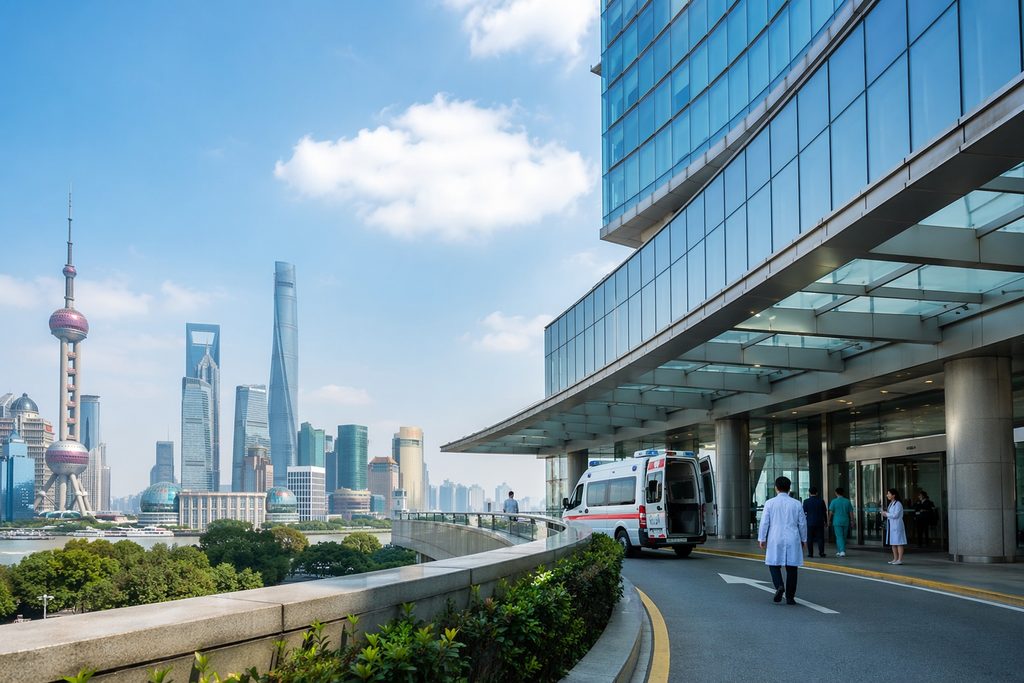
Dermatology Hospitals in Shanghai: Options for International Patients
When 44-year-old Sarah from Melbourne started losing patches of hair along her hairline, her local dermatologist in Australia ran basic bloodwork, handed her a topical steroid, and booked her six months out for a follow-up. By month three, the patches had spread. She began searching for dermatology hospital Shanghai cost estimates, wondering whether a trip to China could get her seen faster, diagnosed properly, and treated for a fraction of what she was quoted at home. That search is exactly where most international patients begin — and it is a reasonable place to start.
Shanghai is one of the two strongest medical cities in China. Eighteen of the Fudan Top 100 hospitals sit here, and several of them run dermatology departments that treat tens of thousands of patients a year. For foreigners, though, the options split into two very different worlds: large public hospitals with world-class expertise but almost no English infrastructure, and private international clinics with fluent English staff, JCI accreditation, and direct insurance billing. Understanding that split is the single most important thing before you book anything.
How This Actually Works, Step by Step
Here is the real sequence, without the marketing gloss.
Step 1 — You send your records. Existing pathology reports, biopsy slides if you have them, photos of the affected skin, prior treatment history, and any lab work. A written second opinion from a top-tier hospital specialist typically runs $300–500 and comes back as a written analysis with treatment direction. It is for reference only, not a prescription.
Step 2 — A specialty team reviews the file. For complex cases — autoimmune skin disease, melanoma staging, severe psoriasis, chronic urticaria that has resisted treatment — a video consultation with the department ($100–300 at a standard international department, $500–800 with a top specialist) lets you explain symptoms directly and hear recommendations. Multidisciplinary review, when dermatology, rheumatology or oncology need to weigh in together, runs $1,500–2,000.
Step 3 — You decide whether to travel. This is the fork in the road. If the plan is feasible remotely, some patients never fly. Others need in-person examination, a biopsy, or a procedure.
Step 4 — Appointment coordination. Here is the part most foreign patients do not know: at public hospitals, routine outpatient registration cannot be pre-booked from overseas. You queue on the day. Surgery or an inpatient procedure requires an in-person consultation first. To lock in a specific senior expert in advance, you go through the hospital’s international or VIP channel — which costs roughly 1.5 to 2 times the standard route.
Step 5 — You arrive, and someone walks you through it. A bilingual medical companion handles registration, queuing, payment, wayfinding and translation. That service starts from $300 per day.
Public vs. Private: The Two Real Options in Shanghai
This is where the “best skin clinic Shanghai for foreigners” question actually gets answered — and the answer depends on what you have.
Public tertiary hospitals, including the Fudan-ranked giants, hold the deepest dermatology expertise in the country. They see volume that Western clinics simply do not: rare presentations, advanced melanoma, complex autoimmune conditions. If your case is diagnostically difficult or you need a specialist who has seen your condition hundreds of times, this is where that expertise lives. The trade-off is infrastructure. A major Shanghai public hospital can process over 10,000 outpatient visits in a single day. Signage is in Chinese. Without language support, navigating it is genuinely hard.
Private international hospitals and clinics — the United Family, Jiahui, Parkway and Raffles tier — were built for exactly this problem. English-speaking physicians, JCI accreditation, Western-style appointment scheduling, and direct insurance billing for many international plans. You can often book online. The cost is higher, and for genuinely rare or complex disease, the subspecialty depth may not match a top public department.
You can browse the full ranked list on our Fudan Top 100 hospital directory, and filter by specialty through the 45 specialty rankings.
A Realistic Timeline
Patients consistently underestimate the administrative layer. Here is what the calendar actually looks like.
| Stage | Typical Duration | What Slows It Down |
|---|---|---|
| Records gathering and translation | 3–10 days | Missing pathology slides; records not in English or Chinese |
| Written second opinion turnaround | 3–7 business days | Specialist availability; need for additional imaging |
| Video consultation scheduling | 5–14 days | Time zone coordination; department slots |
| S2 visa application | 1–3 weeks | Embassy processing times; invitation documents from the hospital |
| Appointment / expert slot confirmation | 1–4 weeks | Senior specialists book out; VIP channel is faster |
| Travel and first in-person visit | 2–5 days | Flight availability; jet lag before examination |
| Biopsy or lab result turnaround | 3–10 days | Histopathology queue; special staining |
| Treatment start | Same visit to 3 weeks | Whether the plan requires pre-treatment screening |
Add it up and a realistic door-to-treatment window is roughly four to ten weeks, assuming nothing unusual. Anyone promising you a confirmed senior specialist slot next week is not being straight with you.
What Can Go Wrong — and What Happens Then
Honest failure modes matter more than success stories.
Your records are incomplete. Dermatology is unusually dependent on tissue. If you arrive without biopsy slides or a proper pathology report, the specialist may need to repeat the biopsy. That adds one to two weeks and real cost. Send everything digitally first.
The expert you wanted is fully booked. Senior public hospital dermatologists can be committed weeks or months out. No coordination service can guarantee a named specialist or a specific surgery date. What a legitimate service can do is coordinate through the official international department and refund the coordination fee if the appointment cannot be secured.
You assumed a diagnosis that does not hold up. Patients sometimes arrive convinced they need a specific laser or biologic. In-person examination occasionally points somewhere else entirely. That is not a failure — it is the system working. But it can reset the timeline.
Language breakdown at the payment window. Public hospitals require prepayment; insurance is reimbursed afterward. Without someone beside you, a queue-and-pay problem becomes a treatment delay.
Follow-up falls apart after you fly home. This is the most common long-term problem. Ask before treatment how records will be transferred to your home physician, and in what format.
What Laser and Skin Treatment Actually Costs
The question “how much does laser skin treatment cost in Shanghai” has a wide honest answer, because it depends on device, area treated, number of sessions, and whether you are in a public or private setting. Public hospital dermatology and medical aesthetics departments are generally the lower-cost end. Private international clinics charge more but bundle in English service and scheduling convenience.
For context on the broader cost picture: equivalent surgical procedures in China’s top public hospitals commonly run one-fifth to one-tenth of US prices. A cardiac bypass that bills over $120,000 in the United States is typically $12,000–20,000 here. Dermatology is less dramatic because most skin treatment is outpatient, but the same structural gap applies.
Every figure in this article is a range. Final pricing varies by hospital and case complexity, and is confirmed only after the hospital reviews your records.
Practical Considerations: Records, Visa, Payment, Follow-Up
Records. Bring pathology slides or blocks, biopsy reports, high-resolution photographs taken in consistent lighting, a full medication list including doses and duration, and any prior imaging. Translate nothing yourself — a mistranslated dermatology term can change the treatment plan.
Visa. Medical travel to China uses the S2 visa, annotated for medical treatment purposes. Stays beyond 180 days use S1. Accompanying family members apply under S2 as well. The M visa is a commercial and trade category and has nothing to do with medical treatment — if a service tells you to apply for an M visa, that is a red flag. Visa rules are set by the latest embassy and consulate requirements, and approval is never guaranteed.
Payment. Public hospitals require prepayment; you claim reimbursement from your insurer afterward. Many private international hospitals bill your insurance directly.
Insurance. Confirm in writing, before travel, whether your plan covers treatment in China and what documentation it requires.
Follow-up. Ask explicitly how your post-treatment records will reach your dermatologist at home. Get it in writing.
For a fuller picture of hospital categories, our guide to private international hospitals in China covers accreditation and billing in detail.
Frequently Asked Questions
China’s top-tier public hospitals meet international standards, and many private international clinics hold JCI accreditation. Safety depends heavily on choosing an appropriately ranked facility for your specific condition rather than the nearest clinic. For complex disease, a Fudan-ranked public dermatology department is generally the safer choice.
At private international clinics, usually yes. At public hospitals, routine outpatient registration happens on the day, and procedures require an in-person consultation first. Pre-booking a named senior expert is possible only through the hospital’s international or VIP channel, at roughly 1.5–2 times the standard cost.
It varies widely by device, treatment area and session count, and public departments are typically cheaper than private clinics. Because pricing depends on your specific case, the only reliable number comes after a hospital reviews your records. Treat any flat quoted price you see online with caution.
Medical travel uses the S2 visa, annotated for treatment. The M visa is strictly for commercial and trade activity and is not a medical visa. Requirements change, so confirm current rules with the relevant embassy or consulate.
That is a common and sensible path. A written second opinion from a top-tier specialist typically costs $300–500 and requires only your existing records. Many patients use it to decide whether traveling is worth it at all.
Your Next Step
Shanghai offers genuinely strong dermatology options — the hard part is matching your specific condition to the right tier of hospital and handling the language and logistics layer that sits around it. Get that match wrong and you lose weeks; get it right and the process is manageable.
We are China Medical Services, a bilingual coordination team covering 340+ top-ranked hospitals across 37 cities. We do not diagnose, we do not treat, and we do not promise outcomes or guaranteed specialist slots. What we do is translate records, coordinate appointments through official hospital channels, and put a bilingual companion beside you on the day. If you would like help working out whether Shanghai is the right destination for your case, you can start with a free consultation — no commitment, no pressure.
This article is for general information only and is not medical advice. Always consult a qualified physician about your individual condition before making treatment decisions.
For more medical information and treatment options in China, visit chinamedservices.com (China Medical Services).
