Dry Eye Treatment in China: Costs, Top Clinics & Real Relief
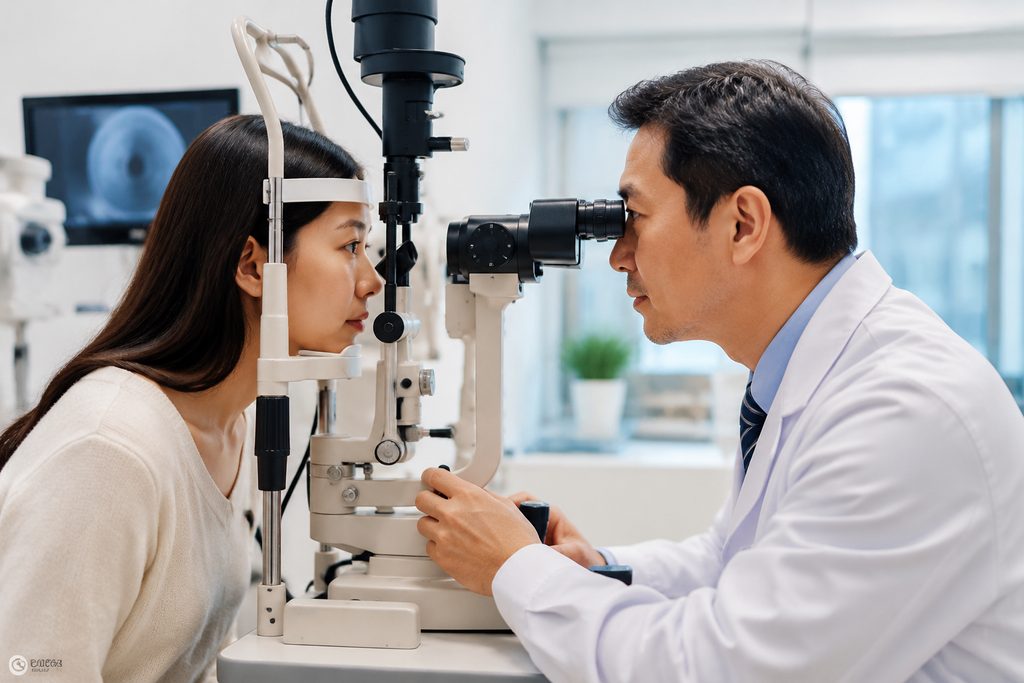
Around 16 million Americans have been diagnosed with dry eye disease, and millions more live with the burning, gritty discomfort without ever seeking care. What surprises many is that a growing number are now looking across the Pacific. The dry eye treatment cost China runs roughly 40–70% below comparable private-pay rates in the United States and Western Europe — and that gap widens for advanced therapies like LipiFlow and intense pulsed light (IPL).
But cost is only part of the equation. Patients also want to know whether the clinics are reputable, whether the equipment is current, and whether they can navigate the process without speaking Mandarin. This guide answers those questions directly. We work with international patients every week who are weighing exactly these decisions.
How This Actually Works, Step by Step
You do not need to fly to China just to find out if treatment makes sense. Here is the sequence that most of our patients follow:
Step 1 — Send your records. You email us your existing ophthalmology reports, any tear film or meibography results, and a short description of what you have already tried. Restasis, Xiidra, warm compresses, punctal plugs — all of it matters.
Step 2 — We match you with a department. Based on your case, we identify which hospital or clinic fits. For straightforward evaporative dry eye, a private international clinic with English-speaking staff may be ideal. For complex ocular surface disease, a top-tier public hospital ophthalmology department is often the better call. Our database covers 340+ top-ranked hospitals across 37 cities.
Step 3 — Remote consultation. A Chinese ophthalmologist reviews your records. You can do this as a written second opinion ($300–500) or a live video consultation ($100–300, or $500–800 for a top specialist). This step tells you whether coming to China is even worth it. Sometimes the answer is no — and that saves you a flight.
Step 4 — You decide. If treatment in China makes sense, we coordinate the on-the-ground logistics: appointment scheduling, bilingual accompaniment, accommodation guidance, and the S2 visa documentation you will need from the hospital.
What Dry Eye Treatment in China Actually Costs
Let us get specific, because vague pricing helps no one. The table below reflects current ranges we see across Shanghai, Beijing, and Guangzhou for international patients. Prices vary by hospital tier and case complexity.
| Treatment | China (USD) | US Private-Pay (USD) | Notes |
|---|---|---|---|
| Comprehensive dry eye evaluation | $80–200 | $250–600 | Includes tear film, meibography, osmolarity |
| IPL (per session) | $150–350 | $400–900 | Typically 3–4 sessions needed |
| LipiFlow (single treatment) | $800–1,500 | $1,500–2,500 | One-time thermal pulsation |
| Meibomian gland expression | $50–150 | $150–400 | Often bundled with IPL |
| Punctal plugs (per eye) | $100–300 | $300–800 | Collagen or silicone |
So how much does IPL for dry eyes cost in China? Most patients pay between $450 and $1,400 for a full course of three to four sessions. That is often less than half the US price. And the Lipiflow treatment price Beijing patients report typically lands around $1,000–1,200 at private international clinics, though public hospital international departments can sometimes go lower.
None of these are guaranteed quotes. They are reference ranges based on what we have coordinated for patients over the past two years. Your final number depends on which hospital, which specialist, and how many sessions your condition requires.
A Realistic Timeline
People underestimate how long the pre-travel phase takes. Here is what a typical dry eye treatment journey looks like:
| Stage | Duration | What Happens |
|---|---|---|
| Record review & remote consultation | 1–2 weeks | You send records; ophthalmologist reviews; video or written opinion delivered |
| Decision & planning | 1–3 weeks | You decide to proceed; we confirm hospital, dates, and cost estimate |
| S2 visa processing | 1–4 weeks | Hospital issues invitation documentation; you apply at the Chinese embassy or consulate |
| Travel & first appointment | 3–7 days | Arrival, initial evaluation, first treatment session if indicated |
| Full treatment course | 1–3 weeks | IPL sessions spaced 2–4 weeks apart, or LipiFlow plus follow-up |
| Follow-up at home | 1–6 months | Your local ophthalmologist monitors; we can arrange remote follow-up with the Chinese team |
The waiting steps people forget are document translation and appointment lead time at top hospitals. A famous ophthalmology department in Shanghai or Beijing may have a two-to-four-week wait for the international clinic. Plan for that. And do not book flights before your visa is approved.
What Can Go Wrong — and What Happens Then
We would rather you know the failure modes before you commit. Here are the honest ones.
The remote consultation says you are not a good candidate. This happens more often than clinics would like to admit. If your dry eye is primarily aqueous-deficient rather than evaporative, IPL and LipiFlow may do little. The recourse is simple: you do not travel. You are out the consultation fee, but you avoided a wasted trip. That is the entire point of the staged model.
Treatment works, but not as dramatically as hoped. Dry eye is chronic. Some patients need maintenance sessions every 6–12 months. The Chinese team should set this expectation before you leave. If they do not, ask directly. If your symptoms return quickly, you can arrange remote follow-up or plan a shorter return visit.
Language friction despite promises. Even at international clinics, some nursing staff speak limited English. Our bilingual companion handles registration, payment, pharmacy pickup, and translation during every appointment. If you go without one, bring a translation app and patience.
Insurance refuses to reimburse. Most US and European insurers treat overseas elective care as out-of-network or not covered. You pay upfront in China. Reimbursement, if any, comes later. Get a pre-determination letter from your insurer before you book anything.
Is Dry Eye Treatment in China Safe? What the Data Shows
This is the question every patient asks, and it deserves a straight answer. Is dry eye treatment in China safe when performed at accredited institutions? The short answer is yes — with the same caveats you would apply anywhere.
Chinese ophthalmology departments perform enormous volumes. A single top-tier hospital eye center in Shanghai may see more dry eye patients in a month than a typical Western clinic sees in a year. Volume builds competency, especially for procedure-heavy treatments like meibomian gland expression and IPL. The equipment is current — LipiFlow, IPL platforms, and diagnostic tools like the Oculus Keratograph are standard at major centers.
That said, safety depends on provider selection. A random clinic in a tier-3 city is not the same as a Fudan-ranked hospital ophthalmology department. Our database filters for hospitals ranked in the top 5% of China’s 35,000+ institutions. For eye care specifically, we look at the ophthalmology specialty rankings and JCI accreditation status.
The risks — corneal abrasion from aggressive gland expression, IPL burns on darker skin types, infection from punctal plugs — exist everywhere. Chinese top-tier hospitals track these complications. Ask for their complication rates. A reputable department will share them.
Choosing Between Shanghai, Beijing, and Elsewhere
Where should you go? The answer depends on what you value most.
For the best dry eye clinic Shanghai options, think about the private international hospital ecosystem. United Family, Jiahui, and Parkway all have Shanghai locations with English-speaking ophthalmologists, JCI accreditation, and direct insurance billing. These are the easiest entry point for foreign patients. Expect to pay toward the higher end of the ranges above.
Beijing offers the deepest bench of public hospital expertise. Peking Union Medical College Hospital and Beijing Tongren Hospital both run high-volume ocular surface disease programs. Tongren, in particular, is known for ophthalmology. The trade-off: public hospital international departments are busier, and the experience is more clinical than concierge.
Guangzhou and Chengdu are worth considering for cost-sensitive patients. The Zhongshan Ophthalmic Center in Guangzhou is one of the largest eye hospitals in the world. Prices can run 20–30% below Shanghai for comparable care.
One common mistake: choosing a hospital based on a general ranking rather than ophthalmology-specific reputation. A hospital can be top-5 overall and mediocre in dry eye. Check the ophthalmology specialty rankings before deciding.
Practical Considerations: Records, Visa, Payment, and Follow-Up
Here is what actually matters for a smooth trip.
Records. Bring every ophthalmology report from the past two years. Tear breakup time, Schirmer scores, meibography images, previous treatments and their outcomes. If your records are not in English, get them translated. Most Chinese ophthalmologists read English, but the nursing and administrative staff may not.
Visa. For medical treatment in China, you apply for an S2 visa with the treatment purpose noted. The hospital issues an invitation letter and treatment confirmation document. Your accompanying family member also applies for an S2. Processing typically takes one to four weeks depending on your home country. We guide you through the documentation, but approval is always the consulate’s decision.
Payment. Public hospitals require upfront payment, usually via card or cash. Private international clinics may bill your insurer directly if they have a direct-billing agreement. Check before you travel. Keep every receipt — you will need itemized invoices for any reimbursement claim.
Follow-up at home. Dry eye management does not end when you leave China. Your local ophthalmologist should receive a treatment summary from the Chinese team. We can arrange this. If you need a remote follow-up consultation, that is available too.
Frequently Asked Questions
Most patients pay 40–70% less than US private-pay rates. A full IPL course in China typically runs $450–1,400 versus $1,200–2,700 in the US. LipiFlow runs $800–1,500 versus $1,500–2,500. These are ranges, not guarantees.
You cannot book a specific treatment before a doctor evaluates you. What you can do is book a remote consultation, get a treatment recommendation, and then coordinate the in-person appointment. Any clinic promising to sell you LipiFlow or IPL sight unseen is one to avoid.
At top-tier accredited hospitals, yes. Chinese ophthalmology departments perform high volumes of these procedures. The key is selecting a Fudan-ranked or JCI-accredited institution. Avoid unaccredited clinics, especially those marketing heavily to foreigners online.
You apply for an S2 visa with the treatment purpose noted. The hospital provides supporting documentation. Your spouse or family member also applies for an S2. The M visa is for commercial and trade activities and is not appropriate for medical travel.
Dry eye is chronic and multifactorial. Some patients respond well to IPL or LipiFlow; others need ongoing management with drops, plugs, or lifestyle changes. A good Chinese ophthalmologist will tell you before treatment whether you are a likely responder. If the first approach fails, there are usually second-line options — but set realistic expectations before you spend money on travel.
Your Next Step
Dry eye is exhausting — the constant discomfort, the eye drops that barely help, the screen time that feels like sandpaper. China offers genuinely high-quality care at prices that make advanced treatment accessible. But the logistics are real, and that is where we come in.
We are China Medical Services, a team that helps international patients navigate Chinese healthcare. We do not practice medicine and we never promise outcomes. What we do is handle the coordination — record review, hospital matching, appointment scheduling, bilingual accompaniment, and visa documentation — so you can focus on your eyes, not the paperwork.
If you are curious whether dry eye treatment in China makes sense for your situation, start with a conversation. It costs nothing to ask.
For more medical information and treatment options in China, visit chinamedservices.com (China Medical Services).
