Eye Exam in Shanghai: How to Book at Top Clinics in 2026
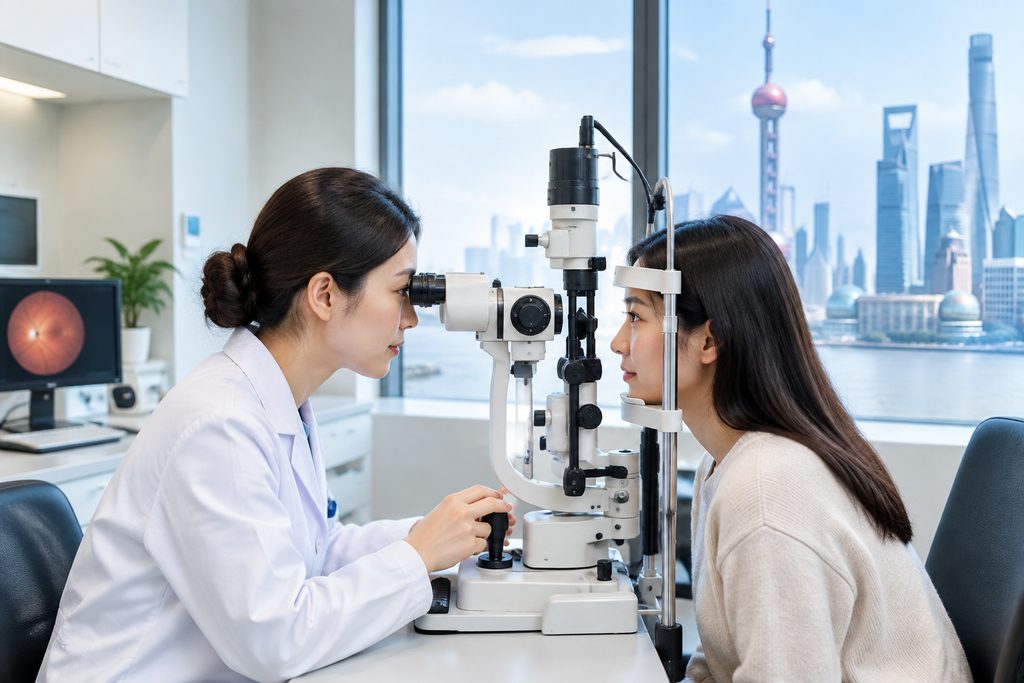
Eye Exam in Shanghai: How to Book — The Short Answer
When 47-year-old Sarah from Portland noticed her vision blurring during a business trip to Shanghai, she assumed booking an eye exam would be straightforward. It wasn’t. She spent two days navigating Chinese-language hospital apps, calling numbers nobody answered, and wondering whether she needed an appointment at all. The truth? You can get an eye exam in Shanghai without an appointment at most public hospitals — but the experience will test your patience if you don’t speak Mandarin. Booking ahead through an international department or a private clinic solves that problem, and it typically costs between $50 and $300 depending on where you go.
Here’s the caveat that trips up most foreigners: China’s public hospital system doesn’t work like the one back home. Walk-in registration is the norm, queues start before sunrise, and the “international” label on a department changes everything about price and access. Understanding those distinctions saves you hours — and possibly a wasted trip.
Who This Is Right For — and Who It Isn’t
Shanghai has become a genuine destination for medical care, and eye exams are no exception. But not every vision problem should be handled here, especially if you’re only visiting short-term.
You’re likely a good fit if:
- You live in Shanghai or are staying for several weeks and need a routine exam, prescription update, or contact lens fitting
- You have a specific eye condition — glaucoma, diabetic retinopathy, macular issues — and want a second opinion from a high-volume Chinese specialist
- You’re considering refractive surgery (LASIK or SMILE) and want to compare pricing and pre-operative assessment in China
- You need a comprehensive exam that includes OCT imaging, visual field testing, or retinal photography at a fraction of Western prices
You should probably look elsewhere if:
- You’re in Shanghai for less than 48 hours and have an acute eye injury — go to the nearest emergency department, not a scheduled clinic
- You need complex surgical intervention that requires follow-up care you can’t receive in China
- You have a rare genetic eye disease where continuity with your home specialist matters more than a one-off assessment
- You’re seeking care primarily because it’s cheaper — without a clear clinical reason, the travel and coordination costs often cancel out the savings
Being honest about this matters. A routine prescription check doesn’t justify a medical trip. But if you’re already in Shanghai — for work, family, or another treatment — the quality of ophthalmic care available here is genuinely world-class.
The Options, Compared
Shanghai offers three distinct tiers of eye care for international patients. Each has real trade-offs.
| Option | Typical Cost (USD) | Wait Time | English Support | Best For |
|---|---|---|---|---|
| Public hospital — standard ophthalmology | $50–$100 | Same-day walk-in, 2–4 hour wait | Limited or none | Budget-conscious patients with a Mandarin speaker |
| Public hospital — international/VIP department | $120–$250 | Booked 2–5 days ahead | Yes, dedicated staff | Patients who want senior specialists and English service |
| Private international clinic | $150–$300 | Booked 1–3 days ahead | Yes, fully English-speaking | Expats, travelers, insurance holders |
| Top-tier specialist hospital (Fudan-ranked) | $200–$400 | Booked 1–2 weeks ahead via VIP channel | Varies by department | Complex conditions needing subspecialty expertise |
Which column suits you? If you’re a short-term visitor with a simple need, a private clinic is the path of least resistance. If cost matters and you have someone who can help with translation, the standard public route works fine. For anything complex — a suspected retinal condition, uncontrolled glaucoma, surgical evaluation — the international department of a major public hospital gives you senior expertise without the premium of a private facility.
Where to Go: Best Eye Clinic Options for Shanghai International Patients
Shanghai’s ophthalmology landscape is anchored by a handful of institutions with genuine depth. The Eye & ENT Hospital of Fudan University is widely regarded as one of China’s leading eye centers, with dedicated subspecialties in retina, cornea, glaucoma, and pediatric ophthalmology. It appears consistently in Fudan’s hospital rankings, and its international department handles foreign patients regularly.
Shanghai Ninth People’s Hospital, affiliated with Shanghai Jiao Tong University School of Medicine, is another heavyweight — particularly for orbital and oculoplastic conditions. For general ophthalmology and refractive surgery, Ruijin Hospital and Zhongshan Hospital both operate international departments with English-capable staff.
On the private side, United Family Healthcare, Jiahui Health, and Parkway Shanghai all offer comprehensive eye exams with Western-style service. These clinics bill insurance directly in many cases, which simplifies reimbursement. If you want to browse the full range of top-ranked hospitals in China by city and specialty, our database covers 340+ institutions across 37 cities.
One practical note: the phrase “best eye clinic Shanghai international patients” gets thrown around loosely online. Rankings help, but the right clinic depends on your specific condition. A refractive surgery candidate and a glaucoma patient need different subspecialists.
How Much Does an Eye Exam Cost in China?
Costs vary widely — by facility tier, by the complexity of testing, and by whether you’re paying out of pocket or through insurance.
A basic refraction and vision test at a public hospital might cost as little as $30–$50. Add a slit-lamp exam, intraocular pressure check, and dilated fundus examination, and you’re looking at $80–$150. Comprehensive workups with OCT, visual fields, and retinal imaging push toward $200–$400 at top-tier hospitals.
Private international clinics sit at the higher end. A full exam with imaging at United Family or Jiahui typically runs $250–$400. That’s still below what you’d pay in the US for equivalent testing — a comprehensive eye exam with OCT in America often exceeds $500 before insurance.
What drives the variance? Three things: the seniority of the doctor (chief physicians cost more than residents), the technology used (OCT and visual field machines add cost), and the channel — standard registration versus international department. The same exam can cost three times more through the VIP route, but you get English service, shorter waits, and often a more senior physician.
For a deeper look at how Chinese medical pricing compares across specialties, see our guide to top departments by specialty.
Is It Safe to Get an Eye Exam in Shanghai?
Yes — with context. China’s top hospitals meet international standards for diagnostic equipment and clinical training. The Eye & ENT Hospital of Fudan University, for instance, handles tens of thousands of ophthalmic cases annually and publishes in peer-reviewed international journals. Sterilization protocols at major hospitals are rigorous.
The bigger risk isn’t clinical — it’s communication. If you don’t speak Mandarin and end up in a standard public clinic, you may struggle to explain your symptoms or understand instructions. Miscommunication around medication dosing or follow-up timing is a real concern. That’s not a reason to avoid care; it’s a reason to choose the right channel.
Also worth noting: not every clinic that advertises “international” service delivers it consistently. Some hospitals designate a single staff member as the English contact, and if that person is off duty, you’re back to square one. Private international clinics tend to be more reliable on this front.
Practical Considerations: Booking, Payment, and Follow-Up
Booking. Public hospitals typically don’t accept overseas advance bookings for standard outpatient slots. You register on the day, in person, and wait. International departments and private clinics do accept advance bookings — usually by phone, email, or through a coordination service. If you want to lock in a specific specialist or date, the international channel is your only realistic option.
Payment. Public hospitals require upfront payment; you’ll settle at a cashier window before or after services. International clinics often accept international credit cards and can bill insurance directly. Bring your passport — it’s required for registration at every facility.
Records. If you have prior eye exams, bring them. Chinese ophthalmologists appreciate baseline data, especially for glaucoma or retinal conditions where progression matters. Digital copies on your phone work fine.
Visa. If you’re traveling to China specifically for medical care, the S2 visa is the applicable short-stay category for medical treatment and private affairs. Requirements and supporting documents vary by consulate, so check with the latest embassy guidance. The M visa is for commercial and trade activities — it is not a medical visa.
Follow-up. If you return home after your exam, ask for a written summary in English. Most international departments provide one. It helps your home doctor pick up where the Shanghai exam left off.
Frequently Asked Questions
Yes, at public hospitals. You’ll register on arrival, pay the registration fee, and wait — often two to four hours during peak times. Private international clinics generally require an appointment, though same-day slots sometimes open up. If your time is limited, book ahead through an international department or private clinic.
Most US and European insurance plans don’t cover routine eye exams abroad, though some cover urgent or medically necessary eye care. Private international clinics in Shanghai often bill international insurance directly, which simplifies things. Check your policy’s overseas coverage before you go — and keep every receipt.
Shanghai’s top hospitals can handle most ophthalmic conditions, from retinal detachment to glaucoma surgery. But treatment decisions depend on your overall situation — how long you can stay, your home follow-up options, and the nature of the condition. A serious finding doesn’t automatically mean you should treat it in China. Sometimes the right move is to get a clear diagnosis here and coordinate treatment closer to home.
Start with international departments at major public hospitals or private clinics like United Family, Jiahui, or Parkway. These facilities maintain English-speaking staff as a standard, not an exception. If you’re unsure which clinic fits your needs, a coordination service can match you based on your condition and location.
Your Next Step
Getting an eye exam in Shanghai is entirely manageable — the key is choosing the right channel for your situation and language needs. Public hospitals offer excellent value if you have translation support; private clinics offer convenience at a premium; international departments split the difference.
We’re China Medical Services, a coordination service that helps international patients navigate Chinese healthcare. We’re not a hospital and we don’t provide medical diagnoses — we connect you with the right facility, help with booking, and provide bilingual support on the ground. If you’d like help figuring out where to start, you can reach out for a free consultation. No pressure, no obligation — just a conversation about what you need.
For more medical information and treatment options in China, visit chinamedservices.com (China Medical Services).
