PCOS Treatment in China: How We Coordinate Your Fertility Care
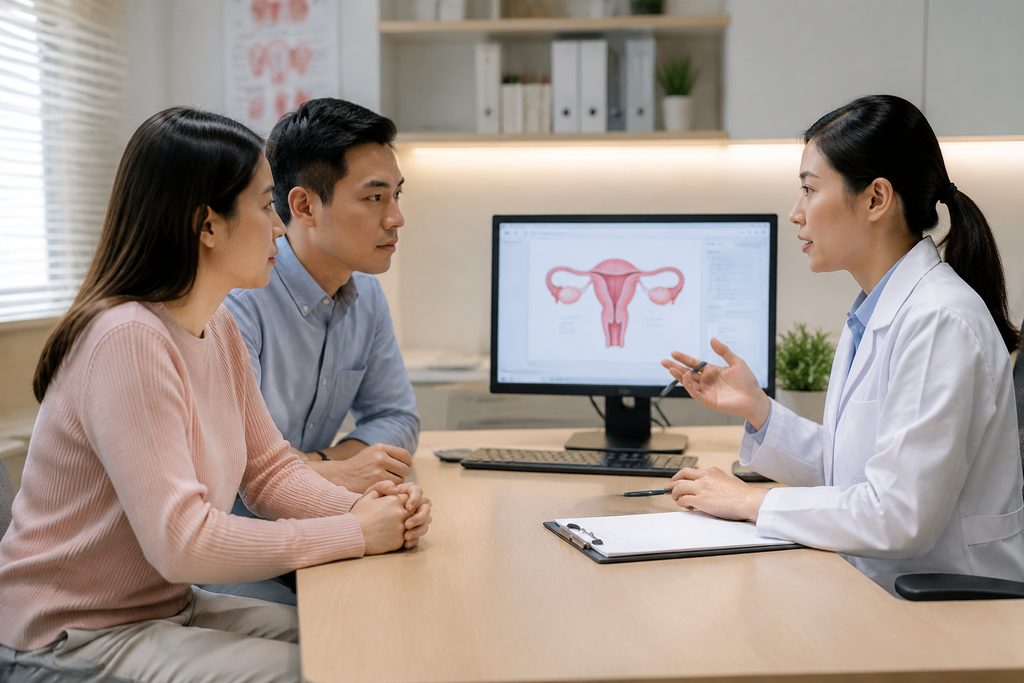
When 34-year-old Sarah from Manchester was diagnosed with polycystic ovary syndrome after two years of irregular cycles and one failed IVF round at home, her first question was not about medication. It was about geography. She wanted to know whether traveling 5,000 miles for treatment made sense. Her Google search history read exactly like the query that brought you here: “PCOS treatment cost China” and “can I get IVF with PCOS in Beijing.”
The short answer: yes, coordinated PCOS fertility care in China is available to international patients, and total treatment costs typically run 40–70% lower than comparable private care in the US or UK. But the pathway is not a walk-in clinic experience. It requires documentation, sequencing, and a realistic understanding of how Chinese hospitals actually operate.
PCOS Treatment in China: The Short Answer
PCOS treatment in China follows international clinical guidelines: lifestyle intervention, ovulation induction with letrozole or clomiphene, metformin where insulin resistance is present, and IVF/ICSI when first-line approaches fail. The difference is cost, scale, and access to high-volume reproductive endocrinology units. A full IVF cycle with PCOS-specific protocols at a top Shanghai fertility center runs roughly $4,000–7,000, compared with $12,000–20,000 privately in the UK or $15,000–30,000 in the US. Medication protocols are comparable; the savings come from lower facility and laboratory fees.
But here is the caveat. You cannot simply email a Chinese public hospital and book a fertility workup from abroad. Ordinary outpatient registration happens day-of, in person, often through a hospital app that requires a Chinese phone number. That is where coordination becomes the actual product.
Who This Is Right For — and Who It Isn’t
We are direct about this because it saves everyone time. PCOS fertility care in China suits a specific profile.
Typically a good candidate:
- Diagnosed PCOS with documented ovulation dysfunction and at least one failed or delayed treatment cycle at home
- Aged under 40, with AMH and antral follicle count indicating reasonable ovarian reserve
- Comfortable committing 3–6 weeks on the ground for stimulation, retrieval, and fresh transfer
- Paying out of pocket, or with insurance that reimburses international treatment after the fact
- Needing IVF, ICSI, or repeated ovulation induction cycles — the cost gap widens most here
Who should not pursue this:
- Women with untreated thyroid dysfunction, uncontrolled prolactin elevation, or undiagnosed uterine anomalies. These need workup before any travel.
- Anyone requiring donor eggs or surrogacy. Chinese law restricts these pathways for foreign nationals, and we do not coordinate them.
- Patients who cannot be away from home for at least three weeks. Remote monitoring is not a substitute for the retrieval and transfer window.
- Those seeking guaranteed outcomes. No reputable program promises a live birth rate; anyone who does is not reputable.
The Options, Compared
How is PCOS treated in China across different hospital tiers? The table below reflects what we actually see when coordinating care, not marketing brochures.
| Factor | Top Public Hospital IVF Center | Private International Hospital | Home Country Private Clinic |
|---|---|---|---|
| IVF cycle cost (PCOS protocol) | $4,000–7,000 | $8,000–15,000 | $12,000–30,000 |
| Annual IVF cycle volume | 5,000–15,000+ | 500–2,000 | Varies widely, often <1,000 |
| English-speaking staff | Limited; interpreter needed | Standard | Standard |
| Direct insurance billing | Rare; pay upfront, claim later | Common | Standard |
| Wait time for IVF start | 1–3 months after initial consult | 2–6 weeks | 1–6 months depending on funding |
| PCOS-specific protocol customization | High at top centers | High | High |
Top public hospital centers win on volume and price. Private international hospitals win on language and speed. Home-country clinics win on convenience but lose badly on cost. For most PCOS patients we coordinate, the public top-tier route with a bilingual companion is the rational middle path.
Best Fertility Clinic for PCOS in Shanghai: What Actually Matters
Searching “best fertility clinic for PCOS in Shanghai” returns a mix of hospital names and paid listings. Let us cut through it. What matters for PCOS specifically is not the shiniest lobby. It is three things: a reproductive endocrinology department with a dedicated PCOS pathway, embryology lab certification, and clinicians who adjust gonadotropin dosing aggressively to avoid ovarian hyperstimulation syndrome (OHSS). PCOS patients carry the highest OHSS risk of any IVF population. A center that does 10,000 cycles a year has seen more OHSS cases in a month than a small clinic sees in a year. That experience translates into safer antagonist protocols and more freeze-all decisions when estrogen spikes.
Shanghai’s top public reproductive medicine departments sit inside major teaching hospitals, several ranked among China’s top 10 nationally for reproductive medicine. You can review them on our specialty rankings by department. The trade-off: these are high-volume, fast-moving environments. Without Mandarin and without someone who knows which window to approach, which form to fill, and which queue to join, you will lose hours daily. That is not a criticism. It is the reality of a system built for domestic throughput.
Book PCOS Fertility Treatment China: The Sequencing Problem
Here is the part most overseas patients get wrong. They try to book a specific procedure before any Chinese physician has reviewed their records. That is backwards. The correct sequence for “book PCOS fertility treatment China” is:
First, a written second opinion. You send existing hormone panels, ultrasound reports, semen analysis if applicable, and prior stimulation records. A Chinese reproductive endocrinologist reviews them and issues a written assessment: whether IVF is indicated, which protocol class they would use, and what additional testing is required before travel. This costs $300–500 and is for reference only, not a prescription.
Second, a video consultation with the treating team. This is where you speak directly with the physician who would manage your cycle. Cost ranges from $100–300 for a standard international department consult, or $500–800 for a top-specialist video consultation. The 90-day credit applies: any consultation fee is credited in full toward on-the-ground coordination if you proceed to treatment in China within 90 days.
Third, in-person evaluation and cycle start. The hospital will not schedule stimulation before a face-to-face visit. Expect 3–5 days of baseline testing, then medication start. From first injection to embryo transfer is roughly 18–24 days for a fresh cycle.
PCOS Treatment Cost China: A Realistic Breakdown
Let us put numbers on the table. A complete PCOS IVF pathway at a top public hospital in Shanghai or Beijing, including stimulation medications, monitoring, egg retrieval, ICSI if needed, embryo culture, and fresh transfer, typically lands between $4,500 and $7,500. Medication costs vary by protocol and body weight; antagonist protocols with recombinant FSH run higher than agonist protocols with urinary-derived gonadotropins. Your physician chooses based on your ovarian reserve, BMI, and prior response — not on price.
What is not included: pre-cycle testing ($300–600), embryo freezing and storage ($500–1,000 for the first year), genetic testing of embryos if indicated ($2,000–4,000), and your own travel and lodging. A three-week stay in Shanghai with a modest serviced apartment runs $1,500–2,500. Coordination services — bilingual companionship, appointment management, document translation — start from $300 per day for a companion, with hospital appointment coordination from $300 total.
Medical tourism for PCOS China packages sometimes bundles these costs. We do not sell packages. We coordinate actual hospital care and charge separately for coordination labor. That distinction matters because it keeps the medical fees transparent and the hospital relationship clean.
Practical Considerations: Visas, Records, and Follow-Up
For medical treatment in China, the applicable visa category is the S2 visa, annotated for medical purposes. Accompanying family members also apply under S2. Processing times vary by consulate, but plan for 3–6 weeks from document submission. Your hospital must issue an invitation letter or treatment confirmation before you apply. We assist with that documentation, but we do not guarantee visa approval — no one can.
Bring everything. Prior hormone panels, ultrasound images on CD or USB, surgical reports if any, medication history, and your partner’s semen analysis if applicable. Chinese reproductive endocrinologists read international records routinely, but reports must be in English or translated to Chinese. We handle certified translation.
Payment at public hospitals is prepaid per encounter. Bring a card that works in China (Visa and Mastercard are accepted at hospital international departments, though not always at every window) or arrange funds through a Chinese bank account if you have one. Insurance reimbursement is your responsibility after the fact; private international hospitals in Shanghai and Beijing do offer direct billing with some global insurers.
After returning home, early pregnancy monitoring continues with your local OB. Chinese fertility centers provide discharge summaries in English on request. If embryos remain frozen in China, storage fees apply and future frozen embryo transfer cycles require another visit — usually 5–7 days, much shorter than a fresh cycle.
Frequently Asked Questions
Yes. Beijing’s top reproductive medicine centers accept international patients through their international departments or VIP channels. You need a prior PCOS diagnosis documented, a referral or records review, and a face-to-face consultation before stimulation begins. Plan for a longer administrative lead time in Beijing than Shanghai — the top centers there are extremely high-volume and international slots fill weeks in advance.
At top-tier centers, yes. The medications are the same — letrozole, clomiphene, recombinant and urinary gonadotropins, GnRH antagonists. Chinese reproductive endocrinologists publish actively in international journals and follow ESHRE and ASRM guidelines. The difference is operational: you will see a physician less frequently per visit, monitoring is more assembly-line, and you need a companion to navigate the system. The medicine is not the weak point. The logistics are.
This is the most common serious risk for PCOS patients, and top Chinese centers manage it well precisely because they see so much of it. Protocols for PCOS lean toward GnRH antagonist cycles with agonist triggers, which reduce OHSS risk substantially. If estrogen rises dangerously or follicle counts spike, the center will freeze all embryos and cancel fresh transfer. You would then return for a frozen transfer in a later cycle. Hospitalization for severe OHSS is rare but available; international departments can arrange admission if needed.
Labor costs, facility overhead, and pharmaceutical pricing all run lower in China. A top public hospital IVF lab processes thousands of cycles annually, spreading equipment and staffing costs across far more patients. The price difference is structural, not a reflection of quality. That said, lower cost means less hand-holding. You are paying less for the medical procedure and more for coordination labor to bridge the language and system gap.
Your Next Step
PCOS fertility care in China is a legitimate, cost-effective option for the right patient — but only when sequenced properly. Written second opinion first, then video consult, then travel. China Medical Services maintains a database of 340+ top-ranked hospitals across 37 cities, and our team coordinates records review, appointment scheduling, and bilingual companionship. We are not a hospital. We do not diagnose, prescribe, or promise outcomes. We get you to the right specialist, in the right order, with the right paperwork.
If you are weighing whether China makes sense for your PCOS treatment, start with a conversation. It costs nothing and clarifies the path. Request a free consultation and tell us where you are in your fertility journey. We will tell you honestly whether this route fits — and if it does not, we will say so.
For more medical information and treatment options in China, visit chinamedservices.com (China Medical Services).
