Eye Pressure Test in China: How It Works, Costs, and Safety
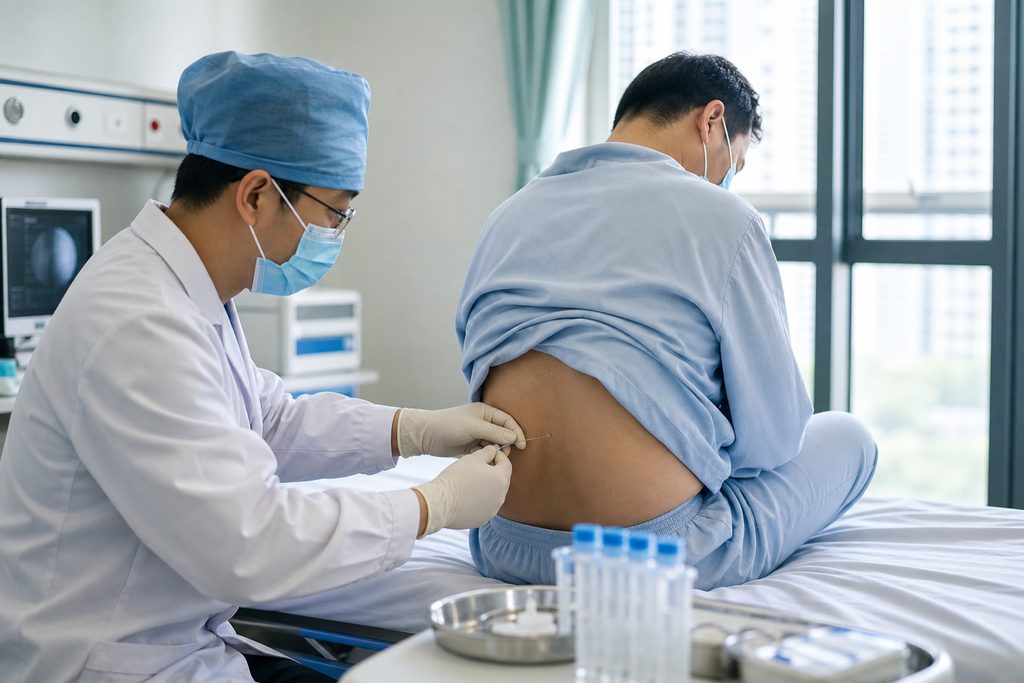
In the United States, a single glaucoma screening visit at a private ophthalmology clinic can bill $150 to $300 before insurance, and patients in the UK often wait 12 to 18 weeks for a routine hospital eye appointment. At a top-tier Chinese hospital, the same tonometry reading — the measurement of pressure inside your eye — typically takes under 15 minutes and costs the equivalent of $5 to $25 out of pocket. That gap is why so many international patients now ask us about the eye pressure test cost China hospitals charge, and whether the quality holds up. It does, and this guide explains exactly how the process works from the moment you land.
How This Actually Works, Step by Step
Here is the real sequence, from your first email to the moment you walk out of the clinic with a printed report.
Step one: you send us what you already have. Old eye exam records, a referral letter, any prior OCT scans or visual field tests. If you have none, that is fine — we note your symptoms instead: blurry vision, halos around lights, a family history of glaucoma, or simply a routine check you have been putting off.
Step two: we match you to a hospital and department. For a straightforward pressure check, any of the 340+ top-ranked hospitals in our database can handle it. For suspected glaucoma, we route you toward a hospital with a strong ophthalmology department — the kind that appears on the Fudan specialist reputation ranking for eye care. You can browse options on our specialist department directory before deciding.
Step three: appointment coordination. Public hospital general clinics in China do not accept overseas pre-booking. You register on the day, in person, and the queue starts early. For international patients we typically coordinate through the hospital’s international or VIP channel, which allows a scheduled slot and English-speaking staff. Coordination starts from $300, and if we cannot secure the appointment shown in your order, that fee is refunded in full.
Step four: the visit itself. A bilingual medical companion meets you at the entrance, handles registration, payment, and queue navigation, and stays in the exam room to interpret. Companion service starts at $300 per day.
Step five: results and follow-up. Most pressure readings are available within minutes. If further testing is needed — corneal thickness measurement, visual field testing, or optic nerve imaging — those are usually done the same day or within 48 hours.
What the Test Measures and Why the Method Matters
Eye pressure, or intraocular pressure (IOP), is the fluid pressure inside your eyeball. Normal range is generally cited as 10 to 21 mmHg, though “normal” varies by corneal thickness and individual anatomy. High pressure is the single biggest modifiable risk factor for glaucoma, which affects roughly 1 in 200 people over 40 and rises sharply with age.
Chinese hospitals use the same four instruments you would find in Germany or the US:
- Goldmann applanation tonometry — the clinical gold standard. A numbing drop, a slit lamp, and a small probe touch the cornea. Takes about two minutes per eye.
- Non-contact “air puff” tonometry — no drops, no contact. Common in screening lines and health checkup packages.
- iCare rebound tonometry — a handheld device, useful for patients who cannot sit at a slit lamp.
- Dynamic contour tonometry — less common, used when corneal thickness skews standard readings.
If you have had LASIK or PRK, tell the technician. Refractive surgery thins the cornea and can make applanation readings artificially low. Top hospitals will compensate by measuring central corneal thickness alongside the pressure reading.
Is the Eye Pressure Test Safe in China?
This is the question we hear most, and the honest answer is yes — with context.
The test itself is about as low-risk as medical procedures get. The main discomfort is the numbing drop, which stings for a few seconds. There is a very small infection risk with contact tonometry, which is why disposable probe covers and single-use fluorescein strips are standard at ranked hospitals. Air-puff tonometry carries essentially no risk at all.
The bigger safety question is not the device — it is the diagnosis behind it. A pressure reading alone does not diagnose glaucoma. Roughly half of people with glaucoma have pressures in the “normal” range, a condition called normal-tension glaucoma. A competent ophthalmologist will combine your IOP with optic nerve appearance, visual field testing, and family history before saying anything definitive.
What It Costs: Real Numbers
Here is where Chinese hospitals separate themselves. The table below shows typical self-pay ranges at public tertiary hospitals versus private international clinics, alongside US benchmarks for comparison.
| Service | China Public Tertiary | China Private International | United States |
|---|---|---|---|
| Single IOP reading (tonometry) | $5–$15 | $30–$80 | $50–$150 |
| Full glaucoma workup (IOP + visual field + OCT) | $80–$180 | $250–$500 | $400–$900 |
| Comprehensive eye exam package | $60–$150 | $200–$450 | $200–$500 |
| Bilingual companion (per day) | from $300 | n/a | |
All figures vary by hospital and case complexity. Private international hospitals such as United Family, Jiahui, and Parkway accept direct insurance billing for many plans; public hospitals require upfront payment with insurance reimbursement handled afterward. You can compare private options on our international hospital page.
A Realistic Timeline
How long does the whole thing take, door to door? Here is what to expect.
| Stage | Typical Duration | Notes |
|---|---|---|
| Initial consultation and hospital matching | 1–3 days | Faster if you send records upfront |
| Appointment coordination | 3–10 days | International channel slots book faster; peak seasons slower |
| S2 visa application | 4–10 business days | Requires hospital invitation letter; varies by consulate |
| Flight and hotel booking | 1–2 weeks | Beijing and Shanghai have the most direct routes |
| Arrival, registration, and the test itself | Half a day | Arrive early; registration queues build from 7:30 a.m. |
| Full workup if glaucoma is suspected | 1–2 additional days | Visual field and OCT often same-day |
| Written report in English | 1–3 days | Request at registration, not afterward |
Total realistic window from first email to results in hand: two to four weeks. If you are already in China on another visa, you can compress this to under a week.
What Can Go Wrong — and What Happens Then
We would rather you hear the failure modes now than discover them at a registration desk.
The queue problem. Walk into a public general clinic without coordination and you may spend three hours to get a five-minute test. This is not a quality issue; it is a volume issue. Top Chinese hospitals see tens of thousands of outpatients daily. The fix is the international channel or a companion who knows the flow.
The language wall. Outside international departments, English is rare. Forms are in Chinese. Technicians give instructions in Chinese. Misunderstanding “look straight ahead and don’t blink” is a real risk. This is the single strongest argument for a bilingual companion.
Appointment slippage. If a senior ophthalmologist is pulled into emergency surgery, your slot may move. It happens everywhere. Our coordination fee is refunded if we cannot secure the appointment shown in your order, but same-day reshuffling at the hospital is outside anyone’s control.
Incomplete records. If you leave without a printed report, getting one later means another trip. Ask for the English report at the time of registration.
Visa timing. Applying too late is the most common self-inflicted delay. The S2 visa is the correct category for short-stay medical treatment, and it requires supporting documents from the hospital. The M visa is for commercial and trade activity and has nothing to do with medical care — if a service tells you otherwise, walk away.
Choosing a Clinic: Beijing, Shanghai, and Beyond
For a routine pressure check, geography matters more than prestige. If you are already in Beijing, a hospital with a strong ophthalmology department near your hotel beats a famous name across the city in rush-hour traffic.
That said, if you are searching for the best eye clinic Beijing glaucoma test options, look for three things: a dedicated glaucoma subspecialty, on-site OCT and visual field equipment, and an international department that issues English reports. Beijing’s top tertiary hospitals concentrate these. Shanghai offers comparable depth, and if you want to book eye pressure test Shanghai services, the private international hospitals there are often easier for first-time visitors because staff speak English natively and insurance billing is direct.
Many patients combine the eye exam with a broader health check. A glaucoma screening package China medical tourism providers offer frequently bundles IOP, visual fields, OCT, and a dilated fundus exam for under $200 at a public tertiary hospital — a fraction of what the same bundle costs in Western markets.
Practical Considerations: Records, Visa, Payment, and Follow-Up
Records. Bring everything. Prior prescriptions, old scans, family history notes. If your records are in English, most international departments can read them. If they are in another language, ask about translation in advance.
Visa. The S2 visa covers short-stay medical treatment and applies to accompanying family members too. Processing typically runs 4 to 10 business days, and requirements change — always confirm current rules with the nearest Chinese embassy or consulate before booking flights.
Payment. Public hospitals require prepayment. Private international hospitals often bill insurance directly. Bring a card that works internationally, and carry some cash for small fees.
Follow-up at home. Glaucoma is a lifelong condition. Whatever the Chinese hospital finds, you need a plan for monitoring after you return. Ask for digital copies of every scan so your home ophthalmologist can compare baseline images.
Language. Even a short visit benefits from interpretation. If you are managing a complex diagnosis, a companion is not a luxury — it is accuracy insurance.
Frequently Asked Questions
At a public tertiary hospital, a single tonometry reading typically runs $5 to $15. A full glaucoma workup with visual field testing and OCT imaging usually falls between $80 and $180. Private international hospitals charge more, roughly $250 to $500 for the same bundle, but offer English-speaking staff and direct insurance billing.
Yes. The procedure is low-risk everywhere it is performed with standard hygiene. Chinese ranked hospitals use the same Goldmann, air-puff, and rebound tonometers found in Western clinics, with disposable covers and single-use drops. The main discomfort is brief stinging from the numbing drop.
Public hospital general clinics do not accept overseas pre-booking — you register in person on the day. International and VIP departments do allow scheduled appointments, and that is the channel we coordinate for foreign patients. Expect three to ten days of lead time depending on the hospital and season.
The S2 visa is the applicable short-stay category for medical treatment and private affairs, and it requires supporting documents from the hospital. Accompanying family members apply under the same category. Requirements vary by consulate, so confirm current rules before booking. The M visa is for commercial activity only.
A single elevated reading is not a diagnosis. Anxiety, caffeine, and breath-holding can all push numbers up. A proper evaluation repeats the measurement and adds corneal thickness, optic nerve imaging, and visual field testing before any conclusion is drawn. If glaucoma is confirmed, treatment options in China are the same as anywhere — drops, laser, or surgery — and costs are substantially lower.
Your Next Step
An eye pressure test is one of the cheapest, fastest, and most useful screenings you can get in China, and the quality at ranked hospitals matches international standards. The complexity is not the test — it is the logistics around it: appointment channels, language, records, and visa timing. China Medical Services helps international patients navigate that layer through written second opinions, video consultations, appointment coordination, and bilingual companionship. We are not a hospital and we do not provide medical advice. If you want to understand your options before booking anything, start with a free consultation at our patient services page — no pressure, just answers.
For more medical information and treatment options in China, visit chinamedservices.com (China Medical Services).
