Full Body Checkup in China: What Surprises People Most
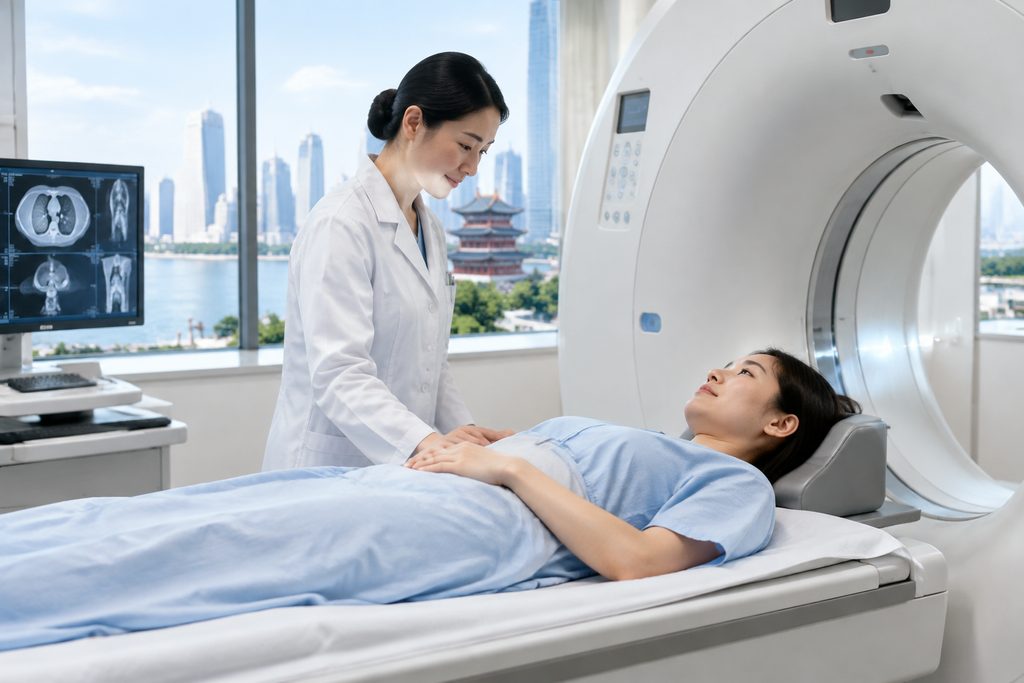
Full Body Checkup in China: What Surprises People Most
A full body checkup is exactly what it sounds like: one coordinated appointment where a hospital runs a broad panel of tests — blood work, imaging, heart and lung function, and often cancer screening — to catch problems before symptoms appear. In China, that same checkup that costs $3,000 to $8,000 in the United States frequently lands between $300 and $1,500. That gap is the first surprise. The full body checkup cost China hospitals charge is not a discount gimmick; it reflects a different system, different volume, and a different philosophy about preventive care.
But cost is only the headline. The bigger surprises are structural. They involve who runs the tests, how fast results come back, what gets scanned, and why walking into a Chinese hospital without help can feel like entering a small city. Understanding those differences before you book is the difference between a smooth, genuinely useful health assessment and a frustrating week you’d rather forget.
This guide walks through the real sequence, the realistic timeline, the honest failure points, and what the numbers actually mean. No hype. Just the mechanics, because that’s what patients ask us about most.
How This Actually Works, Step by Step
Most international patients imagine they’ll pick a hospital, pay online, and show up. The reality is more staged, and the staging protects you.
It starts with your existing records. You send whatever you have — recent blood panels, imaging reports, a list of medications, family history, and the specific worries driving the checkup. A 45-year-old with a father who had colon cancer at 52 needs a different panel than a 30-year-old with no symptoms and no family history. The relevant Chinese specialty reviews those materials and proposes a package matched to your risk profile, not a generic menu.
From there, the standard path looks like this:
- Written review of your records. A specialty team reads your history and recommends which screening modules apply. This is where you avoid paying for tests you don’t need.
- Video consultation (optional but useful). You speak with the medical team directly, explain your goals, and hear their recommendations. For most patients this takes 20 to 40 minutes.
- Appointment coordination. The hospital’s international department or VIP channel books your checkup date. This matters — the general outpatient queue in a top public hospital cannot be reserved from overseas in advance.
- Arrival and the checkup day itself. You arrive, register, and move through the stations. A bilingual companion handles the queueing, payment, wayfinding, and translation.
- Results and interpretation. Reports come back, usually within days, and a physician explains what they mean.
That fourth step is where the surprises live. A top-tier Chinese hospital can see tens of thousands of outpatients in a single day. Signage is in Chinese. Payment windows, lab stations, and imaging floors sit in different wings. Without language support, a checkup that should take half a day can stretch into two.
What Does a Full Body Checkup Include in China — and Why It Surprises People
Here’s the second surprise: Chinese checkup packages tend to be broader than Western “annual physicals.” A Western primary care visit often stops at blood pressure, basic labs, and a conversation. A Chinese executive checkup frequently bundles imaging that American insurers would fight over.
A typical mid-tier package at a top public hospital or private international hospital includes:
| Category | Common Tests |
|---|---|
| Blood work | Complete blood count, liver and kidney function, lipids, fasting glucose, thyroid panel, tumor markers |
| Imaging | Chest CT or X-ray, abdominal ultrasound, carotid ultrasound; some packages include low-dose chest CT as standard |
| Cardiac | Electrocardiogram, echocardiogram, sometimes treadmill stress testing |
| Cancer screening | Depends on age and sex — mammography, cervical screening, colonoscopy, or gastroscopy as indicated |
| Other | Urinalysis, stool analysis, vision and hearing, bone density for older adults |
The gastroscopy and colonoscopy inclusion catches people off guard. In China, endoscopic screening for gastric and esophageal cancer is far more routine, because those cancers are more prevalent here. That’s a genuine clinical difference, not a sales tactic. It also means a Chinese checkup can find things a Western annual physical would miss entirely — and occasionally flag findings that need follow-up you weren’t expecting.
A Realistic Timeline
People underestimate how much of the calendar is consumed by logistics rather than medicine. Here’s a grounded schedule for a patient traveling from abroad.
| Stage | Typical Duration | Notes |
|---|---|---|
| Records review and package proposal | 3–7 days | Depends on how complete your existing reports are |
| Video consultation (if chosen) | 1–2 weeks to schedule | Faster at private international hospitals |
| Appointment confirmation | 1–3 weeks | Top specialists and VIP channels book out further |
| Visa processing (S2) | 1–3 weeks | Requires hospital invitation documents; varies by consulate |
| Travel and arrival | 1–2 days | Build in a rest day before the checkup |
| The checkup itself | Half a day to 2 days | Endoscopy and imaging may be split across days |
| Results and physician review | 2–7 days | Some results same-day; pathology takes longer |
| Follow-up planning | Varies | If something needs treatment, this becomes a new decision point |
Add it up and a straightforward checkup trip runs three to six weeks from first contact to flying home. If you need a biopsy or a specialist consult triggered by a finding, budget more. The waiting steps people forget are document translation and appointment lead time — not the medical procedure itself.
What Can Go Wrong — and What Happens Then
Honest failure modes, because trust is built here and nowhere else.
You can’t book the general outpatient queue from abroad. This is a hard rule at public hospitals. If you show up expecting a reserved slot in the standard queue, you’ll wait. The workaround is the hospital’s international or VIP department, which costs roughly 1.5 to 2 times the standard channel but offers English-speaking staff and reserved appointments.
Results can surface something unexpected. A low-dose CT may find a nodule. A colonoscopy may find a polyp. Sometimes that’s exactly why you came. Sometimes it triggers anxiety and further testing you didn’t plan for. The recourse is a clear follow-up pathway — and if treatment is needed, a separate decision about whether to do it in China or at home.
Language breakdowns cause real errors. Misunderstanding fasting instructions before a blood draw, or which floor to report to, wastes a day. This is the single most common friction point, and it’s entirely avoidable with a bilingual companion.
Payment and insurance friction. Public hospitals require prepayment, and you file for reimbursement afterward. Private international hospitals often bill insurers directly. Know which model you’re in before you arrive.
Is a Full Body Checkup in China Worth It — and How to Judge a Provider
Worth is a personal equation, but the variables are concrete. The cost advantage is real: comparable imaging and lab panels run a fraction of US prices. The breadth advantage is real too. The trade-offs are language, logistics, and follow-up continuity once you’re home.
When evaluating where to go, weigh these factors rather than the brochure photos:
- Hospital tier and specialty depth. The strongest options sit within the top 5% of China’s 35,000+ hospitals, ranked by Fudan and JCI standards. Our directory of top-ranked Chinese hospitals groups them by city so you can see what’s near your travel route.
- International department access. This determines whether you get English support and reserved appointments or join the general queue.
- Package transparency. A provider that won’t itemize what’s included is a provider to skip.
- Follow-up plan. What happens if a finding needs treatment? Who explains it, and in what language?
- Whether the hospital matches your specific risk. A cardiac-focused hospital is the wrong venue for a gastrointestinal screening. Check the relevant specialty rankings before you choose.
For patients weighing a checkup against a larger treatment decision, the same logic applies: get the evaluation first, then decide. That’s how you avoid unnecessary early travel.
Practical Considerations: Records, Visas, Payment, and Follow-Up
Records. Bring everything you have, translated into English or Chinese where possible. Prior imaging is especially valuable because it lets radiologists compare.
Visa. For medical travel to China, the applicable short-stay category is the S2 visa, used for medical treatment and private affairs and subject to the latest embassy or consulate requirements and supporting hospital documents. Stays beyond 180 days fall under S1. Accompanying family members apply under S2 as well. Note that the M visa is for commercial and trade activities only — it is not a medical visa. Approval is never guaranteed, and requirements shift, so confirm current rules with the consulate handling your application.
Payment. Public hospitals require prepayment; private international hospitals frequently offer direct insurance billing. Budget for the checkup itself plus accommodation and transport.
Language. Assume you need support unless you’re fluent in Mandarin. A bilingual medical companion handles registration, queueing, payment, wayfinding, and translation — from $300 per day for a half or full day.
Follow-up at home. Ask for your full reports, including imaging files, in a format your home physician can read. Continuity matters more than the checkup itself.
Frequently Asked Questions
Most packages run from roughly $300 for a basic panel at a public hospital to $1,500 or more for a comprehensive executive package with advanced imaging and endoscopy. Final pricing varies by hospital and case complexity, and private international hospitals sit at the higher end.
The checkup itself usually takes half a day to two days, depending on whether endoscopy or advanced imaging is included. Add two to seven days for complete results, and three to six weeks total if you’re factoring in records review, appointment lead time, and visa processing.
The strongest options are top-tier public hospitals with dedicated international departments, plus JCI-accredited private international hospitals that offer English-speaking staff and direct insurance billing. The right choice depends on your risk profile and whether you need specialty depth.
For many patients, yes — the cost and breadth advantages are genuine. The trade-offs are language barriers, logistics, and follow-up continuity. It’s worth it when you plan the logistics properly rather than improvising on arrival.
You cannot reserve a slot in a public hospital’s general outpatient queue from overseas. You can secure a reserved appointment through the hospital’s international or VIP department, which is the standard route for international patients and typically costs 1.5 to 2 times the standard channel.
Your Next Step
The core message is simple: a full body checkup in China can deliver more screening for less money than most Western equivalents, but the value depends entirely on matching the right hospital and package to your actual risk — and on having language and logistics handled before you land. The surprises aren’t the prices. They’re the breadth, the scale, and the planning required.
China Medical Services connects international patients with top-ranked Chinese hospitals and handles the coordination around them. We are not a hospital and we do not provide medical care or promise clinical outcomes. What we do is review your records with the relevant specialty, arrange written second opinions or video consultations, coordinate appointments through official international departments, and provide bilingual support on the ground. A low-pressure first step is a free consultation — tell us what you’re looking for, and we’ll tell you honestly whether China makes sense for your situation. You can start at our patient consultation page.
This article is for general information only and is not medical advice. A full body checkup is a screening tool, not a diagnosis. Always consult a qualified physician about your individual health, and confirm current visa requirements with the relevant embassy or consulate before travel.
For more medical information and treatment options in China, visit chinamedservices.com (China Medical Services).
