Gastric Bypass Price China: 2026 Costs, Safety, and How to Book
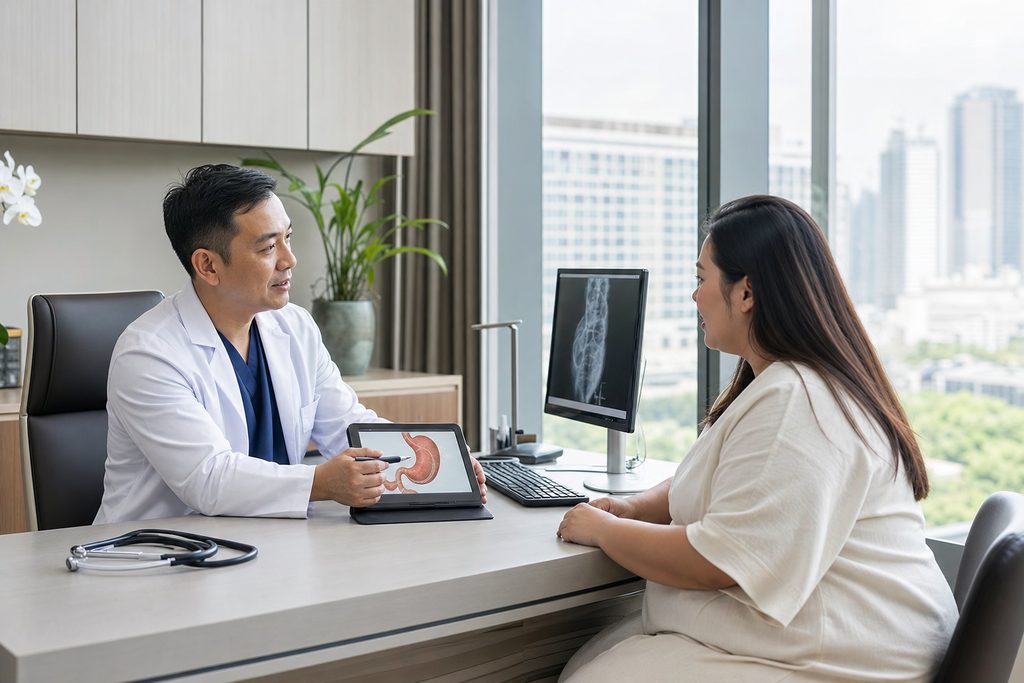
Have you been quoted $25,000, $35,000, or more for gastric bypass at home and wondered whether flying halfway around the world could cut that bill by two-thirds? The short answer is yes — the gastric bypass price China currently runs between $8,000 and $22,000 depending on hospital tier, surgeon seniority, and whether you go through a public hospital’s international department or a private international hospital. That range covers the procedure itself plus standard hospital stay, but it rarely includes flights, accommodation, or post-operative follow-up once you return home. And the real question most patients should be asking is not just “how much is bariatric surgery in China” but whether the total cost of travel, time away from work, and follow-up logistics still makes the trip worthwhile.
Gastric Bypass Price China: The Short Answer
For a standard Roux-en-Y gastric bypass at a reputable Chinese hospital, expect to pay between $8,000 and $22,000. At a top-tier public hospital’s international VIP department in Beijing or Shanghai, the typical range is $12,000 to $18,000. At a JCI-accredited private international hospital such as United Family or Jiahui, plan for $18,000 to $22,000 or slightly higher. The same procedure in the United States averages $23,000 to $35,000 before insurance, and in Western Europe it commonly lands between $15,000 and $25,000. So the savings are real — often 40% to 60% — but they shrink once you add round-trip flights, a two-to-three-week stay, and the cost of a bilingual medical companion if you do not speak Mandarin.
Is gastric bypass safe in China? The honest answer is that safety depends almost entirely on which hospital you choose. China performs a very high volume of bariatric procedures annually, and its top metabolic surgery centers report complication rates broadly comparable to Western benchmarks — major complication rates in the 2% to 5% range for experienced teams. But China’s 35,000+ hospitals vary enormously in quality. The top 5% — roughly 340+ top-ranked hospitals across 37 cities — are where international patients should focus. Those are the institutions ranked by the Fudan University hospital rankings or holding JCI accreditation. At those centers, surgical teams often perform several hundred bariatric procedures per year, which is the single strongest predictor of good outcomes.
Who This Is Right For — and Who It Isn’t
Gastric bypass is major surgery. It permanently reroutes your digestive tract. It is not a shortcut for losing 20 pounds before summer. The patients who benefit most are those with a body mass index (BMI) of 40 or higher, or a BMI of 35 or higher with serious obesity-related conditions such as type 2 diabetes, obstructive sleep apnea, or hypertension. You should also have tried — genuinely tried — medically supervised weight loss without lasting success, and you should be prepared for lifelong vitamin supplementation and dietary changes.
Who should think twice before booking gastric bypass surgery China?
- Anyone with a BMI below 35 and no major metabolic disease. The risks outweigh the benefits.
- Patients with untreated or unstable psychiatric conditions, active substance abuse, or uncontrolled eating disorders.
- People who cannot commit to the required follow-up: blood work every few months for the first year, annual endoscopy, lifelong supplementation.
- Anyone who cannot tolerate a 2-to-3-week stay abroad for surgery plus initial recovery before flying home.
- Patients with complex prior abdominal surgeries, severe liver disease, or conditions that make general anesthesia high-risk without a local care team that knows your full history.
Being honest about who should not do this is what makes the rest of this guide credible. If you fall into the “should not” list, no price discount changes the math.
The Options, Compared
Not all bariatric surgery is the same, and “cheap weight loss surgery China” means different things at different hospital tiers. Here is a realistic comparison of what you are actually choosing between.
| Option | Typical Cost (USD) | Surgeon Volume | English Support | Insurance Billing |
|---|---|---|---|---|
| Public hospital, standard outpatient route | $8,000–$12,000 | High (300–600 cases/yr) | Minimal | Self-pay, claim later |
| Public hospital, international VIP department | $12,000–$18,000 | High (300–600 cases/yr) | Moderate to good | Self-pay, claim later |
| Private international hospital (JCI) | $18,000–$22,000 | Moderate (100–300 cases/yr) | Excellent | Direct billing common |
| United States (for comparison) | $23,000–$35,000 | Variable | Native | Insurance-dependent |
| Western Europe (for comparison) | $15,000–$25,000 | Variable | Native | Insurance-dependent |
The public hospital standard route is cheapest, but it is also the hardest for a foreigner to navigate without Chinese language skills. You cannot pre-book an outpatient slot from overseas at most public hospitals — you must show up, queue, register, and see a doctor before any surgery is scheduled. The international VIP department solves that by offering advance coordination and English-speaking staff, at roughly 1.5 to 2 times the standard price. Private international hospitals are the most expensive in China but feel closest to a Western hospital experience, with direct insurance billing and fully English-speaking teams.
What “Gastric Bypass Price China” Actually Includes — and What It Doesn’t
This is the section that saves you from a nasty surprise. When a Chinese hospital quotes you $12,000 for gastric bypass, that figure typically covers the surgeon’s fee, anesthesiology, operating room time, standard hospital bed for 3 to 5 nights, basic pre-operative testing, and routine post-operative medications during your stay. It does not include your flight. It does not include your hotel or serviced apartment before and after admission. It does not include a bilingual medical companion if you need one — those services run from $300 per day. And it almost never includes the cost of treating a complication, should one occur, or extended ICU care.
Some hospitals offer bariatric surgery packages Shanghai that bundle the surgery, hospital stay, airport pickup, and a translator for a single price. Those packages are convenient, but read the fine print. Does the package include the surgeon you actually want, or whichever surgeon is available that week? Does it cover pre-operative endoscopy and abdominal ultrasound, or are those billed separately? Does it include one night of ICU if needed, or is ICU billed at a daily rate that can add $1,500 to $3,000 per day? A package is only a good deal if it itemizes what is inside.
How Long You’ll Need to Stay
Plan for a minimum of two weeks in China, and three is more comfortable. A typical timeline looks like this:
- Days 1–3: Arrival, pre-operative consultations, blood work, endoscopy, abdominal imaging, anesthesia clearance.
- Day 4 or 5: Surgery. Laparoscopic Roux-en-Y gastric bypass usually takes 2 to 3 hours.
- Days 5–8: Hospital recovery. Most patients stay 3 to 5 nights. You will start on clear liquids, then move to full liquids before discharge.
- Days 9–14: Hotel recovery near the hospital. A follow-up visit to check incisions and adjust the diet plan.
- Day 14–21: Fly home. Most surgeons clear patients for long-haul flights 10 to 14 days after uncomplicated surgery.
Do not book a return flight for day 8. If you develop a leak, an infection, or a bowel obstruction, you want to still be in the same city as your surgeon. The cost of changing a flight is trivial compared to the cost of a medical evacuation.
Practical Considerations: Records, Visas, Payment, and Follow-Up
China does not have a dedicated “medical visa.” For medical treatment, foreign nationals typically apply for an S2 visa, which covers short-term private affairs including medical treatment, with a note explaining the purpose of the visit. Accompanying family members also apply for S2 visas. If your stay will exceed 180 days, the S1 category applies. Requirements vary by embassy and consulate, and you will need supporting documents from the Chinese hospital — usually an invitation letter or treatment confirmation. Our team helps patients assemble these documents, but approval is always at the discretion of the visa officer.
Payment is another practical hurdle. Chinese public hospitals require pre-payment, typically a deposit of 50% to 100% of the estimated cost before admission. Most accept international credit cards at their international departments, but card limits and foreign transaction fees can complicate things. Bank transfers are common for larger deposits. Private international hospitals are more flexible and often bill insurance directly. If you have insurance, confirm in writing before you travel whether bariatric surgery abroad is covered, what documentation you need for reimbursement, and whether the hospital’s invoice format meets your insurer’s requirements.
Language is the issue most patients underestimate. Even at top hospitals, the standard wards operate almost entirely in Mandarin. Nurses may not speak English. Dietary instructions, discharge paperwork, and pharmacy labels will be in Chinese. A bilingual medical companion does not just translate — they handle registration queues, payment windows, prescription pickup, and communication with the nursing station. For a surgery as serious as gastric bypass, that support is not a luxury.
Follow-up after you return home is the part nobody plans for. You will need blood work at 3, 6, and 12 months post-op to monitor vitamin levels, iron, calcium, and protein. You will need an endoscopy at 1 year. Your local doctor may be willing to order these tests, but they may not be familiar with the specific post-bypass protocols your Chinese surgeon uses. Ask the hospital before you leave whether they offer remote follow-up consultations. Many international departments do — video consultations typically run $100 to $300, and a written second opinion from a top specialist costs $300 to $500. Budget $500 to $1,000 for first-year follow-up, wherever it happens.
One caution that matters: if a hospital or agent quotes you a gastric bypass price China that seems dramatically lower than $8,000 — say $4,000 or $5,000 — treat it with suspicion. The price may exclude the surgeon’s fee, the anesthesiologist, the hospital bed, or all three. Or the facility may not be a hospital at all, but a clinic without ICU capability. Bariatric surgery requires a full hospital with critical care backup. There is no safe version of this procedure at a bargain-basement price.
Frequently Asked Questions
At China’s top-ranked hospitals — the 340+ institutions in the Fudan rankings or holding JCI accreditation — major complication rates for bariatric surgery are broadly comparable to Western centers, typically in the 2% to 5% range. The key variable is surgeon and hospital volume. A team performing 300+ bypasses per year will have better outcomes than one performing 30. Ask any hospital you are considering how many gastric bypass procedures their surgical team performed last year, and what their leak rate and 30-day readmission rate are. If they will not answer, choose a different hospital.
Lower labor costs, lower facility overhead, and high patient volumes. Chinese surgeons at top centers operate on far more patients per week than their Western counterparts, which drives down per-case costs without necessarily compromising quality — at the right hospitals. The cost difference is not because the equipment is inferior; many top Chinese hospitals use the same laparoscopic platforms and stapling devices used in the US and Europe. You are paying less for labor and overhead, not for a different standard of care. But that equation only holds at top-tier institutions. The bottom 90% of Chinese hospitals are not where you want this surgery.
Not through the standard public hospital outpatient route. Public hospitals in China generally require an in-person consultation before any surgery is scheduled. What you can do — and what our team does for patients — is coordinate through a hospital’s international department or VIP channel, which allows advance scheduling of consultations, pre-operative testing, and surgery dates. This is not a guarantee of a specific surgeon or exact date, but it is the legitimate way to lock in a plan before you fly. Any agent promising you a confirmed surgery date before you have even had a consultation is not being honest about how Chinese hospitals operate.
This is the hardest question, and you deserve a straight answer. If you develop a leak, stricture, internal hernia, or bowel obstruction after returning home, your local healthcare system will need to manage it. Your Chinese surgeon can provide records and speak with your local doctor, but they cannot operate on you from 7,000 miles away. Some international hospital departments offer remote video follow-up, but emergency complications require local care. Before you book surgery abroad, ask your local primary care doctor or a local bariatric surgeon whether they are willing to manage post-operative complications from a surgery performed overseas. Many will say no. That answer should factor into your decision.
If your priority is surgeon volume and you are comfortable with some language friction, a public hospital’s international department gives you access to China’s highest-volume bariatric surgeons at a lower price than private hospitals. If your priority is a Western-style experience, direct insurance billing, and fully English-speaking staff, a private international hospital like United Family or Jiahui is worth the premium. There is no universally right answer. A patient with complex medical history and anxiety about language barriers may be better served by a private hospital. A patient whose only concern is surgical volume and who has a bilingual companion may do perfectly well at a public hospital’s international department. Both are legitimate choices — the mistake is choosing based on price alone.
Your Next Step
Gastric bypass in China is not a decision to make from a spreadsheet alone. The price is attractive — $8,000 to $22,000 versus $23,000 to $35,000 in the US — but the real value depends on choosing the right hospital, understanding what the quote includes, and planning for follow-up before you ever board a plane. Our team at China Medical Services helps international patients evaluate bariatric surgery options across China’s top-ranked hospitals, coordinate consultations through international departments, arrange bilingual medical companions, and prepare visa documentation. We are not a hospital, and we do not provide medical advice or diagnoses. What we do is help you get clear, honest answers before you commit. If you are seriously considering this, start with a conversation — no pressure, no obligation, just practical guidance on whether this path makes sense for your situation. Request a free consultation and we will help you think it through.
For more medical information and treatment options in China, visit chinamedservices.com (China Medical Services).
