Can GERD Be Cured With Surgery? Costs, Recovery, and Options in China
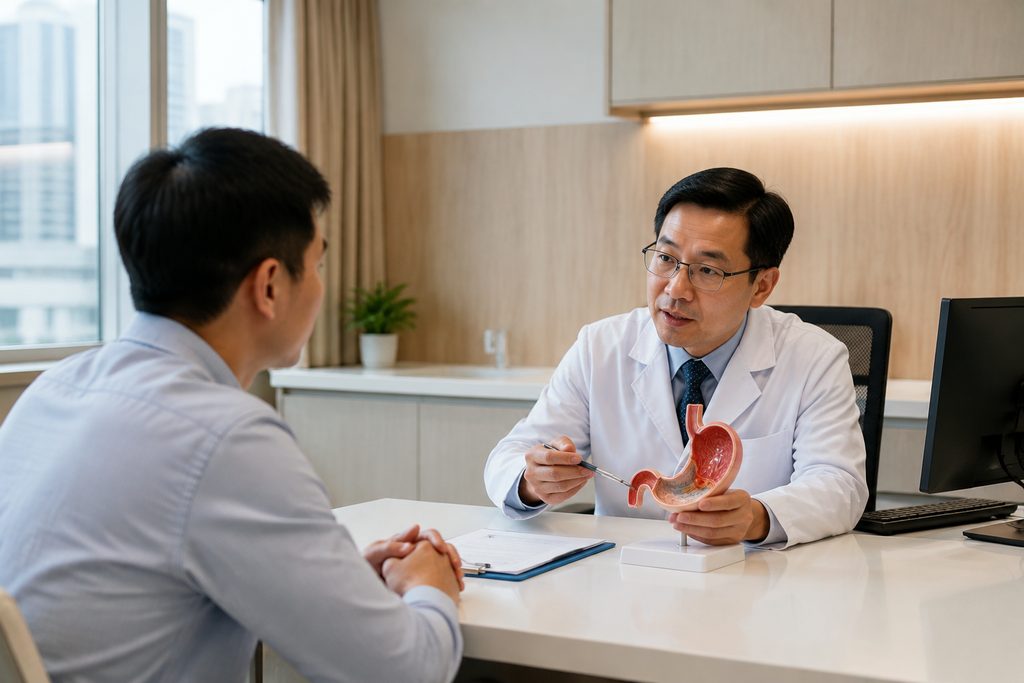
Can GERD Be Cured With Surgery? Understanding GERD Surgery Cost China and Long-Term Outcomes
Roughly 20% of adults in Western countries experience gastroesophageal reflux disease (GERD) weekly, and for many, proton pump inhibitors (PPIs) become a lifelong dependency rather than a cure. When medication fails or side effects mount, surgery emerges as the only path to anatomical correction. The question patients search for is blunt: can GERD be cured with surgery? The short answer is yes — for carefully selected patients, anti-reflux surgery addresses the mechanical defect at the lower esophageal sphincter, offering durable relief that medication cannot. What surprises many patients is the GERD surgery cost China — typically $8,000 to $22,000 at top-tier public and private international hospitals, compared to $25,000 to $60,000 in the United States for the same laparoscopic Nissen fundoplication. That gap is not a quality compromise; it reflects structural economics we will unpack below.
Key Takeaways
- Laparoscopic Nissen fundoplication resolves GERD symptoms in approximately 85–90% of properly selected patients at 5-year follow-up, according to data from the Society of American Gastrointestinal and Endoscopic Surgeons (SAGES).
- The GERD surgery cost China typically runs $8,000–$22,000 at Fudan-ranked public hospitals or JCI-accredited private international facilities — roughly one-third to one-half of US pricing.
- Not everyone is a candidate: surgery works best for patients with documented acid reflux, a mechanically defective sphincter, and symptoms that respond at least partially to PPIs. Poor candidates include those with functional heartburn or major esophageal motility disorders.
- Recovery follows a staged diet protocol — 2 weeks of liquids, 2 weeks of soft foods — before returning to normal eating around week 5. Most patients resume desk work within 2–3 weeks.
The Problem: Medication Masks the Defect, It Does Not Fix It
According to a 2023 analysis published in Gut, up to 40% of patients on long-term PPI therapy report breakthrough symptoms despite dose escalation. That is not a small minority. For these patients, the underlying problem is mechanical: the lower esophageal sphincter (LES) — the valve that separates the stomach from the esophagus — has lost its competence. Acid and bile reflux upward, eroding esophageal mucosa, fueling chronic cough, regurgitation, dental erosion, and in some cases progression toward Barrett’s esophagus. PPIs reduce acid production but do nothing to stop reflux itself. The valve still leaks. The stomach contents still wash upward. Only the acidity is diluted.
This is why the question “can acid reflux be cured permanently with surgery” keeps surfacing. Patients sense that swallowing a pill every morning for thirty years is not treatment — it is management. And management has consequences: long-term PPI use has been associated in observational studies with increased risks of kidney disease, bone fractures, vitamin B12 deficiency, and enteric infections. None of these associations prove causation, but they add weight to the argument that anatomical correction deserves serious consideration when symptoms are refractory or when patients simply do not want a lifetime of medication.
Why Surgery Delivers Results When Medication Cannot
The Mechanical Fix: Restoring the Valve
Nissen fundoplication — the gold-standard anti-reflux operation — works by wrapping the upper portion of the stomach (the fundus) around the lower esophagus to recreate a functional valve. The wrap reinforces the LES, increasing resting pressure and preventing reflux events. A 2021 systematic review in Annals of Surgery pooled data from 32 studies and found that 88% of patients reported satisfaction with symptom control at 5 years post-fundoplication, with 85% remaining off daily PPI therapy. Those are structural outcomes. The valve is repaired. The reflux stops.
Partial fundoplication variants — Toupet (270-degree wrap) and Dor (anterior 180-degree wrap) — exist for patients with weak esophageal motility who cannot tolerate a full 360-degree wrap. The choice between Nissen and Toupet depends on preoperative manometry results.
Volume and Technique at Chinese Centers
China’s top-tier hospitals operate at volumes that are hard to match elsewhere. A single high-volume GI surgery department at a hospital like Zhongshan Hospital Fudan University in Shanghai may perform several hundred anti-reflux procedures annually, concentrated among a handful of senior surgeons. That repetition matters. SAGES guidelines note that surgeon experience — specifically, having performed more than 25 fundoplications — correlates with lower complication rates and fewer reoperations. At China’s Fudan-ranked GI surgery centers, senior surgeons routinely exceed that threshold many times over.
This is not a claim about magic. It is a claim about repetition. Surgical skill in laparoscopy improves with case volume, and Chinese public hospitals — some seeing over 10,000 outpatient visits daily across all departments — generate case volumes that Western centers cannot approach.
Why the Cost Gap Is Structural, Not Qualitative
The GERD surgery cost China is lower for reasons that have nothing to do with lower quality. Labor costs for operating room staff, anesthesiologists, and nursing care are substantially lower in China than in the US or Western Europe. Hospital infrastructure is often publicly subsidized, keeping facility fees down. Device costs — laparoscopic instruments, mesh, staplers — are similar globally, but the human capital component is cheaper. The result: a laparoscopic Nissen fundoplication that bills $35,000 in a US hospital might bill $12,000 at a top Shanghai public hospital international department. Same operation. Same laparoscopic approach. Same 2–3 day hospital stay.
That said, patients should understand that the international department or VIP channel at Chinese public hospitals typically charges 1.5 to 2 times the standard local rate. That premium buys English-speaking coordination, faster scheduling, and private or semi-private rooms. Even with that premium, the total cost remains a fraction of Western pricing. For patients seeking medical tourism packages for GERD surgery abroad, the arithmetic is compelling — but only if the clinical fit is right first.
Are You a Candidate? The Preoperative Workup That Determines Success
Surgery fails when it is offered to the wrong patient. The most common reason for poor outcomes after fundoplication is not surgical error — it is patient selection. A proper preoperative workup includes four components, and skipping any of them is a red flag.
First, upper endoscopy documents the extent of esophageal damage: erosive esophagitis, hiatal hernia size, and whether Barrett’s esophagus is present. Second, 24-hour pH monitoring (or 48-hour Bravo capsule) objectively confirms that acid reflux is actually occurring. This matters because a subset of patients with typical GERD symptoms have normal acid exposure — their problem is functional heartburn or esophageal hypersensitivity, not reflux. Fundoplication in those patients fails more often than it succeeds. Third, high-resolution esophageal manometry rules out major motility disorders like achalasia, which can mimic GERD symptoms but requires entirely different treatment. Fourth, a barium swallow or CT may delineate a large hiatal hernia that needs repair at the same time.
Who is the ideal candidate? Someone with documented acid reflux, a defective LES on manometry, symptoms that respond at least partially to PPIs, and no major esophageal motility disorder. Who should avoid surgery? Patients with functional heartburn, those with significant gastroparesis, and those whose symptoms are driven primarily by non-acid reflux that pH monitoring does not capture. This is not a procedure to rush into.
What Recovery Actually Looks Like: Week by Week
Patients asking how long is recovery from GERD surgery want a concrete timeline, not vague reassurance. Here it is, based on standard postoperative protocols at high-volume centers.
Days 0–2: Hospital stay. Laparoscopic fundoplication typically requires 2–3 nights. Pain is managed with oral analgesics; most patients walk the evening of surgery. A swallow study may be done on day 1 to confirm the wrap is not too tight.
Weeks 1–2: Liquid diet only. This is the hardest phase. The wrap is swollen, and swallowing solid food is impossible. Patients consume protein shakes, broths, thin soups, and water. Some dysphagia — the sensation of food sticking — is expected and usually resolves as swelling subsides. And yes, this phase is frustrating. Knowing it is temporary helps.
Weeks 3–4: Soft diet. Scrambled eggs, mashed potatoes, well-cooked pasta, ground meats. No bread, no raw vegetables, no steak. The wrap is still healing. Carbonated beverages are permanently discouraged — the gas distends the stomach and can loosen the wrap over time.
Weeks 5–8: Gradual return to normal foods. Most patients tolerate a regular diet by week 6, though they eat smaller, slower meals. Desk work resumes at 2–3 weeks; physical labor or heavy lifting waits until week 6.
Months 3–6: Full activity. The wrap has settled. Most patients are off all reflux medication. Gas-bloat syndrome — the inability to burp or vomit easily — affects roughly 10–20% of patients and usually improves over the first year.
Practical tip: If you are flying internationally for surgery, plan to stay in-country for at least 10–14 days post-discharge before flying home. The cabin pressure changes and prolonged sitting are manageable, but you want surgical follow-up available locally if dysphagia worsens.
Choosing Where to Have Surgery: Public vs. Private International Hospitals in China
Two distinct pathways exist for foreign patients seeking GERD surgery in China, and the choice affects cost, language support, and scheduling. Neither is universally better — they serve different priorities.
| Factor | Public Hospital International Department | Private International Hospital (JCI) |
|---|---|---|
| Typical GERD surgery cost | $8,000–$16,000 | $15,000–$22,000 |
| Surgeon seniority | High — Fudan-ranked department chiefs | High — often former public hospital senior surgeons |
| English support | Dedicated international staff; variable bedside nursing English | Fully English-speaking environment |
| Insurance | Prepayment required; patient seeks reimbursement | Direct billing with many international insurers |
| Wait time for surgery | 2–6 weeks after in-person consultation | 1–3 weeks after consultation |
| Room type | Private or semi-private | Private |
For patients specifically searching for the best hospital for GERD surgery Shanghai, the answer depends on what “best” means to them. Zhongshan Hospital Fudan University, Ruijin Hospital, and Huashan Hospital all have GI surgery departments ranked among China’s top 10 in the Fudan specialty reputation rankings. Their international departments handle foreign patients routinely. On the private side, Jiahui International Hospital and United Family Shanghai offer JCI-accredited surgical programs with Western-style workflows and direct insurance billing. A patient who wants the lowest possible cost with a top academic surgeon will lean public international. A patient who wants seamless English communication and insurance simplicity will lean private. Both are defensible choices.
Practical Considerations: Documentation, Visa, and Payment for GERD Surgery in China
If you are considering traveling to China for anti-reflux surgery, the logistics are manageable but specific. You will need your complete medical records: endoscopy reports with images, pH monitoring results, manometry tracings, and a letter from your referring gastroenterologist summarizing your medication history and treatment failures. These documents are reviewed before any surgical plan is confirmed. Without objective pH and manometry data, no responsible Chinese surgical team will schedule a fundoplication — and you should be wary of any provider that would.
Visa-wise, foreign patients traveling to China for medical treatment apply for an S2 visa, which covers short-term private affairs including medical treatment. Accompanying family members also apply for S2 visas. The hospital’s international department provides a treatment confirmation letter and appointment documentation to support the application. Processing times vary by embassy, but 2–4 weeks is a realistic planning window. Note that the M visa is for commercial and trade activities — it is not the correct category for medical travel.
Payment at Chinese public hospitals is prepaid: you deposit an estimated treatment amount at admission, and the hospital draws down from that balance. Any surplus is refunded at discharge. Private international hospitals may bill your insurer directly if they have a direct-billing agreement. If you are paying out of pocket with later reimbursement, keep every receipt, discharge summary, and itemized invoice — international insurers typically require translated and itemized documentation.
Language is the single biggest friction point in Chinese public hospitals. Even in international departments, bedside nursing staff may have limited English. A bilingual coordinator who handles registration, payment, pharmacy runs, and interpretation during ward rounds removes most of that friction. This is not a luxury; it is the difference between a smooth admission and a confusing one.
Frequently Asked Questions
For patients with documented acid reflux and a mechanically defective lower esophageal sphincter, laparoscopic fundoplication provides durable symptom resolution in roughly 85–90% of cases at 5 years. “Permanent” is a strong word — the wrap can loosen over a decade or more, and a small percentage of patients require reoperation. But the majority of well-selected patients stop all reflux medication and remain symptom-free for many years.
Expect 2 weeks on liquids, 2 weeks on soft foods, and a return to normal eating around week 5–6. Most patients return to desk work in 2–3 weeks and resume full physical activity by 3 months. The first two weeks are the most challenging due to the liquid diet and expected mild dysphagia from swelling.
At public hospital international departments, expect $8,000 to $16,000 for a laparoscopic Nissen fundoplication, including surgeon fees, anesthesia, hospital stay, and operating room costs. Private international hospitals run $15,000 to $22,000. Preoperative workup (endoscopy, manometry, pH monitoring) may add $1,500 to $3,000 if not already completed at home. Final pricing always varies by hospital and case complexity.
Serious complications — wrap migration, persistent severe dysphagia, recurrent hernia — occur in a small minority of cases. Before you leave China, obtain the surgeon’s contact information, a complete operative report, and a discharge summary in English. Your local gastroenterologist or surgeon can manage most postoperative issues using those records. For complex reoperations, patients sometimes return to the original surgical team, but this is uncommon.
No reputable Chinese surgical team will schedule surgery without reviewing your records and, in most cases, conducting a video consultation first. The standard pathway is: submit records for written review, have a video consultation with the surgical team, then travel for an in-person preoperative evaluation and surgery. This protects you from traveling halfway around the world only to learn you are not a candidate.
Your Next Step
Surgery for GERD is a serious decision, and the right preparation matters more than the right destination. If you are considering medical tourism packages for GERD surgery abroad, start with your own medical data — endoscopy, pH monitoring, manometry — and get an honest assessment of whether you are a candidate. Our team at China Medical Services helps international patients connect with Fudan-ranked GI surgery departments and JCI-accredited private hospitals across 37 cities, coordinating record review, video consultations, and on-the-ground logistics. We are not a hospital and we do not provide diagnoses; we handle the coordination so you can focus on the decision itself. When you are ready to explore whether surgery in China makes sense for your case, request a free consultation and we will help you map the path forward.
For more medical information and treatment options in China, visit chinamedservices.com (China Medical Services).
