Guangdong Provincial People’s Hospital Urology: A Guide for International Patients
Key Takeaways
- Guangdong Provincial People’s Hospital (GDPH) is a top-tier public hospital in Guangzhou, ranked among the best in South China for urology, with a department handling over 100,000 outpatient visits annually.
- Urology procedures at GDPH typically cost 60-80% less than comparable care in the United States or Western Europe, even when using the hospital’s international VIP channel.
- Foreign patients cannot book surgery remotely. A face-to-face outpatient consultation is mandatory before any procedure can be scheduled, regardless of who coordinates your care.
- Language barriers and hospital navigation are the biggest practical hurdles. Plan for a bilingual companion or hospital international department support, not just a translated medical report.
The Problem: Urology Care Costs and Wait Times Are Crushing Patients in the West
Have you ever looked at a hospital bill for a kidney stone removal or a prostate procedure and felt genuinely sick? You are not alone. In the United States, a routine ureteroscopy with laser lithotripsy for a kidney stone costs between $15,000 and $30,000 without insurance. Even with coverage, out-of-pocket maximums can leave patients owing $8,000 or more. In the UK, NHS waiting times for non-urgent urology referrals now routinely exceed 18 weeks, with some regions reporting waits of over a year for procedures like transurethral resection of the prostate (TURP).
For uninsured patients, underinsured patients, or anyone facing a months-long queue while in pain, the status quo is unacceptable. A patient with a 7mm ureteral stone does not have the luxury of waiting six months. The pain is acute. The risk of infection, kidney damage, or emergency surgery increases with every passing week. And yet, the systems in many Western countries force exactly that choice: wait in agony or pay a crippling bill.
What if the alternative was not a compromise on quality, but a different economic and operational model entirely?
Why Guangdong Provincial People’s Hospital Urology Delivers Results
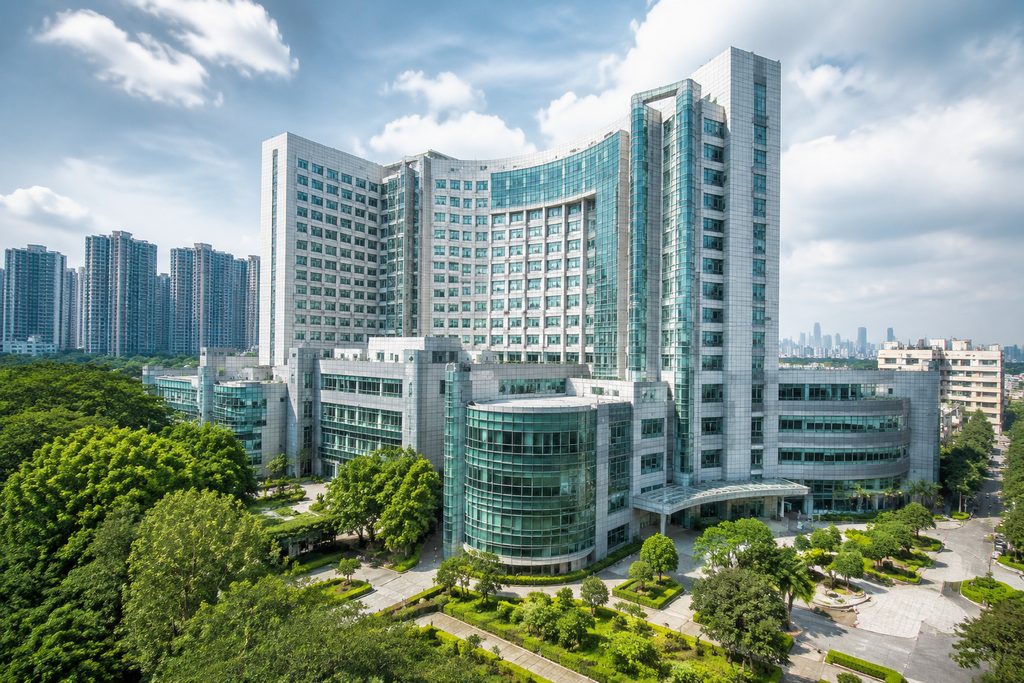
Guangdong Provincial People’s Hospital (GDPH), located in the heart of Guangzhou, is not a small community clinic. It is a massive, academically affiliated Grade 3A hospital — the highest classification in China’s hospital system — with a urology department that functions at a scale most Western hospitals cannot match. The department is recognized in the Fudan University Hospital Rankings, China’s most authoritative hospital evaluation system, as one of the top urology programs in South China. For international patients weighing the best urology hospital China for foreigners, GDPH sits firmly in the conversation alongside Beijing and Shanghai institutions.
Clinical Volume Drives Surgical Repetition
Surgical outcomes correlate strongly with repetition. A surgeon who performs 300 prostatectomies a year simply has more muscle memory than one who performs 40. GDPH’s urology team operates at this high-volume level. The department performs thousands of procedures annually across the full spectrum: percutaneous nephrolithotomy (PCNL) for complex kidney stones, holmium laser enucleation of the prostate (HoLEP), laparoscopic and robot-assisted radical prostatectomy, and microsurgical varicocelectomy.
Compare that to a typical US community hospital, where a urologist might perform 30-50 stone procedures a year. At GDPH, individual senior surgeons routinely complete 200 or more stone surgeries annually. That repetition is not a marketing claim. It is a structural feature of how Chinese public hospitals are organized — they centralize complex cases into a few high-capacity centers rather than spreading them thinly across dozens of small facilities.
Technology Without the Premium Price Tag
GDPH has invested heavily in urological technology. The hospital operates da Vinci robotic surgical systems, advanced flexible ureteroscopes, and laser platforms for stone fragmentation. The infrastructure is modern and well-maintained. But here is the key difference: the cost structure of a Chinese public hospital does not carry the same administrative overhead, malpractice insurance premiums, or profit-margin expectations as a US hospital. That means the same robotic prostatectomy that costs $40,000 in the US can be performed at GDPH for a fraction of that amount.
Is urology surgery safe in China? The honest answer is that safety depends on hospital selection. At a top-tier Grade 3A hospital like GDPH, infection control protocols, surgical standards, and post-operative monitoring follow national guidelines that align with international norms. The hospital has a dedicated international department accustomed to treating foreign patients. But not every hospital in China meets this standard. Choosing a Fudan-ranked, academically affiliated institution is the single most important safety decision a patient can make.
Cost Advantage Without Quality Compromise
The Guangdong Provincial People’s Hospital urology price structure reflects China’s broader healthcare economics. Labor costs are lower. Hospital construction and equipment costs are amortized differently. Administrative overhead is leaner. None of these factors reduce clinical quality — they reduce the bill.
For a foreign patient, the realistic price range for common urology procedures at GDPH, including hospital fees, surgeon fees, and basic consumables, looks like this:
| Procedure | GDPH Estimated Cost (USD) | US Average Cost (USD) |
|---|---|---|
| Ureteroscopy with laser lithotripsy (kidney stone) | $3,000 – $6,000 | $15,000 – $30,000 |
| Percutaneous nephrolithotomy (PCNL) | $5,000 – $9,000 | $25,000 – $50,000 |
| Transurethral resection of prostate (TURP) | $4,000 – $7,000 | $15,000 – $30,000 |
| Laparoscopic radical prostatectomy | $8,000 – $15,000 | $35,000 – $60,000 |
| Robot-assisted radical prostatectomy | $15,000 – $22,000 | $40,000 – $80,000 |
These figures are estimates based on published hospital price lists and patient-reported costs. They vary by hospital and case complexity. The VIP international channel at GDPH typically charges 1.5 to 2 times the standard public rate, which still leaves most procedures at 20-40% of US prices. If you are asking how much does kidney stone removal cost in Guangzhou, the answer is: dramatically less than in the West, even with premium service.
How the Process Actually Works: From Inquiry to Surgery
Many patients assume they can email a hospital, book a surgery date, and fly over. That is not how Chinese public hospitals work. The process is sequential, and skipping steps is impossible.
You start with a remote consultation. GDPH’s international department can review your existing medical records — CT scans, ultrasound reports, lab results — and provide a written second opinion. This costs between $300 and $500 and typically takes 5-10 business days. The opinion will tell you whether your case is suitable for treatment at GDPH and what the recommended approach would be.
Next comes the in-person outpatient visit. This is non-negotiable. Chinese law and hospital policy require a face-to-face consultation before any surgical procedure can be scheduled. You fly to Guangzhou, attend an outpatient appointment with a urologist, and only then can a surgery date be set. The gap between outpatient visit and surgery is usually 1-3 weeks for urgent cases and 2-8 weeks for elective procedures.
After surgery, you remain in Guangzhou for post-operative monitoring. For a routine stone procedure, that means 3-7 days in the hospital plus another 5-10 days in a nearby hotel before flying home. For a prostatectomy, expect 7-10 days inpatient and 2-3 weeks total in Guangzhou.
This timeline matters. If you are trying to book urology treatment Guangdong hospital from abroad, understand that the total trip length is rarely under two weeks and often closer to four.
Who Should Not Choose This Path
GDPH is an excellent option for many patients. It is not the right option for everyone.
If you have a complex, rare urological condition requiring highly individualized, multi-year follow-up with the same surgeon, staying in your home country is probably wiser. The continuity of care across borders is difficult, and while GDPH can coordinate with your local urologist, the burden of communication falls on you.
If you are looking for medical tourism urology China packages that bundle flights, hotels, surgery, and sightseeing into one fixed price, you will be disappointed. Chinese public hospitals do not sell packages. They provide medical care. Logistics are handled separately, either by you or by a coordination service.
If your case is urgent — a completely blocked kidney, sepsis, acute renal failure — do not fly to China. Seek emergency care where you are. Medical travel is for patients who are stable enough to plan, not for emergencies.
And if you cannot tolerate uncertainty, think carefully. Chinese hospitals, even top ones, operate with less administrative predictability than Western private hospitals. Appointment times shift. Surgery dates can move. The system rewards flexibility and punishes rigid expectations.
Practical Considerations: Visas, Payment, and Follow-Up
The visa question comes up early. For medical treatment in China, the correct visa category is the S2 visa, which covers short-term private affairs including medical treatment. Accompanying family members also apply for S2 visas. The hospital’s international department can provide an invitation letter and treatment confirmation document to support your application. Processing typically takes 1-4 weeks depending on your home country’s Chinese embassy or consulate. Do not apply for an M visa — that is for commercial and trade activities, not medical care.
Payment is almost always upfront. Chinese public hospitals operate on a prepaid deposit system. You pay an estimated deposit upon admission, and the hospital deducts from it as services are provided. At discharge, you either pay the balance or receive a refund. International credit cards are accepted at GDPH’s international department, but confirm this before arrival. Bank transfers are also common for large deposits.
Insurance reimbursement is possible but requires work. Most Western insurers will reimburse treatment at accredited overseas hospitals, but you must obtain pre-authorization where required and keep every receipt, report, and discharge summary. GDPH’s international department can provide English-language documentation for insurance claims.
Follow-up after returning home is a real challenge. Your local urologist will need complete operative notes and imaging. GDPH can provide these in English, but the quality of translation varies. A bilingual medical companion can help ensure the records are accurate and complete before you leave Guangzhou.
Practical tip: Bring physical copies of all imaging on CD or USB, not just printed reports. Chinese urologists prefer to review the original DICOM files, not a radiologist’s summary.
Frequently Asked Questions
No. A face-to-face outpatient consultation is mandatory before any surgery can be scheduled. You can complete a remote written second opinion first, which helps confirm that your case is suitable, but the actual surgical booking happens only after you arrive and meet the urologist in person.
For a standard ureteroscopy with laser lithotripsy, budget $3,000 to $6,000 for the procedure itself, plus $1,500 to $3,000 for flights, $800 to $1,500 for a 2-3 week hotel stay, and $300 to $600 for visa and miscellaneous costs. Total: roughly $6,000 to $11,000. That is still less than half the US procedure cost alone.
GDPH is a fully accredited Grade 3A hospital with intensive care capacity and 24-hour emergency urology coverage. Complications are managed on-site. However, once you return home, the hospital’s ability to intervene is limited to remote consultation. You must have a local urologist willing to take over your follow-up care before you travel.
The international department has English-speaking administrative staff, but ward nurses and many junior doctors communicate primarily in Chinese. A bilingual medical companion — someone who can translate during consultations, explain medication instructions, and navigate the hospital’s physical layout — significantly reduces stress and the risk of miscommunication.
At the level of surgical technique and technology, yes. GDPH’s senior urologists perform high volumes of complex procedures using modern equipment. Where differences exist, they are in bedside manner, administrative processes, and the degree of patient hand-holding — not in the core clinical work. Patients who arrive with realistic expectations about these differences report high satisfaction.
Your Next Step
Choosing to travel abroad for urology care is a significant decision. The cost savings are real. The clinical quality at a hospital like GDPH is real. But the logistics — visas, language, hospital navigation, follow-up continuity — are also real, and they are the part most patients underestimate.
We are China Medical Services, a coordination team that helps international patients navigate the Chinese healthcare system. We are not a hospital, and we do not provide diagnoses or medical advice. What we do is handle the practical layer: hospital matching, appointment coordination, bilingual accompaniment, and documentation support. If you are considering GDPH for urology treatment, a good first step is to review our guide to medical care in Guangzhou or explore our urology department rankings to see how GDPH compares to other top programs. When you are ready, request a free consultation to discuss your specific case and whether this path makes sense for you.
The decision to seek care abroad is never easy. But for the right patient, with the right preparation, it can mean access to excellent urology care at a price that does not bankrupt the family. That is worth understanding fully before you decide.
For more medical information and treatment options in China, visit chinamedservices.com (China Medical Services).
