Gynecologic Cancer Second Opinion: Fudan Cancer Center Guide
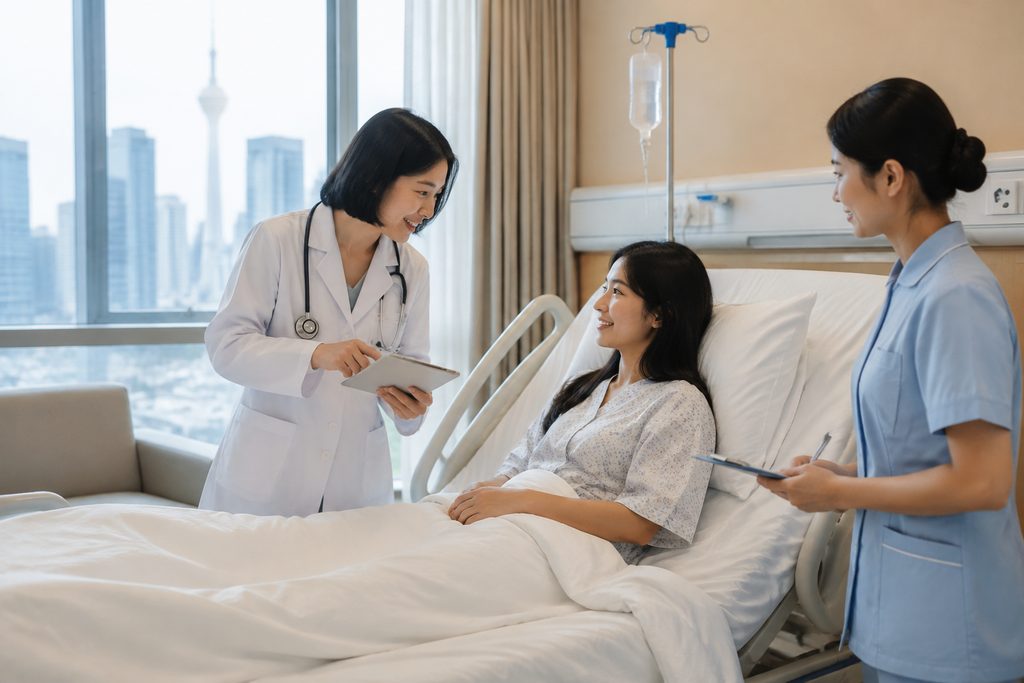
You’ve probably heard that getting a top-tier medical second opinion means waiting months and paying thousands of dollars. The reality is different. A written second opinion from Fudan University Shanghai Cancer Center‘s gynecologic oncology department starts at $300, and the entire process can be completed in under two weeks without leaving your home. That’s not a typo. The hospital that ranks among China’s top 10 for oncology reviews your existing pathology slides, imaging, and treatment records, then sends back a detailed written analysis. China Medical Services coordinates this for international patients every week.
This article explains exactly how the process works, what the Fudan Cancer Center gynecologic oncology second opinion cost actually covers, and what happens after you receive the report. No vague promises. Just the sequence, the timeline, the risks, and the realistic outcomes.
How This Actually Works, Step by Step
The process is more straightforward than most patients expect. Here’s the real sequence, from where you sit right now to holding a written opinion in your hands.
Step 1: You send your existing records. This includes pathology reports, surgical notes if you’ve had surgery, imaging reports (CT, MRI, PET-CT), and any treatment summaries. If your records are in English, French, Spanish, or Arabic, our team translates them into Chinese before submission. Translation typically adds 1-2 days.
Step 2: A gynecologic oncology specialist reviews your file. The Fudan Cancer Center assigns your case to a senior attending physician in the gynecologic oncology department. This is not a junior resident skimming your file. These are the same specialists who treat thousands of ovarian, cervical, and uterine cancer patients each year.
Step 3: You receive a written second opinion. The report covers three things: whether the specialist agrees with your original diagnosis, whether the proposed treatment plan aligns with current international guidelines, and what alternative or additional options you should discuss with your local oncologist. The written second opinion costs $300-500, depending on case complexity.
Step 4: You decide what happens next. Some patients take the written opinion back to their local doctor. Others schedule a video consultation for $500-800 to discuss the findings directly with the Fudan specialist. A smaller number proceed with treatment coordination in Shanghai, and in that case, the consultation fee is credited in full toward the on-the-ground coordination service.
Fudan Cancer Center Gynecologic Oncology Second Opinion Cost: What You’re Actually Paying For
Let’s break down the numbers honestly. When you search for “Fudan Cancer Center gynecologic oncology second opinion cost,” you’re probably seeing scattered figures online. Here’s what we actually quote patients.
Written second opinion from a top hospital specialist: $300-500. Video consultation with a general specialist from the international department: $100-300. Video consultation with a top specialist in gynecologic oncology: $500-800. Multidisciplinary team review: $1,500-2,000. These are the ranges, and final pricing depends on the hospital and case complexity.
What does that money buy? Three things. First, the specialist’s time — a genuine review of your records, not a template letter. Second, the translation of your documents into Chinese and the translation of the specialist’s report back into English. Third, the coordination work: submitting your case through the hospital’s international department, tracking it through review, and getting the report back to you with context you can actually use.
Compare that to a second opinion at a major U.S. cancer center. MD Anderson charges $1,700-2,500 for an international pathology review alone. Memorial Sloan Kettering’s remote second opinion program starts around $2,000-3,000 for medical oncology review. The Fudan option is not “cheap” in a way that should make you suspicious — it’s simply priced for a different healthcare economy. The doctors are trained at top Chinese institutions, many with international fellowships, and the hospital handles over 15,000 new cancer cases annually.
A Realistic Timeline
People forget the waiting steps. Here’s what actually happens, day by day.
| Stage | What Happens | Realistic Duration |
|---|---|---|
| Day 1-3 | You gather and send records; our team reviews for completeness | 2-3 days |
| Day 3-5 | Document translation (if needed) and case preparation | 1-2 days |
| Day 5-12 | Fudan Cancer Center gynecologic oncology department reviews the case | 5-7 business days |
| Day 12-14 | Written opinion delivered to you in English | 1-2 days |
| Week 3-4 | Optional: video consultation scheduled with the specialist | 1-2 weeks lead time |
| Week 4-8 | If you decide to pursue treatment in Shanghai: S2 visa application, appointment coordination, travel arrangements | 4-6 weeks |
The part most patients underestimate is the visa. If you decide to travel to Shanghai for an in-person consultation or treatment, you need an S2 visa with a notation indicating medical treatment purposes. This requires supporting documents from the hospital — an invitation letter or appointment confirmation — and processing times vary by your home country’s Chinese embassy or consulate. Budget four to six weeks for this step. Rushing it leads to disappointment.
What Can Go Wrong — and What Happens Then
Honesty matters more than reassurance. Here are the real failure modes.
Your records are incomplete. The specialist cannot render a meaningful second opinion without the original pathology slides or at minimum a detailed pathology report. If your records are missing key pieces — receptor status for breast cancer, HPV typing for cervical cancer, surgical staging details for ovarian cancer — the review will be delayed. What happens then: our team tells you exactly which document is missing and you request it from your local hospital. This adds days, not weeks, in most cases.
The second opinion disagrees with your original diagnosis. This happens in roughly 10-15% of cases across major cancer centers, based on published pathology review studies. What happens then: you now have a documented disagreement between two specialists. That’s not a failure — that’s the entire point of a second opinion. You take both reports to your treating oncologist and discuss next steps. In some cases, the Fudan specialist may recommend additional molecular testing that wasn’t done initially.
The specialist recommends a treatment unavailable in your home country. China has approved some targeted therapies and immunotherapies earlier than certain Western countries, and clinical trial access differs. What happens then: you evaluate whether traveling to Shanghai for treatment is feasible. That’s a bigger decision, and the written opinion gives you the evidence to make it.
You can’t get the exact specialist you requested. We cannot guarantee a specific named doctor. We can request a specific department and, where possible, a specific specialist. But hospital assignment depends on availability. What happens then: the department head assigns the most appropriate specialist for your specific cancer type. For gynecologic cancers, that means a doctor who specializes in ovarian, cervical, or uterine cancer specifically — not a general oncologist.
Is Fudan University Cancer Hospital Good for Cervical Cancer? Evaluating the Evidence
Patients frequently ask some version of: “Is Fudan University Cancer Hospital good for cervical cancer?” The short answer is yes — it is one of the best hospitals for ovarian cancer treatment in Shanghai and a national leader in gynecologic oncology. But let’s look at what that claim actually rests on.
Fudan University Shanghai Cancer Center is ranked among China’s top 10 hospitals for oncology in the Fudan University hospital rankings — the most authoritative hospital ranking system in China. The gynecologic oncology department specifically treats over 3,000 new gynecologic cancer cases annually, including cervical, ovarian, endometrial, and vulvar cancers. That volume matters. Studies consistently show that higher surgical volume correlates with better outcomes in gynecologic cancer surgery, particularly for ovarian cancer where optimal debulking surgery is the single most important prognostic factor.
The department performs radical hysterectomies, fertility-sparing surgery for early cervical cancer, and complex cytoreductive surgery for advanced ovarian cancer. They use sentinel lymph node mapping, nerve-sparing techniques, and HIPEC (hyperthermic intraperitoneal chemotherapy) for select ovarian cancer cases. The hospital also runs active clinical trials, which means patients who have exhausted standard options may access experimental therapies.
But here’s the nuance. “Good” doesn’t mean “right for every patient.” If your cancer is early-stage and your local gynecologic oncologist follows NCCN or ESGO guidelines, a Chinese second opinion may simply confirm your current plan. That’s still valuable — confirmation reduces anxiety. If your case is complex, recurrent, or involves a rare histology, the Fudan review is more likely to add meaningful value.
How to Get a Second Opinion from China Cancer Specialists: Avoiding Common Mistakes
Knowing how to get a second opinion from China cancer specialists efficiently separates a two-week process from a two-month ordeal. Here’s what actually matters.
Send everything at once. The biggest delay we see is patients sending records in batches — pathology first, then imaging a week later, then a treatment summary after that. Each batch restarts the review clock. Gather every relevant document before you start. If you’re missing something, we’ll tell you within 48 hours.
Include the imaging, not just the reports. Written radiology reports are useful but incomplete. The specialist needs the actual CT, MRI, or PET-CT images — usually as DICOM files on a CD or via a secure upload link. Without the images, the specialist cannot independently assess tumor extent, which is critical for surgical planning.
Be specific about your question. A second opinion is more useful when you ask a focused question. “Does my treatment plan make sense?” is too vague. “Given my stage IIIC ovarian cancer with BRCA1 mutation, should I receive PARP inhibitor maintenance after frontline chemotherapy, and is there evidence for adding bevacizumab?” gets you a far more actionable answer.
Don’t book flights before the written opinion comes back. Some patients assume they need to be in Shanghai to get a second opinion. They don’t. The written opinion comes first. Only after you’ve read it should you decide whether an in-person visit or video consultation is worth the additional cost and time. This staged approach saves thousands of dollars in unnecessary travel.
Practical Considerations: Records, Visa, Payment, and Follow-Up
These are the practical details that determine whether the process goes smoothly or stalls.
Records. You need: original pathology report, surgical operative note if applicable, imaging reports and actual image files, current medication list, and a summary of treatments received to date. All documents should be in English or accompanied by a certified translation. Our team handles the Chinese translation, but the source documents must be legible and complete.
Visa. International patients traveling to China for medical treatment use the S2 visa, which is the short-stay category for private affairs including medical treatment. Family members accompanying you also apply for S2 visas. The M visa is for commercial and trade activities — it is not a medical visa and should not be used for treatment purposes. You’ll need supporting documents from the hospital, and we coordinate the invitation letter with the hospital’s international department. Approval is not guaranteed and depends on your country’s specific requirements.
Payment. Second opinion fees are paid upfront. Hospital treatment costs in China are pre-paid as well — public hospitals generally do not bill insurance directly. You pay, then seek reimbursement from your insurer. Private international hospitals in Shanghai like United Family or Jiahui do offer direct billing with some international insurers, but Fudan Cancer Center is a public hospital, so expect to pay first and claim later. For context on the broader hospital landscape, see our guide to top-ranked hospitals across China and the oncology department rankings.
Language. Fudan Cancer Center’s international department has English-speaking staff, but the main hospital floors operate in Chinese. If you travel for treatment, a bilingual medical companion is not a luxury — it’s the difference between navigating a 10,000-patient-per-day hospital system confidently or getting lost in it. Companion services start at $300 per day.
Follow-up at home. The written second opinion is yours to keep. Take it to your local oncologist. If the Fudan specialist recommends a specific treatment, your local doctor can usually implement it if the drugs and techniques are available in your country. If they’re not, that’s when you start evaluating treatment in Shanghai seriously.
Frequently Asked Questions
A written second opinion from a specialist costs $300-500. Video consultations range from $100-300 for general international department specialists to $500-800 for top gynecologic oncology specialists. Multidisciplinary team reviews cost $1,500-2,000. All fees are credited toward coordination services if you proceed with treatment in China within 90 days.
Yes. The written second opinion and video consultation are both remote. You send your records electronically, the specialist reviews them, and you receive the opinion by email. You only travel to Shanghai if you decide to pursue in-person treatment, and that decision should follow — not precede — the remote review.
Surgical treatment for uterine cancer at a top Chinese public hospital typically costs one-fifth to one-tenth of the U.S. price. A radical hysterectomy that might cost $40,000-60,000 in the U.S. often runs $8,000-15,000 in Shanghai, depending on hospital tier and case complexity. Radiation therapy and chemotherapy are similarly discounted. However, these are out-of-pocket prices for international patients, and you should confirm current rates with the hospital before committing.
Most will. Fudan University Shanghai Cancer Center is internationally recognized, and its specialists publish in major journals and attend international conferences. Present the written opinion as a professional document from a peer institution, not as a challenge to your local doctor’s authority. In our experience, oncologists respond well when the second opinion is framed as additional data for shared decision-making.
Then you have a decision to make. Clinical trial participation requires in-person screening and treatment in Shanghai, which means a longer stay and more complex logistics. The trial itself may cover treatment costs, but travel, housing, and living expenses are yours. We can coordinate the hospital communication and logistics, but the decision to enroll is between you, your family, and your local medical team.
Your Next Step
A gynecologic cancer diagnosis is terrifying, and the instinct to act fast is real. But a second opinion is not a delay — it’s a checkpoint. It either confirms you’re on the right path or shows you a better one. The Fudan Cancer Center gynecologic oncology second opinion cost is low enough that skipping it is hard to justify when the stakes are this high.
China Medical Services helps international patients navigate Chinese healthcare — from document translation and hospital coordination to bilingual companionship on the ground. We don’t practice medicine, and we don’t promise outcomes. What we do is remove the logistical barriers between you and the specialists who can review your case. If you’re ready to get a second opinion, start with a free consultation about your situation and we’ll tell you honestly whether a Fudan review makes sense for your specific diagnosis. Talk to our patient coordination team — no commitment, just clarity.
For more medical information and treatment options in China, visit chinamedservices.com (China Medical Services).
