Getting Your Cancer Care at Harbin Medical University Cancer Hospital: Northern Oncology Full Service
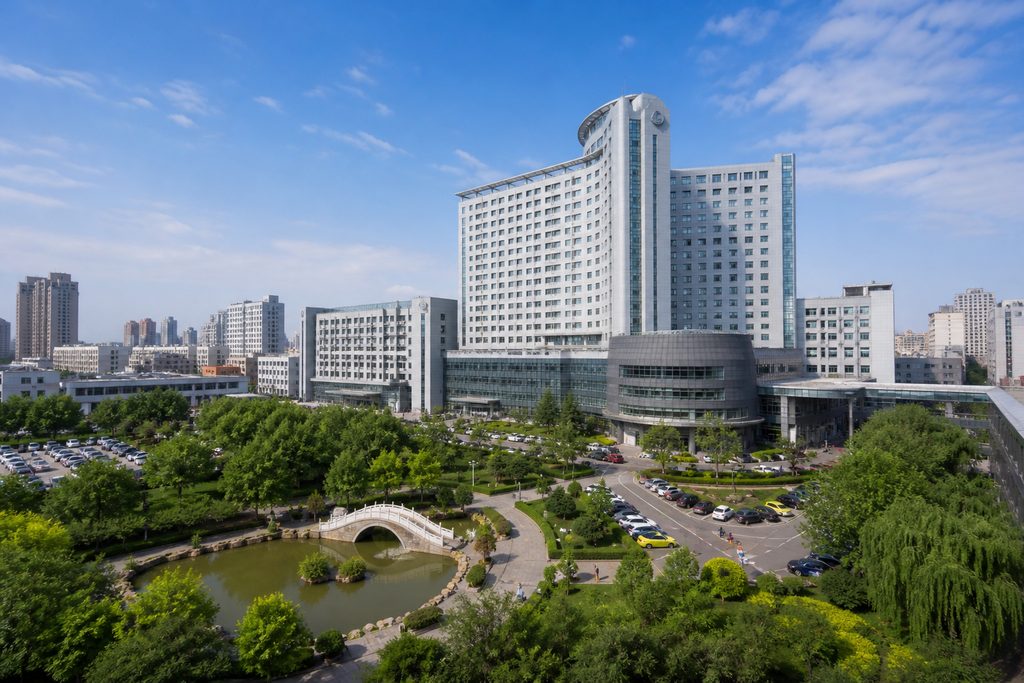
Have you ever searched for a cancer treatment center and found yourself staring at a wall of generic marketing phrases instead of hard facts? What if the information you actually need—the real costs, the exact process, and whether a hospital is genuinely equipped for your specific diagnosis—was laid out plainly? That is what this page delivers. The Harbin Medical University Cancer Hospital price list is not a single, fixed document you can download. It is a dynamic calculation based on your diagnosis, treatment protocol, and length of stay. But we can tell you exactly what drives the numbers, how they compare, and how to get a personalized estimate before you book a flight.
What You Actually Get at Harbin Medical University Cancer Hospital: The Short Answer
You get access to one of China’s highest-volume cancer centers in the country’s northeast, with a particular reputation for thoracic and gastrointestinal oncology. The hospital is a designated National Clinical Research Center for Malignant Tumors and is consistently ranked among China’s top 10 for oncology by the Fudan University Hospital Ranking—one of the definitive medical ratings in China. For international patients, the primary access point is the hospital’s International Medical Service Center. This is not a separate facility. It is a dedicated coordination office within the hospital that arranges English-speaking staff, expedited registration, and inpatient admission for foreigners. Without this channel, navigating a public hospital that handles over 700,000 outpatient visits a year is nearly impossible if you do not speak Chinese.
Who This Is Right For — and Who It Isn’t
Traveling across borders for cancer care is a serious decision. It works best when the clinical upside is clear and the logistics are manageable. Here is the honest breakdown.
This hospital is a strong option if:
- You have a confirmed diagnosis of lung, esophageal, gastric, colorectal, or breast cancer—the departments where this hospital’s surgical volume and clinical trial access are strongest.
- You need a complex thoracic surgery and are looking for a team that performs thousands of these procedures annually, not dozens.
- You are seeking a written second opinion or a video consultation before deciding whether to travel. The hospital’s specialists regularly provide remote evaluations based on your existing pathology slides and imaging.
- You have a treatment plan that requires a combination of surgery, radiation, and chemotherapy in one coordinated location.
You should probably look elsewhere if:
- Your case requires a rare pediatric cancer protocol that only a handful of global centers handle. This hospital treats pediatric patients, but its core volume is adult oncology.
- You are in active treatment and your current oncologist advises against interrupting the therapy cycle for international travel.
- You need a bone marrow transplant from an unrelated donor. China’s donor registry operates under strict domestic regulations, and international matching is an exceptionally complex process that this hospital rarely facilitates for foreign nationals.
- You expect Western-standard hotel-like inpatient rooms. The International Medical Service Center wards are private and comfortable, but this is a high-volume public medical institution, not a luxury resort.
The Options, Compared
When international patients evaluate the cost of cancer treatment at Harbin Medical University, the real comparison is not just against other Chinese hospitals. It is against staying in your home country or choosing a different international destination. The table below lays out the genuine alternatives for a standard course of lung cancer surgery with a typical five-day inpatient stay.
| Option | Estimated Surgical Package (USD) | Wait Time for Surgery | Key Trade-off |
|---|---|---|---|
| Harbin Medical University Cancer Hospital (International Medical Service Center) | $12,000 – $18,000 | 1–2 weeks after face-to-face consultation | Lower cost, high surgical volume; language barrier resolved only through the international center |
| Major US Cancer Center (e.g., MD Anderson, MSK) | $45,000 – $80,000+ | 2–6 weeks, insurance-dependent | Familiar system, no language barrier; dramatically higher cost |
| Private Hospital in Bangkok, Thailand | $20,000 – $30,000 | 1–3 weeks | JCI-accredited, strong hospitality; smaller thoracic surgery volume |
| Public Hospital in Harbin (Standard Domestic Channel) | $6,000 – $10,000 | 2–4 weeks, unpredictable queue | Lowest cost; zero English support, self-navigation required, shared wards |
Those prices are all-in for the hospital portion: surgeon fees, anesthesia, operating room, pathology, and the inpatient bed. They do not include pre-surgery imaging if you have not already done it, post-discharge medications, or any unexpected ICU stays. The international channel at Harbin costs more than the domestic channel because it guarantees a private room, an English-speaking coordinator, and a senior surgeon leading the procedure. For most foreign patients, the domestic channel is not realistic. You would be lost in a system where every sign, form, and conversation happens in Mandarin. The international channel is the practical entry point, and the price reflects that.
Is Harbin Medical University Cancer Hospital Good for Lung Cancer?
This is the question that brings thoracic oncology patients to this page. The short answer is yes—and the data backs it up. The hospital’s Department of Thoracic Surgery performs over 3,000 lung cancer resections annually. That volume places it among the top centers in Asia for thoracic surgical caseload. Volume matters in cancer surgery. Studies published in the Journal of Clinical Oncology and The Lancet have repeatedly shown that hospitals performing a high number of complex cancer resections have lower complication rates and better long-term survival outcomes. The department was an early adopter of video-assisted thoracoscopic surgery (VATS) in China and now performs the majority of its lung cancer resections using minimally invasive techniques. For patients with locally advanced disease, the hospital runs a well-integrated multidisciplinary team (MDT) model where thoracic surgeons, medical oncologists, and radiation oncologists jointly plan treatment sequences. This is not a center where you get surgery first and then get handed off to someone else for chemotherapy. The protocol is designed collaboratively from the start.
But there is a nuance here that matters. The hospital’s strength in lung cancer is strongest in non-small cell lung cancer (NSCLC)—which accounts for about 85% of all lung cancers. For small cell lung cancer (SCLC), which is less common and more aggressive, the treatment protocols are standard and the hospital is fully competent, but the clinical trial options for international patients with SCLC are more limited. If you have a rare EGFR exon 20 insertion mutation or another uncommon driver mutation, you need to confirm directly with the international center that they can access the specific targeted therapy you require before you commit to travel.
How to Get Cancer Care at Harbin Medical University as a Foreigner
The pathway is structured, but it requires patience. There is no online booking portal where you can click “reserve surgery” and pay with a credit card. The process works in stages, and skipping stages will not work.
Stage one is documentation. You need a complete medical dossier: pathology reports (the original slides are ideal, not just the written report), CT and PET-CT scans on a CD or USB in DICOM format, a summary letter from your current oncologist in English, and a list of all current medications. If your documents are not in English or Chinese, you will need certified translations. The hospital’s international center can recommend translators, but you can also arrange this independently.
Stage two is remote evaluation. You have two options here. A written second opinion costs $300–500 and takes about five to seven business days. The relevant department reviews your file and provides a written analysis with treatment recommendations. This is for reference only—it is not a prescription and does not guarantee admission. A video consultation costs $500–800 and allows you to speak directly with the specialist, ask questions, and hear the recommended approach in real time. This is the better option if you are seriously considering travel, because you can gauge the doctor’s communication style and ask the hard questions about your specific case.
Stage three is arrival and face-to-face consultation. If the remote evaluation confirms that you are a suitable candidate, we coordinate an appointment at the International Medical Service Center. You will travel on an S2 visa—this is the short-stay visa category used for private medical treatment in China. Your accompanying family member also applies for an S2. The hospital provides an invitation letter that supports the visa application. Once you arrive, the face-to-face consultation happens within one to two business days. The specialist reviews your original scans, conducts a physical examination, and orders any additional tests needed before surgery. Those tests—typically blood work, an ECG, and sometimes a repeat CT—take one to two days to complete and report.
Stage four is admission and treatment. If all tests confirm the treatment plan, admission typically happens within the same week. For surgery, expect a preoperative day, the procedure itself, and then a five-to-seven-day inpatient stay. The international center ward has private rooms with an accompanying bed for a family member. English-speaking nurses are not available on every shift, so the bilingual coordinator remains your primary communication bridge. After discharge, you will need to stay in Harbin for at least one additional week for a wound check and to receive the final pathology report. Do not book a return flight for the day after discharge. That is a mistake patients make, and it creates a dangerous gap in follow-up care.
What It Costs: A Realistic Breakdown
The hospital has a full surgical ICU staffed by critical care specialists. Complication rates for VATS lobectomy at this hospital are consistent with international benchmarks—major morbidity in the 5–8% range. If you need an extended ICU stay, the cost increases substantially. ICU beds in the international center cost approximately $800–1,200 per day. This is not included in the initial surgical package. You should have a financial buffer of at least $5,000–10,000 for unexpected post-operative care. If the complication is severe enough to require prolonged hospitalization beyond what your visa allows, the hospital can assist with a visa extension application, but this takes time and adds administrative complexity at a moment when you are medically fragile.
Harbin Medical University Cancer Hospital is not JCI-accredited. It is accredited by China’s National Health Commission and holds designations as a National Clinical Research Center and a National Key Clinical Specialty center. These are domestic credentials, not international ones. For some insurance companies, the absence of JCI accreditation is a barrier to reimbursement. For others, the hospital’s status as a top-ranked Chinese institution is sufficient. Check with your insurer. The lack of JCI accreditation does not reflect on clinical quality—this hospital’s surgical outcomes are published in peer-reviewed international journals—but it does affect the administrative side of international patient care.
No. The hospital does not sell pre-packaged treatment bundles to international patients online. What you can do is complete the remote evaluation process—written second opinion or video consultation—and receive a recommended treatment plan. If that plan includes surgery, the international center can tentatively hold an admission window for you. But the final booking only happens after the face-to-face consultation, when the treating surgeon confirms that the remote assessment was accurate and that you are fit for the procedure. This is a clinical safeguard, not a bureaucratic hurdle. Surgeons will not operate on a patient they have not examined in person.
What if I need radiation or chemotherapy after surgery?
The hospital’s radiation oncology department is equipped with linear accelerators capable of intensity-modulated radiation therapy (IMRT) and volumetric modulated arc therapy (VMAT). Adjuvant chemotherapy is administered in the medical
Frequently Asked Questions
Yes. The hospitals used for international patients are JCI-accredited and follow the same international safety standards as top hospitals in the US and Europe. Surgical teams perform high volumes of procedures — often more than their Western counterparts — which studies show leads to better outcomes.
Costs vary by procedure and hospital, but international patients typically save 40-80% compared to US prices — even when factoring in travel and accommodation. A consultation with our team will give you an exact, all-inclusive quote with no hidden fees.
Send us your existing medical reports to get started. We handle everything from hospital selection and appointment scheduling to visa assistance and post-operative recovery planning. Your medical records are reviewed by the specialist before you even book a flight.
For more medical information and treatment options in China, visit chinamedservices.com (China Medical Services).
