Heart Surgery: Your Hospital Match in China Without the Guesswork
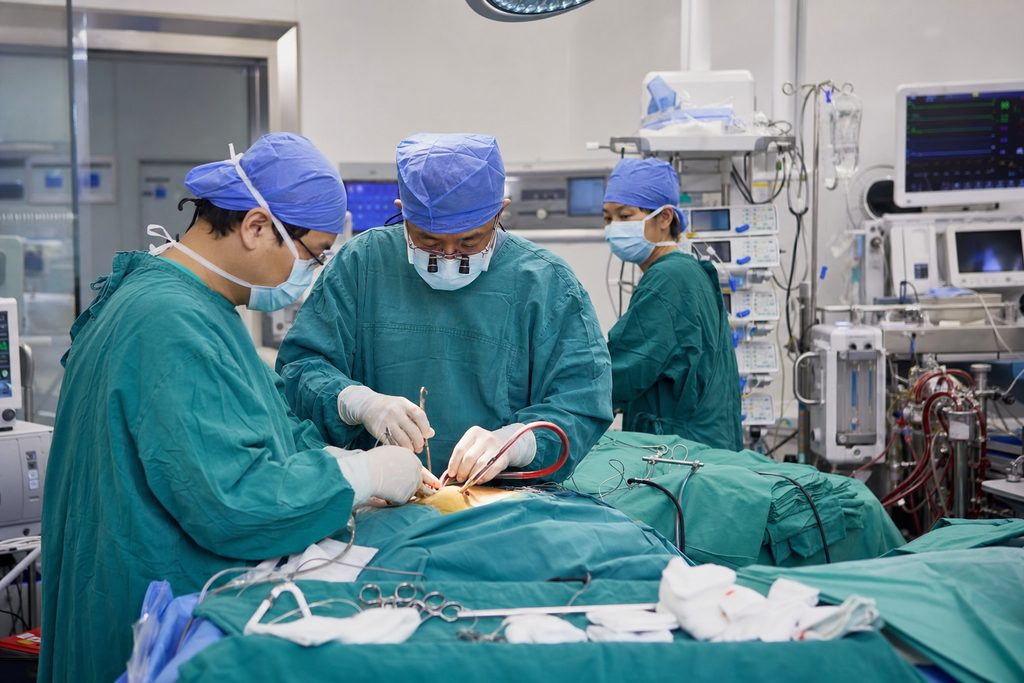
When 54-year-old Daniel from Manchester received his triple-vessel disease diagnosis, the cardiologist’s words hit him twice. First came the fear. Then came the math. The quoted £28,000 for private surgery in the UK, or an 11-month wait on the NHS. Daniel started typing “affordable cardiac surgery medical tourism China” into his browser at 2 a.m., not knowing whether to trust anything he found. His wife worried about language barriers. His son worried about safety. Daniel just wanted to know one thing: which hospital would actually be right for him, and what would it really cost.
That question — matching the right patient to the right cardiac center — is where most international patients stumble. The China Medical Services team has spent years building a database of 340+ top-ranked hospitals across 37 cities precisely because a generic “best hospital” list doesn’t answer the question that matters. What matters is your valve, your bypass, your risk profile, and which surgical team handles cases like yours every single week.
Let’s walk through how this actually works.
How This Actually Works, Step by Step
You don’t book heart surgery the way you book a flight. The process has a specific sequence, and skipping steps costs time and money.
Step 1: You send what you already have. That means your echocardiogram report, coronary angiogram images and report, any CT scans, current medication list, and a brief summary of your symptoms and history. You don’t need to fly anywhere yet. Most patients already possess 80% of what a Chinese cardiac team needs for an initial recommendation.
Step 2: We translate and route your file. Medical translation is not the same as language translation. A cardiologist needs precise terminology, measurement units, and imaging quality assessments. Our team prepares your records for review by the cardiac surgery department at hospitals matched to your specific condition — not a generic “top 10” list.
Step 3: The department reviews your case. A cardiac surgeon or senior department physician looks at your imaging and reports. They assess surgical risk, whether you’re a candidate for minimally invasive approaches, and what additional testing you’d need after arrival. This written review typically takes 3–7 working days.
Step 4: You get a written second opinion and a plan. The response includes a surgical recommendation, an estimated hospital stay, a cost range, and a list of pre-admission tests you’d repeat in China. This is not a prescription — it’s a professional assessment you can take to any hospital in the world.
Step 5: You decide. Some patients take the written opinion back to their home cardiologist. Others schedule a video consultation to speak directly with the Chinese team. And some move toward surgery coordination. You’re never locked into anything.
Heart Bypass Surgery Cost China: What the Numbers Actually Look Like
Let’s address the question directly. The heart bypass surgery cost China ranges from approximately $12,000 to $20,000 at top-tier public hospitals through their international or VIP departments. At private international hospitals in Beijing or Shanghai, the same procedure typically runs $30,000 to $50,000. Both figures vary by hospital and case complexity — no responsible provider quotes a fixed price without seeing your angiogram.
Compare that to the United States, where CABG surgery averages $120,000 to $150,000 before insurance negotiations. In the UK, private bypass surgery sits around £25,000–£35,000. In Australia, A$60,000–A$80,000. The gap is real, and it’s one of the primary reasons patients like Daniel start researching China.
| Procedure | China (Public VIP/International Dept) | China (Private International) | United States (Average) |
|---|---|---|---|
| Coronary Artery Bypass Graft (CABG) | $12,000–$20,000 | $30,000–$50,000 | $120,000–$150,000 |
| Heart Valve Replacement (Mechanical) | $18,000–$30,000 | $35,000–$60,000 | $130,000–$180,000 |
| Minimally Invasive Valve Repair | $22,000–$35,000 | $40,000–$70,000 | $140,000–$200,000 |
But cost is only half the equation. The other half is volume. Fuwai Hospital in Beijing performs over 14,000 cardiac surgeries annually — the highest volume of any cardiac center globally. Zhongshan Hospital in Shanghai handles a comparable caseload. Surgical teams at this scale see rare complications weekly that a regional hospital might encounter once a year. That repetition matters for outcomes.
Volume is a safety signal. A cardiac team performing 1,000+ bypasses per year has refined protocols, anesthesia management, and post-op care pathways that lower-volume centers simply cannot replicate.
Finding the Best Cardiac Hospital Shanghai for Foreigners — Without Guesswork
Search “best cardiac hospital Shanghai for foreigners” and you’ll get a dozen listicles, most of them written by people who’ve never set foot in a Chinese cardiac ICU. The honest answer is more nuanced.
Shanghai has three cardiac centers that consistently rank in China’s Fudan University hospital rankings for cardiac surgery: Zhongshan Hospital (Fudan University), Ruijin Hospital (Shanghai Jiao Tong University), and Shanghai Chest Hospital. Each has strengths. Zhongshan is known for complex valve surgery and adult congenital repairs. Ruijin runs a strong minimally invasive program. Shanghai Chest specializes in combined cardiac-thoracic cases.
But “best” depends on your anatomy. A patient needing a straightforward three-vessel bypass has different priorities than someone requiring a Ross procedure or a redo valve replacement after a failed bioprosthesis. That’s why we don’t publish a single “best hospital” ranking. We match based on your specific echo findings, your age, your comorbidities, and the surgical approach your case requires. See our cardiac surgery department rankings for the full breakdown of China’s top cardiac programs.
For patients who want English-speaking staff and Western-style care protocols from admission to discharge, Shanghai’s private international hospitals — Jiahui, Parkway, and United Family — offer JCI-accredited cardiac programs with direct insurance billing. The trade-off is cost: expect to pay 1.5–2x the public VIP rate. For some patients, that premium is worth it. For others, a bilingual companion at a public hospital delivers the same communication quality at a fraction of the price. Both paths work. The right one depends on your budget and your comfort threshold.
A Realistic Timeline
Medical travel for heart surgery is not a two-week sprint. Here’s what a realistic sequence looks like for most international patients:
| Stage | What Happens | Duration |
|---|---|---|
| Day 1–3 | You submit medical records and imaging via secure upload | 2–3 days |
| Day 4–7 | Records translated, formatted, and routed to cardiac department | 3–4 days |
| Day 8–14 | Cardiac team reviews case; written second opinion prepared | 5–7 days |
| Day 15–21 | Optional video consultation with the surgical team | 1–2 days to schedule |
| Week 4–6 | S2 visa application with hospital invitation documents | 2–4 weeks |
| Week 6–8 | Arrival in China; pre-admission testing (echo, labs, CT) | 2–4 days |
| Week 8 | Surgery | — |
| Week 8–10 | ICU + ward recovery in China | 10–14 days |
| Week 10–14 | Return home; local cardiologist manages follow-up | Ongoing |
Two steps catch people off guard. First, the visa. China’s S2 visa is the correct category for short-term medical treatment and private affairs — not the M visa, which is strictly for commercial activity. Processing takes 2–4 weeks at most embassies, and you’ll need hospital invitation documents, which we help prepare. Second, the pre-admission testing. Chinese hospitals repeat most diagnostics in-house, even if you bring originals. Budget 2–4 days in-country before surgery.
And the question patients ask most: how long to recover from open heart surgery abroad? The honest answer is 6–12 weeks before you feel genuinely normal. You’ll be in a Chinese hospital for 10–14 days post-op. You should stay in-country for another 1–2 weeks after discharge for early follow-up and suture checks. Then you fly home. Full sternal healing takes 8–12 weeks regardless of where you have surgery. No hospital in the world can compress that biological timeline.
What Can Go Wrong — and What Happens Then
Let’s be blunt about failure modes, because pretending they don’t exist serves nobody.
Your case is declined. This happens more often than patients expect. Chinese top-tier cardiac departments decline cases they consider too high-risk for international travel, or cases where the expected benefit doesn’t justify the journey. If this happens, you get that answer in writing — and it’s valuable information. It means surgery abroad was probably a bad idea for you anyway.
Your pre-admission tests reveal something new. Roughly 10–15% of international cardiac patients arrive with undiagnosed conditions that change the surgical plan — a valve that’s worse than the original echo showed, or undetected pulmonary hypertension. The hospital adjusts. Your cost estimate changes. This is not a bait-and-switch; it’s medicine. Always budget a 15–20% buffer above the quoted range.
Post-op complications. Atrial fibrillation after bypass occurs in 20–30% of patients. Pleural effusion in 10–15%. These are not failures of the Chinese system — they’re the known complication rates for cardiac surgery everywhere. Chinese cardiac ICUs manage them daily. Your cost estimate should include contingency for a longer ICU stay.
Language breakdown at a critical moment. This is the one failure mode we can prevent. A nurse explaining discharge medication at 7 a.m. in Mandarin while you’re still groggy from anesthesia — that’s when mistakes happen. A bilingual medical companion costs from $300 per day and eliminates this entire category of risk. For a $20,000 surgery, that’s insurance worth buying.
Do not attempt to navigate a Chinese public hospital cardiac department without either fluent Mandarin or a professional companion. The registration, payment, testing, and ward systems operate entirely in Chinese. This is not a cultural criticism — it’s a logistical reality.
Is Heart Valve Replacement Safe in China? What the Data Says
Western patients ask this question with understandable skepticism. Let’s look at what’s measurable.
Fuwai Hospital’s cardiac surgery mortality rate for isolated CABG is approximately 0.5–0.8%, which compares favorably with STS (Society of Thoracic Surgeons) benchmarks in the US, where the national average sits around 1.8–2.2%. Zhongshan Hospital reports similar figures. These are not marketing numbers — they’re published in peer-reviewed journals and audited by hospital quality departments.
Valve replacement specifically: Chinese centers now perform transcatheter aortic valve replacement (TAVR) with outcomes tracking against international registries. Venus-A and VitaFlow — two Chinese-developed TAVR valves — have completed clinical trials with results published in JACC and EuroIntervention. The technology is not a knockoff; it’s domestically developed and internationally validated.
So, is heart valve replacement safe in China? At a top-10 cardiac center, the short answer is yes — the perioperative mortality and complication rates are statistically comparable to Western centers of similar volume. The caveat is that “China” is not one hospital. A county-level hospital performing 30 valve surgeries a year is a completely different risk proposition than Fuwai performing 3,000. This is why hospital matching matters more than country selection.
Practical Considerations: Records, Visa, Payment, and Follow-Up
Before you book anything, four practical items need your attention.
Medical records. You need the raw DICOM files from your angiogram and echo, not just printed reports. Request these from your home hospital’s imaging department — it can take 1–2 weeks to obtain them. PDFs of reports are useful but insufficient for surgical planning.
Visa category. The S2 visa is the correct short-stay category for medical treatment in China. Your accompanying family member applies for their own S2. The hospital provides an invitation letter and treatment confirmation, which you submit with your application. Processing time varies by embassy — apply early.
Payment. Chinese public hospitals require prepayment before surgery, typically 50–100% of the estimated cost, refundable if unused. International insurance rarely pays Chinese hospitals directly at public facilities — you pay, then claim reimbursement. Private international hospitals in Shanghai and Beijing often have direct billing arrangements with major insurers. Check before you choose.
Follow-up at home. Your Chinese surgical team will provide a discharge summary in English (at international departments) or Chinese (at standard public wards — we translate). Your home cardiologist takes over long-term management. Plan for this handoff before you leave home, not after you return.
If you’re considering booking a heart surgery package in Beijing, know that no legitimate hospital sells a fixed “package” the way a travel agency sells a tour. What exists is a coordinated care pathway: consultation, admission, surgery, recovery, and discharge — arranged through the hospital’s international department. Anyone offering a one-click “heart surgery package” at a fixed price is not coordinating with a real hospital.
Frequently Asked Questions
The heart bypass surgery cost China ranges from $12,000 to $20,000 at top public hospitals through their international or VIP departments, and $30,000 to $50,000 at private international hospitals. Final pricing depends on your specific coronary anatomy, number of grafts, and whether complications arise.
No. Public hospitals require an in-person consultation and repeat diagnostics before scheduling surgery. What you can do remotely is complete a written second opinion or video consultation, get a surgical recommendation, and then arrive with a coordinated admission plan. The hospital will still re-examine you before operating.
Your home cardiologist manages post-operative care. Your Chinese surgical team remains available for follow-up questions via the international department, and we can facilitate video follow-ups if needed. No surgical team in the world can manage complications remotely — that’s why the discharge handoff matters.
International departments at major Beijing and Shanghai hospitals employ English-speaking coordinators. But the surgical ward, ICU, and nursing staff operate primarily in Mandarin. A bilingual companion bridges this gap for a fraction of what you’re paying for surgery.
Most Western insurers reimburse treatment at Chinese hospitals on an out-of-network basis, meaning you pay upfront and claim later. Some private international hospitals in Shanghai and Beijing have direct billing agreements with major insurers. Verify with your insurer before committing.
Your Next Step
Matching with the right cardiac hospital in China is not about picking a name off a ranking list. It’s about your specific coronary anatomy, your valve pathology, your risk factors, and your budget — weighed against the surgical volume and subspecialty strengths of a shortlist of Chinese centers. That matching process is exactly what our team does. We coordinate written second opinions, video consultations, and on-the-ground support for international cardiac patients across 37 Chinese cities. We don’t perform surgery, and we don’t guarantee outcomes — we connect you with the surgical teams that do, and we make sure you understand every step before you commit.
If you have cardiac imaging and a diagnosis, send it over. We’ll route it to the right department and get you a straight
For more medical information and treatment options in China, visit chinamedservices.com (China Medical Services).
