Rehabilitation: A Home Exercise Plan That Actually Works After Surgery
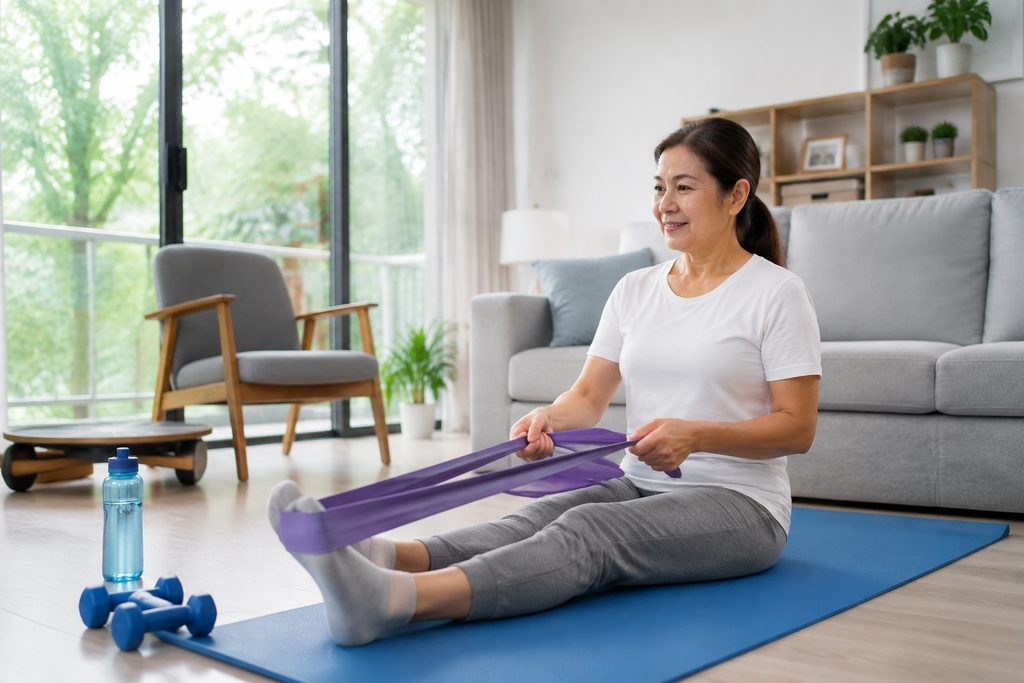
Have you ever left a hospital with a discharge summary in one hand and a sheet of printed exercises in the other, wondering how on earth you’re supposed to turn those stick-figure diagrams into a real recovery? That gap between hospital discharge and actually getting better at home is where most rehabilitation stalls. A structured home exercise plan closes that gap. But building one that works requires knowing what a proper plan contains, how it gets adjusted, and what professional oversight looks like — whether you recover at home or travel abroad for a dedicated program. Before we unpack the exercise components, let’s address the question many international patients ask us: what does rehab center cost China actually look like, and how does it compare to recovering at home?
How This Actually Works, Step by Step
Rehabilitation after surgery, stroke, or a sports injury follows a predictable sequence. Understanding it removes the guesswork.
First, a physician or physical therapist evaluates your baseline. They measure range of motion, strength, balance, and pain tolerance. They review your surgical notes or imaging. This evaluation produces a problem list — for example, “knee flexion limited to 70 degrees, quadriceps activation delayed, gait asymmetrical.” Without this baseline, any exercise plan is guesswork.
Second, someone designs a plan around that problem list. The plan includes specific exercises, sets, repetitions, frequency, and progression rules. A good plan tells you not just what to do, but when to increase difficulty and when to stop. It also flags red-flag symptoms that mean “call your doctor now” versus normal post-exercise soreness.
Third, you execute the plan — at home, in a clinic, or in an inpatient rehab center. Execution is where most plans fail. People skip sessions when pain spikes. They do exercises incorrectly without realizing it. They plateau because the plan never advances. This is why supervised rehabilitation, even for a few weeks, produces better outcomes than a purely self-directed plan.
Fourth, someone reassesses. A physical therapist re-measures your range of motion, strength, and function every one to two weeks. The plan gets modified based on data, not feelings. That reassessment loop is the difference between recovering in 8 weeks and limping for 8 months.
What a Home Exercise Plan Actually Contains
A legitimate home exercise plan is not a photocopied sheet of 10 generic stretches. It has structure. Here’s what you should expect from any plan worth following — whether designed by a therapist in your home country or by a rehabilitation team abroad.
Phase 1: Pain control and early mobility. This phase starts immediately after surgery or injury. Exercises focus on gentle range of motion, isometric contractions, and circulation. Think ankle pumps after knee surgery, shoulder pendulums after rotator cuff repair, or deep breathing after abdominal surgery. The goal is preventing stiffness and blood clots, not building strength.
Phase 2: Restoring movement patterns. Once acute pain subsides, the plan shifts to functional movement. You relearn how to squat, reach, step, or rotate without compensation. This phase often requires feedback — a mirror, a video, or a therapist watching you. Compensation patterns that develop here become chronic problems later.
Phase 3: Progressive loading. This is where strength actually returns. Resistance bands, bodyweight progressions, light weights, or water-based exercises get introduced. The key word is progressive — the load increases on a schedule. A plan that never gets harder stops working after two weeks.
Phase 4: Return to activity. The final phase bridges the gap between “able to walk” and “able to run, lift, play, or work.” It includes sport-specific or task-specific drills, balance training, and confidence-building. Many people skip this phase and reinjure themselves within months.
A Realistic Timeline
Recovery timelines vary enormously by procedure and individual. But here’s a representative timeline for a typical orthopedic surgery — say, a knee replacement or ACL reconstruction — with a structured home exercise plan.
| Stage | Timeframe | What Happens | What People Forget |
|---|---|---|---|
| Immediate post-op | Day 1–7 | Pain control, gentle range of motion, walking with aid | Swelling peaks at day 3–5; exercise feels worse before it feels better |
| Early rehab | Week 2–4 | Progressive mobility, beginning strengthening, gait training | Insurance approvals or travel logistics for supervised rehab take time — start planning early |
| Mid rehab | Week 5–8 | Resistance training, balance work, functional movement | Plateaus are normal; the plan must be adjusted by a professional, not just repeated |
| Late rehab | Month 3–4 | Return to most daily activities, sport-specific drills | Full strength and confidence often lag behind pain-free movement by 2–3 months |
| Full return | Month 5–6+ | Unrestricted activity, maintenance program | Long-term adherence matters more than the first 6 weeks |
For stroke rehabilitation, the timeline stretches longer. Many patients ask how long does stroke rehab take in China — the honest answer is three to six months of intensive therapy for meaningful functional gains, with continued improvement possible for a year or more. The first 90 days after a stroke are the highest-yield window, which is why some families consider traveling for concentrated rehab during that period.
What Can Go Wrong — and What Happens Then
Home exercise plans fail in predictable ways. Knowing the failure modes helps you avoid them.
Wrong dosage. Too little exercise and you stiffen up; too much and you flare up. Without a therapist adjusting the plan, most people err on one side or the other. The fix is a reassessment — either in person or via video consultation — where someone measures your progress and recalibrates.
Silent compensation. You think you’re doing a squat, but your knee is caving inward and your hip is dropping. The exercise feels fine because you’ve recruited the wrong muscles. Weeks later, you have a new pain in a new place. The fix is supervised sessions, even if only once a week, where a professional watches you move.
Plan abandonment. Studies consistently show that adherence to home exercise programs drops below 50% within six months. Life gets busy, pain fluctuates, motivation wanes. The fix is accountability — scheduled check-ins, a partner, or a structured program with a defined endpoint.
Red flags missed. Some pain is normal. Some is not. Swelling that worsens, fever, sudden loss of range, or pain that wakes you at night all warrant immediate medical attention. A good plan tells you which is which. A bad plan leaves you guessing.
Is Rehab in China Good Quality? Evaluating Providers Honestly
This question comes up constantly. Patients considering travel for rehabilitation ask is rehab in China good quality, and the answer depends entirely on where you go and what you’re comparing against.
China’s top rehabilitation hospitals are integrated into major medical centers. The best physical therapy programs are attached to orthopedic and neurology departments at hospitals like those in our top-ranked hospital database. These programs treat high volumes — a single rehabilitation department at a major Shanghai hospital may see hundreds of patients daily. That volume produces clinical experience that smaller facilities cannot match.
What does that mean for quality? It means therapists who have seen your exact condition hundreds of times, not dozens. It means access to equipment — anti-gravity treadmills, robotic gait trainers, hydrotherapy pools — that smaller clinics lack. It also means a system that moves quickly: evaluation, plan, and treatment often happen within the same week, not after a month of waiting.
The tradeoff is language and process. Public hospital rehabilitation departments operate in Chinese. Navigating registration, payment, and scheduling without help is genuinely difficult. That’s where a bilingual coordinator changes the experience. Private international hospitals in Shanghai and Beijing offer English-speaking rehabilitation services with Western-style care, at a higher price point. Both models exist. The right choice depends on your budget and your tolerance for navigating a foreign system.
For patients specifically asking about the best physical therapy hospital Shanghai, the honest answer is that several excellent options exist, and the right one depends on your condition. Orthopedic rehab, neuro rehab, and cardiac rehab each have different centers of excellence. A knee replacement patient and a stroke patient should not go to the same place. That’s why hospital matching based on your specific diagnosis matters more than any single “best” ranking.
Practical Considerations: Records, Visas, Payment, and Follow-Up
If you’re considering a rehabilitation program abroad — whether in China or elsewhere — several practical realities shape the decision.
Medical records. You need your surgical notes, imaging reports, discharge summary, and current medication list. These must be translated into the destination country’s language. For China, that means professional Chinese translation of key documents. This takes time — start gathering records weeks before you plan to travel.
Visa category and timing. For medical treatment in China, foreign patients typically use an S2 visa, which covers short-term private affairs including medical treatment. Processing typically takes one to four weeks depending on your home country’s consulate. You’ll need supporting documents from the hospital or clinic confirming your treatment arrangement. Family members accompanying you apply for the same S2 category. Do not book flights before your visa is approved.
Payment. Public hospital rehabilitation in China requires upfront payment for each session or package. International divisions and private hospitals may accept direct insurance billing. For a general sense of rehab center cost China, inpatient rehabilitation at a top public hospital typically ranges from $150 to $400 per day depending on room type and therapy intensity, while private international hospital rehab programs run higher — often $500 to $1,000 per day. Outpatient physical therapy sessions at public hospitals range from $30 to $80 per session, with private international clinics charging $100 to $250. These figures vary significantly by city, hospital, and case complexity.
Insurance. Most international insurance plans reimburse rehabilitation costs after the fact rather than paying directly. Check your policy’s coverage for overseas rehabilitation, pre-authorization requirements, and whether inpatient or outpatient care is covered. Some policies exclude rehabilitation entirely. Know this before you commit.
Follow-up at home. A rehabilitation program abroad is only as good as the plan you bring home. Before you leave, ask for a written home exercise plan with clear progression rules, a video recording of each exercise, and a contact person for questions. The best programs provide a structured handoff — not a wave goodbye.
Frequently Asked Questions
A post surgery rehab package price abroad usually bundles evaluation, daily therapy sessions, accommodation, meals, and sometimes transportation. In China, a two-week inpatient rehabilitation package at a top public hospital typically runs $3,000 to $6,000, while private international hospital packages start around $8,000 and can exceed $15,000. Always confirm exactly what’s included — some packages exclude imaging, medications, or specialist consultations.
You can initiate the process remotely, but you cannot typically book rehab program Beijing hospital slots the way you’d book a hotel room. Public hospital rehabilitation departments require an in-person evaluation before finalizing a treatment plan. What you can do remotely is submit your records for review, get a preliminary assessment of whether the program fits your needs, and arrange the evaluation appointment. International divisions and private hospitals offer more flexibility for remote scheduling.
You need objective markers, not feelings. Track range of motion with a goniometer or phone app, measure walking distance or speed, record pain levels on a 0–10 scale at the same time each day. If objective markers improve week over week, the plan works. If you’ve plateaued for two weeks or more, the plan needs adjustment — either the exercises are too easy, too hard, or targeting the wrong thing. That’s a signal to get professional input, not to quit.
It depends on what’s missing at home. If you have access to a good physical therapist and a structured program locally, staying home is usually the right call — continuity matters. Travel makes sense when you need concentrated, high-intensity rehabilitation that isn’t available locally, when wait times at home would delay your recovery window, or when the cost difference is substantial enough to justify the trip. For some patients, a two-week intensive program abroad followed by a home plan produces better results than months of once-weekly local sessions.
Your Next Step
A home exercise plan only works when it’s designed around your specific baseline, adjusted on a schedule, and executed with some form of accountability. Whether you recover at home or travel for a concentrated program, the principles don’t change. Our team at China Medical Services helps international patients evaluate rehabilitation options at top Chinese hospitals — we match you with the right department, coordinate record review, and arrange bilingual support on the ground. We don’t provide medical advice or guarantee outcomes. We handle the logistics so you can focus on the work of getting better. If you’re weighing a rehabilitation program in China against a home-based plan, start with a conversation — send us your records and questions, and we’ll tell you honestly whether this path makes sense for your situation. Visit our consultation page to begin.
For more medical information and treatment options in China, visit chinamedservices.com (China Medical Services).
