Zhongnan Hospital Wuhan Oncology: Immunotherapy and Precision Radiation Costs
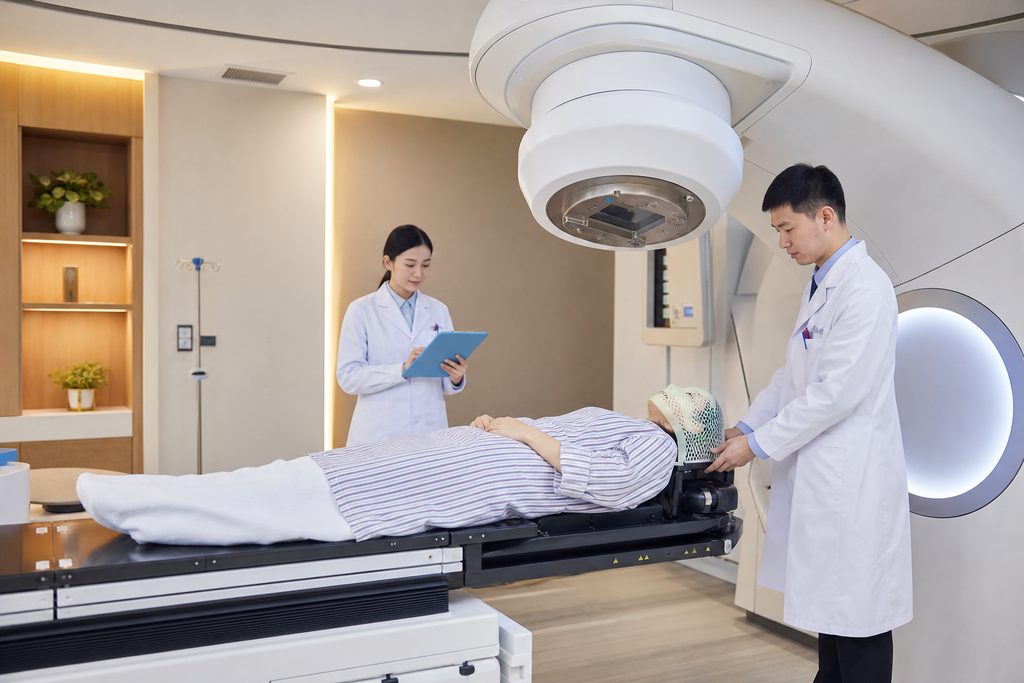
When 57-year-old Elena from Manchester was diagnosed with stage III non-small cell lung cancer, her oncologist laid out a path that included checkpoint inhibitors. The price tag stopped her cold. Her insurance would cover some of it, but the projected out-of-pocket expense for a year of pembrolizumab in the UK still hovered near £90,000. She started searching abroad. Not for a miracle cure, but for the same science at a number her family could actually manage. That search led her to questions about immunotherapy protocols in Asia, and eventually to a specific hospital in central China.
The Zhongnan Hospital Wuhan cancer immunotherapy cost is one of the most searched phrases we see from patients in exactly Elena’s position. They know the drugs exist. They have read the survival curves. They simply cannot afford the price of access where they live. Our team exists to answer what comes after that realization. We are not a hospital. We do not provide medical treatment or clinical diagnoses. We are your logistical architects—we bridge the gap between you and China’s top-tier medical expertise, handling everything from hospital matching to visa guidance to bilingual accompaniment on the ground.
Key Takeaways
- Zhongnan Hospital is ranked among China’s top 10 for oncology by the Fudan University specialty reputation list, and its radiation oncology department handles over 8,000 precision radiotherapy plans annually.
- Cancer immunotherapy costs at Chinese public hospitals typically range from $25,000 to $55,000 for a standard treatment course, compared to $120,000–$200,000 in the United States—a structural price difference, not a quality compromise.
- International patients cannot simply walk in and book treatment. The hospital’s VIP International Ward requires pre-arranged coordination, translated medical records, and an S2 visa—all manageable, but not trivial.
- Any video consultation fee you pay for an initial assessment is fully credited toward on-the-ground coordination if you proceed with treatment within 90 days.
The Problem: When a Viable Treatment Exists but the Price Excludes You
Cancer immunotherapy has reshaped oncology. Drugs like nivolumab, pembrolizumab, and atezolizumab have turned previously grim diagnoses into manageable chronic conditions for some patients. The data is solid. A 2024 pooled analysis in The Lancet Oncology showed five-year overall survival rates of approximately 26% for advanced melanoma patients on checkpoint inhibitors—a figure that was essentially zero two decades ago. For non-small cell lung cancer, PD-1 inhibitors combined with chemotherapy now achieve median survival exceeding 20 months in certain subgroups.
But the economics are brutal. In the United States, a single 200mg infusion of pembrolizumab carries a list price of roughly $11,000 before insurance negotiations. Most treatment protocols require 17 to 35 cycles over two years. Even with insurance, co-pays and deductibles can bankrupt a family. In Canada and the UK, public health systems ration these drugs through strict eligibility criteria. Patients fall through the cracks. They are told the treatment exists but they cannot have it.
That is the precise moment many start searching for alternatives. They look at Germany, at India, at South Korea. And increasingly, they look at China. Not because it is cheap in an absolute sense—$30,000 is still a serious sum—but because the ratio of cost to clinical capability has shifted dramatically in the past decade. Chinese oncology centers now publish in Nature Medicine and JAMA Oncology. They run domestic immunotherapy trials with drugs that are biosimilar to, or directly competitive with, the global brands. The question is no longer “is the medicine real?” It is “how do I access it safely?”
Who We Are
We are China Medical Services, a medical concierge organization built specifically for international patients who need treatment in China but lack the language, cultural, and institutional knowledge to navigate the system alone. We maintain a database of 340+ top-ranked hospitals across 37 cities, representing the top 5% of China’s 35,000+ hospitals as ranked by the Fudan University Hospital Ranking and JCI accreditation standards. We do not employ doctors. We do not make clinical decisions. We translate medical records, coordinate appointments through official hospital international departments, arrange S2 medical visas, and place a bilingual medical companion at your side from the moment you land until you board your flight home. Our work is logistics, compliance, and advocacy—not medicine.
Why Zhongnan Hospital Wuhan Delivers Results in Oncology
Zhongnan Hospital of Wuhan University sits on the banks of East Lake in central China. It is a 3,300-bed public teaching hospital, a Grade A Class 3 institution—the highest tier in the Chinese system. Its oncology and radiation oncology departments are not just large; they are academically formidable. The hospital’s tumor center is a National Key Clinical Specialty, and its radiation oncology team has been an early adopter of volumetric modulated arc therapy (VMAT) and stereotactic body radiation therapy (SBRT) in mainland China.
But what does that mean for a patient searching for the best precision radiation therapy China price? It means you are looking at a center where the physicists and radiation oncologists have treated a volume of cases that most Western departments will never approach. Volume breeds competence. A radiation oncologist who plans 500 SBRT lung cases per year develops an intuitive grasp of organ motion management and dose constraints that no textbook can replicate. That is the structural advantage here.
Clinical Volume and Sub-Specialization
The Zhongnan Hospital oncology department manages approximately 120,000 outpatient visits and 45,000 inpatient admissions annually across all tumor types. Within that, the radiation oncology unit delivers roughly 8,200 precision radiotherapy plans each year. To put that in perspective, a busy academic radiation oncology department in the United Kingdom might plan 2,500 to 3,000 cases annually. The sheer repetition matters. Thoracic radiation oncologists at Zhongnan see more central lung tumors, more challenging mediastinal cases, and more re-irradiation scenarios in one year than many Western specialists encounter in five.
Also, the department is sub-specialized. You are not assigned a general oncologist who treats everything from breast to brain. The lung cancer team handles lung cancer. The GI team handles colorectal, gastric, and pancreatic. This mirrors the sub-specialization model of MD Anderson or Memorial Sloan Kettering, but at a fraction of the cost. When you ask “is Zhongnan Hospital Wuhan good for oncology,” the answer is embedded in its structure: it is a high-volume, sub-specialized academic center with a direct pipeline to domestic immunotherapy clinical trials and some of the most experienced radiation physicists in Asia.
Precision Radiation Therapy: Technology and Technique
Precision radiation is not a single machine. It is a workflow. At Zhongnan, the standard pathway for a curative-intent lung SBRT case involves a 4D CT simulation to capture tumor motion across the respiratory cycle, followed by fusion with diagnostic PET-CT and contrast-enhanced MRI. The physicist team then generates multiple competing plans—VMAT, static IMRT, and occasionally helical tomotherapy—and the attending radiation oncologist selects the plan that best balances target coverage against organ-at-risk constraints. This is not “advanced technology” as a marketing slogan. It is a specific, verifiable sequence of steps that the department performs thousands of times per year.
The equipment inventory includes multiple Elekta and Varian linear accelerators with onboard cone-beam CT for daily image guidance. Surface-guided radiation therapy (SGRT) is available for breast and chest wall cases, eliminating the need for permanent tattoos in some protocols. The department also operates a Gamma Knife unit for intracranial targets and has an active brachytherapy program for cervical and prostate cancers. The best precision radiation therapy China price you will find is not at a private boutique clinic. It is at a high-volume public academic center like this one, where the capital equipment costs are amortized across an enormous patient base.
Immunotherapy: The Science and the Economics
How does immunotherapy work for lung cancer in China? The mechanism is identical to anywhere else. Immune checkpoint inhibitors block the PD-1/PD-L1 or CTLA-4 pathways that tumors exploit to evade T-cell attack. The drugs are either imported originators (pembrolizumab, nivolumab) or China-developed PD-1 inhibitors (camrelizumab, sintilimab, toripalimab) that have demonstrated non-inferiority in large domestic phase III trials. The China-developed drugs are significantly cheaper—often 40% to 60% less than the global brands—because they were developed for a domestic market with intense price competition among local pharmaceutical companies.
This is the single biggest driver of the Zhongnan Hospital Wuhan cancer immunotherapy cost advantage. A patient may be offered a domestically manufactured PD-1 inhibitor at approximately $1,200 to $1,800 per cycle, compared to $4,500 to $6,000 for an imported originator drug in a Western hospital. Over a 17-cycle treatment course, that difference alone can exceed $50,000. And the clinical data supporting the domestic drugs is not flimsy. The ORIENT-11 trial for sintilimab in non-squamous NSCLC, published in The Lancet Oncology, showed a median progression-free survival of 8.9 months versus 5.0 months for chemotherapy alone—comparable to the KEYNOTE-189 results for pembrolizumab. The science transfers. The price does not.
Cancer immunotherapy packages abroad China do not exist in the way some patients imagine. There is no all-inclusive fixed-price menu for immunotherapy at a Chinese public hospital. What you receive is a treatment plan with itemized costs: drug cost per cycle, administration fees, inpatient bed charges if admission is required, imaging for response assessment, and laboratory monitoring. A typical six-month immunotherapy course for lung cancer at Zhongnan Hospital’s International VIP Ward, including all associated diagnostics and professional fees, might range from $28,000 to $48,000 depending on the drug selected and the complexity of concurrent therapies. That number in the United States, even at negotiated insurance rates, easily exceeds $130,000.
What You Need to Know Before Going Alone
We want to be completely direct about what makes this difficult. The treatment quality is real. The cost advantage is real. But the barriers to independent access are equally real, and they can derail a treatment plan before it starts.
- Visa Requirements: Medical treatment in China requires an S2 visa with a specific annotation for medical purposes. You cannot enter on a tourist visa and then seek treatment—hospitals will not admit you through the international department without proper documentation. The S2 requires an invitation letter from the treating hospital, a detailed treatment plan, and proof of sufficient funds. Obtaining that invitation letter as an individual patient, without a local coordinator, is extremely difficult. Most hospital international departments will not issue one without a confirmed appointment, and you cannot get a confirmed appointment without a medical records review, which requires someone on the ground to present your translated documents in person.
- Payment Systems: Chinese public hospitals operate on a prepaid deposit system. You load funds onto a hospital account at admission, and services are deducted in real time. International credit cards are not accepted at most public hospital cashier desks—only UnionPay cards or domestic bank transfers. The VIP International Ward at Zhongnan does have dedicated staff who can process international wire transfers, but the lead time is 5 to 7 business days. Arriving without a financial intermediary who understands this system means you could be admitted but unable to start treatment while your funds are stuck in transit.
- Medical Records and Translation: The oncology team at Zhongnan will not make a treatment decision based on English-language records alone. Every relevant document—pathology reports, imaging findings, prior treatment summaries—must be professionally translated into Chinese, formatted to the hospital’s standards, and submitted for review before a consultation is scheduled. A mistranslated pathology subtype or a missing PD-L1 expression percentage can lead to an inappropriate treatment recommendation or a refusal to treat. This is not administrative busywork. It is a clinical safety step, and it requires medical translators who understand oncology terminology in both languages.
How We Help You Navigate This
These barriers exist for structural reasons, not malice. A 3,300-bed public hospital treating 120,000 oncology outpatients per year does not have the bandwidth to guide an individual international patient through visa applications, payment logistics, and document translation. That is not their job. It is ours.
Our process begins with a structured medical records review. You upload your existing records—DICOM imaging files, pathology slides, clinical notes—and our team arranges professional medical translation. We then coordinate a formal written second opinion or a video consultation with a Zhongnan Hospital oncology specialist through the hospital’s official international department channel. The video consultation fee ranges from $500 to $800, and if you proceed with treatment coordination, that entire amount is credited toward our on-the-ground service fee. We never mark up hospital charges. Our coordination fee is separate and transparent.
Once a treatment plan is confirmed, we handle the S2 visa invitation letter, guide you through the consular application, and arrange your airport transfer and accommodation in Wuhan. On the day of your first appointment, a bilingual medical companion meets you at the hospital entrance. That person handles registration, deposit payment, queue management, interpretation during the oncologist consultation, and all communication with the nursing staff. They stay with you through every infusion session, every imaging appointment, and every follow-up consultation. When you return home, we coordinate the transfer of your Chinese medical records back to your local oncologist for continuity of care.
We do not promise to book cancer treatment at Zhongnan Hospital Wuhan for every patient who contacts us. The hospital’s oncology team reviews each case individually and accepts only patients for whom they believe they can provide meaningful benefit. What we promise is that if you are accepted, the logistics will be handled completely, and if for any reason we cannot secure the appointment we have agreed to coordinate, our appointment coordination fee is fully refunded.
Frequently Asked Questions
The imported originator drugs—pembrolizumab (Keytruda), nivolumab (Opdivo)—are the identical products manufactured by the same companies. Domestically developed PD-1 inhibitors such as sintilimab and camrelizumab have undergone rigorous phase III clinical trials with results published in major international journals and have received approval from China’s National Medical Products Administration, which applies standards comparable to the FDA and EMA. The choice between an imported and a domestic drug should be made in consultation with the treating oncologist based on your specific tumor type, biomarker profile, and the available clinical evidence for each agent.
Immune-related adverse events are managed according to the same ASCO and ESMO clinical practice guidelines used internationally. Zhongnan Hospital has an inpatient oncology ward with 24-hour physician coverage, an intensive care unit, and access to all necessary immunosuppressive agents including high-dose corticosteroids, infliximab, and mycophenolate mofetil. The International VIP Ward has English-speaking nursing staff on day shifts, and your bilingual medical companion is reachable by phone at all hours. That said, immunotherapy carries real risks—colitis, pneumonitis, hepatitis, endocrinopathies—and you should discuss your individual risk factors with the treating oncologist before committing to treatment abroad.
Yes, and this combination is one of the department’s clinical strengths. The radiation oncology and medical oncology teams are co-located within the same tumor center and hold joint multidisciplinary meetings. Concurrent or sequential chemo-radiation with immunotherapy is a standard protocol for stage III non-small cell lung cancer, and the department has extensive experience managing the complexities of overlapping toxicities. The sequencing and fractionation schedule will be determined by your specific clinical stage and tumor biology, not by a generic protocol.
This depends entirely on your treatment protocol. A course of SBRT for early-stage lung cancer typically requires 3 to 5 outpatient treatment sessions over one to two weeks. Immunotherapy cycles are usually administered every 3 to 4 weeks, and many international patients arrange to stay for the first two cycles to establish tolerance, then return home and travel back for subsequent cycles. Some patients on concurrent chemo-radiation protocols need to remain in Wuhan for 6 to 7 weeks. Your treating oncologist will specify the expected duration during the initial consultation, and we will help you plan accommodation accordingly.
Your Next Step
The science of cancer immunotherapy and precision radiation is no longer confined by geography. The drugs, the linear accelerators, and the clinical protocols at Zhongnan Hospital Wuhan are comparable to what you would find at any major Western cancer center. The difference is access and cost—and navigating the path between those two realities is what we do every day. If you have a diagnosis and a treatment plan that feels financially out of reach, we can help you understand whether treatment in China is a viable option. There is no obligation and no pressure. Just an honest conversation about your case, your options, and the logistics of making it happen.
To start that conversation, request a free consultation with our patient coordination team. We will review your situation and tell you plainly whether this path makes sense for you.
For more medical information and treatment options in China, visit chinamedservices.com (China Medical Services).
